



Entity Authority vs Domain Authority: What Actually Matters in 2026

Key Takeaways
- Domain Authority is a third-party metric, not a direct Google ranking factor.
- Entity authority reflects how consistently your brand is recognized and validated across the web.
- Modern search systems prioritize credibility, clarity, and topic ownership over raw backlink volume.
- Strong backlinks improve rankings, but entity recognition determines citation and AI visibility.
- Topical authority grows when you build connected content clusters around a focused subject.
- Structured data, mentions, reviews, and expert attribution strengthen entity validation signals.
- Sustainable SEO success in 2026 requires both technical strength and trusted brand recognition.
If you’re still obsessing over domain authority like it’s a scoreboard, you’re optimizing for a metric, not for visibility. The real discussion about Entity vs. Domain Authority focuses on how search engines decide who to trust today. Google looks at signs of experience, expertise, and credibility, not scores from third-party tools. That means recognition across the web matters more than isolated link metrics.
Here’s how this change works in practice: a small software service with a few backlinks gets mentioned in AI-generated summaries because it shares original research. In contrast, a popular affiliate blog gets overlooked. Why does this happen? Because authority now depends on context. According to Backlinko, longer articles usually receive 77.2% more backlinks on average. But backlinks alone don’t create brand trust.
Search engines now focus on how brands are connected to different topics. When people see your brand linked to a topic through reviews, mentions, and structured data, it helps prove your credibility. This is where semantic SEO becomes important: it values clear meaning over just backlinks. In the future, authority will come from recognition rather than just a strong domain.
What SEO Is No Longer About in 2026
SEO in 2026 focuses on creating strong recognition rather than just boosting numbers. A widely cited Ahrefs study found 96.55% of web pages receive zero organic traffic. That statistic reflects weak authority signals, not poor optimization. In the debate over Entity and Domain Authority, focusing solely on domain metrics results in limited visibility.
Old habits still linger:
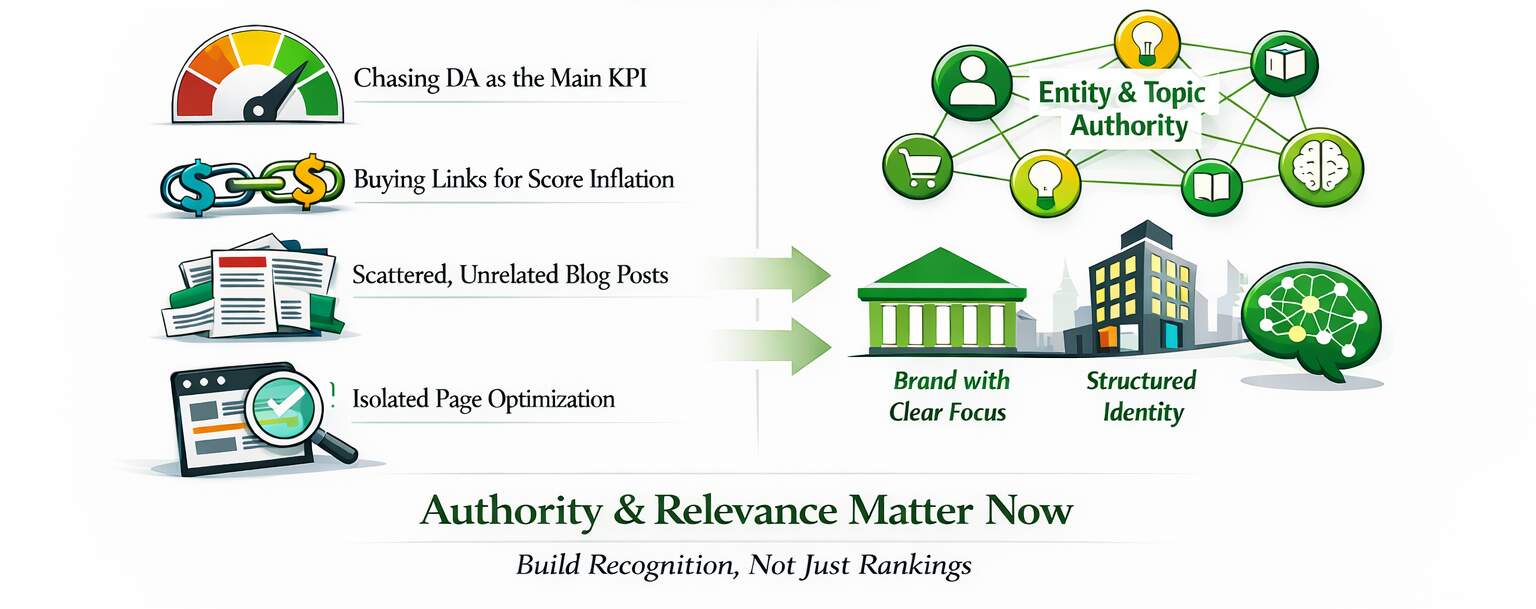
- Chasing DA as the main KPI
- Buying links purely for score inflation
- Publishing scattered blog posts across unrelated topics
- Optimizing individual pages without topic cohesion
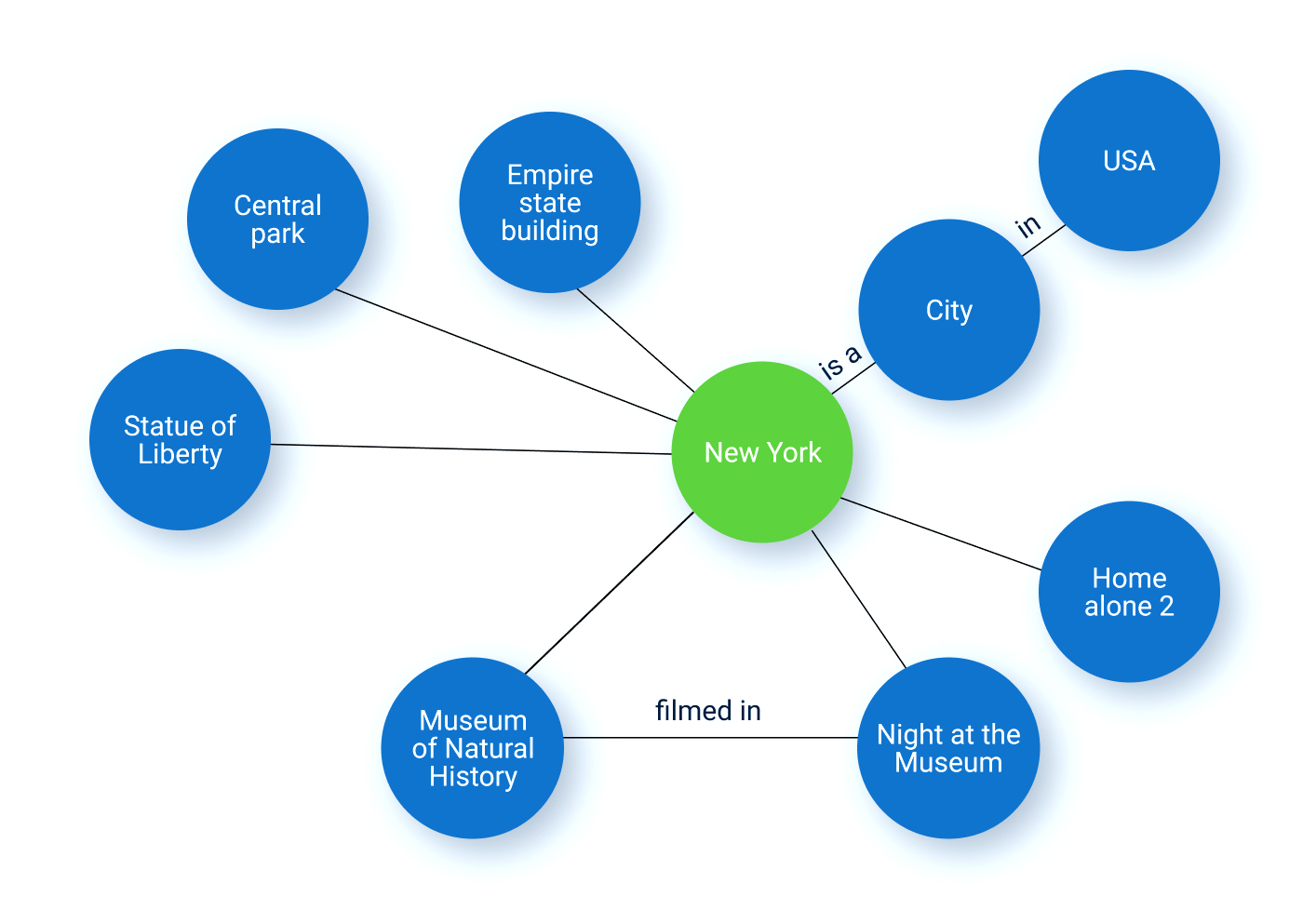
Those tactics ignore how entity-based search systems interpret the meaning across the web. Modern search favors structured identity and subject ownership. Google’s Knowledge Graph handles billions of entity connections. If your brand lacks consistent topic associations, you dilute credibility. SEO now rewards clarity, not noise.
What Is Domain Authority (Really)?
Domain Authority (DA) is a metric created by Moz that estimates how likely a website is to rank highly in search results. It primarily focuses on the website’s backlinks. It is important to note that DA is not a ranking factor used by Google, but rather a tool for comparing websites. This distinction is important when brands ask, “Does domain authority still matter for rankings?” While DA helps with competitive comparisons, it does not determine a website’s trustworthiness.
DA remains useful for:
- Comparing link strength against competitors
- Prioritizing outreach targets
- Tracking relative growth over time
But raising a score doesn’t guarantee inclusion in AI answers or featured summaries.
When comparing Entity Authority and Domain Authority, think of Domain Authority (DA) as the basic structure. Having strong backlinks helps search engines find and better understand your site. Backlinko confirms that backlinks remain one of the most important Google ranking factors. However, having a solid structure isn’t enough to make your site stand out. Without clear topic signals, even strong domains may struggle to get noticed.
What Is Entity Authority?
Entity authority is the trust and recognition a brand, person, product, or organization earns online. It depends on consistent names, related topics, reputation, and validation. As search evolves toward entity-based search, they rely more on connected knowledge signals instead of standalone metrics. Google’s Knowledge Graph shows this entity-focused method.
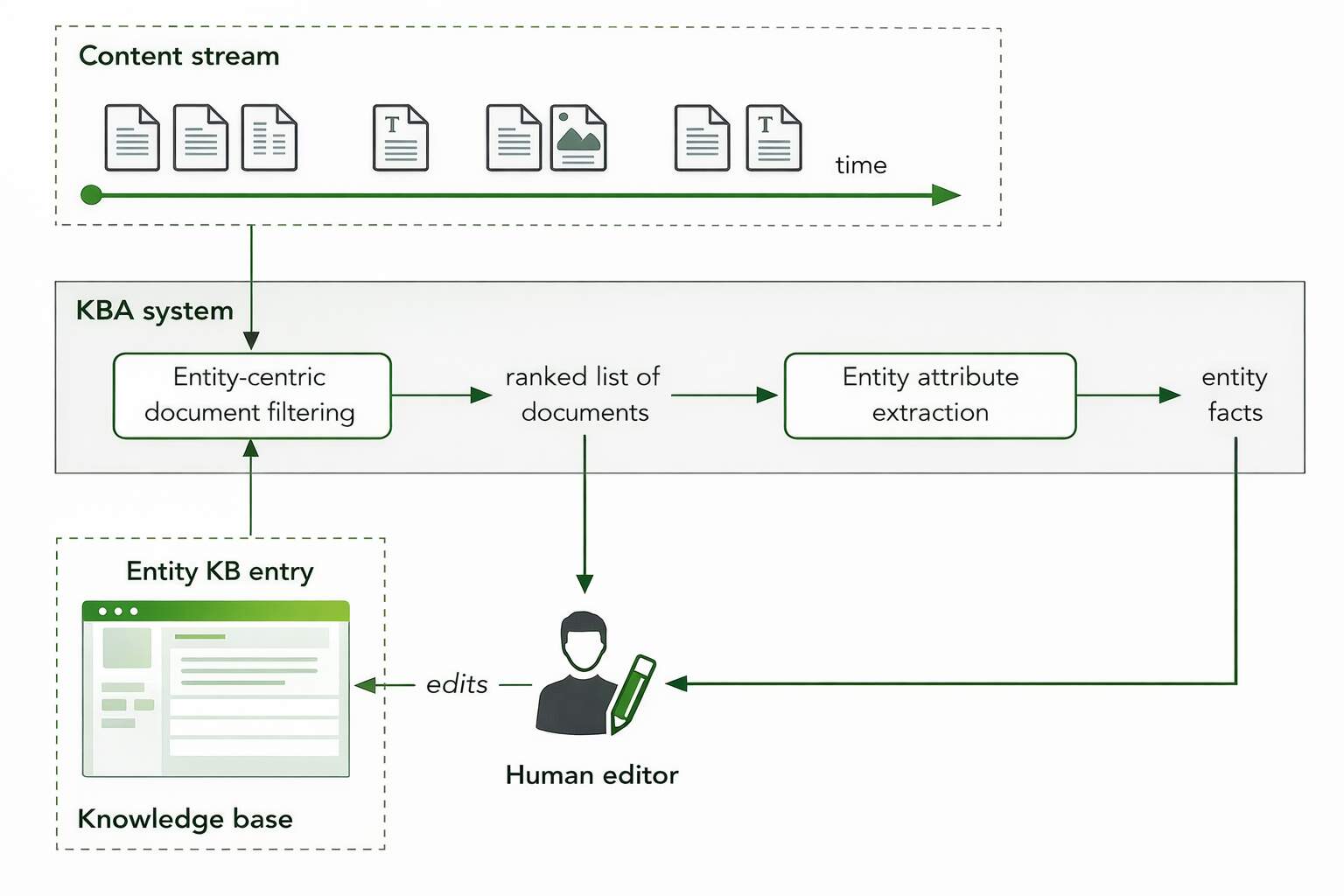
To understand how Google measures an entity’s authority, it’s important to look beyond just backlinks. Signals that matter include structured data, author bios, reviews, mentions, and consistent category alignment. Together, these elements support a strong entity-based SEO strategy, where clear information gives you an edge over competitors.
It’s important to understand the difference between domain authority and entity authority. Domain authority looks at the strength of links to a website, while entity authority focuses on the credibility of a person or organization. Entity authority is often easier to verify. For example, a founder quoted in well-known publications builds authority faster than a blog that just collects random backlinks.
Why Entity Authority Matters More in 2026
Google no longer just lists websites; it summarizes and recommends them. Sometimes, it provides answers without needing a click. A Study found that 57% of searches now end without a click. This changes everything. Simply ranking first isn’t enough anymore. You must be the brand that Google trusts enough to mention. In the discussion of Entity vs. Domain Authority, entities are favored because search systems can easily verify them using multiple reliable sources.
Here’s the real risk: brands that focus only on domain metrics may still rank, but they won’t be referenced in AI-generated answers. You can see SaaS brands rank in the top three and still lose pipeline because no one recognizes their name. If your brand lacks consistent identity signals, structured data, credible mentions, and clear topic ownership, search systems struggle to verify you. When verification is weak, visibility drops; especially in AI summaries and recommendation features. Simply ranking first isn’t enough anymore. You must be the brand that Google trusts enough to mention.
According to sources, 68% of online experiences start with a search engine. Today, search engines do more than rank pages; they select sources. Because of this, clarity, validation, and in-depth topics are more important than ever. Brands that focus on building clear entity signals create lasting visibility that goes beyond traditional blue link rankings.
Domain Authority Still Matters
Let’s be clear: domain strength still affects how easily search engines discover and rank your pages. Backlinks remain one of the strongest ranking signals. A Backlinko study analyzing 11.8 million Google results found that the number of referring domains correlates strongly with higher Google rankings. But correlation isn’t credibility. In the ongoing debate of Entity vs. Domain Authority, link power improves access, while trust determines influence and citation in AI-generated results.
If you’re wondering how domain strength still contributes in 2026, here’s what that really means in practical terms:
- Earning links from trusted industry publications increases crawl frequency and ranking competitiveness.
- Strengthening internal linking distributes authority efficiently across important pages.
- Fixing crawl errors ensures search engines can properly index and evaluate your content.
- Publishing citation-worthy resources naturally attracts high-quality backlinks over time.
These actions build structural authority, not brand recognition.
Domain authority helps you rank. Entity authority helps you get chosen. But without entity validation, strong link profiles plateau. In Entity vs. Domain Authority, domain power opens the door, while entity credibility determines whether your brand gets referenced, summarized, or trusted in AI-driven search ecosystems.
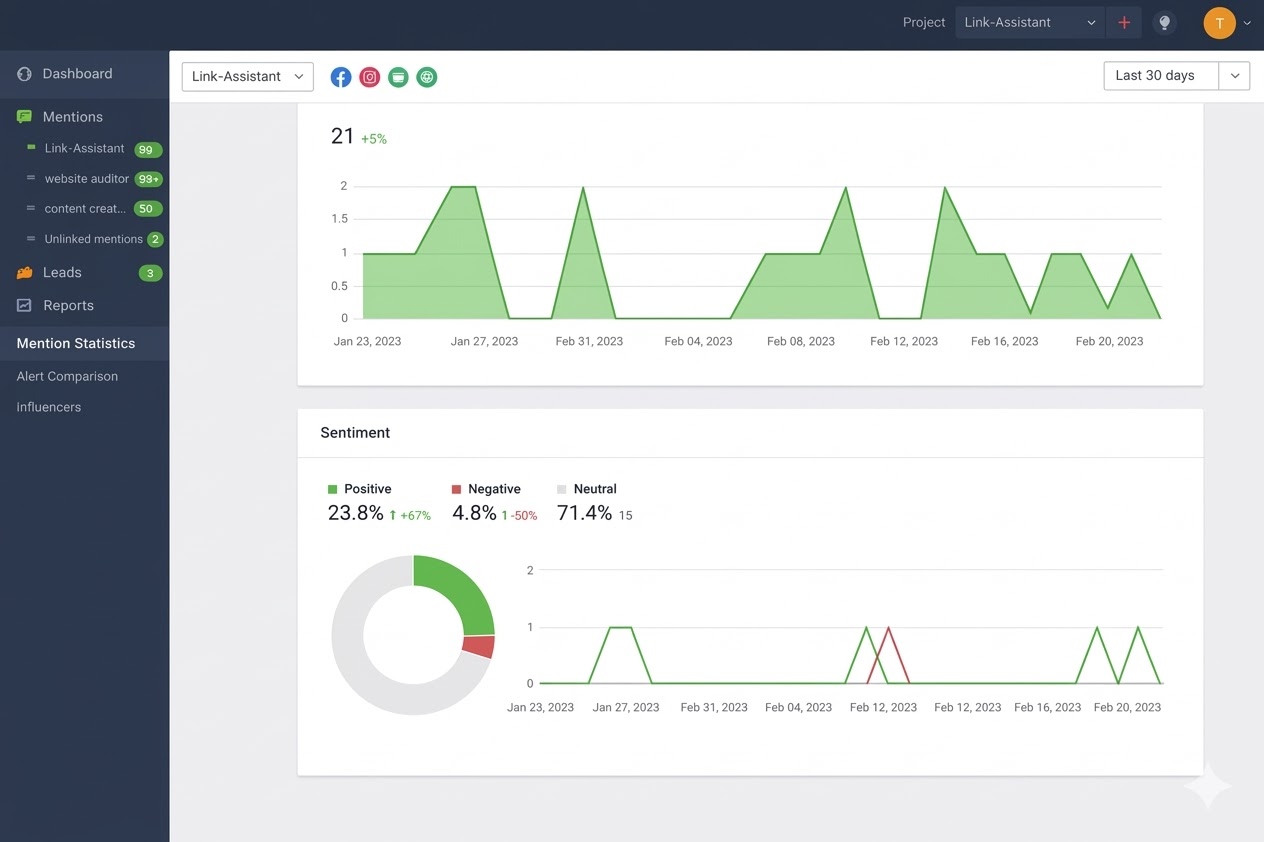
Entity Authority vs. Domain Authority
Understanding the difference between these two authority models can help you decide how to invest your time and budget. Many businesses focus too much on backlink scores, unaware that modern search systems consider broader patterns of recognition. This difference becomes clearer when you compare the two models side by side.
| Factor | Domain Authority | Entity Authority |
| Source | SEO tool–generated metric based primarily on backlink profile data | Recognition developed organically across web platforms, mentions, and knowledge systems |
| Primary Driver | Quantity and quality of referring domains pointing to website | Consistent identity signals, topical relevance, and credibility associations |
| Validation Method | Calculated score within proprietary SEO tools like Moz or Ahrefs | Cross-platform consistency validated through profiles, citations, schema, and mentions |
| Trust Signal | Indicates relative link competitiveness, not guaranteed credibility | Reflects perceived expertise, reputation, and real-world recognition |
| Manipulation Risk | Can be inflated through aggressive link-building tactics | Difficult to fake due to required consistency and third-party validation |
The table shows a key difference. SEO tools calculate domain authority using backlink data to predict how well a site can rank. This score is based on comparisons. In contrast, entity authority develops naturally from consistent mentions, related topics, structured data, reviews, and reputation on trusted platforms. Tools track one, while the other is visible online.
When comparing entity and domain authority, the strategy is clear: strong backlinks help with visibility, but solid credibility builds lasting trust. Businesses that combine solid infrastructure with good recognition build authority that search engines and AI systems can easily validate and reference.
What Actually Matters in 2026
In 2026, authority is no longer just one measure; it’s a system built on recognition, validation, and clarity. Successful brands don’t just focus on building backlinks; they also build their identity. The first part is entity clarity: this means using consistent names, positions, and categories across all digital platforms. If your brand description differs across platforms, it weakens the recognition search systems need.
The second and third layers focus on deepening understanding and providing proof. Clearly defining the topic helps build authority by grouping related content rather than posting information at random. Using evidence-based materials; like case studies, benchmarks, and original data; builds trust. Demand Metric reports that content marketing generates three times as many leads as paid search and costs 62% less. The more your content supports a clear position, the better it performs.
The final steps focus on validation and organization. Strong references from trusted publications increase credibility. Using clear formats such as structured data, FAQs, and a consistent schema helps search engines better understand the information. When discussing Entity and Domain Authority, the stack approach ensures that authority builds up across different platforms rather than spreading thinly across separate pages.
How to Build Entity Authority
Phase 1: Identity Alignment (Weeks 1–2)
- Standardize brand name, tagline, and positioning across all platforms
- Fix inconsistent NAP (Name, Address, Phone) details
- Strengthen About, Contact, and author bio pages
- Add clear editorial guidelines and credibility signals
Phase 2: Topic Ownership (Weeks 3–6)
- Publish one authoritative pillar page on your core topic
- Develop 6–10 supporting cluster articles
- Interlink content logically to reinforce subject relationships
- Include FAQs and structured content blocks
Phase 3: Validation & Proof (Weeks 7–12)
- Publish case studies with measurable results
- Release original research or benchmark reports
- Earn mentions from relevant industry publications
- Convert testimonials into narrative-driven success stories
Taking action builds recognition. Your authority increases when you back up your claims with evidence and share them on different platforms. To stay visible over time, focus on clarity and proof rather than just chasing scores.
How to Measure Entity Authority
Stop focusing on just one score. Real authority shows up in patterns. First, check the growth of searches for your brand name. When more people search for your company directly, it means awareness is growing. Next, look at non-branded impressions for your main topics in Google Search Console. These indicate whether search engines connect your brand with specific subjects. This connection is important when discussing Entity vs. Domain Authority.
Here’s a simple diagnostic: if branded search is rising but non-branded impressions aren’t, you’re building awareness but not topical authority. That means people recognize your name, but search engines don’t consistently connect you to a specific expertise area. Strong topical authority requires depth; clusters, internal linking, and subject consistency across multiple pieces of content.
You should track mentions of your brand by others, check if reviews are consistent, and use structured data. Keep an eye on conversion rates on information pages, as trust can boost engagement and lead generation. According to Ahrefs, 96.55% of pages get no organic traffic. This shows that visibility comes from being noticed, not just from creating a lot of content. In today’s search landscape, you build authority by appearing consistently in search results, across different platforms, and in AI-generated summaries.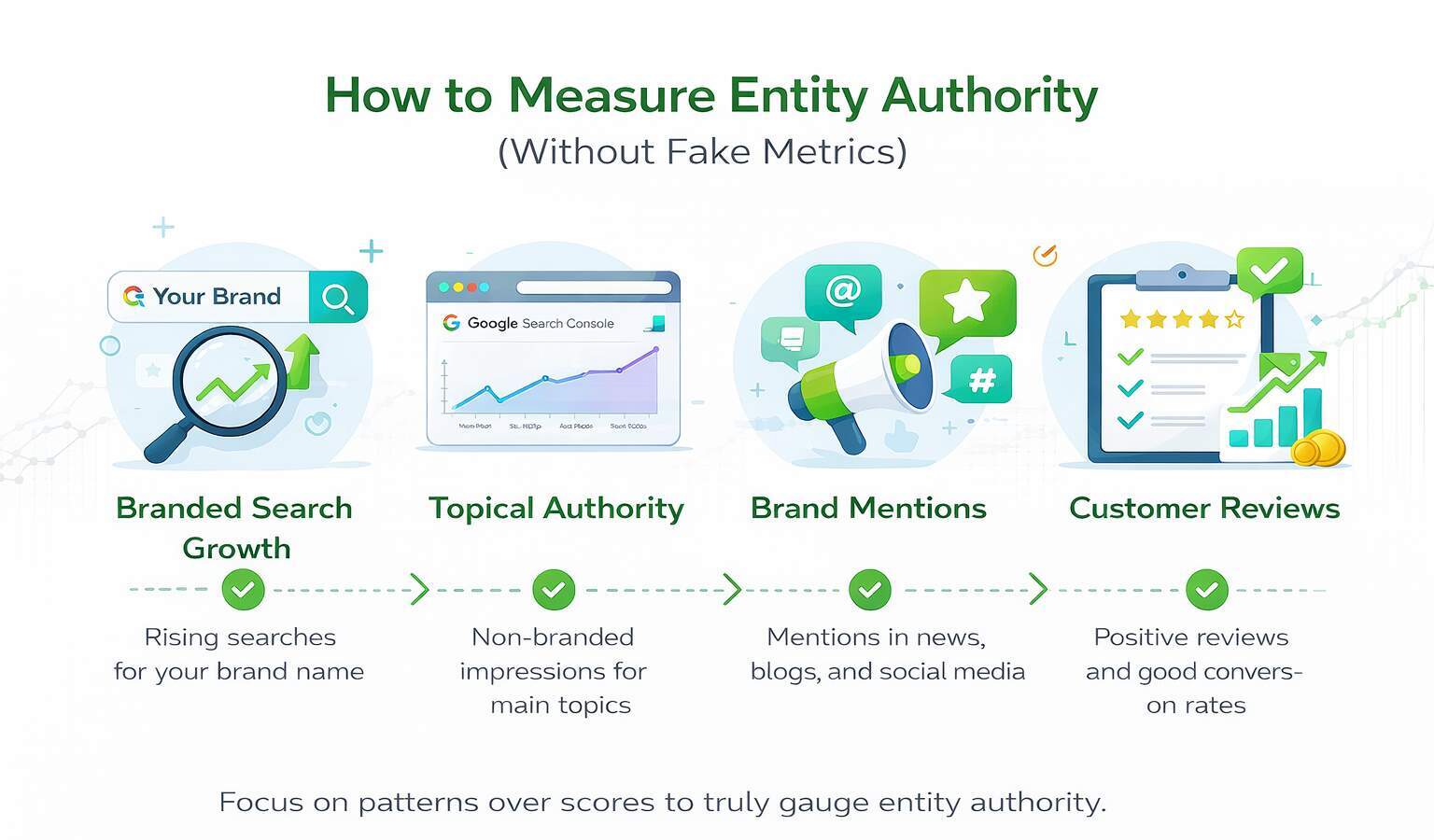
Performance Tracking Plan
First 30 Days: Foundation Signals
- Establish baseline metrics for branded and non-branded impressions in Google Search Console.
- Monitor crawl health, indexing coverage, and technical errors.
- Audit internal linking to ensure pillar and cluster pages are connected logically.
- Verify brand name, description, and NAP consistency across directories and profiles.
- Track early engagement signals (bounce rate, average time on page).
Goal: Confirm that foundational identity and structural signals are aligned, crawlable, and measurable.
Days 31–60: Topic Reinforcement
- Measure the performance of the pillar and supporting cluster content.
- Track non-branded keyword impressions related to your core topic.
- Analyze engagement depth (scroll tracking, session duration, assisted conversions).
- Review internal link flow and adjust based on performance gaps.
- Monitor growth in topical visibility relative to the initial baseline.
Goal: Validate that topical authority is strengthening and content clusters are gaining traction.
Days 61–90: Recognition & Validation Growth
- Track growth in branded search queries and brand-related impressions.
- Assess earned mentions and backlink quality (not just quantity).
- Identify citations in third-party publications or directories.
- Check for inclusion in AI-generated summaries, featured snippets, or knowledge panels.
- Compare conversion rates against the baseline to measure the impact on trust.
Goal: Confirm that authority signals are translating into measurable recognition, visibility, and conversion improvement.
The Culmination
In 2026, authority is not just about boosting scores from third-party tools. It’s about creating a trusted and recognizable entity that search systems can easily understand and refer to. While domain strength helps with visibility and ranking, it does not assure credibility. Building recognition requires consistent identity signals, expertise in specific topics, clear structure, and evidence-based resources.
Businesses that succeed know that their reputation grows when their infrastructure and credibility work together. Clear branding, reliable content, and trustworthy references create a strong advantage in AI-driven search results. When your brand is consistently linked to a single topic across many trusted sources, search engines are more likely to trust you.
To achieve lasting visibility, you need alignment. Strong technical foundations help you grow, but having credibility is what truly influences others. Rather than debating which metric is more important, focus on building a clear, trustworthy authority that your audience can see everywhere they look. If you’re ready to build long-term search credibility instead of chasing vanity metrics, partner with eSign Web Services to create an authority strategy built for the AI-driven future.
Stop Chasing Scores. Start Building Authority
You can keep chasing metrics that look impressive on reports. Or you can build a brand search engines genuinely trust and reference. If you’re ready to become a recognized entity—not just another website in the rankings—we’re here to help. Request a free quote or call eSign Web Services today and start building authority that gets you chosen, not just ranked.
Frequently Asked Questions (FAQs)
Question: Is Domain Authority a Google ranking factor?
Answer: No. Domain Authority (DA) is a third-party metric created by SEO software companies to estimate a website’s ranking potential, mainly based on link signals. Google has repeatedly confirmed it does not use “DA” in its ranking systems. It can be useful for competitive comparison or directional benchmarking, but it is not a performance KPI. A higher DA does not guarantee rankings, traffic, conversions, or trust. Focus on real visibility, relevance, and credibility instead.
Question: What is entity authority in SEO?
Answer: Entity authority refers to the credibility, recognition, and trust associated with a brand, person, or product across the web. It develops through consistent identity signals, clear topic associations, reputable mentions, and verifiable proof of expertise. Search engines and AI systems evaluate how consistently and confidently your entity can be validated across multiple sources. When your brand is clearly defined and widely referenced in context, it becomes easier for algorithms to trust, summarize, and recommend.
Question: Does entity authority replace backlinks?
Answer: No. Backlinks remain an important credibility and discovery signal in SEO. However, their value today depends more on quality, context, and relevance than on sheer volume. Entity authority complements backlinks by strengthening identity, reputation, and trust signals beyond your own website. In 2026 SEO, links alone are not enough. Search systems evaluate whether your claims are supported by consistent information, third-party validation, and proof-driven content across the broader digital ecosystem.
Question: How do I know if my brand is an “entity”?
Answer: Your brand functions as an entity if it appears consistently across the web with a clear, unified identity. This includes your website, social profiles, business directories, review platforms, and third-party mentions using the same name, description, and positioning. Structured data, author pages, and consistent branding strengthen recognition. The key is clarity: search systems should easily understand who you are, what you do, and what you’re known for without confusion or ambiguity.
Question: What’s the fastest way to build entity authority?
Answer: The fastest path to building entity authority is combining clarity with proof. First, clean up identity signals across your website and external profiles to ensure consistency. Strengthen About pages, author bios, and mission statements. Then publish evidence-backed assets such as case studies, benchmarks, methodologies, and original research. Support your claims with data and real outcomes. Finally, earn a handful of high-quality industry references. Trust grows fastest when credibility is clearly demonstrated and independently reinforced.
Question: Why does entity authority matter for AI search results?
Answer: AI-driven search systems prioritize sources they can validate, summarize, and cite confidently. Entity authority helps because it allows AI models to cross-reference consistent information across multiple trusted sources. When your brand has aligned descriptions, credible mentions, and proof-backed content, it reduces ambiguity. This increases the likelihood that AI systems will reference your brand in generated answers, overviews, and recommendations. In short, stronger entity signals make your content safer and more reliable to reuse.
Question: Can a low-DA website still build entity authority?
Answer: Yes. A website with a low Domain Authority score can still build strong entity authority. Third-party metrics may lag behind real-world recognition. By maintaining consistent identity signals, focusing deeply on specific topics, and earning credible mentions from relevant sources, a smaller site can grow recognition and trust. Publishing authoritative, well-structured content and demonstrating expertise can improve visibility even before traditional authority metrics increase. Entity recognition often develops faster than external scoring systems reflect.
Question: How does topical authority connect to entity authority?
Answer: Topical authority refers to the depth, breadth, and consistency of your coverage on a specific subject. Entity authority strengthens when your brand is repeatedly associated with that topic across content, mentions, and links. If you build comprehensive topic clusters, interlink them effectively, and support them with evidence and examples, search systems begin associating your entity with expertise in that area. Over time, your brand becomes “known for” that topic, reinforcing both topical and entity authority.
Question: What’s the biggest mistake brands make in 2026 SEO?
Answer: The biggest mistake brands make is optimizing for vanity metrics instead of building trust. Chasing Domain Authority, publishing thin content, or buying low-quality backlinks may create temporary spikes but weak long-term credibility. Modern search systems evaluate clarity, consistency, proof, and reputation. If your content lacks depth or cannot be confidently reused by AI systems, it will struggle to perform. Sustainable SEO in 2026 prioritizes verifiable expertise, structured information, and meaningful value over shortcuts.
Question: What should I prioritize first: entity authority or domain authority?
Answer: Start with foundational elements such as technical health, site structure, and crawlability. Then prioritize building entity authority through consistent identity signals, focused topical coverage, and proof-based content assets. While domain-level strength supports overall growth, entity authority drives trust, differentiation, and inclusion in AI-generated results. The most effective strategy builds both simultaneously, with entity clarity guiding your content and reputation strategy, ensuring sustainable visibility across traditional and AI-powered search systems.
Author Details

Ashwani Kumar Sharma
Ashwani has been actively involved in SEO services since 2005. His expertise and distinctive work approaches have made him one of the most experienced and trusted SEO experts in the industry. He is a certified SEO and Google Ads professional. He also has strong business development skills in advanced SEO, PPC, and digital marketing strategies.


