



How to Optimize Content for AI Overviews, SGE & Voice Search Together

Key Takeaways
- Optimize for SERP inclusion, not rankings, AI answers often remove the need to click through.
- Lead each section with a 30–60 word answer block that stands alone and quotes well.
- Write for three outputs: quick summary, follow-up conversation, and speakable voice response.
- Use clear headings and definitions so AI can extract meaning without scanning long introductions.
- Add one mini-scenario per concept to prove real-world applicability and reduce misinterpretation risk.
- Build topical authority with clusters: a pillar guide plus interlinked subtopics covering decisions and mistakes.
- Strengthen trust signals: named authors, credentials, fresh updates, and citations beside every benchmark.
- Make content “speakable”: short sentences, simple words, and decision shortcuts like “best if…” lines.
If your SEO plan still assumes “rank #1 = win,” it’s time for a reset: the SERP is the new homepage, and you’re competing with more than other blogs. In AI-powered search, users can get complete answers without visiting your site. Semrush reported that 58.5% of U.S. searches in 2024 ended without a click. That shifts the goal from “earn the click” to “earn inclusion”, becoming the source AI systems choose to summarize, quote, and cite. It also means old-school keyword writing isn’t enough anymore. If your headings are vague or your main point is buried, AI will skip your page and pull from someone who’s clearer.
AI Overviews amplifies this shift. In March 2025, Semrush reported that AI Overviews appeared in 13.14% of searches, up from 6.49% in January 2025. So your content has to perform in three modes: a fast summary, a follow-up conversation, and a speakable answer, without reading like a robotic checklist.
So what actually works? Build crisp answer blocks, add credibility signals, and write like a professional; direct, specific, and usable.
Quick checklist:
- Place a 30–60 word direct answer near the top of the relevant section,
- Add one concrete mini-scenario showing the advice in action, and
- End with a repeatable next step a reader, or assistant, can act on today.
In this blog, we’ll break down how to earn visibility in AI Overviews, voice answers, and zero-click results, not just rank on page one. You’ll learn how to build topical authority, structure pages for easy summarization, and write in a way search systems can confidently reuse. By the end, you’ll have a practical framework for turning your site into a source that gets referenced, not ignored.
From Rankings to an AI-Trusted Source
When you’re searching for information, focus on “sources” rather than just individual pages. To attract AI Overviews, start with a strong plan: create a main page and link it to nine related articles that answer important follow-up questions your customers might have. A good way to do this is to outline a topic map with ten sections: one main guide and nine subtopics. Make sure each supporting article links back to the main page and to two other related articles. This keeps the topic clear and connected. Include one “proof” element on each page, like a quick metric or a mini case note, to show that your expertise is based on real experience.
Clarity is a key sign of credibility. When a section starts with a clear definition and explains why it matters, readers, and search systems, understand it faster. Backlinko analyzed Google Home results and found that the average voice answer is 29 words. A simple way to follow this “29-word rule” is to open with a short, direct answer first. Then expand with details underneath. If the idea can’t be explained simply, it usually needs a rewrite.
To show that you are a reliable source of information, include the names of authors, their qualifications, and the date of updates. Use consistent terms in your posts so search engines can understand your content better, this is called entity-based SEO. Here’s what you can do: add an author box, cite your sources for key claims, and update your important pages at least every three months to keep your information current. Remember, consistency is more important than quantity.
How do you write content AI can summarize?
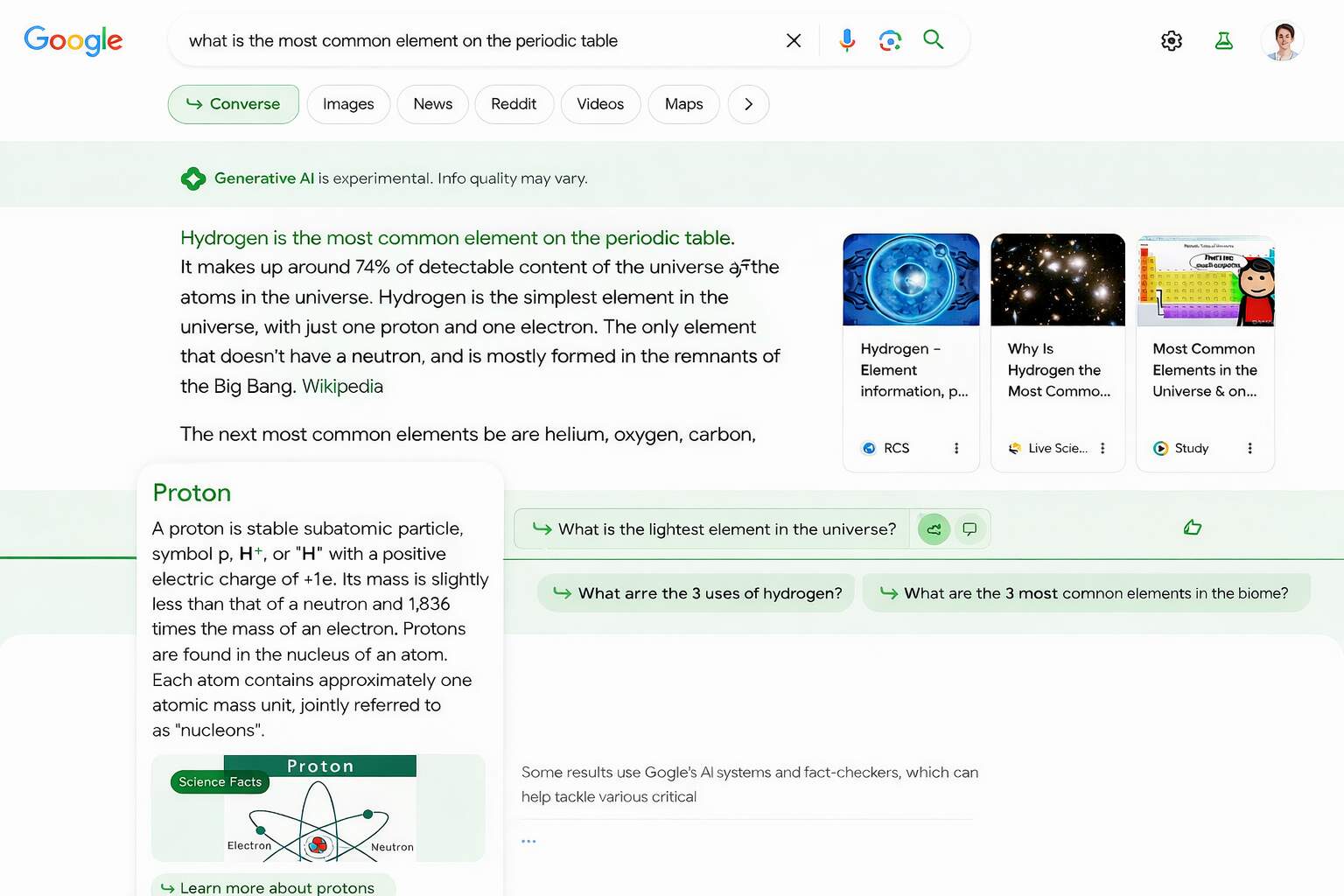
To get your content noticed in AI Overviews, write clear and concise sections that can stand alone without extra details. Start with the main answer, then provide context and evidence. In January 2025, Semrush found that AI Overviews appeared for 6.49% of queries, and this increased to 13.14% by March 2025. This growth means more competition for attention, so the best pages should be easy to summarize in the first 60 seconds. Aim for a clear answer block followed by supporting details.
Use simple language without oversimplifying. Backlinko notes that voice search results are easy to understand and usually around a 9th-grade reading level. This means using words like “use” instead of “utilize,” breaking long sentences into shorter ones, and explaining one term in each paragraph.
Here’s a mini checklist: stick to one idea per sentence, give one example for each concept, and avoid long introductions. If you need to provide background information, include it after the main answer.
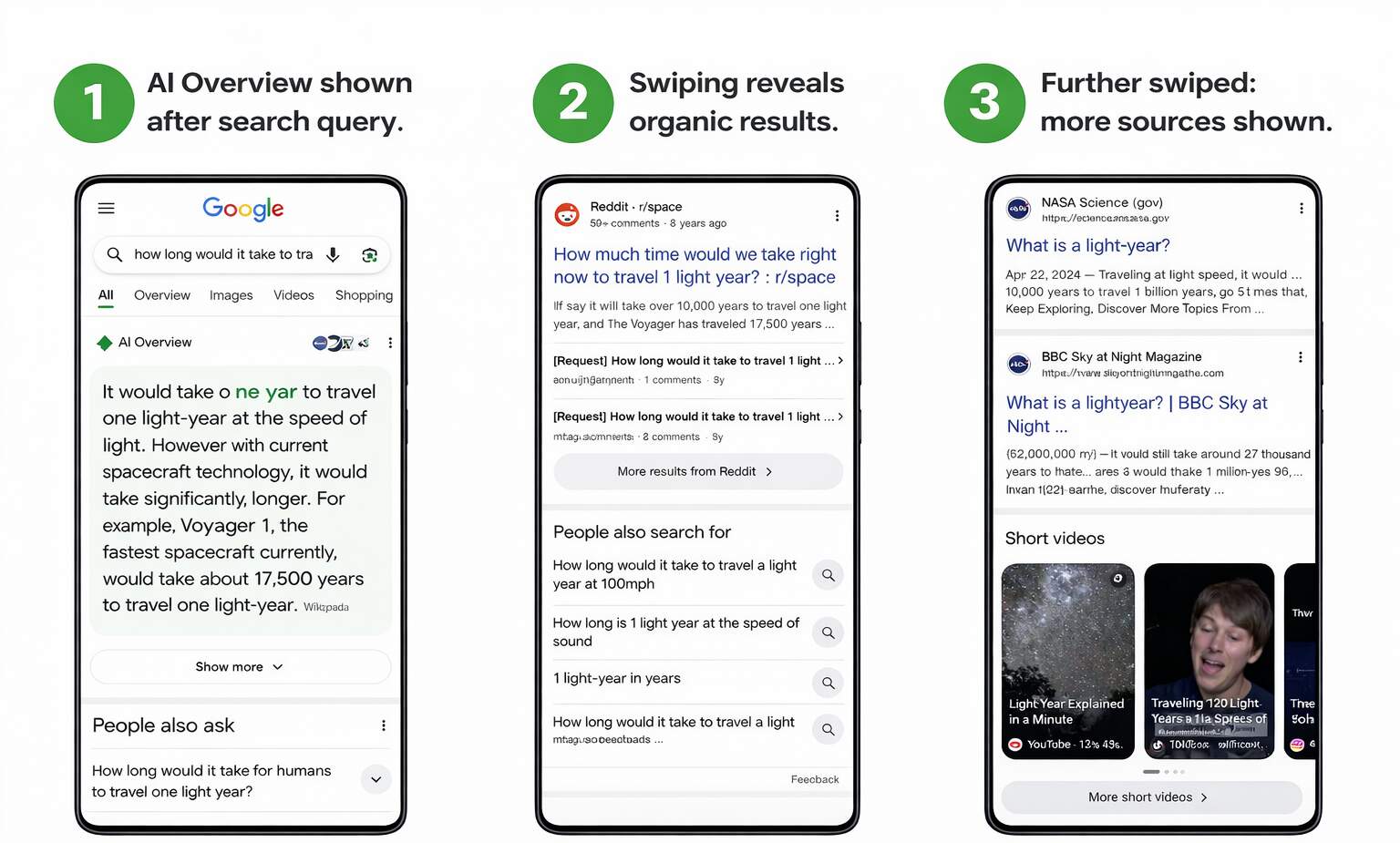
Design for multiple formats: summary, conversation, and full read. Modular sections, definition → steps → example, travel well across SGE optimization surfaces and help you optimize content for AI search without sounding templated in the real world. Action step: add a 3–5 step process list and a short example right after each key definition. Then add a one-line “common mistake” to prevent misreads.
Designing Content for Voice & AI Queries
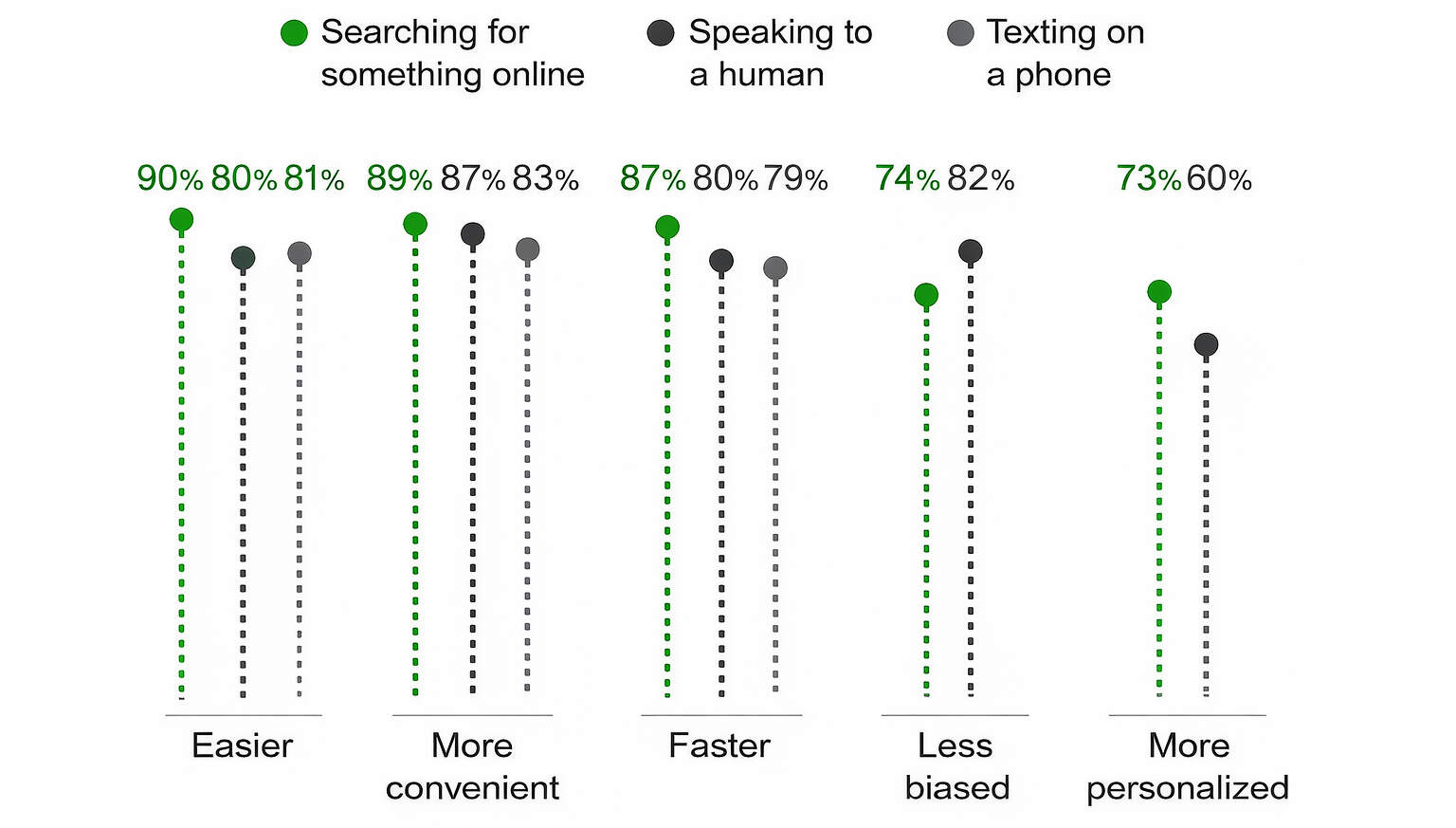
Voice search is booming because talking is faster, natural, and practical. People speak in full sentences, ask follow-ups, and often want help deciding, content must match this style to appear in voice results and AI summaries.
Speak Like Humans Do
Write as if you’re talking to someone directly. Use natural questions and phrasing people actually say to make your content easy to understand, conversational, and more likely to appear in voice and AI search results.
- “How do I…?”
- “What’s the best…?”
- “Is it worth…?”
When your content mimics real speech, it becomes easier for voice assistants to interpret and for users to engage with, increasing the chance your answers are selected for voice responses or AI-generated summaries.
Put Fast Answers First
Voice users want quick, precise answers. Structure your content to deliver the solution immediately, followed by a brief explanation and next steps, so it’s easy for assistants to read aloud and users to act upon.
- 1–2 sentence direct response
- Short definition + benefit
- Next step
Clear, concise answers improve usability and engagement, making your content more likely to appear in voice results. Users get what they need fast, and your content becomes a reliable, repeatable source for assistants.
Add Decision Shortcuts
Many voice searches aim to make a choice. Include simple guidance like “Best choice if…” or “If you need X, choose Y” so users can quickly decide and assistants can summarize recommendations efficiently.
- “Best choice if…”
- “If you need X, go with Y.”
Decision shortcuts create actionable, conversational content that helps users select the right option quickly while boosting your chances of being featured in voice search answers or AI assistant recommendations..
Reduce Confusion, Increase Clarity
Voice search favors clarity. Avoid jargon, long introductions, or complex sentences. Focus on practical, outcome-driven answers that are easy to understand, so both users and voice assistants interpret your content correctly.
Keep It Speakable
Short sentences work best:
- Core answers under 35 words
- Avoid nested clauses
- Use short, actionable lists
Simple, neutral, and concise answers reduce misunderstanding, keep users engaged, and make your content highly compatible with voice assistants and AI summaries, ensuring information is conveyed accurately and effectively.
How do you win visibility in zero-click search
Zero-click Search isn’t a loss, it’s free visibility at the exact moment people need answers. Semrush reports 58.5% of U.S. searches ended without a click in 2024. That doesn’t mean “SEO is dead.” It means your content has to earn visibility where the answer lives. Treat it like SERP PR: your goal is to be the cited explanation users remember, without feeling like an ad today. Quick test: could someone repeat your answer after one read?
To get referenced, make your content quotable. Use crisp definitions, rules of thumb, and clear comparisons. Example: “If your page answers the question in one paragraph, it’s easier to cite than a 900-word warm-up.” Add sources beside stats and include one “reference sentence” per section that can be lifted without losing meaning, this is content for AI answers in practice. Quick checklist: definition → cited fact → example. Then expand only if it adds clarity.
Then build recall. Repeat the same framing across related posts, and ensure your brand voice stays consistent (this supports semantic search because meaning remains stable). Action list: add a short ‘Key takeaway’ line per section, include a “next step” sentence, use descriptive headings, and create internal links that keep readers moving even when initial clicks drop. Add one short comparison (A vs. B) to speed up decisions.
Building Authority Across Related Topics
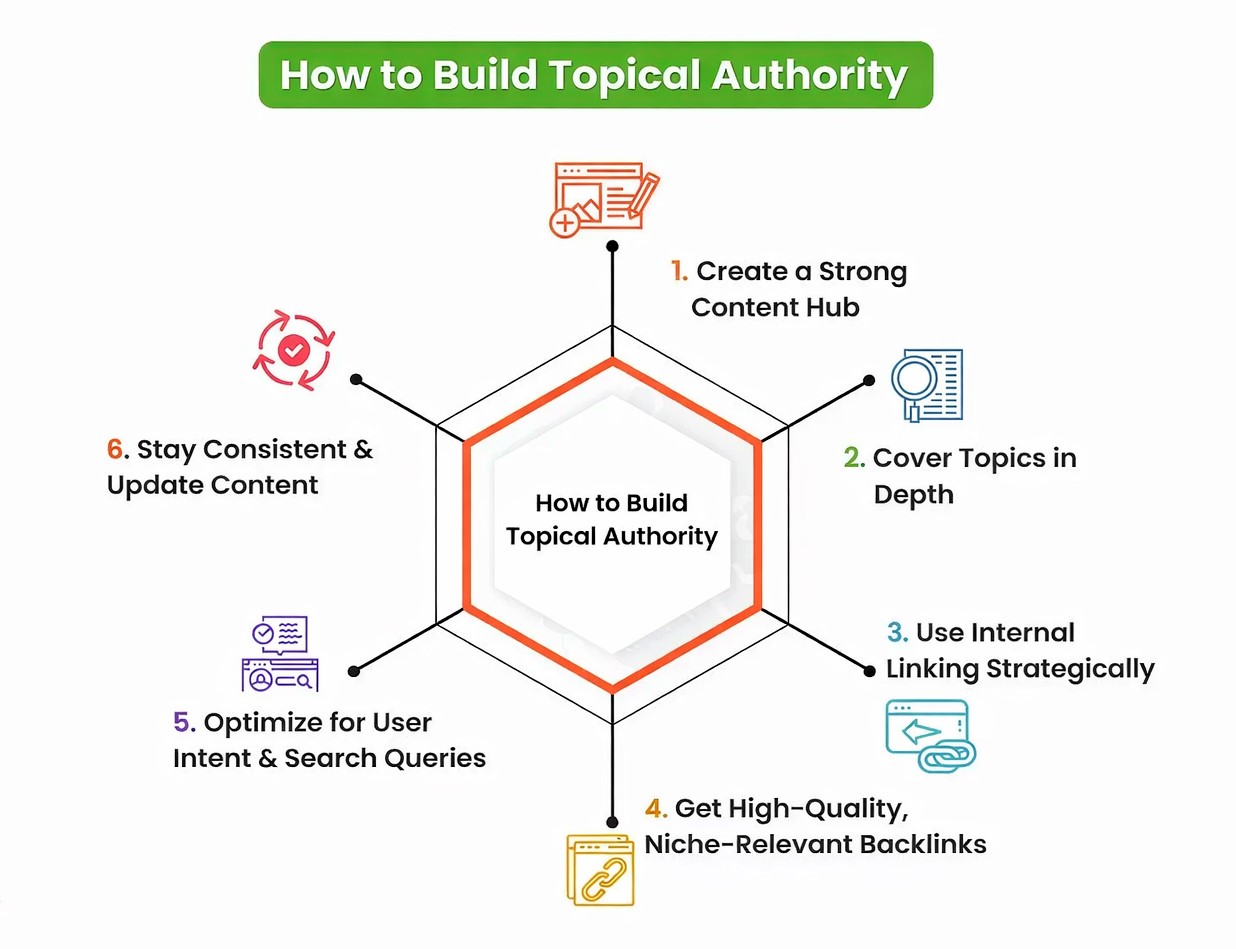
Topical coverage is your moat. AI systems evaluate whether you own a topic ecosystem, not whether you wrote one post. Semrush’s AI Overviews study shows visibility varies by industry and query type over time. So, build clusters that cover definitions, comparisons, mistakes, and implementation. Add one “tool” asset, too (a template, calculator, or checklist), because assets attract citations. Practical step: for every pillar, publish at least three “decision” posts (best options, vs. comparisons, and common errors).
Connect subtopics with purposeful internal links. Don’t just link “here” to “click here.” Link concepts to concepts: definitions to guides, guides to checklists, and checklists to templates. This reinforces topical authority and helps engines understand how your pages relate. Checklist:
- Each new post links to the pillar.
- Link to two siblings.
- Link to one deeper resource (template, glossary, or case note).
- This turns your blog into a library.
Keep terminology consistent and content fresh. Use a mini style guide so your team doesn’t alternate between three names for the same thing (that weakens AI search optimization). Update priority pages on a schedule: fix outdated examples, refresh stats, add new FAQs when sales calls change, and tighten the first paragraph until it reads like the answer. That’s how you stay present in AI Overviews even when the SERP keeps evolving.
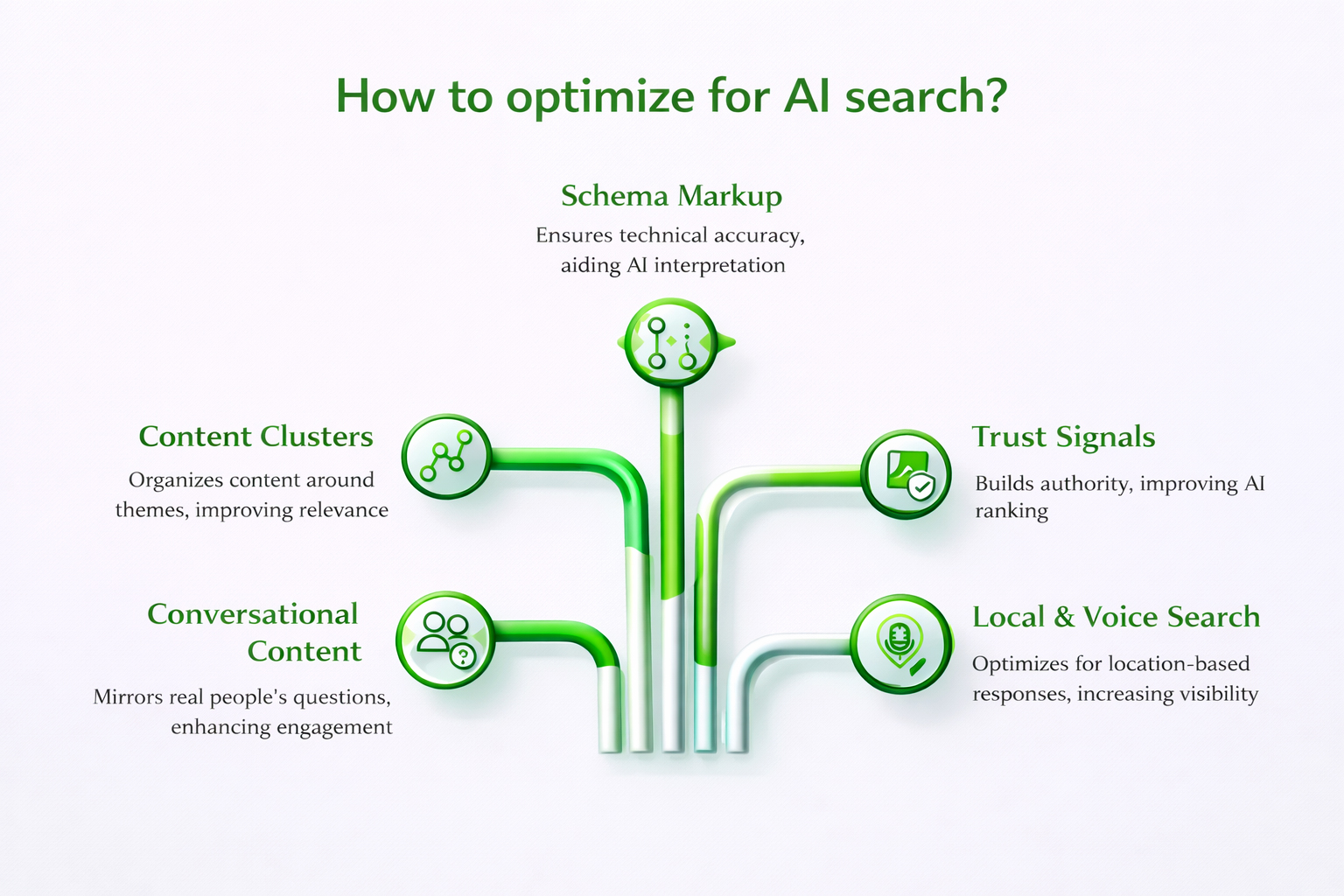
Design for interpretability, not just rankings. Use clean structure, clear definitions, and explicit decision rules. Add a short “when to use this” and “when not to use this” section to key guides. Micro-checklist:
- Who this is for.
- One prerequisite.
- One clear outcome.
That improves reuse in SGE optimization contexts, gives your copy the crispness voice search SEO needs, and supports optimize content for AI search as systems stitch answers from multiple sources in a search generative experience flow.
Build resilience by treating content like a product again: roadmap, QA, refresh cycle. Publish fewer, better pieces, then iterate based on query data. For reporting, pair Search Console with a simple spreadsheet that logs the questions you’re winning, losing, and missing. Action checklist: maintain a topic map, run quarterly updates, and create a measurement dashboard that tracks visibility and outcomes, not just sessions. This is how you stay competitive in AI Overviews and voice assistant search without chasing every interface change month after month.
Competitor Snapshot (What Wins Where)
| What the search surface rewards | What “good” looks like | Common competitor miss | Your fix |
| Summaries | Short definition + proof | Long intros, buried answer | Put a 30–60 word answer block first |
| Conversations | Follow-up-ready sections | One-note content | Add “if you mean X, do Y” lines |
| Spoken answers | Short, readable sentences | Complex clauses | Rewrite key answers for speakability |
| Reference selection | Clear claims + sources | Opinions with no support | Cite data next to claims |
| Topic trust | Cluster coverage | Random posts | Build interlinked topic ecosystems |
The Final Thoughts
The old SEO finish line used to be simple: climb the rankings and collect clicks. Now the finish line moved, and it’s sitting right inside the SERP. When AI Overviews summarize, assistants speak answers out loud, and users get what they need without visiting a page, your content isn’t “competing for position” anymore. It’s competing for selection.
That’s the new advantage: build pages that are easy to extract, hard to misunderstand, and confident enough to cite. Start with clear answer blocks. Back them with proof. Keep sections modular so AI can lift the right part for the right moment; summary, conversation, or voice response, without losing meaning. Then widen the moat with topical authority: clusters that explain the topic from every angle (definitions, comparisons, mistakes, and implementation), all connected with intentional internal links.
Most importantly, measure success the way search now behaves. Don’t obsess over sessions alone. Track impressions, citations, brand lift, and assisted conversions; because visibility is happening even when the click doesn’t. When your site becomes the explanation AI chooses, you stop chasing the SERP and start shaping it. That’s how you stay present while the interface keeps changing.
Want Your Brand to Be the Source AI Pulls From?
If you’re ready to stop writing “SEO content” and start building AI-ready answers, let’s make it real. eSign Web Services can help you map the topic ecosystem, structure pages for AI Overviews and voice, tighten credibility signals, and set up tracking that proves impact beyond clicks. No fluff, just a practical plan your team can execute and measure.
Contact us today, and we’ll turn your best pages into the ones search systems actually choose.
Frequently Asked Questions:
Question: What are AI Overviews and how do they affect content visibility?
Answer: AI Overviews present summarized answers directly on search results pages using information selected from trusted sources. This changes visibility from simply ranking pages to being cited within AI-generated responses. To appear in AI Overviews, content must be clearly structured, factually accurate, and easy for AI systems to interpret. Brands that publish authoritative, well-organized content across related topics are more likely to be referenced, increasing brand exposure even when users do not click through to websites.
Question: How is SGE different from traditional search results?
Answer: Search Generative Experience (SGE) provides conversational, contextual answers rather than a list of links. Users can explore follow-up questions within the same interface, which changes how content is discovered and consumed. For content to perform in SGE, it should address user intent clearly, provide concise explanations, and support deeper exploration. Pages that demonstrate topical authority and offer structured information are more likely to contribute to AI-generated responses in conversational search environments.
Question: Does optimizing for voice search require a different content strategy?
Answer: Voice search favors natural language and clear, concise answers that can be easily spoken by assistants. While the core content principles remain the same, optimization for voice search emphasizes conversational phrasing, direct responses to questions, and simple sentence structures. Content designed for voice should anticipate how users speak, not just how they type. This approach also improves performance in SGE and AI Overviews, making voice optimization part of a unified AI search strategy.
Question: Can traditional SEO still help with AI-driven search visibility?
Answer: Yes, traditional SEO remains foundational, but it is no longer sufficient on its own. Strong technical SEO, clear site structure, and high-quality content help AI systems crawl and understand pages. However, AI-driven search also values semantic clarity, topical authority, and content structure that supports summarization. Brands should evolve from keyword-focused optimization toward building interconnected content that clearly explains concepts, answers questions, and demonstrates expertise across a topic area.
Question: What kind of content is most likely to appear in AI Overviews?
Answer: Content that provides clear definitions, concise explanations, and structured answers to common questions is more likely to appear in AI Overviews. AI systems prefer information that can be easily extracted and summarized without ambiguity. Pages that demonstrate subject-matter expertise, include helpful context, and are organized with clear headings improve their chances of being referenced. Consistent topical coverage across multiple related pages further increases credibility and visibility in AI-generated summaries.
Question: How can brands build authority for AI-powered search experiences?
Answer: Authority in AI-powered search is built through consistent, in-depth coverage of related topics over time. Creating interconnected content clusters, maintaining accuracy, and updating information regularly signals expertise to AI systems. Clear structure, reliable sourcing, and consistent terminology help AI models associate a brand with specific subject areas. Authority is not created by one article alone, but by a sustained strategy of publishing useful, well-organized content that demonstrates long-term knowledge leadership.
Question: Will zero-click searches reduce website traffic permanently?
Answer: Zero-click searches can reduce direct traffic for certain informational queries, but they also create new forms of visibility through AI Overviews and SGE. Being cited within AI-generated answers increases brand exposure and trust, even without immediate clicks. Over time, this visibility can influence user perception and brand recall, leading to downstream engagement and conversions. The focus should shift from measuring success only by clicks to also valuing presence and authority within AI-driven search results.
Question: How should content be structured for AI summarization?
Answer: Content should be organized with clear headings, concise sections, and direct answers to key questions. Starting sections with short, informative summaries followed by deeper explanations helps AI systems extract relevant information accurately. Avoiding overly complex language and maintaining logical flow improves interpretability. Modular content design allows individual sections to stand alone as useful answers while still contributing to a comprehensive resource, supporting visibility across AI Overviews, SGE, and voice search.
Question: How can teams measure success in AI-driven search experiences?
Answer: Measuring AI-driven visibility is still evolving, but teams can monitor indicators such as changes in impressions, brand mentions within AI interfaces, engagement trends, and performance of content designed for answer-based queries. Tracking topic-level visibility and user engagement across related content provides insights into whether authority is increasing. While direct metrics for AI Overviews and SGE are limited, consistent performance improvements across informational queries suggest growing relevance in AI-powered discovery environments.
Question: Should content be written for AI systems or for human users first?
Answer: Content should always be written for human users first. AI systems surface content that is clear, helpful, and trustworthy for people. Writing for humans naturally improves AI interpretability because clarity, structure, and usefulness are shared priorities. When content genuinely answers user questions and explains topics well, AI systems are more likely to select and summarize it accurately. The best results come from aligning human-focused content design with AI-friendly structure and clarity.
Author Details

Ashwani Kumar Sharma
Ashwani has been actively involved in SEO services since 2005. His expertise and distinctive work approaches have made him one of the most experienced and trusted SEO experts in the industry. He is a certified SEO and Google Ads professional. He also has strong business development skills in advanced SEO, PPC, and digital marketing strategies.


