



Generative Engine Optimization (GEO): Optimizing for AI-Driven Search Results

Key Takeaways
- GEO shifts focus from rankings to being cited inside AI-generated search answers.
- AI-driven search favors clear definitions, structured content, and citation-ready information over promotion.
- Topical authority comes from comprehensive content clusters, consistent entities, and strong internal linking.
- E-E-A-T signals like expertise, sourcing, authorship, and freshness directly influence AI trust.
- Zero-click search results reduce traffic but increase brand influence within the decision journey.
- GEO works alongside SEO, turning high-ranking pages into reusable, AI-friendly reference sources.
- Formatting matters: quotable blocks, lists, tables, and FAQs make content safer to summarize.
- Success metrics evolve from clicks to citations, branded lift, assisted conversions, and visibility.
Search isn’t the same as it used to be. It wasn’t that long ago that visibility meant finding a place among 10 blue links and persuading someone to click. These days, that moment is increasingly unlikely to occur. As AI Overviews spreads across the U.S., Google’s results page is acting less like an encyclopedia and more like a first-response responder. The response comes immediately, boiled down to the top line that many users never even read past. Multiple studies now suggest that, for an increasing share of searches, the open web gets only a tiny sliver of follow-up actions even when interest is high.
This shifting of the ground under the feet of businesses and agencies poses a furtive but grave challenge. Your rankings may look stable. Traffic might not collapse overnight. Yet influence is slipping. Users are still learning, comparing and playing favorites; they just aren’t always doing it on your website. The journey of decision-making is getting compressed to the SERP. With the Google Search Generative Experience shaping what users see first, brands featured in that summary gain prime visibility at the pinnacle moment of discovery, connecting with users exactly when they are making decisions. Rather than being invisible, this moment presents a powerful opportunity for brands to stand out, influence choices, and become a trusted source in the AI-driven search landscape.
Here’s where Generative Engine Optimization enters the picture. GEO is not going after another algorithmic trick or trying to replace SEO. It’s about adjusting to how AI-driven search systems select, condense, and cite information. When AI-powered search engines produce answers, they draw from sources that can be clearly understood, deemed reliable, and reused (without being twisted). If your content is not built for that environment, it will not be chosen, no matter how well it may have ranked in the past.
In this article, we’ll break down what GEO actually means in practice, how AI-driven search decides which sources to surface, what needs to change in your content and structure, and how to measure success when visibility no longer depends on clicks alone.
What Is Generative Engine Optimization?
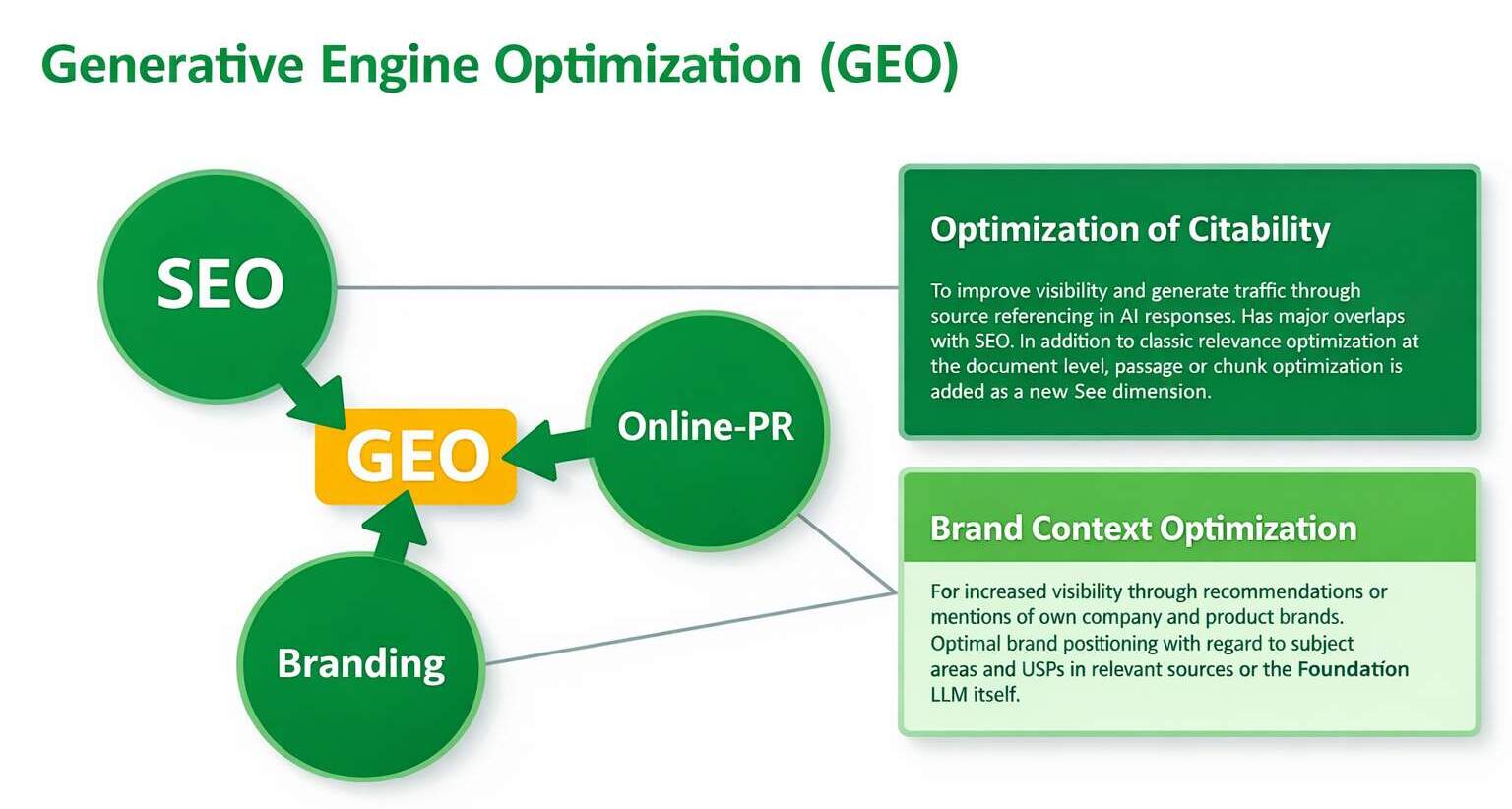
Generative Engine Optimization (GEO) is the shift from chasing blue-link rankings to earning a spot inside AI-generated answers. As AI Overviews and chat-style results expand, content must be structured, factual, and easy to cite, so your brand shows up for the queries your customers ask daily.
- Optimizing for Answers, Not Just Rankings: Generative Engine Optimization (GEO) is about being included in the generated answer, not just “position #1.” That means your best content starts with a direct definition, and then supports it with evidence, steps, and context that can Trading: seed with references, dates, and clarity so it can be quoted accurately. This matters because Google’s own documentation notes there’s “no special optimization required” for AI features; so the edge comes from fundamentals executed better than competitors.
- Built for AI Interpretation: AI systems summarize what they can parse. If your page reads like a brochure, it becomes hard to extract information from it. If it reads like a clean explainer, it becomes easy to cite. The mechanics are simple: strong headings, short answer blocks, and “why it matters” lines that connect the idea to real decisions. That’s how large language models turn your content into a reusable source instead of a skipped result.
- A Natural Evolution of SEO: GEO doesn’t replace SEO; it makes SEO usable in an answer-first SERP. You still need pages that rank, load fast, and satisfy Search Essentials, but you also need ‘citation-ready’ blocks that an AI can lift without distorting meaning. That’s why you pair keyword targeting with clear definitions, compact steps, and sourced claims. Google’s guidance says there are no special optimizations for AI Overviews, so the advantage comes from stronger fundamentals and clearer structure.
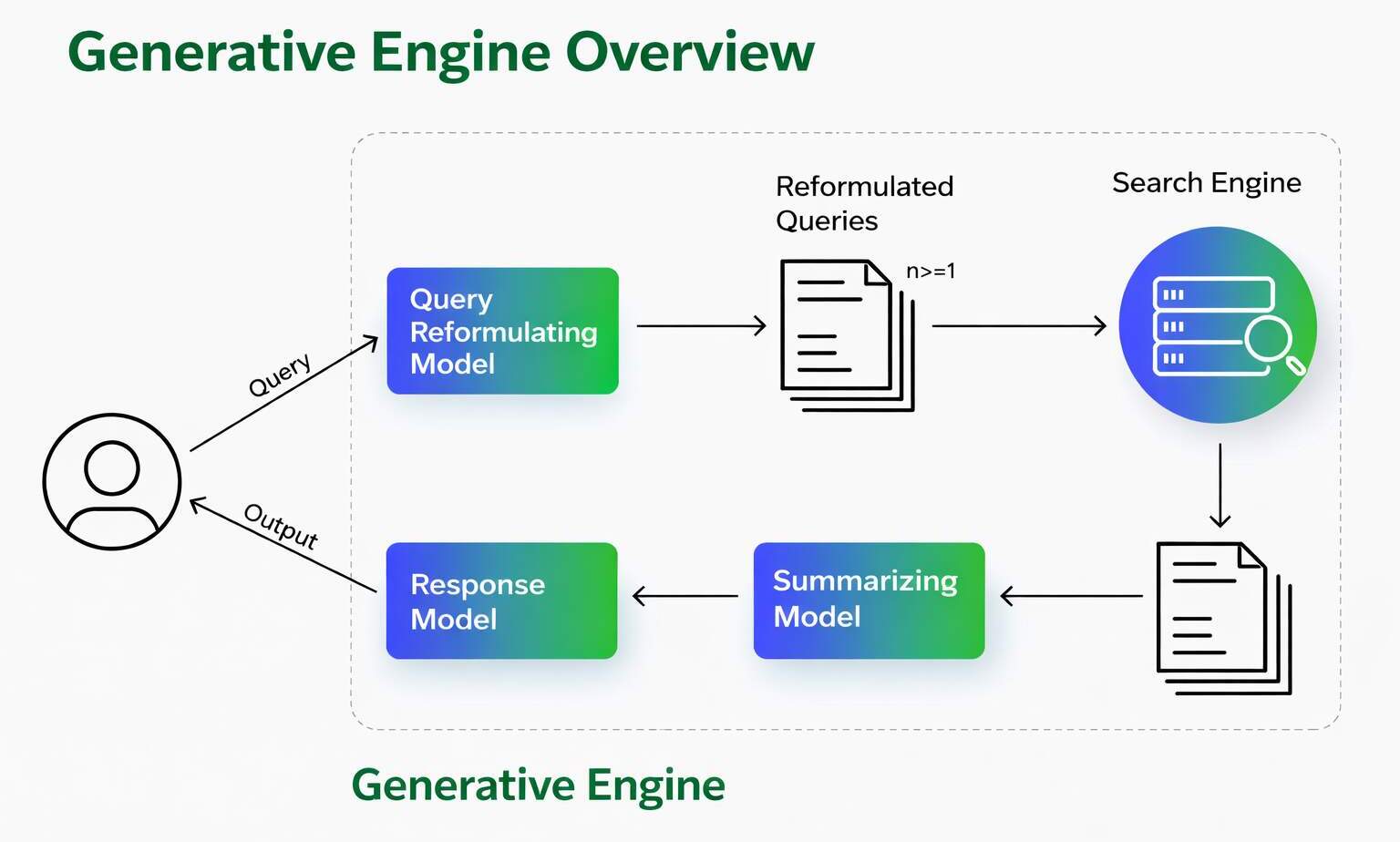
How AI-Driven Search Engines Work?
AI-powered search engines favor brands that demonstrate complete topic coverage rather than isolated keyword mentions. Publishing a single, thin article signals limited expertise, while a connected cluster of pages; definitions, use cases, FAQs, and comparisons; signals depth and reliability. This is the foundation of AI-driven search optimization: you are building a knowledge environment, not just a page. When terminology, intent, and internal links are consistent, AI systems can confidently treat your site as a trusted source.
AI systems don’t just scan text; they interpret meaning. They evaluate how concepts relate, what the user intent is, and whether ideas are explained clearly enough to reuse. This is why semantic search influences every modern content decision. Pages that define concepts, break them into parts, connect related ideas, and anticipate follow-up questions support semantic search optimization. Strong contextual structure reduces ambiguity, making content safer for AI to summarize without distorting intent.
AI doesn’t “feel trust,” but it detects credibility patterns. Specific details, clear constraints, cited data, and real-world examples signal reliability. Vague claims and generic advice do the opposite. Signals aligned with E-E-A-T; such as author expertise, proof of experience, and transparent sourcing; strengthen content authority signals. These factors help large language models decide whether your content is safe to reuse in AI search results optimization and Google AI Overviews.
SEO vs GEO: What Has Changed
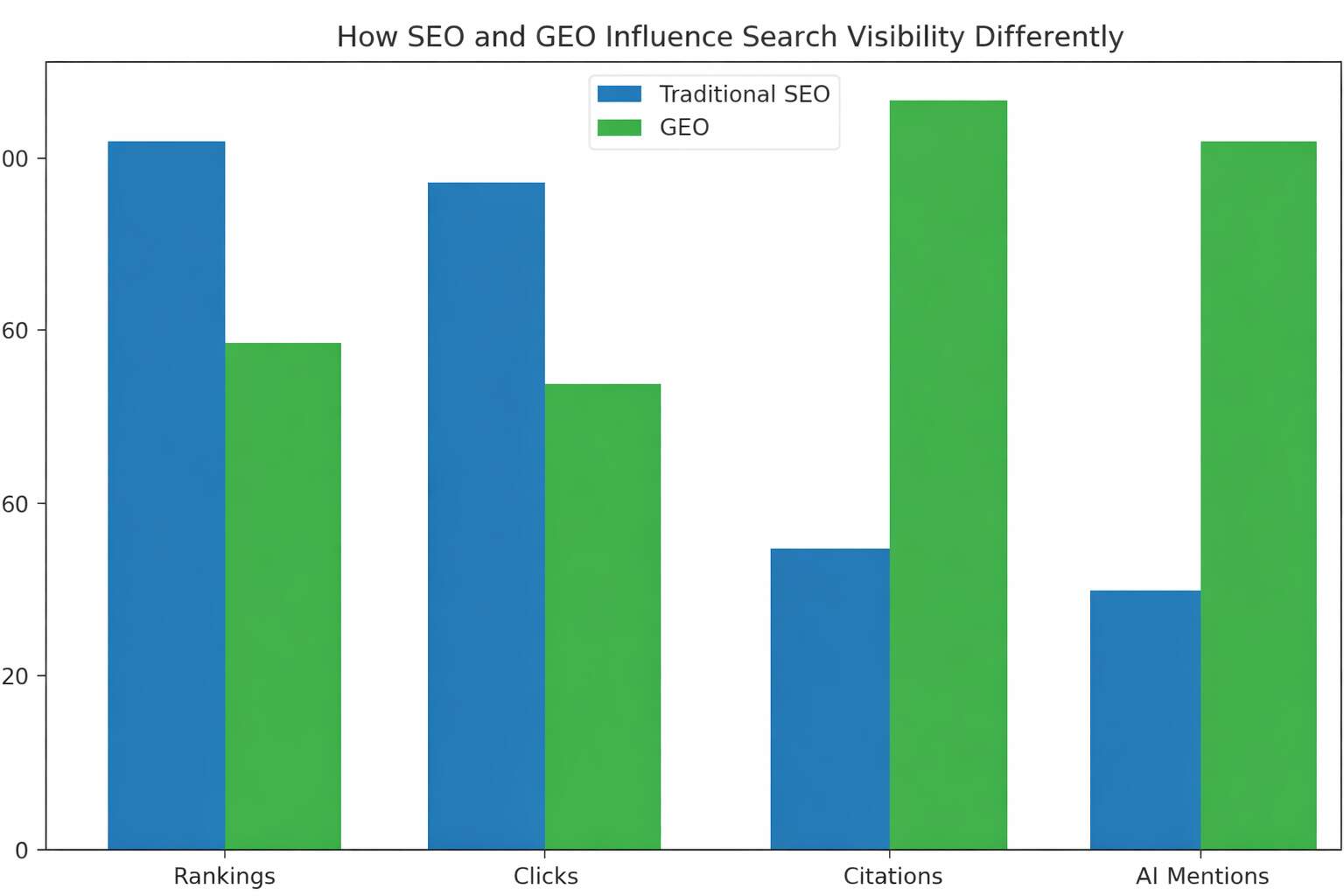
Traditional SEO asks, “How do we rank this page?” Generative Engine Optimization (GEO) asks a tougher question: “How do we become the source the AI trusts enough to cite?” That difference feels subtle until you look at modern SERPs, where the summary often is the answer and links have become optional reading. As AI-powered results reshape search behavior, visibility increasingly happens before the click. Brands that rely only on rankings risk being present in the index but absent from the answer. Generative Engine Optimization (GEO) exists to close that gap by aligning content with how AI systems interpret, summarize, and reuse information.
| Category | Traditional SEO (Rank & Click) | Cite & Influence (GEO) |
| Primary goal | Earn higher rankings to drive clicks | Earn citations/mentions inside AI-generated answers |
| Success metrics | Rankings, sessions, CTR | AI citations, branded lift, assisted conversions |
| Content structure | Helpful, but not always enforced | Mandatory: definition-first blocks, steps, FAQs, comparisons |
| Trust signals | Backlinks + basic credibility | Strong E-E-A-T: authorship, proof, sources, freshness |
| Optimization focus | Page-level optimization | Topic clusters + entity clarity across pages |
| What wins on SERPs | Relevance + authority + technical SEO | Reuse-safety + clarity + authority + structure |
The future of search rewards clarity, credibility, and structure; not just position. Generative Engine Optimization (GEO) doesn’t replace SEO; it builds on it, ensuring your content remains influential even when clicks decline. As AI-driven summaries guide decisions directly on the SERP, brands must optimize for reuse, not just discovery. Pages that are easy to understand, safely quotable, and grounded in expertise are the ones AI systems select. In an answer-first search landscape, winning visibility means becoming the reference, not the afterthought; and Generative Engine Optimization (GEO) is how that shift is made practical.
Why GEO Matters for Businesses?
Let’s not overcomplicate the business impact. If your informational traffic has softened while impressions remain steady, you’re likely witnessing the rise of zero-click search results in real time. As AI-generated summaries answer questions directly on the SERP, fewer users need to visit websites to learn. The SparkToro/Datos study puts real numbers behind this shift: in the U.S., only about 360 out of every 1,000 searches result in an open-web click, while the rest are satisfied directly on Google surfaces. This is not a traffic glitch, it’s a structural change driven by AI-driven search optimization.
That shift doesn’t mean your pipeline disappears. It means your measurement model must evolve. When your brand is cited inside Google AI Overviews, visibility still happens; just earlier in the decision journey. Brand recall improves, trust increases, and many users still click citations to validate what they’ve read. In fact, research shows that a large majority of B2B buyers click cited sources in AI summaries for fact-checking, making AI content visibility a driver of higher-intent engagement rather than raw volume.
The competitive edge is straightforward. Early adopters of Generative Engine Optimization (GEO) gain disproportionate “reference real estate” while AI systems are still learning who to trust. Wait too long, and you’re not competing for rankings; you’re trying to replace established sources. That’s why Generative Engine Optimization (GEO) matters now, not after the SERP is fully rebuilt.
Core Principles of GEO
- Entity-Based Content Optimization: This is where entity-based SEO stops being academic and starts being practical. Make your brand, services, and core topics consistent across pages; names, definitions, and even how you describe “what you do.” AI systems summarize more confidently when entities are stable and relationships are clear. In Generative Engine Optimization (GEO), ambiguity is the enemy. When an AI can easily connect your brand to specific concepts, services, and expertise, it reduces the risk of misinterpretation. This consistency strengthens GEO optimization by making your content safer to reuse in AI-driven search optimization and AI search results optimization environments.
- Topical Authority & Content Depth: Don’t publish “one post” and expect authority. Build a structured cluster: definition → use cases → mistakes → comparisons → measurement → FAQs. The goal is to cover a topic so completely that the AI views your site as a reliable reference rather than a partial answer. This is where generative search SEO consistently wins. Depth beats surface-level keyword targeting in answer-driven SERPs because AI systems prefer sources that anticipate follow-up questions. Strong topical coverage also improves semantic search optimization, making it easier for large language models to understand context and reuse your insights accurately..
- E-E-A-T Signals: Add proof that you’re real. Author bios, credentials, client case studies, firsthand experience, and clear editorial updates are not “nice-to-haves.” They’re the difference between being summarized and being ignored. AI systems don’t feel trust, but they detect patterns aligned with E-E-A-T; experience, expertise, authority, and trustworthiness. Specific examples, sourced data, and stated limitations strengthen content authority signals and improve AI content visibility. This is how credibility becomes machine-readable, helping your content surface in Google AI Overviews and shaping the future of search engines.
Step-by-Step GEO Optimization Framework
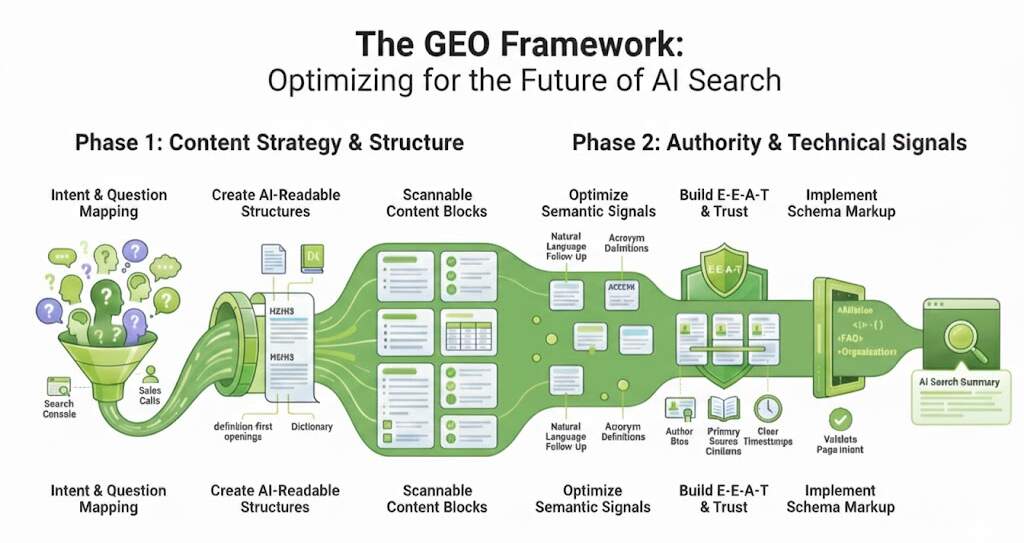
Step 1 – Intent & Question Mapping:
Start with Generative Engine Optimization (GEO) by collecting real questions from Search Console, sales calls, support tickets, and competitor SERPs. Prioritize “answerable” queries where AI summaries appear. Group by intent, then map each cluster to a single page. This is the foundation of AI-driven search optimization and GEO optimization today.
Step 2 – Create AI-Readable Content Structures:
For Generative Engine Optimization (GEO), rewrite pages with clear H2/H3 logic, definition-first openings, and short, quotable blocks. Use bullets, mini tables, and “Do/Don’t” callouts. Place key facts early so generative search SEO engines can cite you cleanly for AI search results optimization, fast, consistently, without fluff, for humans.
Step 3 – Optimize Semantic & Contextual Signals:
Strengthen Generative Engine Optimization (GEO) by enhancing semantic search. Add related entities, define acronyms, clarify pronouns, and link to supporting pages to reinforce entity-based SEO. Use natural language that mirrors how people ask follow-ups. This boosts AI content visibility across semantic search and Google AI Overviews.
Step 4 – Strengthen Trust & Authority Signals:
Generative Engine Optimization (GEO) depends on credibility. Add author bios, experience proofs, client micro-examples, and cite primary sources for statistics. Update timestamps and include limitations or edge cases. These content authority signals align with E-E-A-T and help AI-driven search optimization systems choose your page over generic summaries.
Step 5 – Use Structured Data & Schema:
Complete Generative Engine Optimization (GEO) by implementing the Article, FAQ, and Organization schema, and validating them. Mark up sections (definitions, steps, FAQs) so machines can understand the page’s intent. Keep titles, headings, and entities consistent. This supports generative search SEO and improves AI search results optimization as future of search engines evolves.
Role of Content Format in GEO
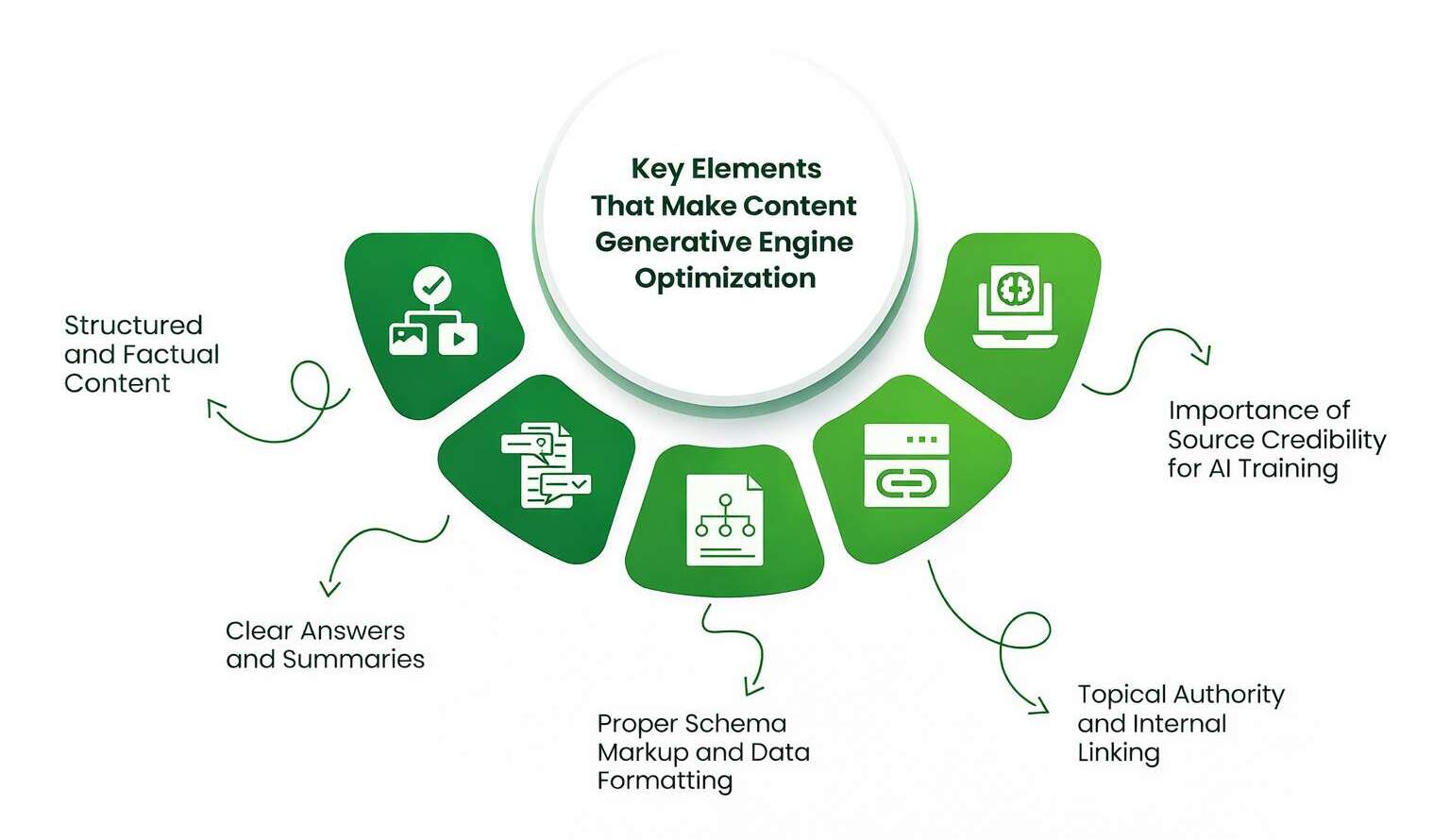
AI doesn’t “prefer” lists because it’s lazy; it prefers them because they’re reliable. In Generative Engine Optimization (GEO), reliability is the difference between being cited and being ignored. A definition stays intact, a checklist preserves order, and a comparison table keeps trade-offs clear, helping AI reuse your content without changing what you meant. That’s why content format is now part of AI content visibility: the safer your structure, the safer your page is to summarize. This matters even more as Google AI Overviews expand, because the AI often pulls compact blocks that answer quickly while still sounding authoritative.
A practical rule is simple: for every major point you make, create one “quotable block.” Start with a one-sentence definition, then add either a three-step checklist or a mini table that shows “what to do” versus “what to avoid.” Keep the language concrete, not promotional, and anchor the block to a specific outcome. For example, instead of saying “improve trust,” write “add an author bio with credentials, a last-updated date, and one primary source link for each statistic.” That kind of specificity supports GEO optimization and improves how large language models interpret your page, because the information is easy to lift without guessing.
If you want a quick self-test, ask: “Could an AI quote this without rewriting it?” If the honest answer is no, you don’t need more words; you need a cleaner structure. Format is no longer just decoration; it’s a ranking signal for reuse and a practical edge in AI-driven search optimization.
GEO + SEO: Why Both Must Work Together
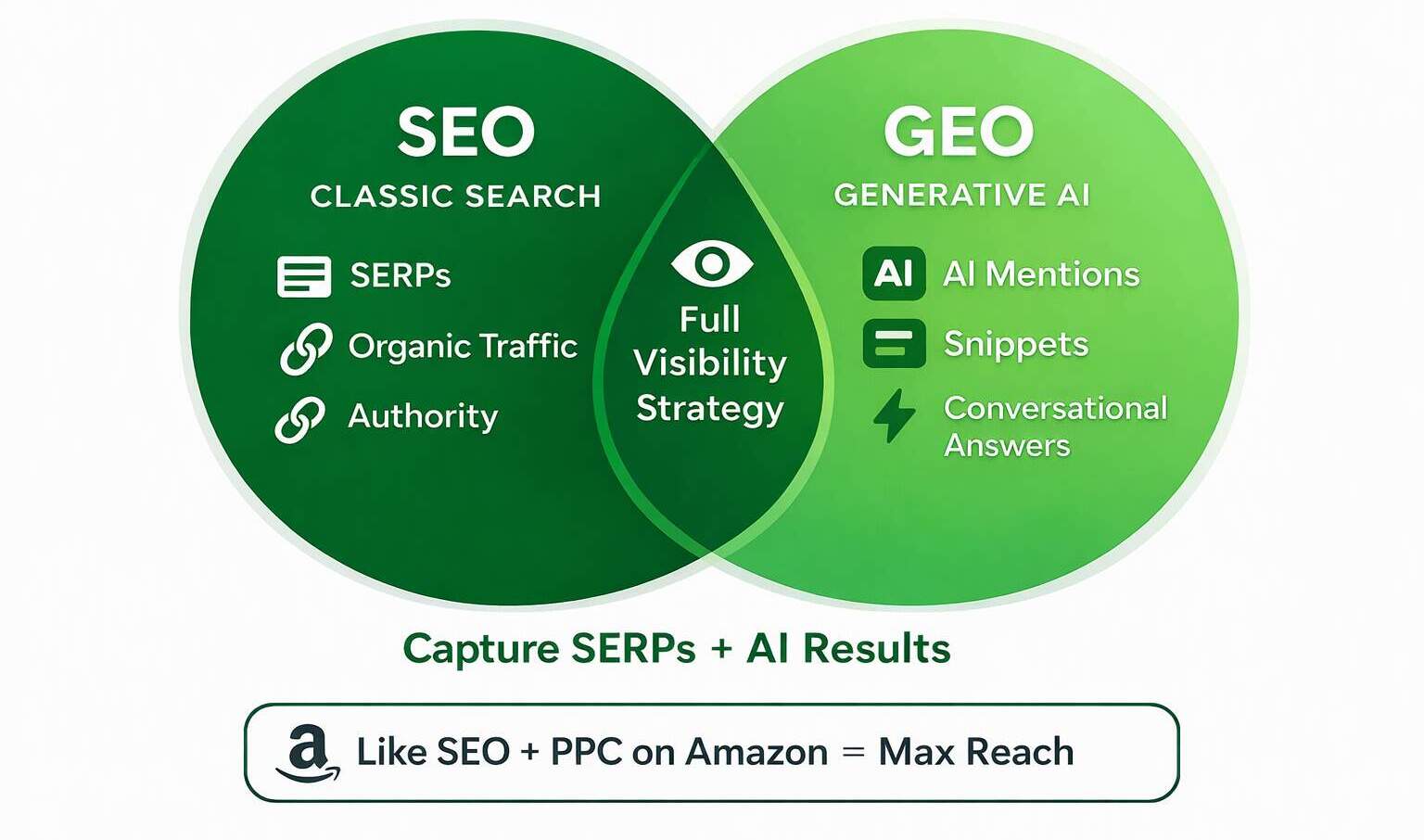
SEO and GEO aren’t rivals; they’re the same discipline operating in two different “surfaces” of the SERP. Traditional SEO still earns you discoverability: indexing, rankings, and the right to show up when someone wants options, pricing, or a vendor shortlist. But Generative Engine Optimization (GEO) is what determines whether you become the source an AI trusts when the user wants a fast explanation. Think of it like this: SEO gets you invited into the room; GEO decides whether you get quoted during the meeting. If your page ranks but the AI can’t safely reuse it, you’ll watch visibility drift upward into summaries while your click share shrinks.
The relationship is tight because the inputs overlap. Technical SEO makes content accessible and fast. On-page SEO clarifies intent. Internal linking builds topic depth. Those are also the building blocks that help AI systems interpret your site with fewer assumptions. The difference is the editorial lens: GEO forces you to write in “reference format.” You still target keywords, but you package answers as definitions, steps, and comparisons, backed by proof. That’s how GEO optimization turns classic SEO assets into citation-ready blocks that work for AI-driven search optimization.
Here’s a micro example. A local IT firm ranks for “managed services pricing,” but its page opens with marketing fluff. They rewrite the first section into a pricing range table, add a “what changes cost” checklist, and cite one industry benchmark. Rankings barely move, yet they start appearing in AI summaries because the content is easy to lift without distortion. That’s the real connection: SEO builds the road; GEO decides whether the AI chooses your lane.
Common GEO Mistakes to Avoid
Mistake #1
Writing “AI content” that reads like it was written for AI is the primary mistake. Shallow, generic pages are the easiest to summarize, and the easiest to ignore. You don’t want to be summarized as “another generic article.” You want to be cited as “the source.”
Mistake #2
Ignoring trust layers: author identity, update hygiene, and proof is anothr mistake. When publishers complain about traffic loss, the hidden detail is that AI systems still link out, especially when users want to verify. That’s why citation is a prize.
Mistake #3
Keyword over-optimization should be avoided. You still need relevance, but stuffing reduces readability and makes extraction messy. If you want one rule that prevents 80% of mistakes, it’s this: write for humans first, format for machines second.
If you cannot explain your page’s main claim in one sentence, the AI probably cannot either. Rewrite for clarity before you add more content.
How to Measure GEO Performance
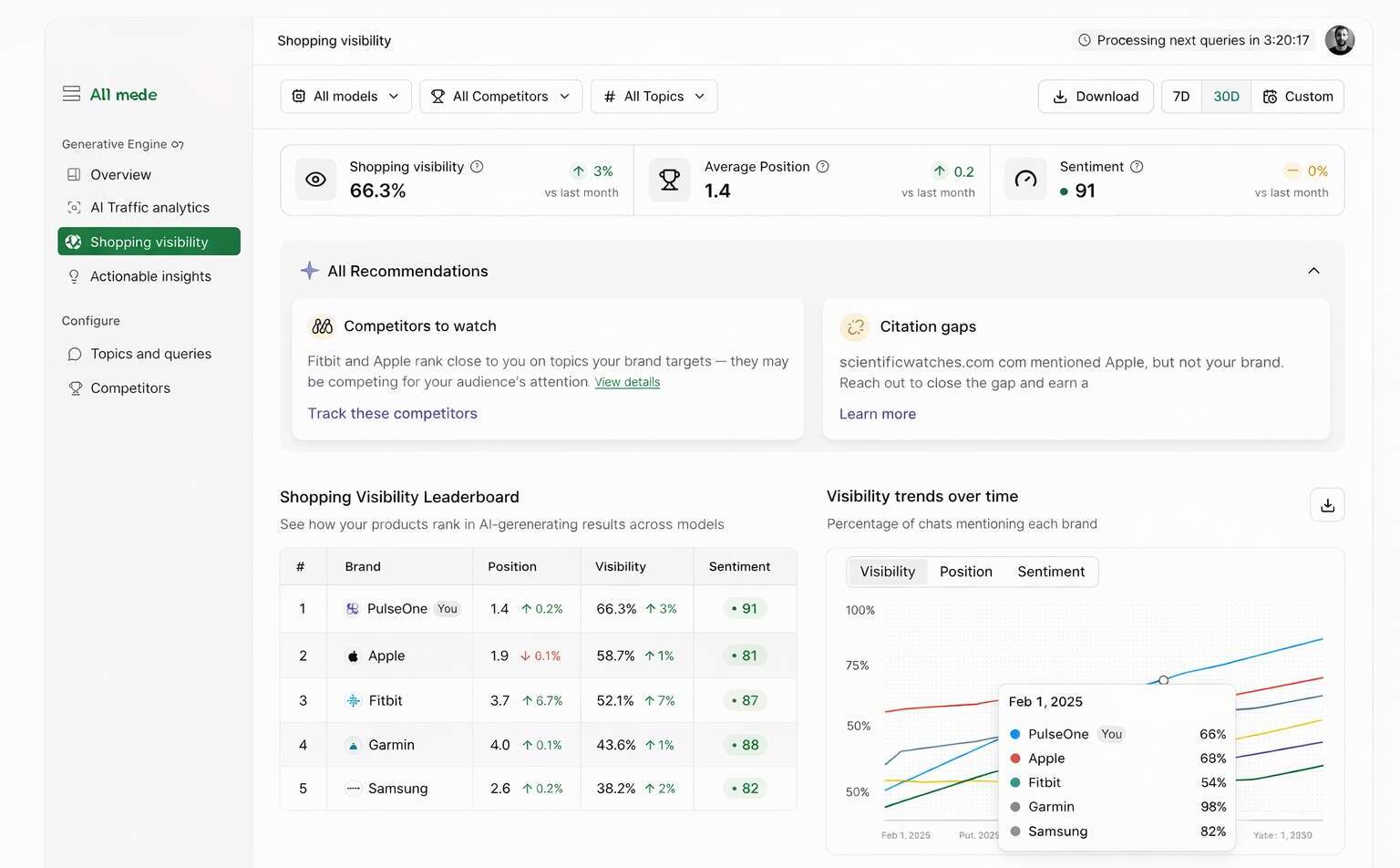
If your reporting still starts and ends with sessions, you will miss the point of GEO. The metrics that matter align with visibility and influence: AI citation mentions, brand presence in AI features, growth in branded queries, and assisted conversions. Search behavior trends also show why: reports have tracked increases in zero-click outcomes and declines in organic click share in certain markets over time.
Here is a practical measurement model for AI search results optimization that agencies can actually run monthly:
What to track (minimum viable GEO dashboard):
- AI Overview visibility for priority queries (manual checks + rank tracking notes)
- “Cited source” screenshots (build a citation library by topic)
- Branded search lift (Search Console)
- Assisted conversions (GA4 paths, CRM attribution)
- Content refresh cadence (last updated, references, authorship)
Create a shared sheet where your team logs “Query → AI feature appeared → Which domains cited → What format was cited.” In 60 days, patterns show up fast.
The Future of Search: From SEO to GEO
The direction is clear: search is becoming an answer engine, and brands are being treated as data sources. This doesn’t mean content volume wins; it means content clarity wins. The web is still the training and citation layer for many AI experiences, which is why being the cleanest source matters more than publishing the most posts.
In that world, Generative Engine Optimization (GEO) is less about “gaming AI” and more about making your expertise legible. The brands that win will do three things relentlessly: publish complete clusters, maintain strict entity consistency, and prove their experience with examples and references. That’s the playbook.
If you want to future-proof your marketing for the future of search engines, the safest bet is boring in the best way: technical hygiene, editorial discipline, and content that can be cited without being rewritten.
The Final Thoughts
Search is no longer just about being found; it’s about being trusted enough to be used. As AI-driven search results reshape how information is delivered, visibility increasingly happens inside generated answers, not just on websites. That shift doesn’t make SEO obsolete; it raises the bar. Pages still need to rank, load fast, and satisfy intent, but they also need to be clear, structured, and credible enough for AI systems to safely summarize and cite. This is the real value of Generative Engine Optimization (GEO).
GEO rewards content that explains, not promotes. It favors definitions over slogans, evidence over claims, and structure over volume. For businesses, startups, and agencies, this means rethinking how content is planned and measured. Success now includes citation visibility, brand presence in AI summaries, and assisted conversions; not only traffic charts. Teams that adapt early gain an outsized advantage, becoming default references while competitors still chase rankings alone. Those that wait risk being present in the index but absent from the answer.
The future of search isn’t a replacement of SEO; it’s an expansion of responsibility. Optimizing for humans and machines at the same time is no longer optional. It’s how relevance is maintained in an answer-first search landscape.
Ready to Turn Visibility Into Influence?
Ranking alone isn’t enough anymore. If AI summaries are shaping decisions before the click, your content needs to be clear, credible, and citation-ready. That’s where eSign Web Services steps in. Our GEO readiness check goes beyond surface metrics to show how your content is interpreted, summarized, and reused in AI-driven search results, and what’s holding it back. You’ll get practical, prioritized insights you can act on immediately, not a generic report.
Book your GEO readiness check and start showing up where AI is already deciding for your audience.
Frequently Asked Questions (FAQs)
Question: What is Generative Engine Optimization (GEO)?
Answer: Generative Engine Optimization focuses on structuring content so AI systems can accurately understand, summarize, and reference it in generated answers. Unlike traditional SEO, GEO optimization prioritizes clarity, credibility, and reuse over clicks. As large language models power features like Google AI Overviews, GEO helps brands maintain AI content visibility and influence outcomes even when users don’t visit a website directly.
Question: How is GEO different from traditional SEO?
Answer: Traditional SEO targets rankings, keywords, and traffic, while GEO focuses on how AI systems interpret and reuse content. Generative search SEO is about citation and inclusion, not just position. GEO supports AI-driven search optimization by improving structure, meaning, and trust. SEO captures demand through clicks; GEO ensures relevance when zero-click search results dominate the SERP.
Question: Does GEO replace SEO completely?
Answer: No, GEO does not replace SEO. Traditional SEO remains essential for transactional, commercial, and local queries. GEO extends optimization into AI-generated answers where visibility occurs without visits. Together, SEO and AI search results optimization support traffic, trust, and brand influence across evolving search environments shaped by future of search engines trends.
Question: Why are zero-click searches increasing?
Answer: Zero-click search results are increasing because AI summaries provide instant answers directly on the SERP. Features powered by large language models reduce the need to open multiple pages. While this improves user convenience, it shifts focus from traffic to authority. GEO helps brands maintain relevance by strengthening content authority signals and presence inside AI-generated responses.
Question: How can content get referenced in AI-driven search results?
Answer: Content must be accurate, structured, and authoritative. AI systems favor pages that answer questions clearly, demonstrate expertise, and follow semantic search optimization principles. Strong headings, logical flow, and proof-backed insights improve trust. When E-E-A-T and clarity align, AI systems are more likely to reference content in summaries and Google AI Overviews.
Question: Does GEO affect website traffic negatively?
Answer: Traffic for informational queries may decline, but remaining users often show higher intent. GEO supports AI-driven search optimization by increasing brand exposure and trust, which drives assisted conversions and future branded searches. While raw traffic may drop, improved AI content visibility often leads to stronger long-term business outcomes beyond traditional metrics.
Question: What type of content benefits most from GEO?
Answer: Educational guides, FAQs, comparisons, and expert explainers benefit most from GEO. Content that clearly defines topics and explores intent deeply aligns with entity-based SEO and semantic search principles. Thin, promotional pages rarely get reused, while structured, insightful resources are more likely to appear in AI search results optimization scenarios.
Question: How should businesses measure GEO success?
Answer: GEO success goes beyond sessions and rankings. Key indicators include branded search growth, assisted conversions, engagement quality, and visibility within AI features. These metrics reflect how generative search SEO influences decision-making. Measuring content authority signals helps businesses understand how AI exposure contributes to demand and long-term performance.
Question: Is GEO only relevant for large brands?
Answer: No. GEO often favors clarity over brand size. Smaller businesses with niche expertise can outperform larger competitors when their content best answers user questions. AI systems reward precision, relevance, and trust, allowing specialists to gain AI content visibility alongside major brands within future of search engines landscapes.
Question: What’s the biggest GEO mistake businesses make?
Answer: The biggest mistake is publishing generic, surface-level content. AI-driven search ignores pages that lack depth, structure, or expertise. Without strong E-E-A-T, clear explanations, and meaningful insights, content won’t be referenced. GEO demands quality over volume; because AI systems reuse what improves the answer, not what fills space.
Author Details

Ashwani Kumar Sharma
Ashwani has been actively involved in SEO services since 2005. His expertise and distinctive work approaches have made him one of the most experienced and trusted SEO experts in the industry. He is a certified SEO and Google Ads professional. He also has strong business development skills in advanced SEO, PPC, and digital marketing strategies.


