



SEO Benchmarks 2026: Average CTR, Conversion Rates & Trends by Industry

Key takeaways
- Benchmarks add context, so CTR and conversions are judged against real industry behavior.
- Rankings don’t guarantee clicks; intent, brand familiarity, and SERP layouts now decide CTR.
- AI summaries, ads, maps, and snippets reduce click share even with strong rankings.
- Long-tail queries often deliver higher CTR because intent is clearer and competition is narrower.
- Conversion expectations vary by model: lead-gen, local services, ecommerce all behave differently.
- Segment data by device, location, intent, and page type to uncover hidden bottlenecks.
- Trust signals like reviews, policies, and proof elements consistently lift conversions across industries.
- Use benchmarks to prioritize testing: snippets, schema, speed, UX friction, and intent alignment.
Understanding whether your SEO performance is “good” or “worrying” has never been harder. Most teams still open Search Console, glance at CTR, impressions, or conversions, and make snap judgments without any context. A 3.8% CTR might feel impressive in one industry and underwhelming in another. A 1.5% conversion rate might mean success for a high-consideration service but signal deeper UX issues for a local business. That is exactly why SEO Benchmarks 2026 matter; they anchor your expectations in reality instead of assumptions.
What’s changed is the google search environment itself. SERPs today are layered with AI summaries, richer snippets, visuals, carousels, and new modules that didn’t exist a few years ago. As Google experiments more aggressively with featured answers, instant results panels, and alternative click paths, understanding your performance requires more nuance. Benchmarks give business owners, marketers, and agencies a compass; a way to distinguish actual problems from standard category behavior.
Benchmarks don’t exist to shame your numbers. They exist to protect you from unrealistic pressure, misinterpretation, and wasted effort. They reveal where you’re naturally strong, where competitors outperform you, and where focusing your energy will produce meaningful growth. When used properly, SEO benchmarks 2026 help you evaluate your organic click-through rate, your conversion efficiency, the quality of your search traffic, and how SERP features affect visibility.
In short: benchmarks give you clarity. They turn scattered data into direction, helping you improve systematically instead of reacting emotionally to numbers that don’t tell the full story.
Why SEO Benchmarks Matter (and Where They Mislead)
Benchmarks are useful because they substitute guesswork with realistic expectations. All too frequently, businesses judge performance in a vacuum, comparing their numbers against fictional targets rather than actual competitors or industry standards. With stakeholders often anticipating a 20% conversion rate on cold organic traffic or a 40% CTR on non-brand keywords, benchmarks serve to ground the discussion back in reality. They make it clear what performance is achievable, which assumptions are unrealistic and help protect teams from running after metrics that aren’t representative of how organic traffic behaves in the market.
They also highlight genuine underperformance. If your industry typically sees 1–3% conversion from organic sessions but you’re sitting at 0.5%, that isn’t “just SEO being slow”; it’s a signal worth investigating. Maybe your pages aren’t aligned with user intent. Maybe your mobile UX is blocking progress. Maybe the snippet isn’t compelling enough to win the click. Benchmarks point you toward the right questions, not just the right numbers.
But benchmarks can mislead if treated too rigidly. They are averages gathered from diverse businesses with different audiences, offers, pricing, and funnel maturity. They’re not a pass/fail test. They’re a compass that guides decisions, revealing whether performance issues stem from competitive SERPs, misaligned content, weak trust signals, or simple UX friction. When you use benchmarks to guide improvement, not judgment, you build a more strategic, resilient SEO program that knows when to push harder and when to pivot.
Average Organic CTR Ranges by Intent and Industry
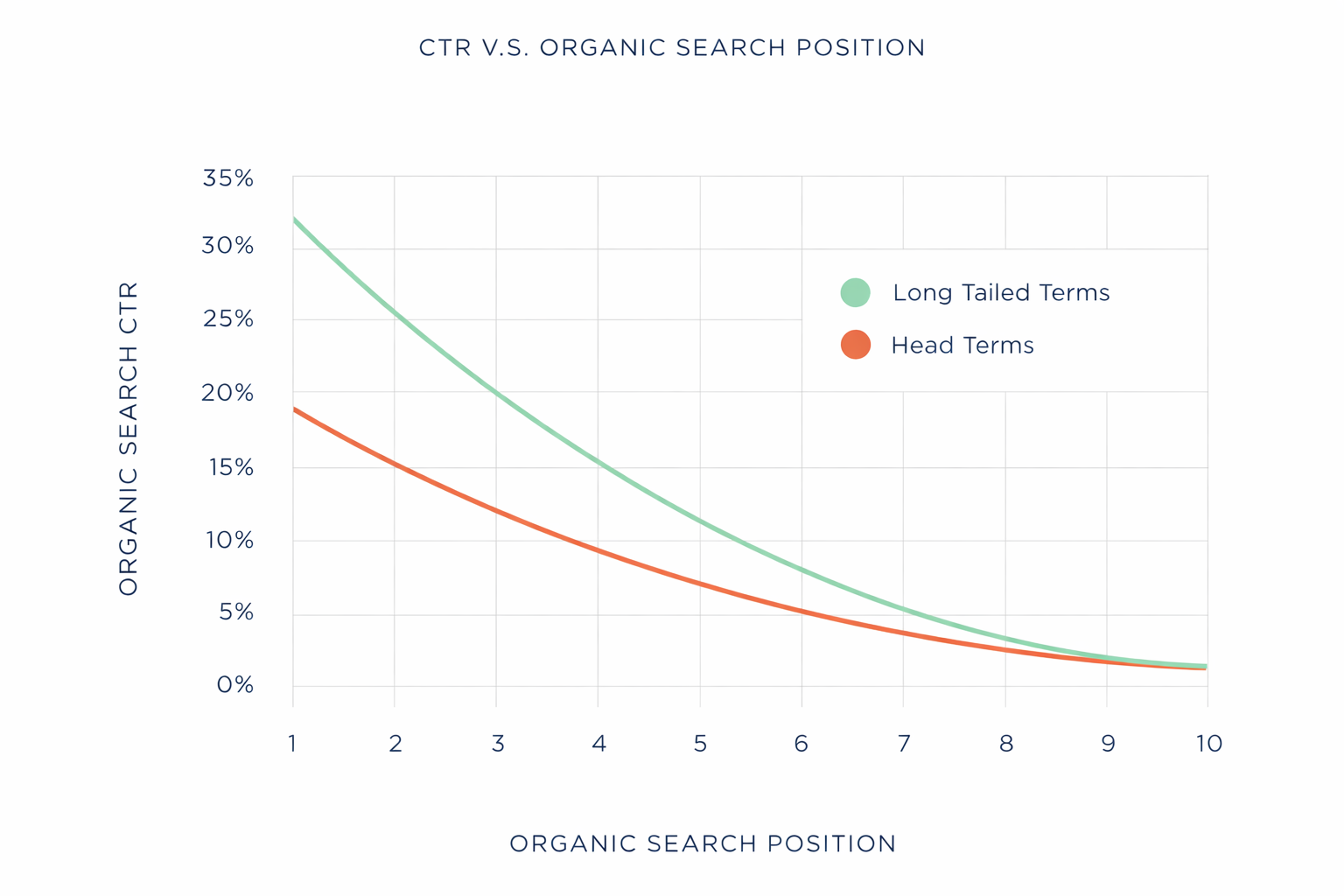
CTR varies wildly across industries, devices, and intents, even when rankings look identical. Before evaluating your performance, it’s important to understand the patterns shaping average organic CTR by industry in 2026. In most datasets, more specific long-tail queries behave very differently from broad head terms: long-tail terms keep higher CTRs across positions, while generic head terms drop off much faster as you move down the SERP.
Key factors shaping CTR in 2026:
- Brand queries outperform everything. When users type your name, CTR often jumps above 30–40%, while non-brand terms may barely reach 5–10%, even in top positions.
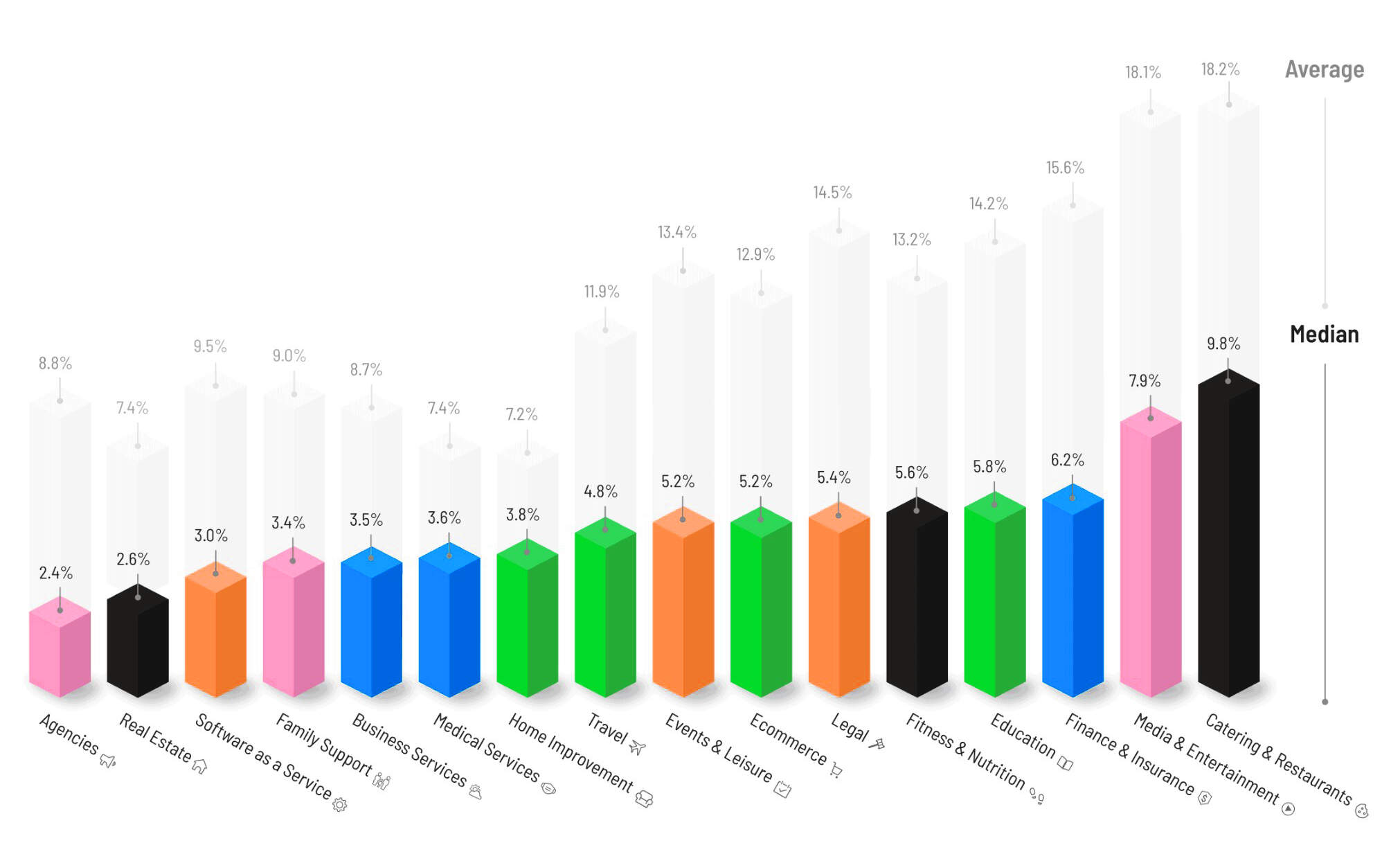
- High-intent industries earn higher clicks. Legal, healthcare, finance, and urgent-service keywords attract 8–15% CTR in top positions because users want quick, trustworthy solutions.
- Content-heavy niches are crowded. SaaS, ecommerce, education, and software queries often yield CTRs of 3–7% due to similar-looking results and intense competition.
- SERP features heavily suppress clicks. Shopping ads, maps, FAQs, videos, and AI summaries reduce available click share even when you rank well.
- Snippet strength now determines clicks. Specificity, clarity, value-focused titles, and structured FAQ snippets dramatically increase your organic click-through rate.
- User intent trumps rank position. Informational keywords naturally produce lower CTR than commercial or transactional ones, regardless of ranking.
These patterns tell us something important: CTR is no longer a clean metric. It depends not only on your ranking, but on how much “real estate” remains on the SERP for traditional clicks. Understanding your category’s normal CTR range protects you from misjudging performance and helps identify where optimization will genuinely move the needle.
Conversion Rate Benchmarks by Type of Business
Conversion rates vary widely because every business model carries different buying behavior. Lead-generation businesses, particularly B2B, SaaS, and agency services, tend to convert at 1–3%. These industries require nurturing and multiple touchpoints, so cold organic traffic is rarely ready to convert immediately. Still, with strong value messaging, a polished offer, and frictionless UX, these funnels can edge upward over time, especially when supported by consistent trust-building content.
Local businesses see far stronger SEO conversion rate benchmarks because user intent is immediate. Searches for “AC repair,” “dentist near me,” or “emergency plumbing” often indicate a high level of urgency. When service pages are clear, mobile-friendly, and trust-heavy, conversion rates jump into the 3–7% range. For these industries, the biggest differentiators are speed, clarity of location/service, visible reviews, and simple contact options.
Ecommerce operates on different dynamics. Conversion benchmarks typically fall between 1–4% because users compare prices, check availability, and browse multiple stores. Here, lead conversion from SEO is highly influenced by UX and trust signals — such as product photos, clear shipping and return policies, and genuine social proof; all common issues highlighted in website design mistakes that kill conversions. Comparing your numbers against SEO benchmarks 2026 helps determine whether your challenge is competitive pricing, poor user experience, or insufficient trust-building. It also reminds you not to panic; your industry’s normal behavior defines the right benchmark for improvement.
Industry Patterns: What “Good” Looks Like in 2026
Different industries approach search differently, making universal comparisons meaningless. B2B and SaaS companies operate in dense ecosystems filled with guides, whitepapers, thought leadership, and comparison queries. Ranking is only half the battle; convincing a skeptical, research-heavy audience requires clarity, depth, and strong proof. As a result, CTR tends to be modest, and conversions slow, but highly valuable when achieved.
Local services and healthcare navigate a different landscape. They compete not only with organic listings but also with map packs, local ads, and top-rated competitors with strong reputations. Here, appearing near map results, showing relevant service information, and earning visible review stars meaningfully influence performance. When these signals are present, SEO traffic quality tends to be strong, leading to impressive conversion benchmarks and consistent leads.
Ecommerce and travel face SERPs dominated by product listings, visuals, reviews, and price comparisons. SERP features heavily influence CTR in these niches; visually optimized competitors can steal clicks regardless of ranking. The best-performing businesses focus on trust, product clarity, user experience, and compelling differentiators. Strong performance in 2026 relies less on ranking #1 and more on owning a snippet that clearly communicates value and reduces user hesitation.
Trends Shaping CTR and Conversions in 2026
SEO in 2026 is shaped by rapid changes in SERP design, user behavior, and Google’s shift toward answer-driven results. These trends redefine how we measure visibility, clicks, and conversions.
The most influential trends include:
- Generative AI results reduce traditional clicks. AI summaries answer simple queries instantly, shrinking available click share but increasing the value of intent-driven traffic.
- Brand strength influences CTR more than rank. Recognizable names win the click even when ranking second or third, especially in crowded informational SERPs.
- Trust signals directly lift conversions. Users gravitate toward businesses that display reviews, guarantees, transparent policies, and consistent social proof.
- UX quality impacts both engagement and revenue. Faster page load times, better mobile layouts, and clearer CTAs consistently boost conversions across industries.
- SERP competition becomes more visual. With more rich snippets and structured features, snippet optimization becomes just as important as content itself.
- Intent-aware content outperforms generic posts. Searchers reward pages that clearly address their exact need, and skip pages that feel broad or unfocused.
All of these trends play out along the full customer journey – from first impression to repeat customer – not just on the results page.
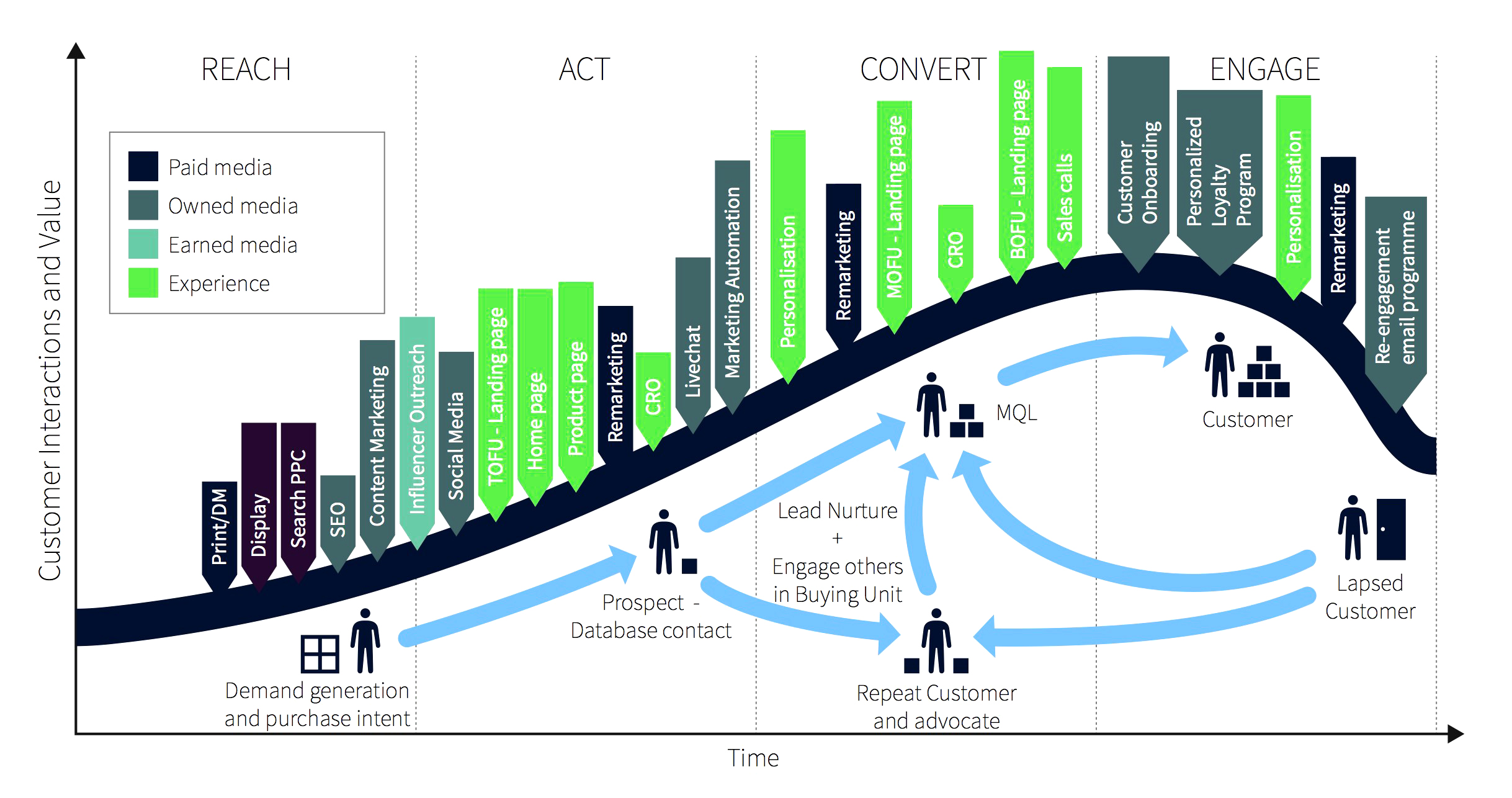
Together, these trends reveal a deeper shift: SEO success in 2026 depends not only on ranking, but on how effectively your result earns trust, communicates value, and removes friction. Benchmarks help you interpret these shifts without misjudging natural industry-wide changes as personal performance issues.
How to Use Benchmarks to Improve
Benchmarks help you stop guessing and start diagnosing. When you break down data by device, location, page type, and intent, you begin to see patterns that blended averages hide. A low CTR might be completely normal for top-of-funnel content, while the same metric on a commercial landing page signals an under-optimized snippet. Segmenting your numbers turns vague performance concerns into actionable insights.
Once your data is segmented, benchmarks reveal where the biggest gains live. Falling below your industry’s CTR range means revisiting titles, descriptions, schema, and SERP research. If conversions lag behind typical industry SEO KPIs, examine friction points: slow pages, weak value propositions, unclear pricing, or forms that overwhelm mobile users. Small adjustments here often deliver outsized improvements, especially in industries with strong intent.
Most importantly, benchmarks guide structured experimentation. Instead of chasing random optimizations, you use data-driven priorities. Underperforming CTR triggers snippet testing. Weak conversions lead to UX changes or more convincing proof elements. Low funnel progression pushes you toward stronger internal linking or deeper intent coverage. Benchmarks also strengthen reporting, enabling clearer conversations with stakeholders who may misunderstand what “good” looks like. When paired with reliable SEO reporting metrics, benchmarks turn analysis into strategy and strategy into predictable performance improvements.
The Final Thoughts
Benchmarks aren’t about comparing yourself to another business. They’re about understanding your industry’s rhythm so you can make smarter, calmer, and more focused decisions. When you evaluate performance through SEO Benchmarks, you stop reacting emotionally to numbers and start reading them with context. You see, when CTR is suppressed by SERP features—not poor strategy—and when conversion rates reflect natural user behavior rather than failure.
This frame helps teams shift from pressure to progress. It refocuses conversations on what actually moves results: better snippets, clearer messaging, faster pages, stronger trust signals, and content that matches intent more precisely. It lets you spot real friction points and avoid wasting time “fixing” normal benchmarks. And it empowers stakeholders to understand why some pages outperform others, even when their rankings look similar.
SEO is evolving rapidly, and benchmarks help you keep up. They transform scattered metrics into a structured improvement plan, reveal the real opportunities hiding in your data, and highlight what to prioritize next. When you adopt benchmarks as a compass, not a scoreboard, you build a system that improves predictably, learns continuously, and withstands constant algorithmic change.
If you ever feel unsure about whether your organic performance is strong or slipping, benchmarks will answer that question. They won’t define success for you—but they will guide you, support your decisions, and clarify exactly where your next opportunity is waiting.
See What’s Holding Back Clicks and Conversions
Want clarity without guesswork? eSign Web Services can benchmark your CTR and conversion data against your industry, audit SERP feature impact, and turn insights into an action plan you can actually execute. Reach out to our website or contact us today to get a focused performance review and next-step roadmap built for your niche.
Frequently Asked Questions (FAQs)
Question: Where do SEO benchmarks for CTR and conversion rates come from?
Answer: SEO Benchmarks 2026 are built using aggregated analytics data, industry surveys, and platform-level reports across thousands of websites. These sources analyze organic click-through rate, lead conversion from SEO, and SEO traffic quality to establish averages. While not perfectly precise, they reveal SEO performance trends, average organic CTR by industry, and common industry SEO KPIs. They work best as directional references alongside your own SEO reporting metrics.
Question: What is a “good” organic CTR in 2026?
Answer: Under SEO Benchmarks 2026, a good organic click-through rate depends on ranking position, query intent, and industry. Many service-based, non-brand keywords see 5–10% CTR in top positions, aligning with average organic CTR by industry. SERP features impact results heavily, often reducing clicks. Brand and niche terms usually perform better. Comparing against SEO performance trends and industry SEO KPIs gives proper context.
Question: What’s considered a healthy SEO conversion rate?
Answer: SEO conversion rate benchmarks in 2026 show most lead-generation sites converting between 1–3%, with local services often higher. Ecommerce varies based on product and funnel strength. These SEO Benchmarks 2026 reflect lead conversion from SEO and overall SEO traffic quality. Instead of chasing averages, focus on consistent improvement. Tracking industry SEO KPIs and SEO reporting metrics helps identify sustainable optimization opportunities.
Question: Why is my CTR low even though I rank on page one?
Answer: SEO Benchmarks 2026 highlight that rankings alone don’t guarantee clicks. Organic click-through rate is influenced by titles, meta descriptions, and SERP features impact. If competitors have more compelling snippets or rich results, users may skip your listing. Ads and AI summaries also reduce visibility. Optimizing snippets is a key SEO performance trend for improving average organic CTR by industry.
Question: How do zero-click and AI results affect benchmarks?
Answer: Zero-click searches and AI-generated answers have lowered CTR expectations in SEO Benchmarks 2026, especially for informational queries. Users often get answers directly in the SERP, reducing organic click-through rate. However, high-intent searches still deliver strong SEO traffic quality. SERP features impact benchmarks unevenly, so average organic CTR by industry should always be evaluated by intent and query type.
Question: Should I be worried if my conversion rate is lower than industry benchmarks?
Answer: A lower conversion rate than SEO Benchmarks 2026 isn’t a failure signal. Benchmarks highlight where to investigate lead conversion from SEO, targeting accuracy, UX, or offer clarity. Poor SEO traffic quality often explains gaps. Compare results against industry SEO KPIs, then test improvements. Using SEO reporting metrics to track progress matters more than instantly matching SEO conversion rate benchmarks.
Question: Do benchmarks differ a lot between desktop and mobile?
Answer: Yes, SEO Benchmarks 2026 show clear differences by device. Mobile organic click-through rate can be lower due to crowded SERPs, but intent is often stronger for local searches. SEO conversion rate benchmarks may lag on mobile due to UX or speed issues. Segmenting SEO reporting metrics by device reveals SEO performance trends and helps diagnose mobile-specific issues impacting industry SEO KPIs.
Question: How often should I review my SEO performance against benchmarks?
Answer: Reviewing SEO Benchmarks 2026 quarterly is ideal for most businesses. This timeframe allows changes to influence organic click-through rate, rankings, and lead conversion from SEO. Regular reviews help identify SEO performance trends without overreacting to short-term volatility. Comparing results to average organic CTR by industry and industry SEO KPIs ensures timely course correction and growth planning.
Question: Can improving CTR alone increase my rankings?
Answer: Improving organic click-through rate can support rankings indirectly, but it’s not enough on its own. SEO Benchmarks 2026 suggest CTR works best when combined with relevance, engagement, and strong SEO traffic quality. Misleading titles may harm long-term performance. Genuine optimization aligned with intent and SERP features impact reinforces positive SEO performance trends more effectively.
Question: What’s the best way to use benchmarks in client or stakeholder reports?
Answer: Use SEO Benchmarks 2026 as flexible reference ranges, not fixed goals. Segment by intent, page type, and device to reflect average organic CTR by industry accurately. Show where performance aligns with or exceeds industry SEO KPIs, then link gaps to actions. Clear SEO reporting metrics tied to SEO performance trends keep discussions focused on improvement, not just numbers.
Author Details

Ashwani Kumar Sharma
Ashwani has been actively involved in SEO services since 2005. His expertise and distinctive work approaches have made him one of the most experienced and trusted SEO experts in the industry. He is a certified SEO and Google Ads professional. He also has strong business development skills in advanced SEO, PPC, and digital marketing strategies.


