



Voice Search Optimization in 2026: Proven Strategies to Stay Ahead in the AI Era


Key Takeaways
- Voice Search Optimization will redefine digital marketing and SEO dominance by 2026.
- Over 8.4 billion voice assistants will reshape global search behavior and engagement.
- Write naturally and conversationally to effectively optimize for voice search success.
- Create a seamless and intuitive voice user interface for better experiences.
- Structure content for AI search using schema markup, FAQs, and concise formatting.
- “Near me” searches boost local business visibility and instant customer conversions.
- Leverage advanced voice search analytics tools to measure performance and insights.
- Improve site speed, mobile responsiveness, and technical SEO for better rankings.
- Optimize across Google Assistant, Siri, and Alexa for multi-platform voice reach.
- Voice search is the future—adapt today to stay ahead of competitors.
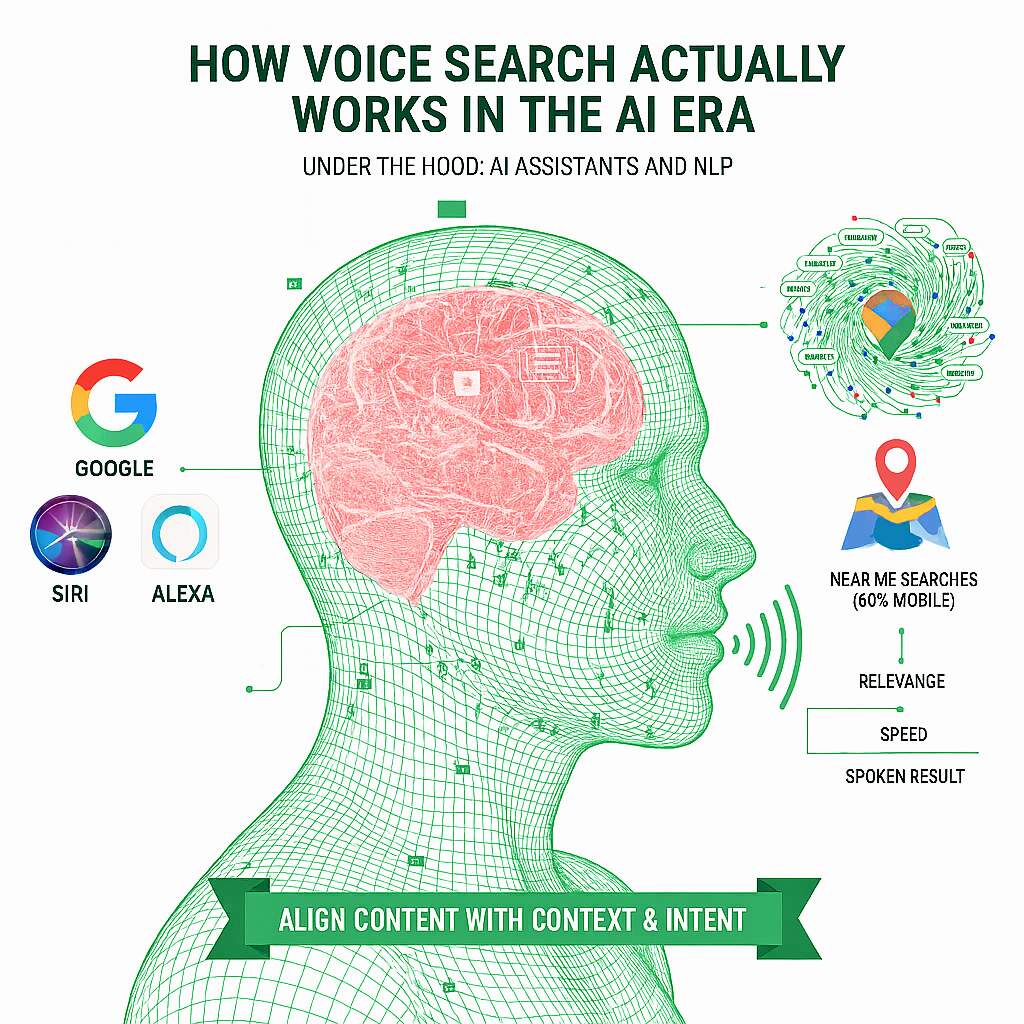
Voice search has quietly evolved from a novelty feature into a core way people interact with technology. By 2026, advances in artificial intelligence will make voice assistants feel like intuitive companions; capable of understanding tone, memory, and context. This shift isn’t just technological; it’s a full transformation in how search engines process human language and intent. Today, over 50% of adults use voice search daily, adults’ uses optimize for voice search tools daily, and the number continues to rise. Smart speakers and mobile devices now manage complex, multi-step tasks with ease, while mobile voice searches dominate local discovery, driving instant “find near me” decisions. People no longer type keywords; they ask full questions, expecting fast, accurate, conversational answers.
2026 will mark the tipping point, powered by natural language processing and smarter machine learning. Voice assistants will understand regional accents, implied meanings, and emotional cues that traditional search ignores. For businesses, the implications are massive. Those that adapt their SEO to voice will capture intent-driven customers before competitors even appear. Ignoring this trend means fading into digital silence.
Understanding how people speak versus how they type is now the foundation of success. Voice queries are longer, more human, and driven by context — not cold keywords. As AI reshapes search itself, the brands that master this shift will not only rank higher but sound smarter, more human, and more relevant than ever before.
Voice Search Revolution: 2026 Changes Everything
Voice search usage is exploding. By 2026, there will be over 8.4 billion voice assistants globally—more devices than people. Users now expect frictionless, hands-free search experiences. This massive shift is powered by natural language processing (NLP) breakthroughs that enable devices to understand tone, context, and nuance. AI-driven comprehension models have bridged the gap between spoken words and intent, providing users with results that feel humanized and relevant.
Voice searches aren’t just replacing text searches; they’re changing the types of queries we ask. Instead of “weather Paris,” people now ask, “Hey Google, will it rain in Paris this weekend?” This shift towards conversational, long-form queries means your content structure for AI search must reflect natural speech. As these queries surge, businesses that optimize early through Voice Search Optimization will win the zero-click game. Embracing this change isn’t just about staying visible; it’s about understanding a new digital behavior that defines user expectations.
Adapting early means dominating results while competitors play catch-up. Waiting to act could result in your business being left out of crucial AI-generated answers. The sooner you build voice readiness, the longer your advantage will last. Early adopters of VSEO (Voice Search Engine Optimization) are already seeing increased traffic and lead conversions from voice-activated devices.
How Voice Search Works in the AI Era
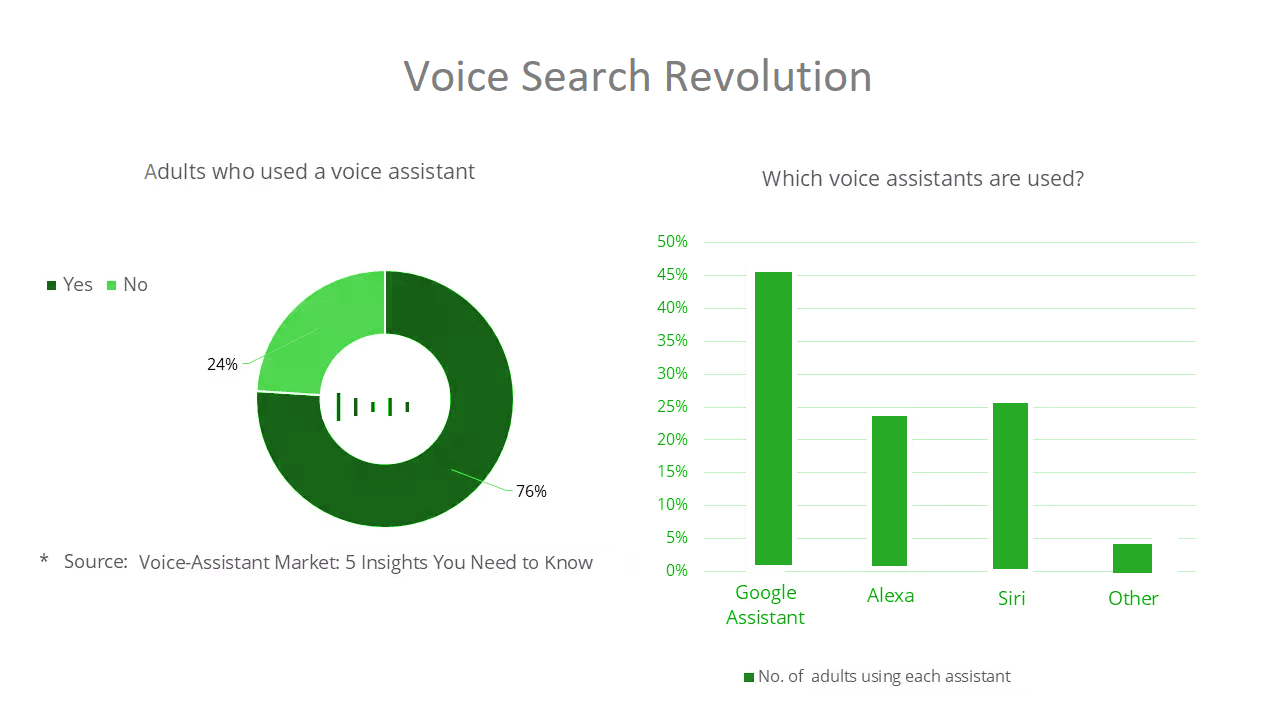
AI drives modern voice search; NLP enables voice recognition tools to decode user intent with incredible accuracy. Voice user interfaces are built to understand context, infer location, and even remember previous queries. Google’s BERT and MUM models, for instance, can now interpret complex, layered voice prompts with multi-part instructions. These systems are designed to think like humans while processing at the speed of algorithms.
Each assistant has its quirks. Google Voice Assistant leverages featured snippets. Alexa uses structured skill apps. Siri often relies on Apple Maps and Safari results. As a result, Google Assistant, Siri, Alexa optimization requires platform-specific tweaks. Understanding these systems allows marketers to tailor their SEO across multiple ecosystems, maximizing exposure where users are most active.
Want to win in voice SEO? You need to align content not just with keywords but with context and intent—especially for “near me” searches, which make up nearly 60% of all mobile voice queries. Every spoken question is a reflection of user intent, and aligning with it transforms your content from static text into dynamic answers.
These AI engines thrive on clarity, relevance, and speed. Structuring content properly allows AI to parse and deliver your site as the spoken result. Knowing each assistant’s behavior can give you a strategic edge in placement. The businesses that invest in understanding these nuances today will own the top spot in tomorrow’s voice-driven market.
Expert Quote Suggestion “We’re moving from search engines to answer engines. Your site must become the source of the answer.” ~ Rand Fishkin.
Content Strategy for Voice Search Success
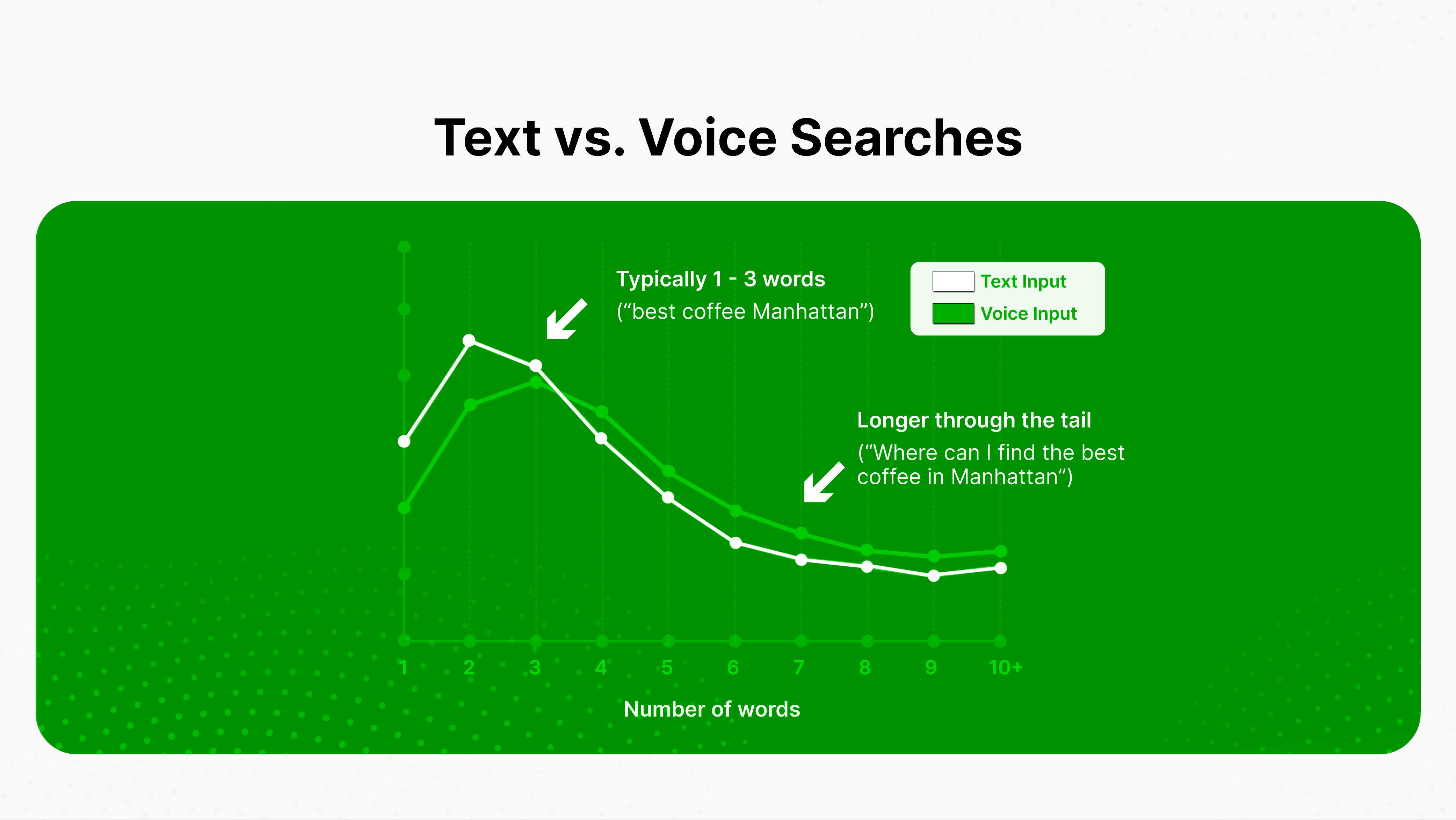
Writing for voice means ditching robotic keyword stuffing. Focus on conversational content. Ask yourself: what would a user say to their AI assistant? For example, instead of targeting “best coffe Manhattan” write content like, “Where can I find best coffee in Manhattan?” Structuring your content as if you’re responding to real-time questions makes it naturally discoverable by voice algorithms.
Use tools like Answer the Public, AlsoAsked, and People Also Ask boxes to uncover question-based search patterns. Each question becomes a content opportunity. Structure content into bite-sized Q&A formats to match voice snippet responses. Voice search analytics tools can help identify emerging voice keyword trends. Integrating FAQs and answer-driven headings helps voice assistants locate relevant snippets faster.
As shown below, voice searches are naturally longer and more conversational than text inputs. While typed queries usually contain one to three words, voice searches often form full questions—mirroring how people speak to their devices.
Don’t forget to include long-tail keywords and natural filler phrases—they mimic real speech and increase your chances of being picked up by voice algorithms. Content should read like advice from a trusted friend, not a keyword matrix. The more conversational your copy, the better your ranking potential. Effective Voice Search Optimization here means crafting authentic answers that sound like they’re coming from a human, not a bot.
Incorporating a story-driven approach can also humanize your brand. Content that feels like a conversation builds trust and retention. A relatable voice can turn users into loyal visitors. Adding contextual examples, local relevance, and intent-driven storytelling enhances both SEO and user engagement.
Technical SEO for Voice Search Optimization
Speed, Mobile, and Schema: The Winning Trio
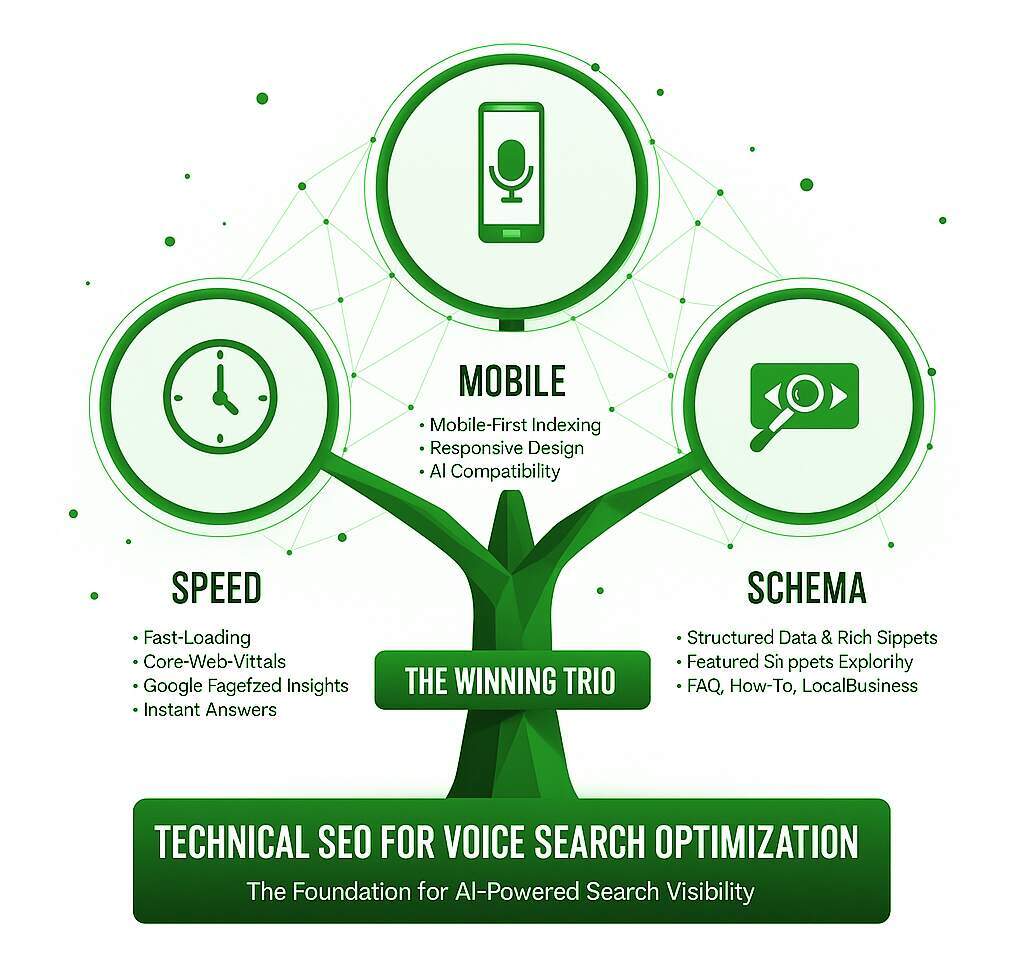
The technical foundation behind voice search optimization is non-negotiable. Since most voice searches happen on mobile, your site must be lightning-fast. Voice results typically load 52% faster than average web pages. Use Google PageSpeed Insights, Lighthouse, or GTMetrix to trim the fat. Users expect instant answers, and slow-loading sites simply don’t cut.
Implement structured data and schema markup across your content. FAQ schema, How-To schema, and LocalBusiness schema help AI understand your site’s purpose. Google loves structured clarity—especially for voice search for local business queries. Schema markup acts like a translator between your website and AI algorithms, improving your eligibility for featured snippets.
Lastly, focus on mobile-first indexing and core web vitals. If your site isn’t responsive, voice search won’t consider it. Think voice-first, not just mobile-first. The experience must be seamless whether users speak through a smart speaker or smartphone.
Even the best content fails if your tech can’t deliver it quickly and cleanly. Technical precision amplifies visibility across AI platforms. Ignoring these foundations puts your voice rankings at serious risk. A strong backend ensures your content not only gets heard but also ranked above the noise.
Local SEO and Voice Search Integration
Local voice search is one of the most lucrative arenas. When users say, “Find a coffee shop near me,” Google prioritizes verified businesses with great reviews, accurate listings, and structured local content. Voice is now the bridge between online visibility and offline foot traffic.
Step 1: Claim and optimize your Google Business Profile.
Step 2: Add high-quality photos, update your hours, and maintain NAP consistency (name, address, phone number).
Step 3: Collect reviews—and respond to them. Voice assistants often mention star ratings in their responses. Each positive review increases your credibility in voice search results.
If you operate in multiple locations, build dedicated location pages. Add local landmarks, FAQs, and directions. Enhance each with LocalBusiness schema. That’s how you win those “near me” queries that drive real foot traffic and conversions. Optimizing locally is no longer optional—it’s essential for dominance.
Businesses with local relevance get prioritized in AI-driven rankings. Your local presence must be as optimized as your website. Showing up first in voice results often translates to first in foot traffic. Combine accurate citations with local storytelling to boost authenticity.
Fun Fact Callout: 76% of voice searches for local businesses lead to a same-day visit.
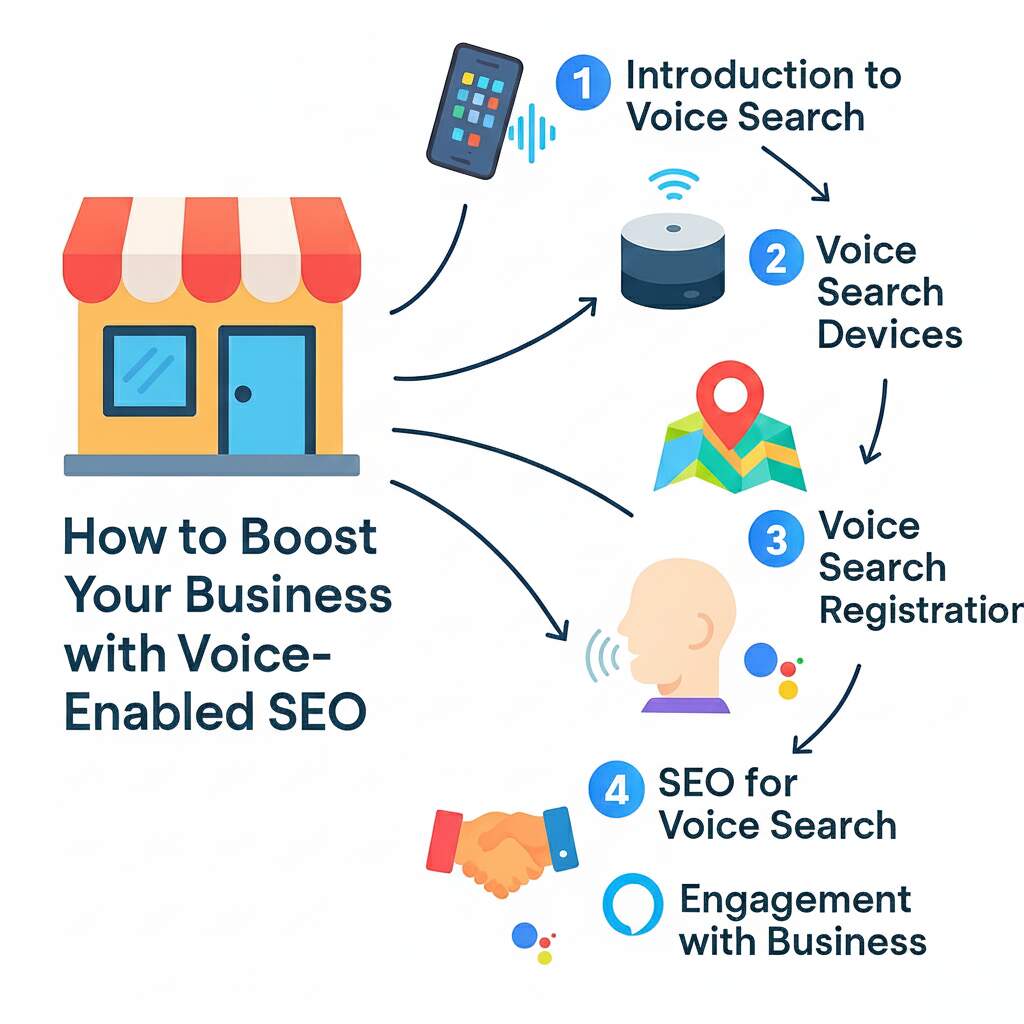
Overview: Your 2026 Voice SEO Action Plan
Voice search is not a passing trend; it’s the evolution of how humans interact with machines. By 2026, brands that master voice search optimization will gain unmatched visibility and consumer trust. From crafting content in a conversational tone to perfecting your technical SEO and mastering local voice strategies, every detail counts. The winners in this AI era will be those who prioritize clarity, speed, and user-centric answers. Don’t wait for competitors to take your spot in the answer box—act now. Voice queries are rising fast, and being late means missing out on high-intent traffic and real business conversions.
Understand the language your audience speaks—and let your brand be the voice that answers. The digital race is on, and voice is setting the pace. Your adaptation today determines your success tomorrow. Building voice-ready content today ensures sustainable growth and brand leadership tomorrow.
Ready to Be Heard Loud and Clear?
If your business isn’t optimized for voice, you’re already behind. Let eSign Web Services help you transform your site into a smart, responsive answer engine. Speak up, stand out, and dominate 2026. We’ll turn your website into the brand users hear first. Let’s get you talking—Contact us today.
Frequently Asked Questions (FAQs)
Q: How different will voice search be in 2026 compared to today?
A: Voice search in 2026 will be significantly more conversational and context-aware, with AI assistants understanding complex multi-part questions and maintaining context across longer conversations. The accuracy and personalization will improve dramatically.
Q: Do I need to completely rewrite my website content for voice search?
A: You don’t need to rewrite everything, but you should add conversational content that answers common questions your customers ask. Focus on creating FAQ sections and natural language content alongside your existing material.
Q: Which voice search platform should I prioritize for optimization?
A: Focus on Google Assistant first since it handles the majority of voice searches, but also optimize for Amazon Alexa if you have an e-commerce business, and Apple Siri if you target iPhone users heavily.
Q: How can I measure if my voice search optimization efforts are working?
A: Monitor your featured snippet appearances, track long-tail conversational keyword rankings, analyze Google Search Console data for question-based queries, and use voice search testing tools to check your content’s performance.
Q: What’s the biggest mistake businesses make with voice search optimization?
A: The biggest mistake is optimizing for how they think people search instead of how people actually speak. Voice queries are longer, more conversational, and often include filler words that businesses ignore in their optimization efforts.
Q: How can “near me” searches help my business grow?
A: “Near me” searches connect high-intent users to nearby services instantly. By improving local SEO, reviews, and schema, businesses increase visibility and conversions from customers actively seeking immediate solutions close to their location.
Q: How do AI search assistants impact modern SEO strategies?
A: AI search assistants interpret natural speech, context, and intent, so brands must create conversational, structured content. Optimizing for these assistants ensures your business appears in voice-generated answers across multiple devices and platforms.
Q: What are the best ways to use voice search analytics tools?
A: Voice search analytics tools reveal long-tail queries, conversational patterns, and FAQ opportunities. Tracking these insights helps refine content, improve snippet eligibility, and optimize user intent targeting across voice-powered search ecosystems.
Q: How important is (Google Assistant, Siri, Alexa optimization) for visibility?
A: Strong (Google Assistant, Siri, Alexa optimization) ensures multi-platform reach. Each assistant uses different data sources, so tailoring your schema, content, and structure increases your chances of being selected as the spoken result.
Q: Why is voice search for local business crucial today?
A: Voice search for local business drives real-time traffic by delivering instant answers to location-based queries. Businesses with optimized listings, reviews, and localized content gain priority placement and higher conversion rates from mobile and smart speaker users.
Author Details

Ashwani Kumar Sharma
Ashwani has been actively involved in SEO services since 2005. His expertise and distinctive work approaches have made him one of the most experienced and trusted SEO experts in the industry. He is a certified SEO and Google Ads professional. He also has strong business development skills in advanced SEO, PPC, and digital marketing strategies.


