



8 Essential Steps to Managing a Successful PPC Campaign

Through pay per click advertising businesses can access potential customers who are already looking for the products and services they have to offer. PPC can drive traffic to your website, generate enquiries, boost your brand visibility and support online sales with little or no advertising budget. This is especially a boon to small and growing businesses. But buying an ad and picking a few keywords is not enough. A successful PPC campaign requires strategic planning, accurate targeting, relevant keywords, robust landing pages and ongoing monitoring.
Advertisers need to know where their money goes, too. Without a clear strategy, it is easy to burn through a large portion of a budget on clicks that never result in an enquiry or sale. The following eight steps can assist businesses in developing and running a more effective PPC campaign.
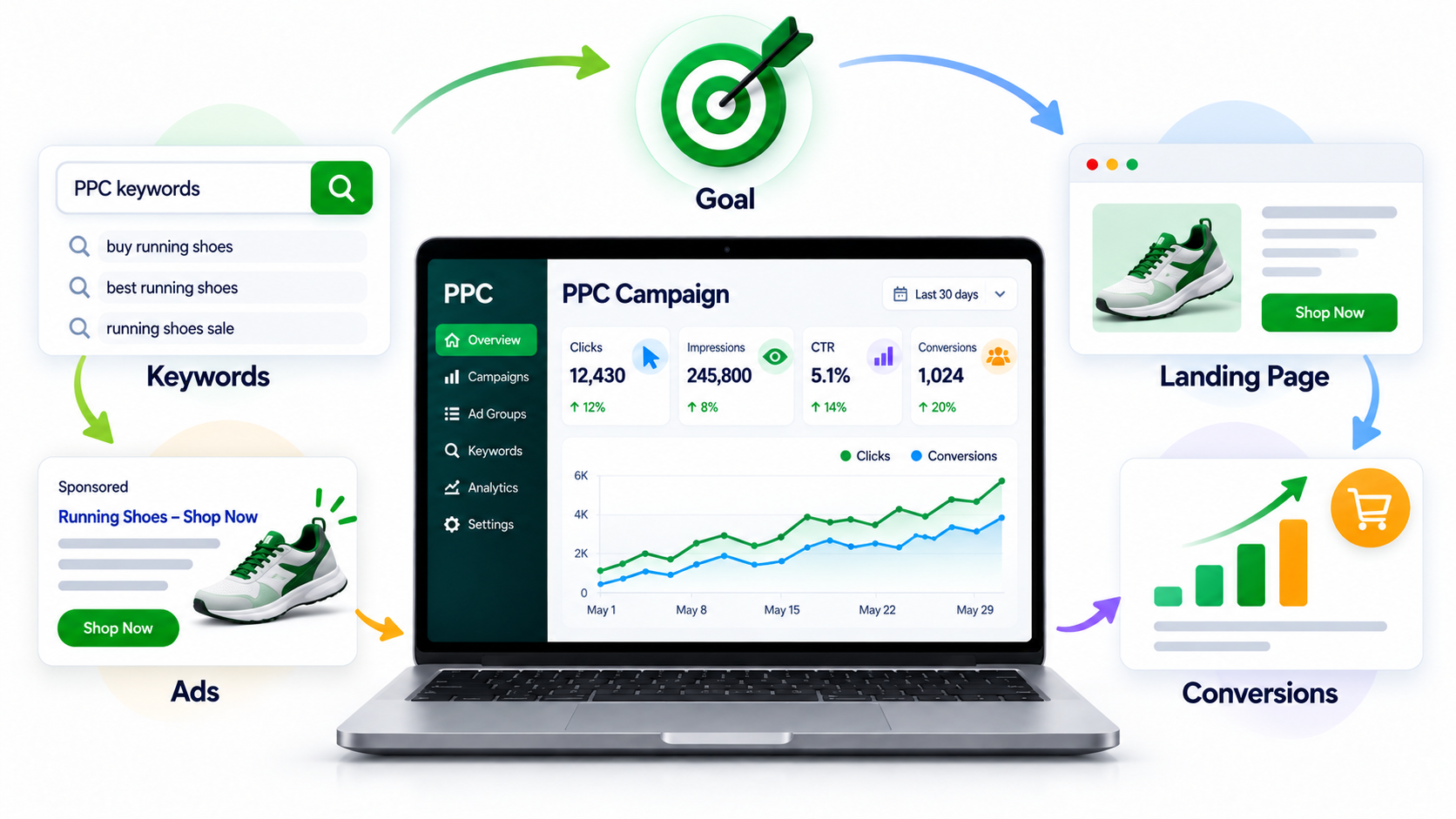
Step 1: Set a Clear Goal for Your Business
Before you log in to Google AdWords or create an ad, have a clear idea of what you want the campaign to achieve. Maybe you want more traffic to your site, more sales, more customer enquiries, more phone calls, promotion for a particular service, or simply greater visibility for your business.
A clear goal will make it easier to choose the right campaign settings and measure whether your advertising is working. For example, a company looking for sales may focus more on keywords showing stronger buying intent, while a local service provider may concentrate on people searching within a particular city or service area.
Businesses should also decide how much they want to spend to generate a customer or enquiry. This gives the campaign a clearer financial direction from the beginning. Instead of measuring success only by the number of clicks received, look at whether those clicks are contributing to the goal you originally established.
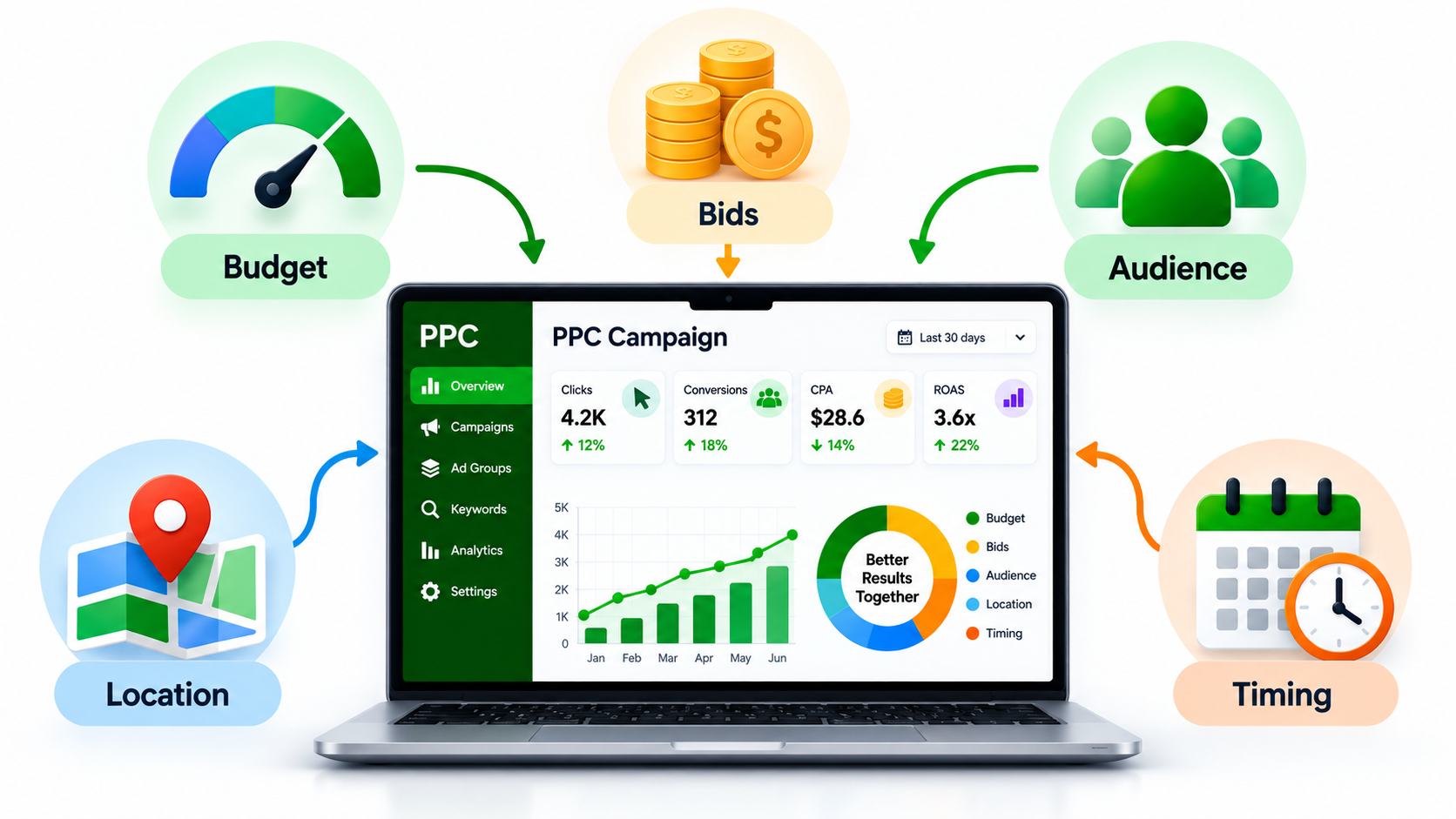
Step 2: Set a Realistic Advertising Budget and Cost-Per-Click Bids
Once you know what you want the campaign to achieve, work out what the business can afford to spend. In Google AdWords, advertisers create a daily budget for their campaigns. They also specify a maximum amount they are willing to pay for a click. This gives greater control on advertising costs, but the limits still need to be planned carefully.
Instead of picking a random number, it’s useful to calculate the right PPC advertising budget based on the value of a customer, expected conversions, available funds and the cost of bringing in relevant traffic. This links the budget to real business objectives rather than treating advertising spend as a guess.
The budget should be based on how much money the company can spend and how much a potential customer is worth. If a keyword is consistently bringing quality leads or sales, then it may be worth paying a little more per click. In contrast, no money should be spent on keywords that bring in visitors but no business. Budgets and bids are not something you set and forget, but need to be reviewed regularly.
Step 3: Define Where, When, and to Whom Your Ads Should Appear
Getting to the right people is as important as picking the right keywords. Businesses using more than one advertising platform may also need to compare Google Ads vs Meta Ads for lead generation because each platform reaches customers differently depending on their intent and stage in the buying journey. Advertisers have to decide which locations they want to target, which languages are relevant and where they want their ads to appear. If a business only has clients in one city, then it should not spend money on clicks coming from areas where it cannot serve its products or services.
Timing can also influence performance. Some businesses may do better during normal business hours, others may attract more customers in the evenings or at weekends. Advertisers should consider when their customers are most likely to look and respond. Such targeting decisions should be exercised judiciously. More visitors to a website doesn’t necessarily mean a campaign is improving. You want to spend the budget you have on reaching people that are actually likely to need what the business has to offer.
Step 4: Research Keywords and Organize Them Into Focused Ad Groups
Keywords determine when Search advertisements may appear, making keyword research one of the most important stages of a PPC campaign. Consider the words your customers would use when they are actively looking for the products or services your business provides. Very broad terms can attract many visitors, while understanding search intent behind keywords can help identify terms used by people who are closer to making a purchase or enquiry. Keyword match types matter, too. Broad, phrase and exact match let you control how broadly or narrowly you want your ads to show for a search. Negative keywords stop your ads from appearing for searches that are obviously irrelevant, saving your budget from wasted clicks.
Controlling irrelevant searches can also help businesses lower cost per click without losing relevant traffic over time. The objective should not simply be to attract the cheapest click possible. It should be to avoid paying unnecessarily for traffic that has little chance of becoming business. Once you have selected your keywords, group similar ones into separate ad groups. Every group should have one distinct subject, product, or service. Focused ad groups make it much easier to write advertisements that are closely related to what the person is actually searching for.
Step 5: Write Ads That Closely Match Each Keyword Group
Once you’ve organised the keyword groups, you should write ads specific to each group. The headline and description should be relevant to the terms that triggered the ad and clearly communicate what the business offers. Your ads are less likely to be relevant to potential customers if they are too broad and used for many unrelated keywords. Good PPC ad copywriting connects the searcher’s need to the offer as clearly as possible. The ad should tell people what they can expect once they click, rather than making vague promotional claims.
The ad should also give the searcher a good reason to visit the website. This could be a useful service benefit, an offer, availability, pricing information or another real advantage. Strong calls to action can give users an idea of what they can do next, whether that is to request a quote, make a purchase, contact the company or learn more. It helps to create multiple ads for an ad group too. You can try out different headlines, descriptions and calls to action and find out which message gets the better response.
Step 6: Direct Each Advertisement to the Most Relevant Landing Page
Getting a click is only useful if the visitor arrives somewhere relevant. The landing page should closely match both the advertisement and the search that brought the person to the website. If someone clicks an advertisement for a particular service, sending them directly to the page about that service is generally more useful than sending them to a broad homepage. The landing page should immediately explain what is being offered and make the next action easy to understand. Important information should be easy to find, and visitors should not have to move through several pages before they can make an inquiry or purchase.
When traffic is arriving but visitors are not taking action, it is worth examining possible landing page conversion issues rather than assuming the advertisement itself is the only problem. A disconnect between the ad promise and the destination page can make an otherwise relevant click far less valuable. Page speed, useful content, simple navigation, and clear contact information can all affect whether visitors stay on the site. Landing-page relevance can also influence AdWords campaign performance, so it should be treated as an important part of PPC management rather than simply a website design concern.
Step 7: Set Up Conversion Tracking Before Measuring Success
A campaign cannot be managed properly if the advertiser knows only how many clicks it receives. Businesses also need to understand what visitors do after reaching the website. Google AdWords conversion tracking can help show whether those visitors complete actions that matter to the business. A conversion will depend on the purpose of the campaign. It could be an online purchase, a completed enquiry form, a registration, a download, or another valuable action. Businesses can track these results to see which keywords and advertisements are actually helping them reach their goals.
Advertising activity only becomes meaningful when businesses can connect that activity with useful outcomes. This information can also point to an important difference between traffic and useful traffic. One keyword may get a lot of clicks but very few conversions, while another may receive fewer clicks but produce a larger number of customers. Conversion data allows advertisers to make better decisions about where to spend their budget.
Step 8: Review Performance and Make Regular Campaign Improvements
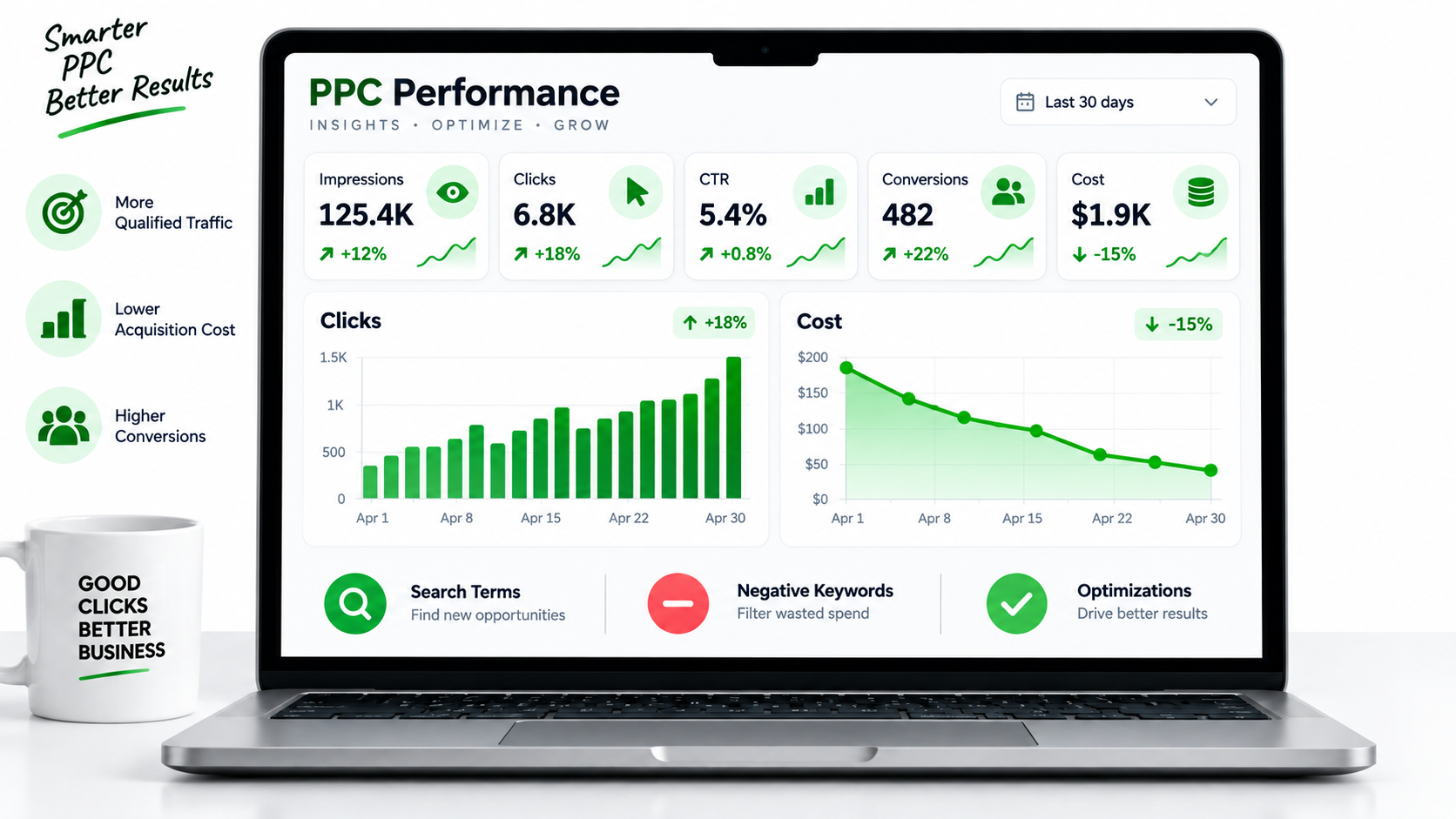
PPC management doesn’t end when the ads go live. You should track campaigns to see where money is being spent well and where there is room for improvement. Key data such as impressions, clicks, click-through rate, average cost per click, conversions, Quality Score, advertising spend and search terms can help you gauge the performance of your campaign.
The point is not just to collect numbers but to make better decisions with them. If some searches are irrelevant, you may need to add more negative keywords. If a keyword is getting clicks but not producing any useful results, it might be time to lower the bid or pause the keyword. Keywords that are doing well may be worth a greater focus and bad ads can be rewritten and tested against other ads.
Regular optimization allows the campaign to improve gradually. Advertisers can use actual campaign performance to decide what should be kept, what needs to change, where additional budget may be justified, and which parts of the campaign should be removed.
Keep Improving Your PPC Campaign over Time
Creating a PPC campaign is only the beginning. Advertising success depends heavily on what happens after the campaign starts receiving traffic. Businesses need to regularly review their keywords, ads, costs, conversions, and landing pages. Even a well-performing campaign may eventually need adjustments as competition, customer behaviour, and advertising costs change.
Do not make changes unless there is a clear reason for doing so. Instead, use the information available in the advertising account to see what is working and where money may be getting wasted. When goals, targeting, keywords, advertisements, landing pages, tracking, and ongoing testing all work together, PPC can become a much more controlled way to attract potential customers and make better use of an advertising budget. Want to get more value from your PPC budget? Explore our PPC advertising services and build campaigns focused on better leads, stronger conversions, and measurable results.
Author Details

Ashwani Kumar Sharma
Ashwani has been actively involved in SEO services since 2005. His expertise and distinctive work approaches have made him one of the most experienced and trusted SEO experts in the industry. He is a certified SEO and Google Ads professional. He also has strong business development skills in advanced SEO, PPC, and digital marketing strategies.


