



Google Ads vs Meta Ads for Lead Generation: Budget Strategy Guide

Key Takeaways:
- While Google Ads leverages existing demand, Meta Ads works toward building and nurturing future demand.
- It is up to the business objective, industry sector, audience dynamics, budget, and sales cycle to determine which platform is better.
- The cost per lead should never be the sole criterion for evaluating campaign effectiveness.
- Different parts of the customer journey require a different budget split.
- Landing pages, creatives, and conversion tracking have a huge impact on campaigns. Landing pages, creatives, and conversion tracking have a giant impact on campaigns.
- Revenue, lead quality, and customer acquisition cost give clearer insights than clicks or impressions.
Introduction
Choosing between Google Ads vs. Meta Ads is not only about finding services; Meta will assist businesses in reaching cheaper platform. These platforms can help companies generate leads; however, they operate quite differently. While Google will find people who are searching for the services, Meta will assist businesses to reach people based on their interests, behaviors, and activities online.
It is important to know this because each lead will not necessarily be in the same position. A Google lead will likely already have been price shopping and could even be calling, while a Meta lead might still be educating themselves on the offer.
The decision will have to be made on the basis of your industry type, your business objectives, the budget at your disposal, consumer behavior, competitors, and the sales process you follow. A business that demands emergency services might not require the same strategy as compared to eCommerce businesses, SaaS companies, and real estate firms.
In this blog, we will be covering various aspects, including the working of both tools, quality of leads, suitable industries for both, budget planning, and mistakes to avoid when launching a marketing campaign.
Why Does Platform Choice Matter?
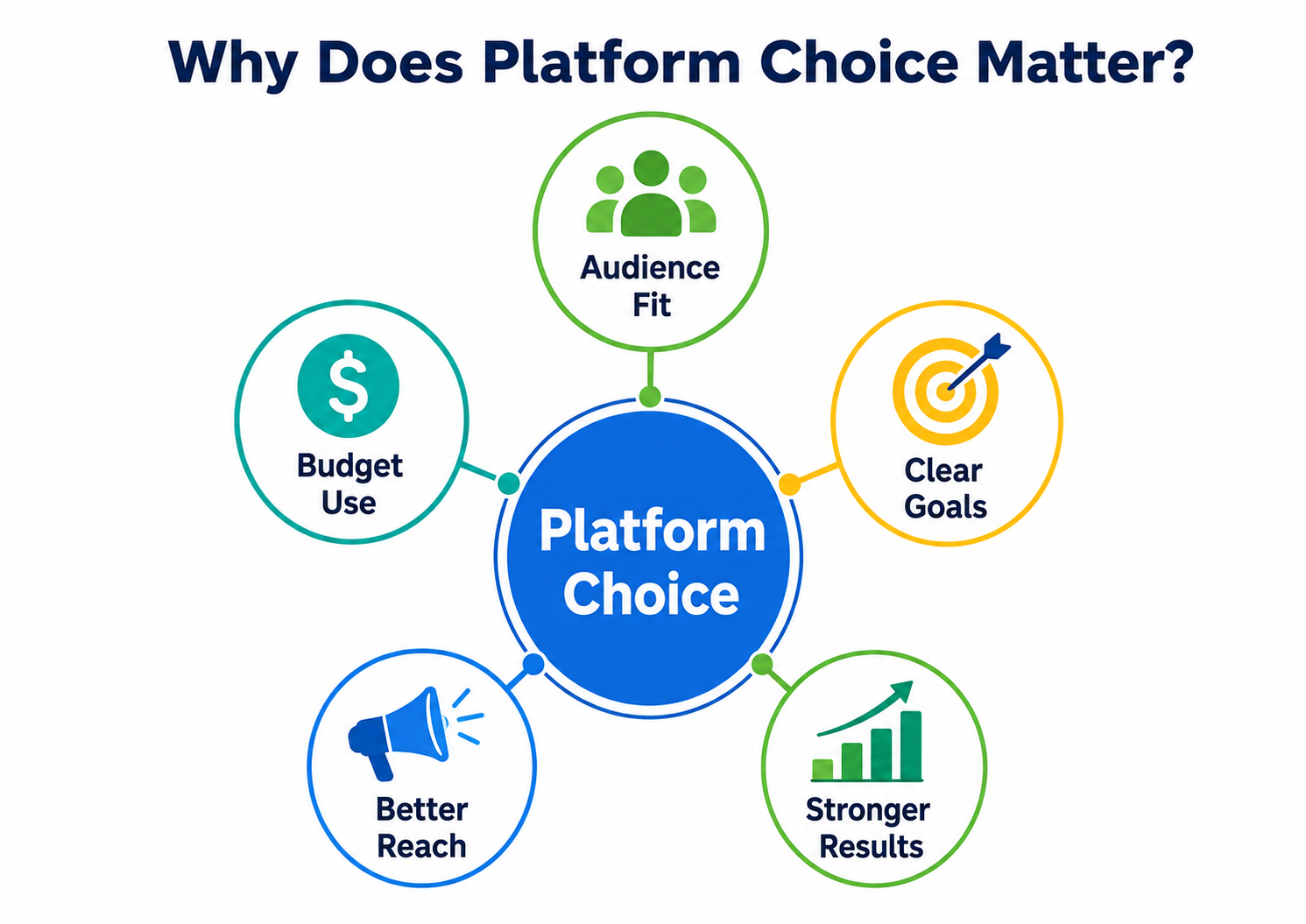
Businesses often compare Facebook Ads vs. Google Ads because both platforms can generate leads, but they influence different parts of the buying journey. Neither platform is universally better. The right option depends on customer intent, business objectives, budget, competition, industry, and sales process.
- Why Businesses Compare Both Platforms: Google is associated with intent-based searches, whereas Meta is associated with reach, brand awareness, visual content, and interest-based marketing. This is why the comparison is relevant for any company that wants to invest wisely and avoid wasting money.
- Understanding Customer Buying Behavior: Some customers tend to search only when they intend to take action, whereas some require multiple encounters with the brand before they make their query. For instance, the customer who is searching for an emergency plumber will make the call straightaway, whereas the customer searching for an online course will do some research first.
- How Business Goals Influence Selection: If the goal is quick inquiries from people already searching, a strong Google Ads strategy may work better. If the goal is awareness, education, community building, or demand creation, a strong Meta Ads strategy may be more useful.
Platform selection is crucial because consumer behavior varies between industries. Prior to choosing either Google or Meta, companies must first consider whether the consumers they are targeting are seeking information, browsing, or simply unaware that they require the product or service.
How Do Google And Meta Differ?
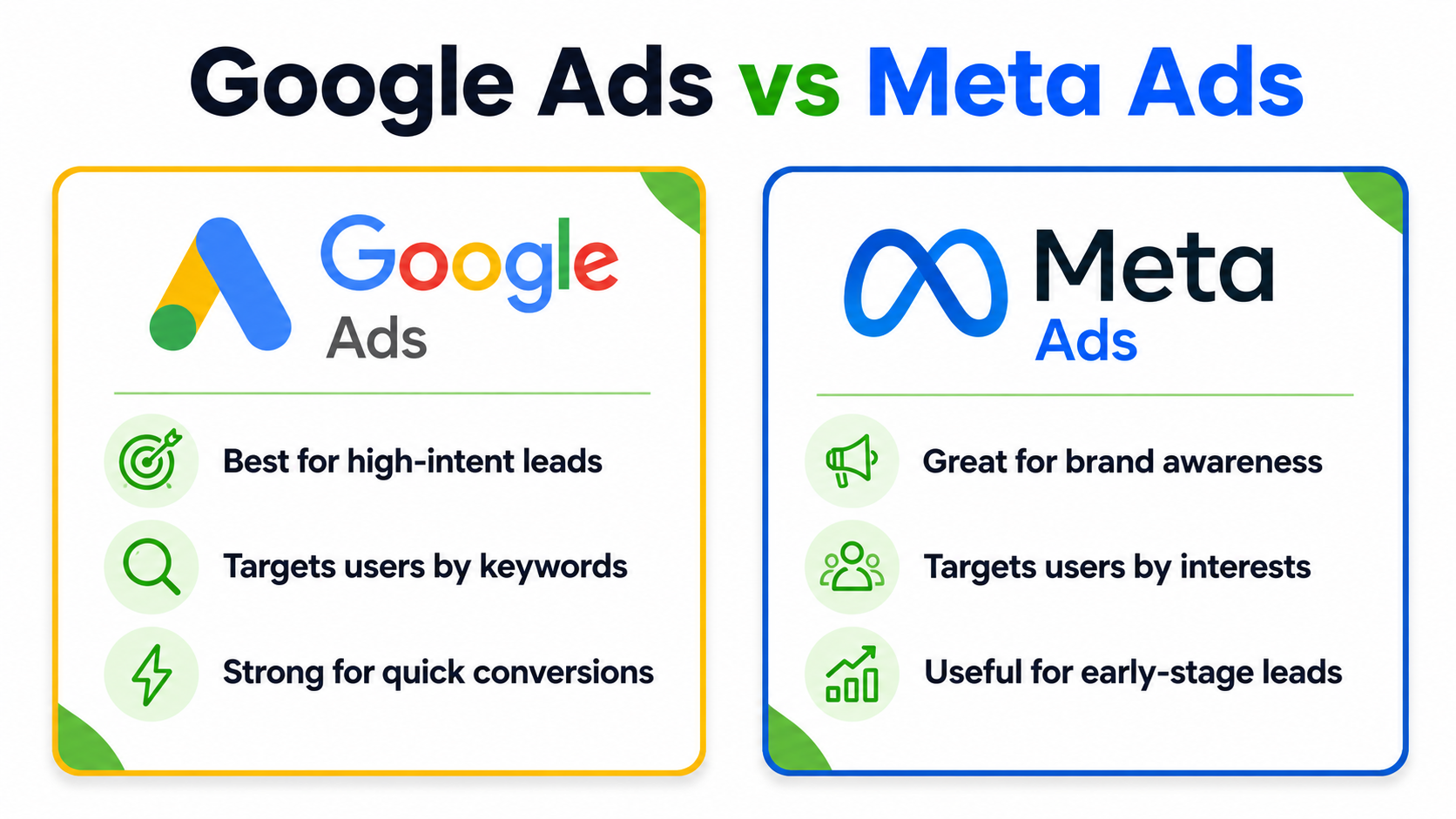
Google Ads for lead generation works by capturing existing demand. People search for a product, service, problem, or solution, and Google shows relevant ads based on keywords, location, bid, quality, and intent. This is why search intent marketing is so powerful for urgent or high-intent services.
Meta Ads for lead generation works differently. Meta shows ads across Facebook, Instagram, Messenger, and other placements based on interest-based advertising, demographics, behavior, engagement, and content interaction. It helps businesses create demand before users actively search.
- Search Intent vs. Interest-Based Targeting: Google is determined by what people enter on their screen. Meta is determined by who people are, what they like, and how they behave online. Google works in response to an active demand, whereas Meta influences interest before anything else.
- Modern Customer Journey: Today, a person may first see a Meta ad, visit a website, leave, later search on Google, and then convert. This makes multichannel advertising more important because one platform may create awareness while the other captures the final inquiry.
- Audience Targeting Capabilities: Google makes use of keywords, location, audience, devices, remarketing list, and search behavior. Meta uses demographics, interests, lookalike audiences, custom audiences, website traffic, engagement metrics, and customer lists.
- Campaign Types across Both Platforms: Google includes Google Search Ads, Display, YouTube, Shopping, and Performance Max. Meta includes image ads, video ads, carousel ads, messaging ads, Meta Lead Ads, retargeting campaigns, and Advantage+ campaigns.
Google and Meta are distinct because they connect with their users in different ways. Google is effective when the user knows what he needs. Meta is effective when the user needs to discover, comprehend, or believe something before taking any action.
Which Platform Generates Better Leads?
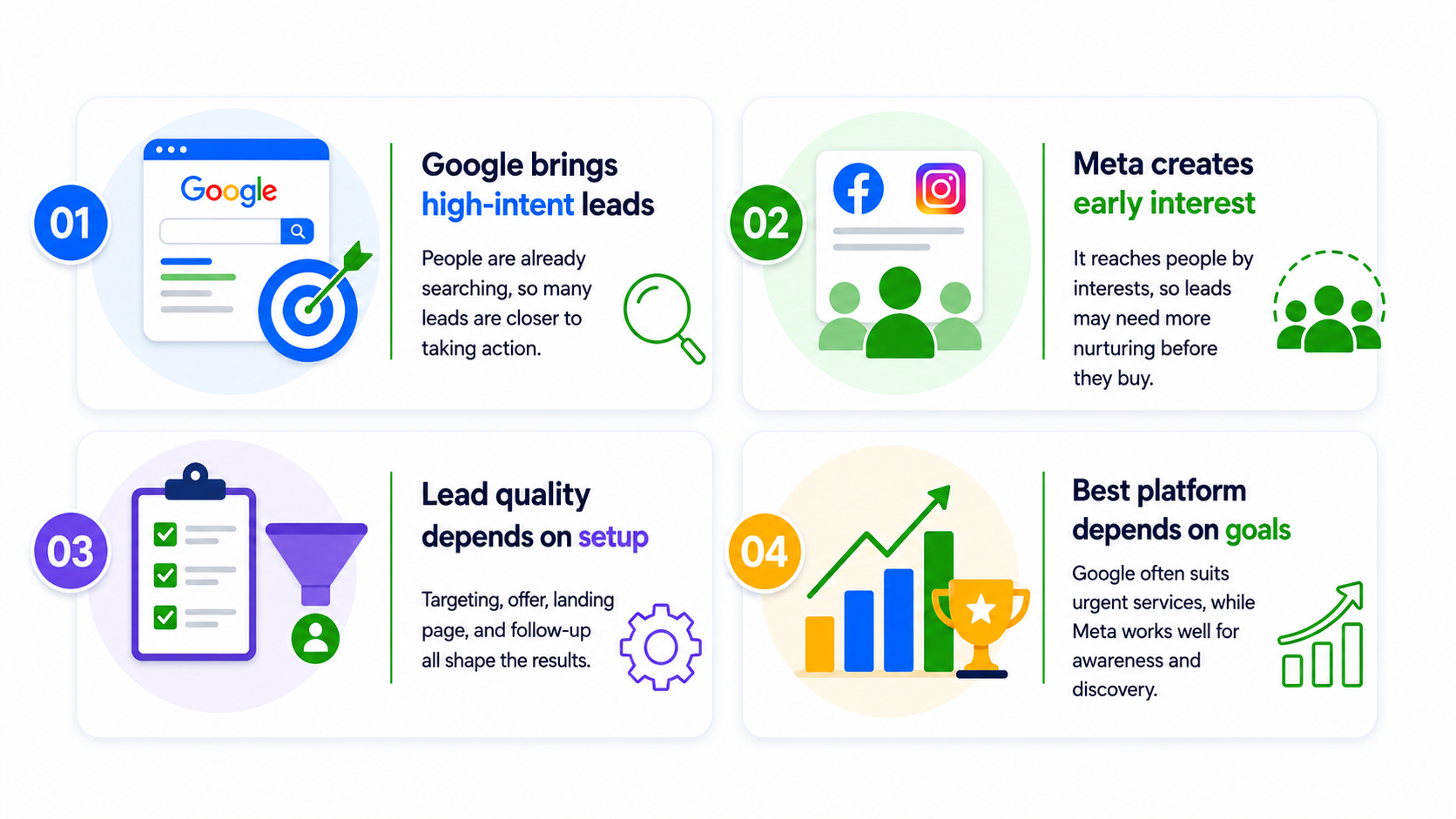
The lead quality depends on the intention of users, the targeting, the landing page, the offer, the response time, and the qualification process. The system can produce lots of leads, but this doesn’t mean that all these leads are serious.
- User Intent: Google attracts customers who have a higher intention of buying since they are looking for something particular. Meta may attract leads at a lower level of intention to buy.
- Audience Targeting: Meta can be strong for audience targeting because it allows businesses to reach people based on interests, lifestyle, behavior, engagement, and lookalike data. Google works better when keyword intent is clear and search volume exists.
- Cost Per Click and Cost Per Lead: Google may have higher click costs in competitive industries. Meta may deliver a lower cost per lead, but lower cost does not always mean better value. Businesses should compare qualified leads, not just form submissions.
- Lead Quality and Conversion Rates: A good Google campaign may produce fewer but stronger inquiries. A good Meta campaign may produce more leads but require better lead nurturing. The sales team must check how many leads answer calls, book appointments, and convert.
- Customer Acquisition Cost: Customer acquisition cost shows how much it costs to gain one paying customer. This is more useful than only tracking lead cost because a cheap lead that never converts can become expensive.
- Return and Long-Term Value: Campaigns should be measured by return on ad spend, revenue, customer lifetime value, and business growth. A lead that produces repeat purchases may be worth more than several low-quality inquiries.
Good leads do not arise from the platform itself. Good leads come from the right message, the right target market, the right landing page, the right offer, the right tracking, and rapid follow-up. The value of the leads must be measured, not their quantity.
Which Industries Fit Each Platform?
The way industries behave varies from Google to Meta. It all boils down to the search behavior of potential clients, urgency, and level of education required by the buyer.
- Local Service Businesses and Home Improvement: Businesses like electricians, plumbers, movers, roofers, and repair companies often benefit from PPC lead generation on Google because customers search when they need fast help. Google is useful for urgent and location-specific services.
- B2B Companies and SaaS Businesses: The companies may need both of these platforms. Google would be able to attract users who search for solutions, while Meta would be able to tell its users about it through cases, guides, videos, and retargeting material.
- Ecommerce and Lifestyle Brands: Meta always works great for e-commerce, fashion, beauty, fitness, food, travel, and lifestyle niches because it can create curiosity through images. Meta ads can demonstrate the product in such a way that it appears organic and understandable.
- Healthcare, Financial Services and Education: Explanation and trust could be required by many of such industries. Google could be used to attract people looking for appointments, guidance, and service providers. Meta could be helpful in raising awareness through testimonials, videos, and educational opportunities.
- Real Estate and Hospitality: Real estate, hotels, travel agencies, property management companies, and other similar businesses can utilize Meta for visual discovery and Google for intent-driven search. For instance, a property management company could use Meta for property tour promotion and Google for capturing “property for sale nearby” searches.
Google is generally a good choice for businesses that have a certain search intent. Meta is generally a good choice for businesses that require visual storytelling, awareness, and educational opportunity.
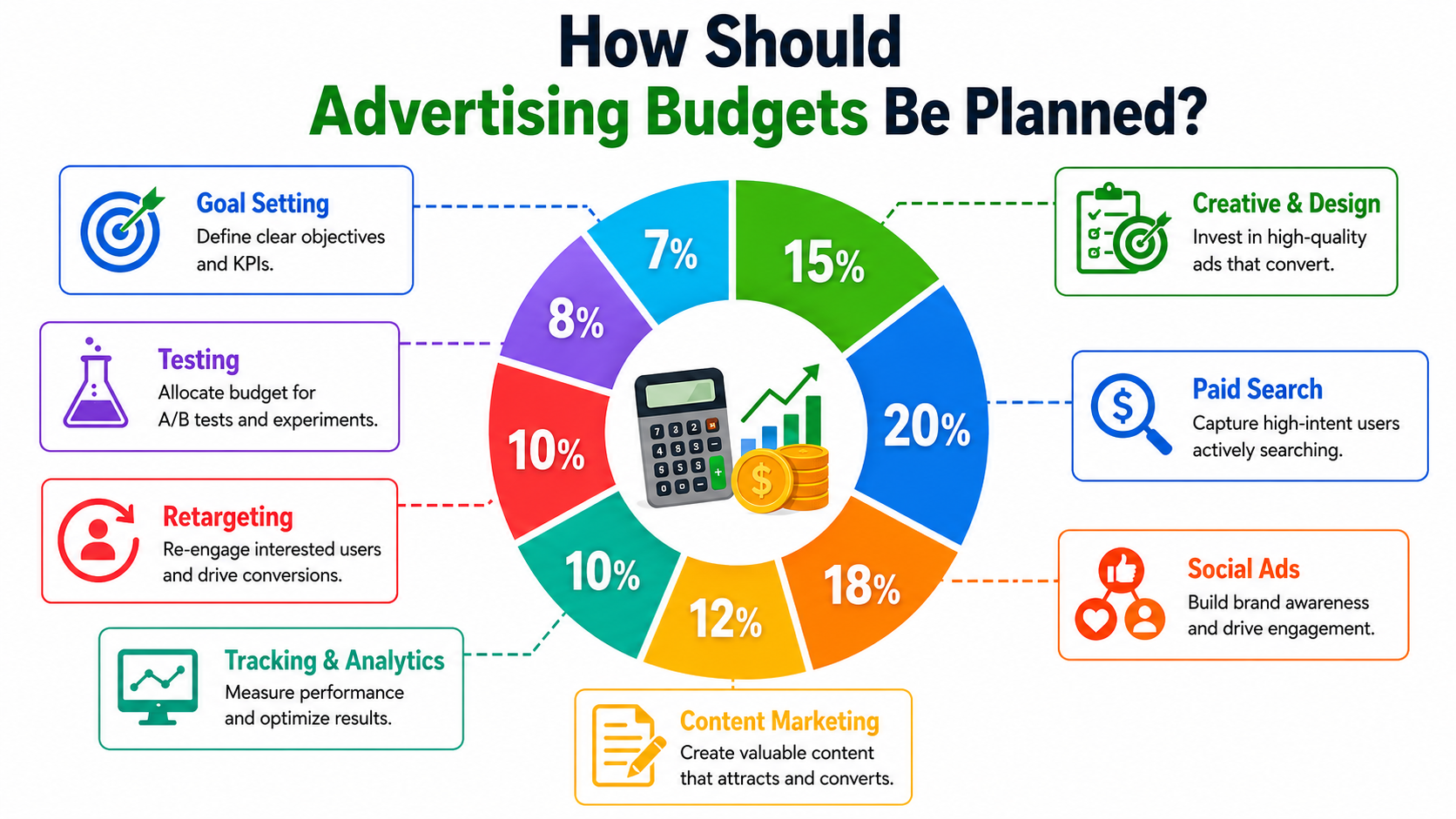
How Should Budgets Be Planned?
A good budgeting process starts with figures in the business, rather than assumptions. It requires an understanding of how much value a customer adds, how many leads are required, and how much one can spend on advertising.
- Define Business Objectives: The first step is figuring out what you are trying to achieve with the campaign. This can range from phone calls, forms filled out, appointments made, sales, demonstrations, or any form of lead generation.
- Understand Customer Acquisition Costs: Calculate how much it costs to gain one paying customer. This includes ad spend, Google Ads management, Meta Ads management, creative costs, software, and sales resources.
- Calculate Monthly Advertising Budget: Consider the revenue goals, average lead-to-customer conversion ratio, customer lifetime value, and target cost per acquisition. If the customer’s value is £5,000, the budgeting for that organization will be different from an organization where the customer’s value is £100.
- Allocate Budget Across the Marketing Funnel: A complete marketing funnel includes awareness campaigns, consideration campaigns, conversion campaigns, and remarketing campaigns. Meta often supports awareness and consideration. Google often supports conversion and direct demand capture.
- Budget Allocation Models: A Google-first strategy, such as 70% Google and 30% Meta, can suit local services, healthcare, legal firms, contractors, and emergency services. A balanced 50/50 model can suit professional services, B2B companies, and education providers. A Meta-first model, such as 30% Google and 70% Meta, can suit e-commerce, fashion, beauty, consumer products, and lifestyle brands.
- Seasonal and Product Launch Budgets: Campaigns may require greater budgets prior to periods of increased demand. Product launches may require more money allocated to Meta advertising early on and, later on, more money for Google advertising as the products become search terms.
Advertising budget needs to relate to the sales objective, value of the customer, quality of leads, and conversion rate. Arbitrary spending every month tends to produce poor results because there will be no indication of profitability.
How Can Both Platforms Combine?
Google and Meta often work better together than separately. A connected digital marketing strategy can use Meta to build interest and Google to capture demand when users are ready to act.
- Build a Full-Funnel Marketing Strategy: Meta could be the medium through which the brand is introduced, the offer is made, and the credibility is built up, whereas Google could come into play after searching for the service.
- Generate Awareness Using Meta Ads: Meta is effective for videos, testimonials, educational content, lead magnets, and visuals. It can allow companies to reach out to potential customers who do not even realize their need for the product/service yet.
- Capture Purchase Intent Through Google Search: Once a user starts looking for a certain service, Google can capture that intent through related ads and relevant landing pages.
- Retarget Visitors Across Both Platforms: Retargeting allows bringing back those visitors who came to the company’s website but failed to inquire about the product/service.
- Share Audience Insights between Platforms: Google search analytics help determine customer needs. Meta creative analytics help know what catches the customer’s attention. All of this helps to better create ads, content, offers, and landing pages.
- Optimize Landing Pages for Higher Conversions: Good landing page optimization supports both platforms. A landing page should match the ad message, load fast, work well on mobile, include trust signals, and have a clear call to action.
- Test Creatives, Audiences, and Offers: Strong conversion rate optimization includes testing headlines, forms, visuals, calls to action, and page structure. Businesses should also use first-party data from CRM systems, website visitors, and customer lists to improve targeting.
Google and Meta should not work in isolation. There is an alignment of information in both platforms about messaging, landing pages, and remarketing audience segments.
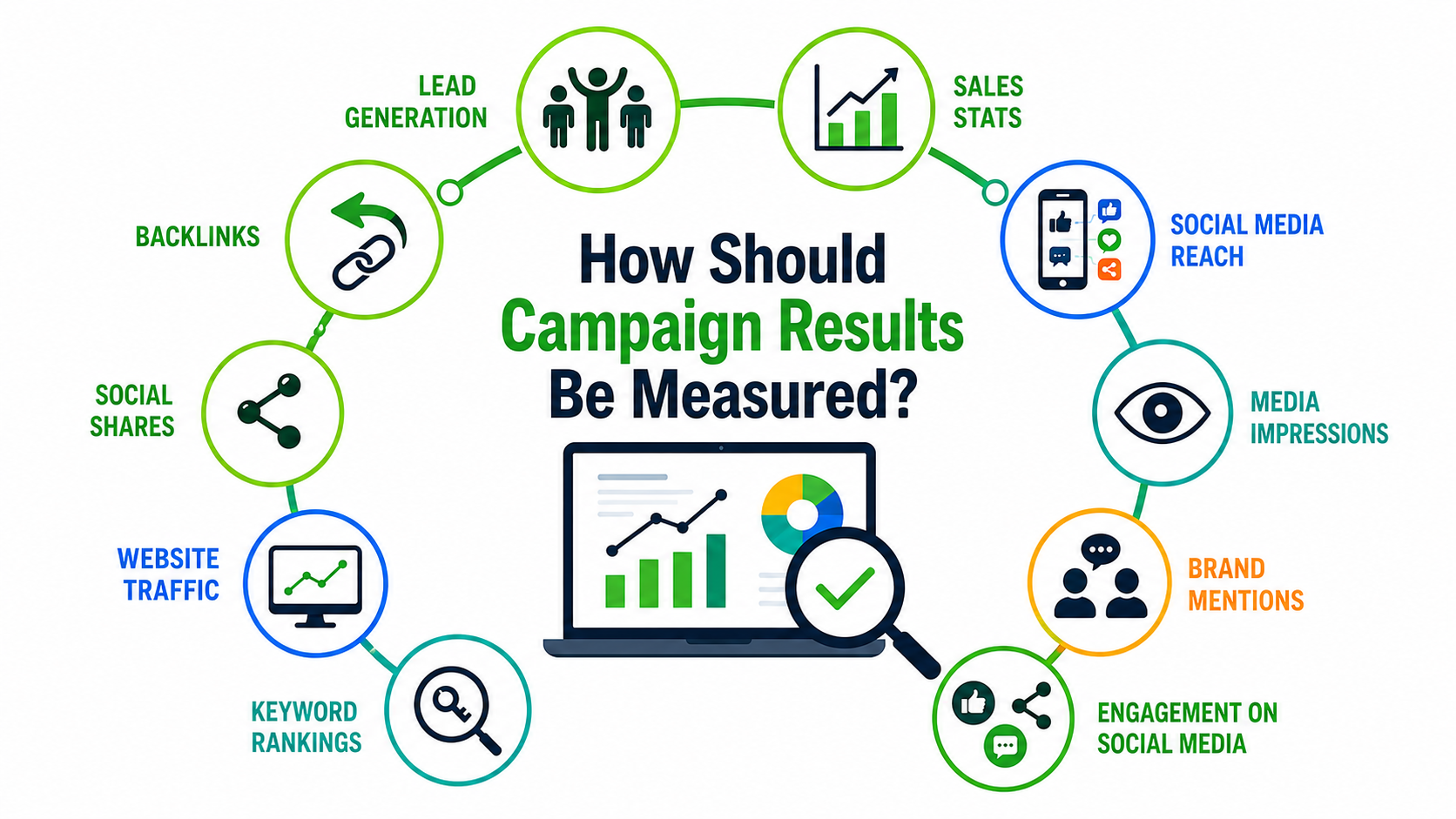
How Should Results Be Measured?
Campaign success should not be measured only by clicks, impressions, or cheap leads. Strong performance marketing connects advertising data with qualified leads, sales, revenue, and profit.
- Common Budget Mistakes: Businesses often compare platforms only by cost per lead, ignore lead quality, underfund campaigns, scale too quickly, send traffic to weak landing pages, use the same creative too long, ignore conversion tracking, focus only on clicks, or run Google and Meta separately.
- Qualified Lead Volume: Determine the number of leads that match your organization’s service area, budget, timing, and qualifying criteria. This metric is much more valuable than the total number of leads.
- Lead-to-Customer Conversion Rate: Sometimes, a less successful campaign in terms of qualified leads can turn out to be more profitable compared to campaigns with many unqualified leads.
- Customer Acquisition Cost and ROAS: Track customer acquisition cost, return on ad spend, revenue per lead, customer lifetime value, assisted conversions, attribution models, and incremental revenue.
- Future Trends in Paid Lead Generation: AI is changing both platforms. Google’s Performance Max, Meta’s Advantage+ Campaigns, predictive targeting, privacy-first advertising, AI-generated creatives, and cross-platform automation are becoming more important. Still, automation works best when tracking, creative, offers, and conversion data are strong.
A good marketing report does not consist of traffic figures alone; it should also show quality leads, sales, revenue, cost per acquisition, and lifetime value. It helps organizations make better decisions without wasting money on ineffective actions.
Conclusion
Google Ads vs. Meta Ads is not a simple winner-versus-loser comparison. Google is often stronger when people are already searching, while Meta is useful for building awareness, creating interest, and nurturing future demand. The correct way to budget is dependent on a range of factors, including the industry, search traffic, buying habits, buying cycles, buyer value, and objectives. Lead costs alone can never be the only deciding factor for platform choice.
Businesses get better results when they track qualified inquiries, sales, customer acquisition cost, revenue, customer lifetime value, and return on ad spend. In many cases, Meta creates the first interest, Google captures the search, and remarketing keeps the business visible until the customer is ready.
Are you getting the right results from your paid advertising budget?
Get in touch with eSign Web Services for a detailed paid advertising review, platform comparison, and budget strategy designed around your business goals. Our team can help you assess campaign performance, identify opportunities for improvement, strengthen conversion tracking, and allocate your advertising budget more effectively to generate better-quality leads and support sustainable business growth.
Frequently Asked Questions
Question: Which is better for lead generation, Google Ads or Meta Ads?
Answer: However, Google Ads tend to work better when the user is actively looking for a product or service. On the other hand, Meta Ads tend to work well when the organization needs to raise awareness about its products/services or even reaches out to individuals through their interests and behaviors. It all depends on the type of industry, offers, audience, and sales cycle involved. Many organizations benefit when they use Meta to raise interest and then Google to catch the users.
Question: Is Google Ads more expensive than Meta Ads?
Answer: The cost-per-click of Google Ads may be higher since the user is closer to making the final decision already. Meta Ads will probably generate less cost per click or inquiry, but the lead will need to be qualified. The real comparison will be done by comparing cost per qualified lead, cost per acquisition, conversion rate, and revenue. A high-cost lead from Google can still be profitable as long as its conversion rate is higher than a low-cost lead from Meta.
Question: Which platform generates higher-quality leads?
Answer: Google generally creates more leads ready to buy because they are indicating their intent through search keywords. Meta is also capable of creating good leads, provided that everything from targeting, creatives, offers, and even form questions has been well-planned. Lead quality needs to be tested based on the contact rate, lead qualification, appointments, proposals, sales, and customer lifetime value. Each platform does not guarantee quality on its own.
Question: Should small businesses invest in Google or Meta first?
Answer: Small firms should begin with the platform where their customers tend to find them. Where the customer actively seeks out the need for immediate assistance, Google could be the right choice. But where there are visual requirements, branding needs, and lifestyle aspects, Meta could be the right place. Given a limited budget, it is preferable to have one solid campaign rather than several campaigns at the same time.
Question: Can Google Ads and Meta Ads work together?
Answer: Yes, the two platforms can work hand in hand. The Meta platform will raise awareness, educate users, and drive them to the website. The Google platform will then find these individuals once they are searching for the services offered. Retargeting of those who did not convert will be done using both platforms. This approach will be ideal for expensive services and longer sales cycles.
Question: How should I split my advertising budget?
Answer: The initial split is dependent upon the search volume, the campaign objective, the sales cycle, and the value of the customers. A local service that is urgently needed may have a split of 70/30. A professional service firm that is growing may opt for a 50/50 split to begin with. An aesthetic consumer brand will allocate more money to Meta. The first allocation must always be seen as an experiment.
Question: Which industries perform better on Google Ads?
Answer: Google Ads is known to do quite well with industries where consumers look for solutions right away. Industries such as home service, healthcare, law firms, finance, repair service, moving service, software as a service, and professional service fall under that category. However, performance depends on factors such as competition, keyword price, location, landing page, and sales follow-ups. It is important to have conversion tracking in expensive industries where click price can pay off in leads.
Question: Which businesses benefit most from Meta Ads?
Answer: There are several businesses that might benefit from using Meta Ads, such as e-commerce, fashion, beauty, fitness, real estate, education, events, travel, lifestyle products, and innovative services. The companies will be able to attract their potential clients’ attention through the use of photos, videos, testimonials, and demos. It is also good to use this type of marketing when the customer needs time for consideration.
Question: How long does it take to see results?
Answer: Certain marketing campaigns could yield leads in a few days’ time, but for sound judgments, more information is needed. The outcomes will vary according to budget, traffic volume, number of prospects, industry, offer, landing page, and conversion rate. Organizations should not base their judgments on a limited number of clicks and leads that occur at the beginning of the marketing campaign.
Question: Should I hire a professional ads agency?
Answer: There are agencies that specialize in handling the situation for companies that do not have enough time, skills, creativity, or experience to conduct their campaigns effectively. Agencies that suit your business needs can help you manage strategies, keywords, target audience, ads, landing pages, tracking, testing, and even budgets. But it is important for agencies to track only leads that matter and money made from those leads, not clicks or low-quality inquiries.
Author Details

Ashwani Kumar Sharma
Ashwani has been actively involved in SEO services since 2005. His expertise and distinctive work approaches have made him one of the most experienced and trusted SEO experts in the industry. He is a certified SEO and Google Ads professional. He also has strong business development skills in advanced SEO, PPC, and digital marketing strategies.


