



Google My Business Optimization: 10 Steps to Improve Local Search Visibility

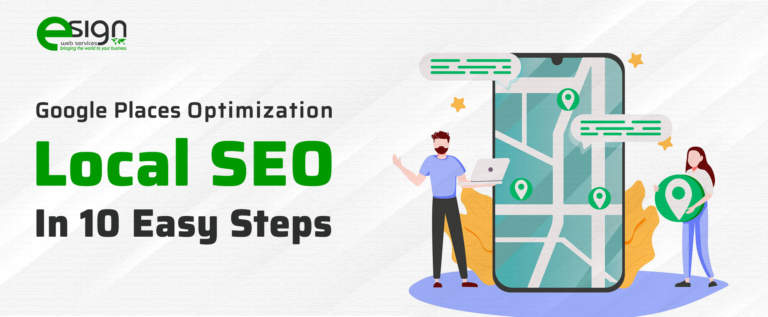
Local search had become an important way for customers to discover nearby customers. Someone looking for a dentist, restaurant, plumber, retailer, accountant, or repair company could search Google and compare businesses through Search and Google Maps before making contact.
For a local business, visibility was therefore about much more than adding a city name to a website. Google My Business, website content, business information, reviews, citations, links, and mobile usability all contributed to a stronger local presence. The following ten steps provide a practical approach to Google My Business optimization and wider local SEO.
Before You Start: Understand Local Search Rankings
Before making changes, it helps to understand how Google decides which local businesses to show. Google describes three main considerations in local search: relevance, distance, and prominence. Relevance is how closely a business matches the search. Distance considers how far the business is from the searcher or the location used in the query. Prominence relates to how established and well known the business appears, including signals such as links and reviews.
A business cannot control where every searcher is located, but it can improve relevance and prominence by keeping information accurate, building useful website content, earning genuine reviews, and developing a trustworthy online presence.
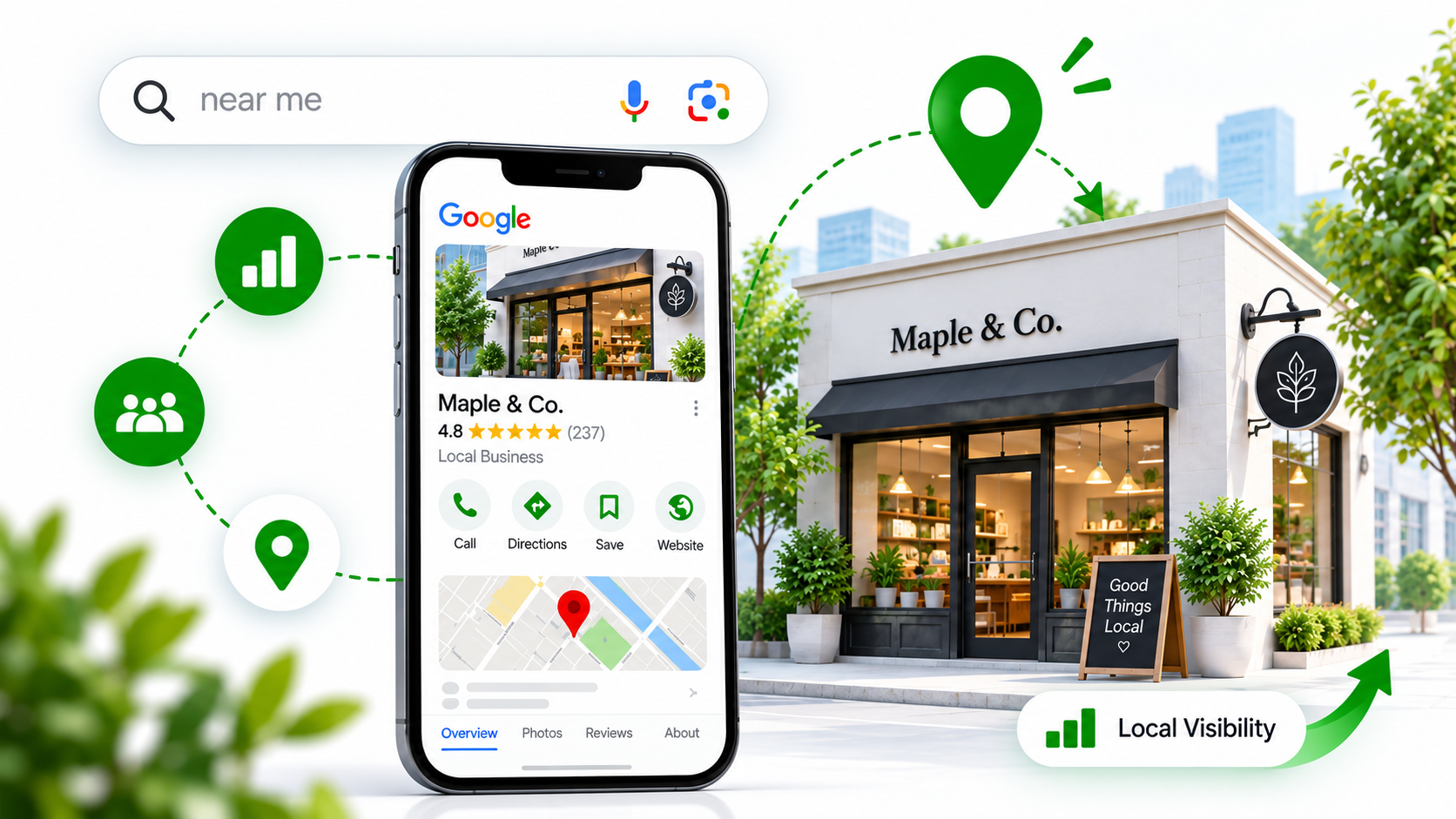
Step 1: Claim and Verify Your Google My Business Listing
The first step is to claim the company’s Google My Business listing and complete Google’s verification process. Verification confirms that the person managing the listing is authorized to represent the business. Once access is available, the owner can manage how important information appears in Google Search and Google Maps.
The business name should reflect the genuine trading name rather than being filled with service terms or locations simply to influence rankings. The address, telephone number, website, opening hours, and service area should also accurately represent how the business operates.
For companies relying heavily on nearby customers, Google My Business should form part of a broader local SEO strategy rather than being treated as an isolated listing.
Step 2: Complete the Profile and Choose Accurate Categories
A verified listing is only useful if it gives Google and customers enough information to understand the business. Complete the main profile fields, including the business name, address where applicable, telephone number, website, hours, and service area. Information should be clear enough that somebody can understand what the business provides before visiting the website.
The primary business category also deserves careful attention. It should describe the company’s main activity as closely as possible. Secondary categories may be added when they represent genuine additional areas of the business. Avoid selecting unrelated categories simply to appear for more searches. The purpose is to make the listing more relevant to appropriate searches, not to make the business look as though it provides every service in its industry.
Step 3: Keep Business Information Accurate and Consistent
You can find a local business on its own website, Google My Business, online directories, social networks, industry websites, etc. There will be main info that will be the same. Pay special attention to the business name, address, telephone number, website and working hours. Where practical older listings should be updated if a company moves premises or changes its telephone number
Minor format differences are usually less important than real conflicts. Wrong address or old phone number can be confusing for customers and make the business information look less trustworthy. Also, check the Google My Business listing on a regular basis. Opening times, temporary closures, services, contact information and links to websites are subject to change. More useful than creating it once and forgetting it, is treating the listing as an ongoing part of local search marketing.
Step 4: Add Genuine and Helpful Business Photos
Photos give customers additional information before they call, visit, or make an enquiry. Helpful photos could be of the storefront, office, team, products, equipment, facilities, or finished work, depending on the type of business. Outside images also help people identify a physical location when they arrive.
The idea isn’t to upload photos just for the sake of uploading them. Generic stock photos that tell customers little about the actual business are less useful than real images that truly reflect the company. Photos also should be kept reasonably up to date. Old images can give the wrong expectation if the premises, branding, products or facilities change.
Step 5: Optimize the Website for Local Search Intent
Google My Business should support the company website rather than replace it. A website gives the business far more space to explain services, expertise, locations, processes, and customer information. Important services may deserve individual pages so visitors can find specific answers instead of relying on a homepage that tries to cover everything. Each important page should make its purpose clear through its title, heading, body content, and location context. A page about commercial cleaning in Leeds, for example, should clearly explain the service and where it is offered without repeating “commercial cleaning Leeds” unnaturally throughout the copy.
An SEO-friendly website should help search engines understand the content while remaining clear and useful for visitors. Separate location pages can also be created by businesses that have multiple legitimate locations. But each page needs to have useful information specific to that area, such as its address, service coverage, directions, facilities, opening hours or local contact details. There is not much point in creating dozens of pages that look almost identical but have different city names.
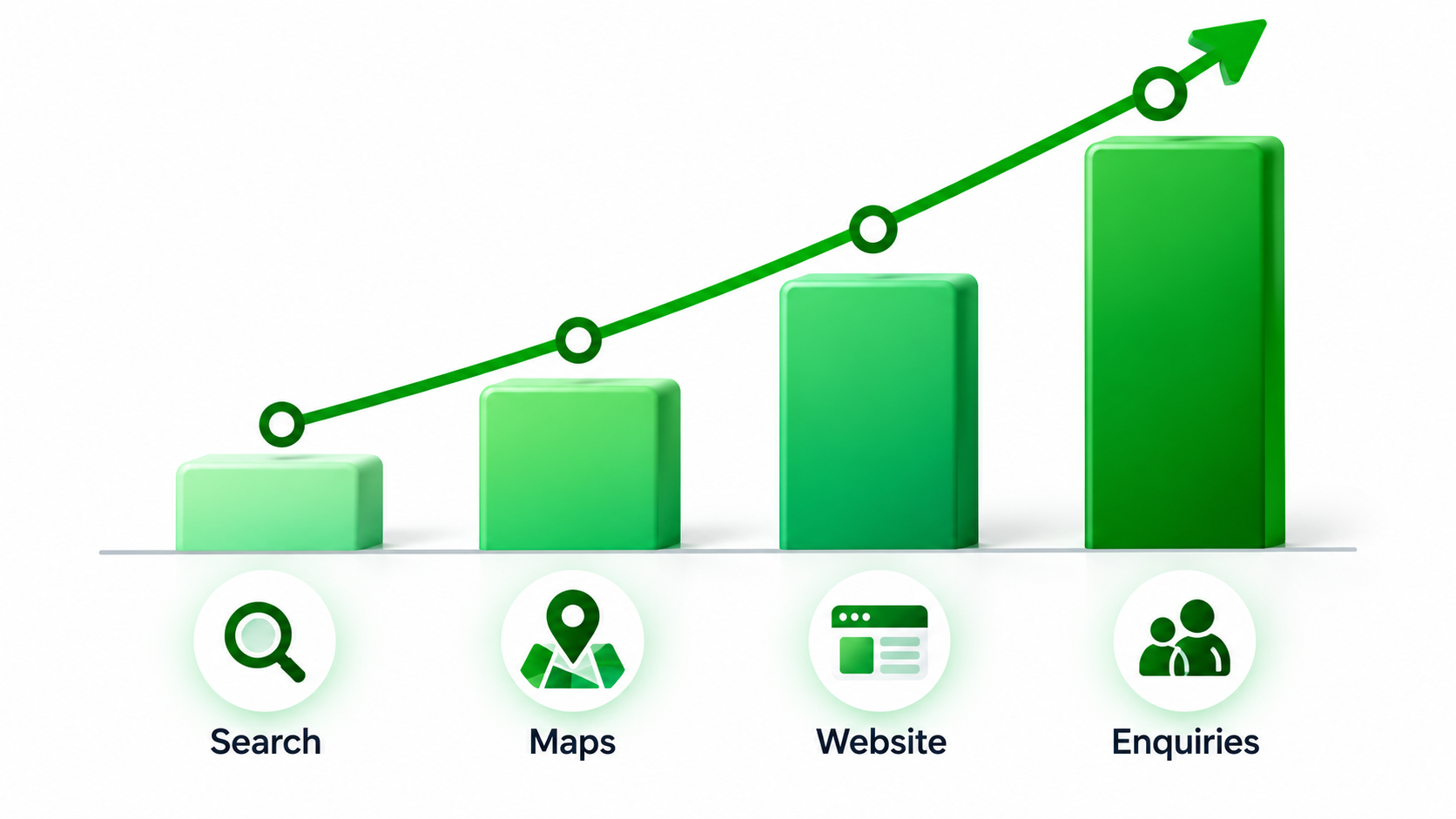
Step 6: Build and Manage Genuine Customer Reviews
Review generation an ongoing activity rather than a one-time task. Once a service, purchase or appointment is complete, businesses can ask their customers to leave an honest review. Direct review links can simplify the process and remove unnecessary steps, but never pressure customers to leave only positive feedback.
And responses matter. Positive reviews may receive a short personal acknowledgment. Stay calm and professional when dealing with negative feedback. An argumentative reply might leave a worse impression than the original complaint. Reviews should ultimately provide an honest picture of real customer experiences.
Step 7: Strengthen Citations, Links, and Local Authority
Google can also learn about a company from information that appears beyond its own website and Google My Business listing. Local citations are references to the company on directories, professional organisations, industry platforms, chambers of commerce, and other relevant websites. These references are most useful when the business information is accurate.
Links can strengthen the wider online presence as well. A company may naturally earn links from suppliers, local organisations, professional bodies, community partnerships, local publications, or useful industry resources. The emphasis should be on relevance and credibility rather than volume. Hundreds of weak directory submissions are not automatically better than a smaller number of genuine references from trustworthy sources.
The same principle applies to link building: useful links should come from relevant relationships and content rather than being created simply to increase a link count. Social media can support this wider presence by helping businesses communicate with customers and distribute useful information, but social profiles should support the local strategy rather than replace the core work on Google My Business, the website, reviews, and citations.
Step 8: Improve Mobile Usability and Website Speed
Local customers may be searching from a smartphone while trying to call a company, check opening hours, find an address, or arrange an urgent service. The website therefore needs to work properly on smaller screens. A good web design should make navigation, contact information, forms, buttons, and service content easy to use across different screen sizes.
Speed also affects the experience. Large images, unnecessary scripts, poor hosting, and heavy page elements can make visitors wait before they can access important information. Improving website page speed is not about chasing a perfect technical score. The practical goal is to help customers reach useful information without unnecessary delay. For a local business, a high search position has limited value if the visitor reaches the website and struggles to use it.
Step 9: Help Search Engines Understand Business Information
Structured data provides another way to describe business information to search engines.
LocalBusiness structured data can identify details such as the organisation name, business type, address, telephone number, and opening hours. The information included in structured data should match what customers can see on the website. It should not be treated as a shortcut to local rankings.
Structured data supports clearer interpretation of existing information. It does not replace useful content, a complete Google My Business listing, genuine reviews, relevant links, or accurate citations. The same principle applies to the wider technical setup of a website. Search engines should be able to access and understand important business and location pages without being blocked by avoidable technical problems.
Step 10: Measure Results and Keep Improving
Local SEO should not be measured only by where one keyword ranks.
Local results can change depending on the searcher’s location, query, device, and competition. A business may therefore appear differently for two customers searching from different parts of the same city. A better measurement approach looks at whether greater visibility produces meaningful actions.
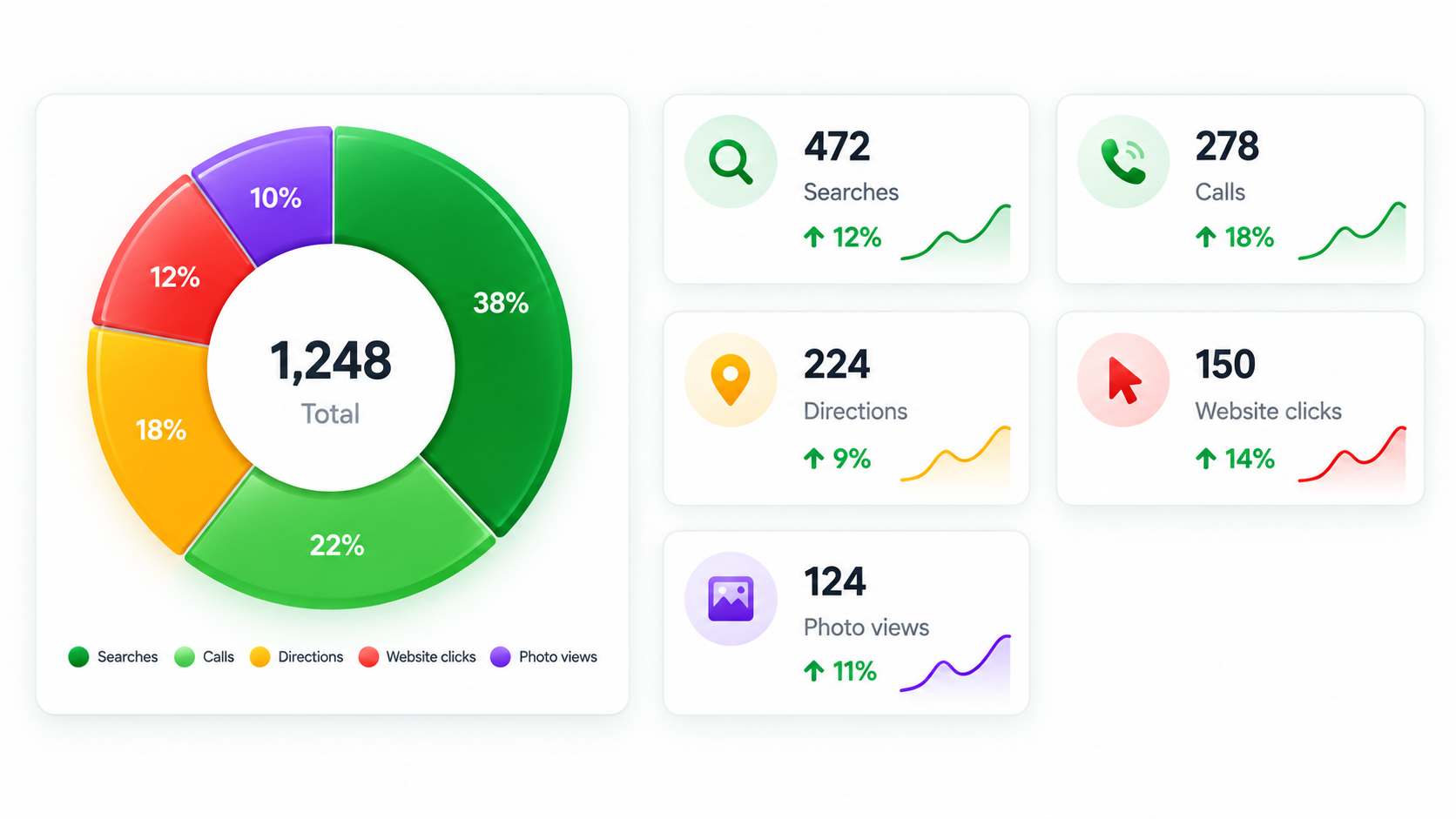
Google My Business Insights could provide information about how people found and interacted with a listing, while Google Search Console could show organic search queries and website visibility. Website analytics could then help businesses understand traffic, enquiries, and other visitor actions.
Conclusion: Build Local Visibility One Step at a Time
Google My Business optimization is not about finding one setting that could push a company to the top of local results. It required several signals working together. Start by claiming and completing the listing. Keep business information accurate, select relevant categories, add genuine photographs, strengthen service and location pages, collect honest reviews, and build credible citations and links. The website should also be easy to use on mobile devices and provide search engines with clear business information.
Most importantly, keep measuring what happens after people find the business. Local search is valuable when visibility becomes real customer activity. By following these ten steps consistently, a business can create a clearer and more trustworthy local presence and improve its chances of being discovered when nearby customers are actively searching for the products or services it provides. Want to improve your local search visibility and attract more nearby customers? Explore our local SEO services and build a stronger presence across Google Search and Maps.
Author Details

Ashwani Kumar Sharma
Ashwani has been actively involved in SEO services since 2005. His expertise and distinctive work approaches have made him one of the most experienced and trusted SEO experts in the industry. He is a certified SEO and Google Ads professional. He also has strong business development skills in advanced SEO, PPC, and digital marketing strategies.


