



The Future of Social Media Ads: AI, Automation & Micro-Targeting

Key Takeawys
- Boosting posts blindly is outdated; outcome-focused future of social media ads now wins leads, sales, installs.
- AI social media advertising guides bidding, targeting, and testing, helping campaigns learn faster from real signals.
- automated social media campaigns enforce rules nonstop: pause costly ads, scale winners, rotate creatives, prevent waste.
- micro-targeting in digital marketing prioritizes relevance: behaviors, intent, funnel stages beat broad demographics every time.
- Creative stays human lever; AI ad optimization scales variations, but strong hooks still drive performance.
- social media ad strategy needs clean tracking: CAPI, server-side events, CRM data for scalable optimization.
The future of social media ads is not about randomly boosting posts and hoping the algorithm is kind. It’s a high-speed environment where platforms evaluate every scroll, tap, save, and purchase in milliseconds. Global social media advertising revenue was about $65 billion in 2024 and is forecast to exceed $160 billion by 2030, growing at an over 16% CAGR. That kind of growth means more competition in every auction and higher expectations from users, which can feel intimidating for small and medium-sized businesses, startups, and local brands. But it’s also your opportunity to compete with bigger players if you learn how to use AI, automation, and targeting properly.
Instead of thinking broadly about “reaching more people,” the real challenge today is reaching the right people with the right creative at the right moment. AI social media advertising, automated workflows, and precise audience segmentation help brands replace guesswork with strategy and build campaigns that actually convert. As traditional “set and forget” setups become outdated, the brands adopting intelligent targeting, optimized creatives, and performance-driven structures are seeing stronger ROAS, lower costs, and far more predictable results. In short, the brands that adapt early will lead the feeds, while those who don’t will keep fighting rising costs without meaningful returns. This blog explains how AI social media advertising, automated workflows, and smart audience segmentation work together to replace outdated tactics and build a social media ad strategy that delivers meaningful results instead of empty impressions.
New Landscape of Social Media Advertising
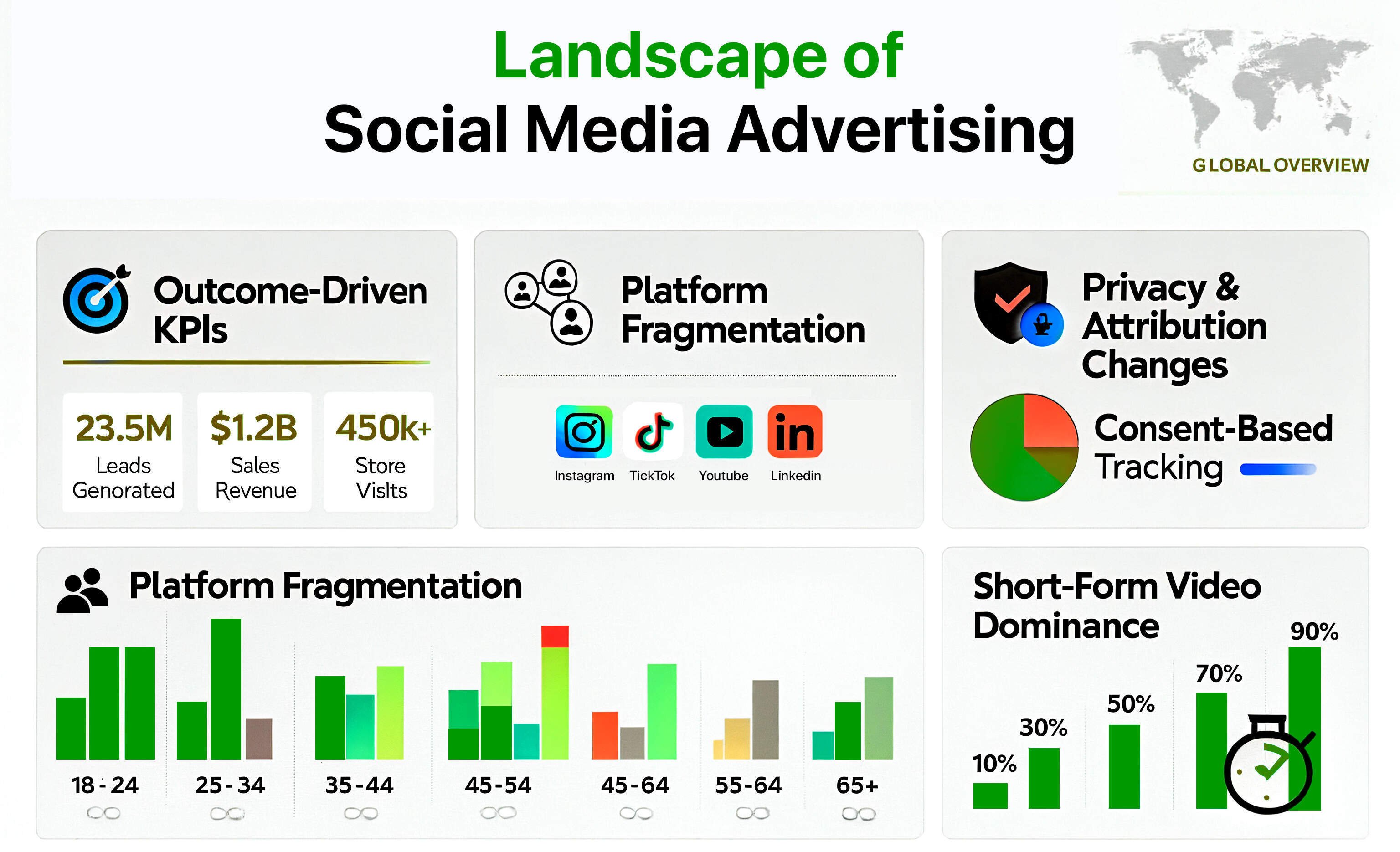
The future of social media ads is outcome-driven, not ego-driven. Historically, brands chased impressions, likes, and follower counts because they were easy to measure and looked good on reports. Today, platforms are tuned for hard outcomes: leads, sales, app installs, calls, and store visits. The wider digital ad market is expected to pass $1 trillion by 2030, with social media taking a growing slice as budgets follow where attention lives. At the same time, users are fragmented across Instagram, TikTok, YouTube, LinkedIn, and niche communities, consuming more short-form and vertical video than ever before. You don’t get minutes to make your point; you get seconds.
On top of that, privacy changes and tracking restrictions are reshaping attribution. Third-party cookies are weaker, and first-party data and consent-based tracking are quickly becoming the foundation of targeting. Social media analytics as a market is projected to more than triple by 2030, which shows how much value brands are placing on understanding behavior at a deeper level. If your social media ad strategy still revolves around boosting posts to broad audiences and hoping something converts, you’re already behind. The new baseline is clear objectives, clean data, and campaigns built to support actual business KPIs instead of superficial engagement.
AI as the Brain Behind Social Media Ads
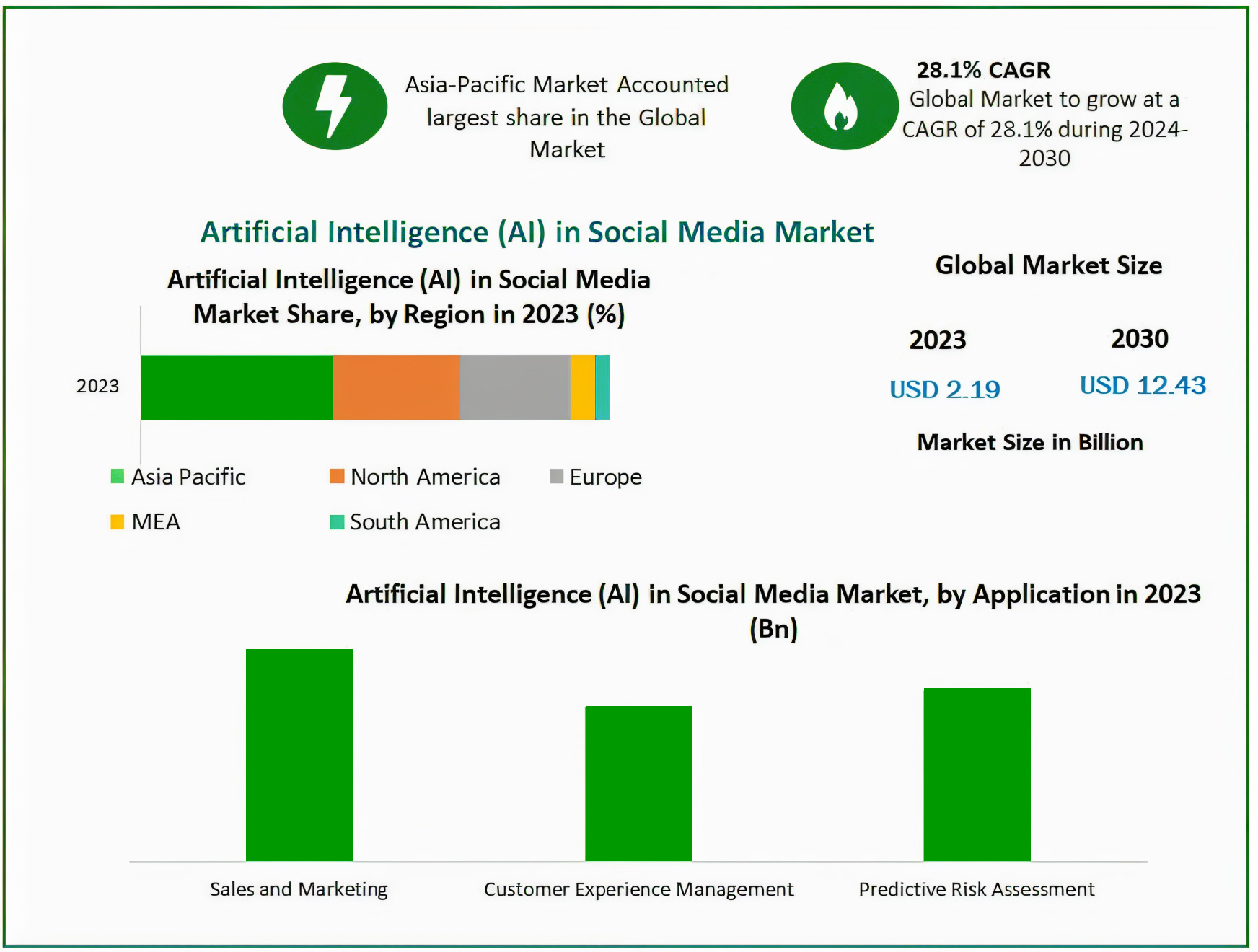
AI in social media advertising is moving from “experiment” to infrastructure. The market is scaling fast, with forecasts projecting strong growth through 2030. This chart points to two big realities: Asia-Pacific holds the largest share, and adoption is spreading across practical business use cases. In 2023, the biggest applications sit in areas like sales and marketing, customer experience management, and predictive risk assessment; signals that brands aren’t only creating content with AI, they’re using it to plan, personalize, and optimize decision-making at speed.
In campaign terms, that growth reflects how teams are using automation to test creative angles, refine targeting, and improve efficiency without guessing. The opportunity isn’t “AI makes ads,” it’s “AI makes ad systems smarter,” so budgets and messaging adjust based on what markets and audiences respond to best.
What matters now is execution: teams need clean data, clear objectives, and tight feedback loops so AI doesn’t optimize toward the wrong signals. As investment rises, expect sharper competition for attention; meaning smarter segmentation, faster testing, and more consistent measurement will decide winners. Done right, AI supports better decisions at scale without diluting the brand’s core message.
Automation: Always-On Optimization for Busy Teams
Even the smartest model needs guardrails, and that’s where automated social media campaigns come in. Automation systems act like a 24/7 assistant inside your ad account, enforcing rules you define so you don’t babysit every campaign. You can set conditions like: pause an ad set if CPA exceeds a threshold, increase the budget when ROAS exceeds the target for several days, or rotate creatives once frequency gets too high. With social media ad automation, you’re not just saving time; you’re protecting profitability and reducing human error when teams are distracted or overloaded.
Industry data shows that more marketers are leaning on AI agents and automation for daily execution, with nearly 20% planning to automate more of their marketing workflows in 2025, and the majority experimenting with AI-driven tools. For paid social for small businesses, this is huge. Instead of paying someone to tweak bids all day, local and growing brands can focus on better offers, landing pages, and follow-up sequences. Hook your ad platforms into your CRM and email tools, and you can automatically move new leads into nurture flows, remarketing segments, and sales pipelines. Automation becomes the engine that keeps everything running efficiently while your team concentrates on strategy rather than micromanagement.
Micro-Targeting: Precision Over Volume
Micro-targeting in digital marketing is no longer about creepy over-personalization; it’s about smart relevance. You’re not just targeting “women, 25–45, in a city.” You’re layering behaviors, interests, life events, and past engagement to build nuanced audience segmentation. For example, you can differentiate between someone who watched 75% of a product video, someone who visited your pricing page twice in a week, and someone who just liked a top-of-funnel reel. Each of those people should see different messages, even if they technically sit in the same demographic band.
Behavior-Based Micro-Targeting Breakdown
| User Behavior | What It Indicates | Best Ad Message |
| Watched 75% of a product video | High curiosity + potential intent | Show feature benefits, social proof, product demos |
| Visited pricing page twice | Strong buying intent | Show limited-time offers, guarantees, comparisons |
| Liked a top-of-funnel reel | Early awareness | Show brand story, value proposition, light engagement CTAs |
| Added to cart but didn’t purchase | High conversion potential | Show urgency, testimonials, fast shipping, discount triggers |
| Viewed multiple blog pages | Research mode | Show detailed guides, case studies, long-form content |
This is where personalized ad experiences start paying off. McKinsey’s research shows that brands that get personalization right often see 10–15% revenue lifts, with leaders earning even more. For paid social for small businesses, that can mean the difference between barely breaking even and building a sustainable customer pipeline. Instead of shouting at everyone, you tailor creative offers to specific funnel stages—awareness, consideration, and conversion. Micro-targeting is powerful when used responsibly: cap frequency to avoid fatigue, avoid hyper-sensitive criteria, and always weigh what is useful for the user versus what feels invasive.
Creative Strategy in an AI + Automation World
In an AI-first ecosystem, creative becomes your main human lever. Users don’t see your targeting rules; they see your story, your visuals, and your hook. Video is leading that story: about 89–95% of businesses now use video marketing, and the vast majority say it delivers strong ROI and helps users better understand their products. For social feeds dominated by vertical clips and silent autoplay, your creative must stop thumbs fast. That means tight opening frames, clear benefits, and visuals that convey value even without sound.
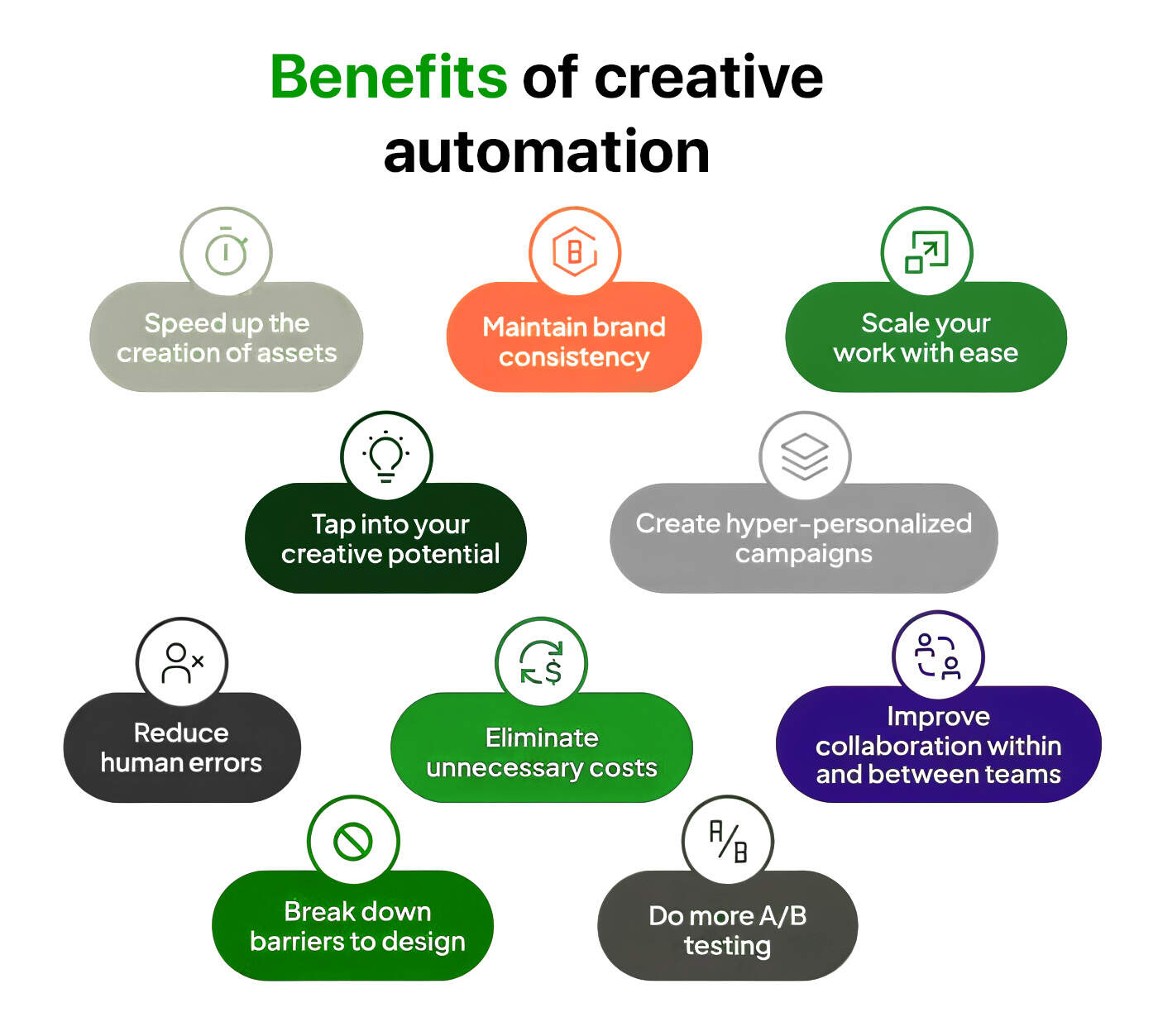
Tools powered by dynamic creative optimization and AI ad optimization can remix assets at scale, but you still need a strong foundation. Design modular campaigns; core message, proof, offer, and CTA; that can be reassembled for different personas and placements. Layer in personalized ad experiences where copy, imagery, or offers adjust to user behavior without breaking brand consistency. As generative tools become embedded in creative workflows, many advertisers are already using AI to help produce and adapt assets, with reports suggesting that generative AI will be involved in a large share of social and video ads in the next few years. The secret is not to replace human storytelling, but to use AI to scale ideas that already resonate.
Measurement, Attribution, and Optimization
If data is messy, every optimization you make is a gamble. That’s why the future of social media ads depends on stronger tracking foundations. Pixels alone are no longer enough; you need conversion APIs and server-side tracking to recover signal lost to browser and privacy limitations. Every important user action; viewing content, adding to cart, starting checkout, submitting a lead, purchasing; should be mapped as a meaningful event. When that data flows back to platforms cleanly, AI social media advertising can make smarter decisions about who to show ads to and how aggressively to bid.
Attribution is evolving from last-click thinking to blended, multi-touch views. Smart teams combine platform reports, analytics tools, and CRM data to understand which channels and creative combinations truly drive profitable growth. AI-driven personalization and measurement have been shown to lift revenue by 5–15% while improving customer satisfaction and reducing costs, making the case for better data practices very clear. This is also where performance-driven social ads stand out. Instead of asking, “What’s our cheapest click?”, you ask, “What mix of audience, message, and placement generates the best long-term customer value?” That question forces you to test systematically, document learnings, and treat campaigns as ongoing experiments rather than one-off promotions.
Future Trends: Where Social Media Ads Are Headed Next
Looking ahead, the future of social media ads will be shaped heavily by generative AI and more integrated experiences. According to recent industry reports, around 86% of advertisers already use or plan to use generative AI for video ads, and it could account for around 40% of all video ads by 2026. That doesn’t just change how fast campaigns are produced; it changes how many creative variations you can realistically test and how finely you can tune messaging for different segments. For smaller brands, that means the gap in creative output between them and big-budget competitors narrows.
At the same time, offline and online signals will merge more tightly. Store visits, phone calls, QR scans, and in-person interactions will increasingly feed back into automated social media campaigns, improving predictive targeting and retargeting accuracy. The risk is a flood of generic AI-generated content that all looks and sounds the same. The brands that stand out will be the ones that pair social media ad automation and AI with real human stories, founder presence, and community-driven content. Technology will handle scale, but trust and distinctiveness will still come from people, not models.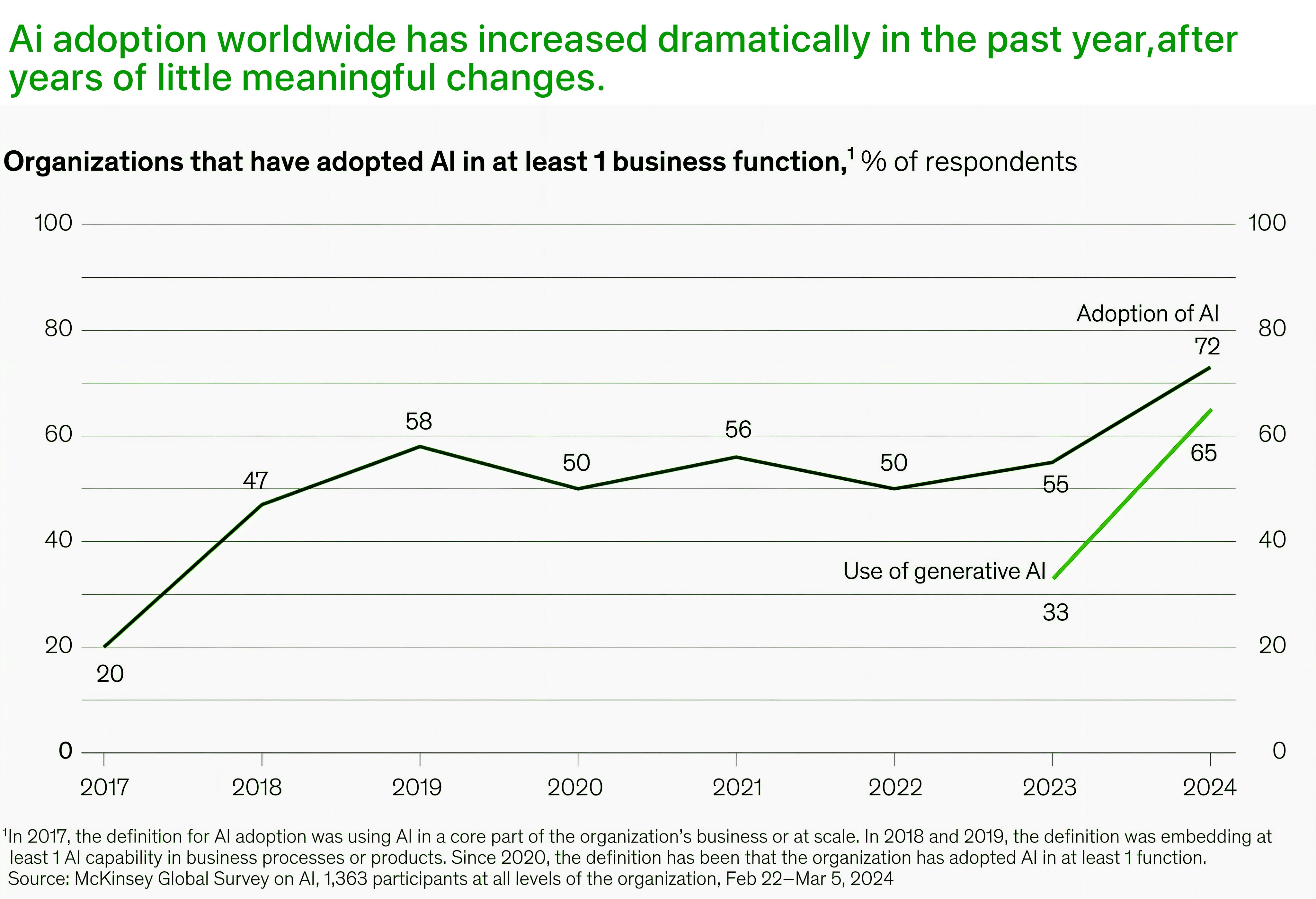
The Final Thoughts
The future of social media ads isn’t a trend waiting to arrive; it’s already here, reshaping how brands attract attention, convert users, and build long-term loyalty. AI-powered intelligence, automation-driven efficiency, and micro-targeted relevance have turned social platforms into performance ecosystems where every click, scroll, and interaction becomes data you can use to your advantage. As global competition rises and ad auctions become more aggressive each year, businesses that rely on old-school “boost and hope” tactics will find themselves paying more and gaining less. The brands that lead tomorrow will be the ones using AI to understand behavior, automation to scale smarter, and segmentation to speak to the right customer at the right moment.
But here’s the good news: you don’t need massive budgets or giant teams to win. You just need a strategic system that blends creativity with intelligence. When AI social media advertising, automated social media campaigns, personalized ad experiences, and refined audience segmentation work in sync, your ads don’t just perform; they evolve. They get sharper, cheaper, and more effective with every iteration. That’s the power of a modern, performance-driven social ads framework.
If you’re ready to stop guessing, start scaling, and finally run campaigns built for the future, eSign Web Services is here to help you make it happen.
Request a FREE quote, and let’s build social campaigns that don’t just show up in the feed, they dominate it.
Frequently Asked Questions
Question: Is AI social media advertising only for big brands?
Answer: No. Smaller businesses often gain more because AI social media advertising helps stretch budgets, refine targeting quickly, and compete effectively. Clean data and clear goals ensure stronger performance without waste.
Question: How do automated social media campaigns help day-to-day?
Answer: Automated social media campaigns manage repetitive tasks like pausing weak ads, adjusting bids, and rotating creatives. This reduces manual effort, protects performance, and frees teams to focus on strategy and content planning.
Question: What’s the real advantage of micro-targeting in digital marketing?
Answer: Micro-targeting in digital marketing focuses on audiences likely to convert using behavior and intent signals. It boosts lead quality, improves ROAS, and minimizes wasted impressions by avoiding broad, unfocused demographic targeting.
Question: How should businesses prepare for the future of social media ads?
Answer: Set strong tracking, define funnel stages, and segment audiences by intent. Use testing and dynamic creative optimization to refine campaigns continuously and ensure every learning improves long-term advertising performance.
Question: How do AI social media advertising and human strategy work together?
Answer: AI social media advertising amplifies smart human decisions. You set goals and messaging, while AI handles testing, bidding, and targeting, reducing waste and improving consistency across campaigns.
Question: What are automated social media campaigns, and why do they matter?
Answer: Automated social media campaigns adjust bids, pause weak ads, and rotate creatives automatically. This social media ad automation protects performance targets and frees small teams to prioritize strategy and better offers.
Question: Is micro-targeting in digital marketing risky for user privacy?
Answer: Micro-targeting in digital marketing is safe when focused on interests, intent, and broad signals. Avoid sensitive traits, cap frequency, follow policies, and maintain user trust through responsible, transparent messaging.
Question: What makes a strong social media ad strategy for small businesses?
Answer: A strong social media ad strategy starts with clear goals, tight targeting, and simple offers. Paid social for small businesses grows through retargeting, lookalikes, light automation, and scaling profitable creatives.
Question: How do AI ad optimization and dynamic creative optimization improve results?
Answer: AI ad optimization and dynamic creative optimization test headlines, visuals, and CTAs automatically. They push spend toward winners, reduce acquisition costs, and improve click-through and conversion rates across key audiences.
Question: How do I start building performance-driven social ads?
Answer: Begin with solid audience segmentation and predictive targeting based on behavior. Add clean tracking, strong offers, and consistent testing so each campaign learns, improves, and continually drives better results.
Author Details

Ashwani Kumar Sharma
Ashwani has been actively involved in SEO services since 2005. His expertise and distinctive work approaches have made him one of the most experienced and trusted SEO experts in the industry. He is a certified SEO and Google Ads professional. He also has strong business development skills in advanced SEO, PPC, and digital marketing strategies.


