



Google Ads Makes Call Recording the Default for AI Lead Calls

Key Takeaways
- Google Ads has turned call recording on by default for AI-qualified call leads in eligible accounts.
- The update helps Google AI judge lead quality beyond basic call duration.
- Google Ads call recording can now support smarter conversion reporting and bidding decisions.
- Advertisers can still turn off call recording from their account settings.
- The feature is currently limited to calls where both parties are in the United States or Canada.
Introduction
Google Ads is updating the way phone call leads are measured by making call recording the default for AI-qualified call leads in eligible accounts. In the past, many advertisers have relied on call length as the primary way to measure call conversions. That posed a shared problem: a long call could be counted as a conversion even if it was a spam call or low-quality inquiry.
Google AI can listen to calls and detect stronger signs of buying intent, including a person’s interest in the service, a desire to schedule an appointment, pricing concerns, or a need for a consultation. This makes Google Ads call recording an important part of modern lead tracking, especially for service-based businesses that depend on phone calls.
Why Has Google Made This Change?
Google has made this move because the length of a call alone doesn’t always reveal whether a lead is valuable. A customer might be on the phone for a good few minutes with no real buying intent. At the same time, shorter calls can still be very valuable if a caller makes a clear request for a quote, books a consultation, or asks for details on a service. The new system uses AI-qualified call leads to more effectively distinguish between valuable conversations and poor or accidental contacts. This helps advertisers understand which calls are actually valuable for the business.
This has the potential to change how performance is measured for businesses that run call ads, call assets, or call-based campaigns. Now advertisers can ask, “How many quality leads came in?” instead of just, “How many calls came in?”
This is where Google Ads call recording becomes more than a reporting feature. It supports lead qualification, campaign learning, and better optimization. When Google AI can understand which calls are more valuable, Smart Bidding may also receive stronger signals for future ad delivery.
How Will AI Judge Lead Quality?
The AI system listens to the call recording to judge the quality of the conversation. It can identify the signals of explicit customer interest, relevant service inquiries, the intent to make an appointment, purchase readiness, or an indication that the caller is a good fit for the offering.
For example, a roofing company might not want every call to be a conversion. A misdial, a sales call from another company, or a caller seeking something else should not have the same value as a homeowner requesting a roof inspection. Call leads qualified by AI are designed to make that difference pop. In addition, Google may deliver call reports with summaries and labels, so advertisers can understand why a call was perceived as valuable. This allows marketing teams to spot patterns faster, without having to listen to every call manually.
Businesses that rely on Google call conversion tracking should pay close attention to this update. It may affect how conversions appear, how campaigns are judged, and how budgets are shifted between campaigns.
What Should Advertisers Check Now
Advertisers can first check whether call recording is enabled in their Google Ads account. Eligible accounts might have the feature on by default, but advertisers can still control the setting themselves, Google says. It is also important to check the business’s eligibility. Google has pointed out that call recording is only accessible when both the caller and receiver are located in the US or Canada. Businesses outside of those locations may not have access to the same feature.
Advertisers should also check their privacy notices, their internal call-handling processes and staff awareness. The caller may hear a recording saying that the call is being recorded for quality assurance purposes. Businesses must ensure that their teams understand this and comply with relevant legal and compliance rules.
Another important step is reviewing lead quality reports over time. If Google Ads call recording changes how conversions are counted, advertisers may notice shifts in reported performance. A campaign that once showed many call conversions may show fewer but stronger qualified leads. That should not always be seen as a negative result. In many cases, fewer but better conversions can give a more accurate picture of real business value.
Google’s help page confirms that call recording is now turned on by default for AI-qualified call leads in eligible accounts.
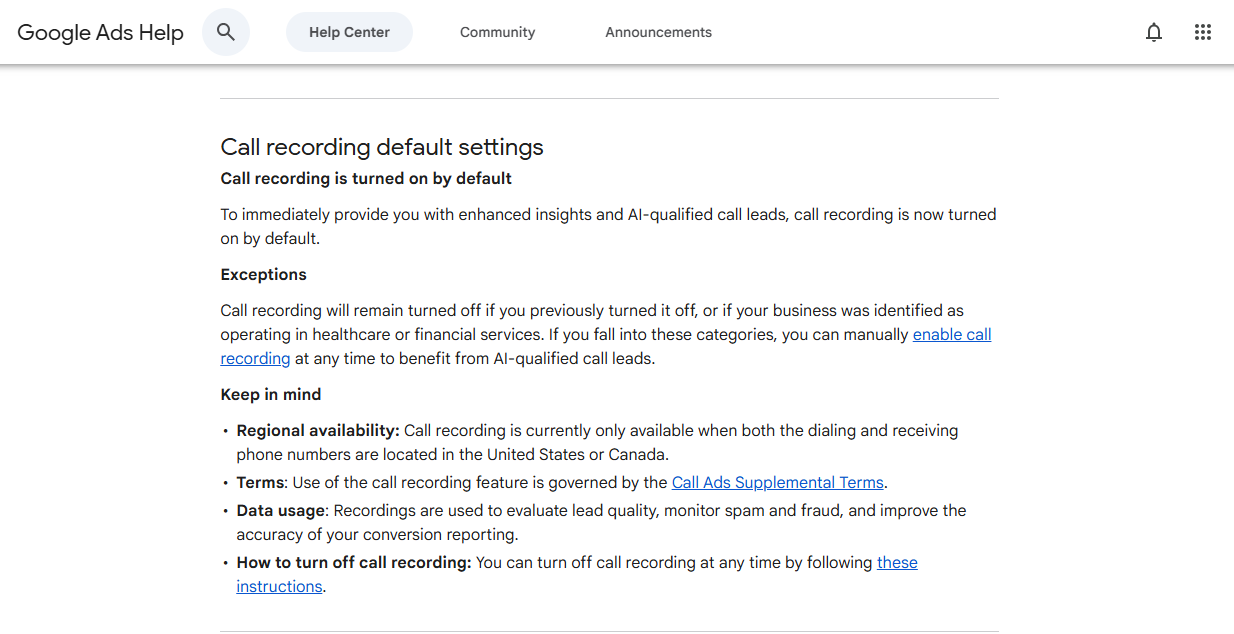
Image Source: Google Ads Help – Call recording default settings.
What Does This Mean For Campaign Performance
This could be a step towards making marketing data useful to advertisers. Using the new Google Ads feature, AI can identify the calls that are more likely to result in conversion, and thus not all lengthy calls are automatically viewed as successful. This will enable companies to make more effective use of their budgets and understand how successful their marketing campaigns are.
The update also highlights Google’s wider move toward AI-led advertising systems. Features like Google Ads AI lead calls show that Google is no longer focused only on clicks, impressions, and basic conversions. It is trying to understand what happens after the click and whether that interaction brings real business value.
Still, AI reports should not be followed blindly. Still, businesses should not depend only on AI reports. What matters most is whether the call actually turns into a real sale, booking, or inquiry. Teams should check AI-marked calls against real customer results to see if the data truly matches what is happening in the business. When used the right way, Google Ads call recording can help connect ad performance with real conversations happening on the phone.
Conclusion
Recording calls by default on AI calls from Google is a big leap towards better lead assessment from Google. This will allow advertisers to go beyond just call duration and learn about what the caller really needs. This update may help certain advertisers in improving their reporting, bidding, and campaigns. Yet, advertisers need to make sure about all other aspects. Google Ads call recording can be useful, but it works best when businesses also have strong call handling and regular performance checks.
Ready to Improve Your Google Ads Lead Quality?
Make every call lead count with a smarter Google Ads strategy. eSign Web Services can help you strengthen conversion tracking, review lead quality, and optimise campaigns around the enquiries that matter most to your business.
Author Details

Ashwani Kumar Sharma
Ashwani has been actively involved in SEO services since 2005. His expertise and distinctive work approaches have made him one of the most experienced and trusted SEO experts in the industry. He is a certified SEO and Google Ads professional. He also has strong business development skills in advanced SEO, PPC, and digital marketing strategies.


