



Post Penguin Off-page SEO Practices

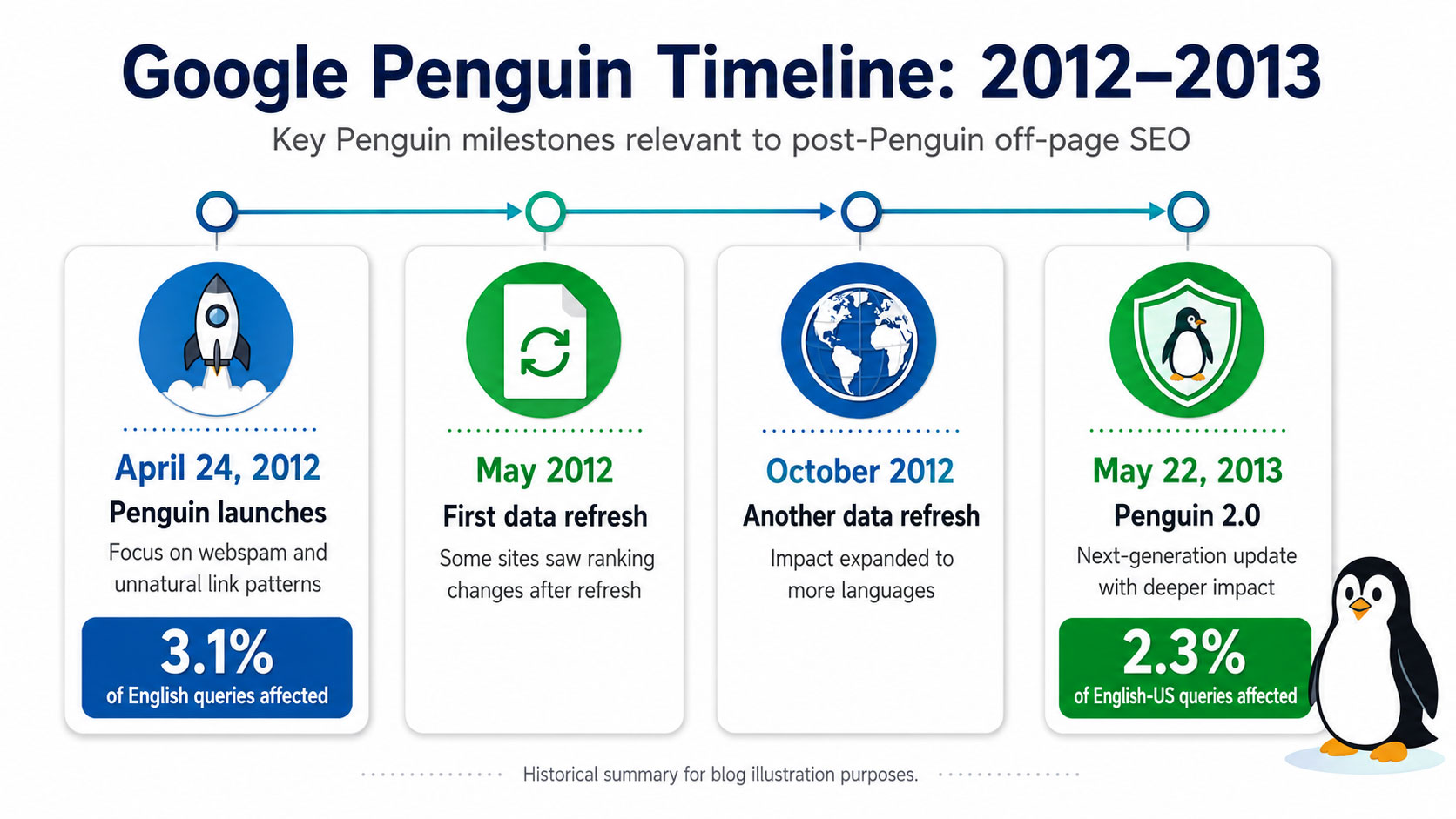
Perhaps the biggest steps you can take to ensure that you avoid a future penalty or to recover from a Google Penguin penalty is to address your site’s Off-Page optimization. For years, Google has told webmasters that your links can’t hurt your rankings. At best, poor quality or questionable links to your website would simply be ignored. This was to prevent your competition from trying to “de-optimize” your site by building a whole lot of spammy links to your site.
However, all that has changed with Penguin. For the first time in Google’s history, you can be penalized by having an “over-optimized” link network. While it’s true that a single link may not be able to harm your site – certainly, the wrong mix or “pattern” of links to your site definitely knock your site out of the search engines. The following practices can help create a safer and stronger approach.
1. Produce High-Quality Unique Content
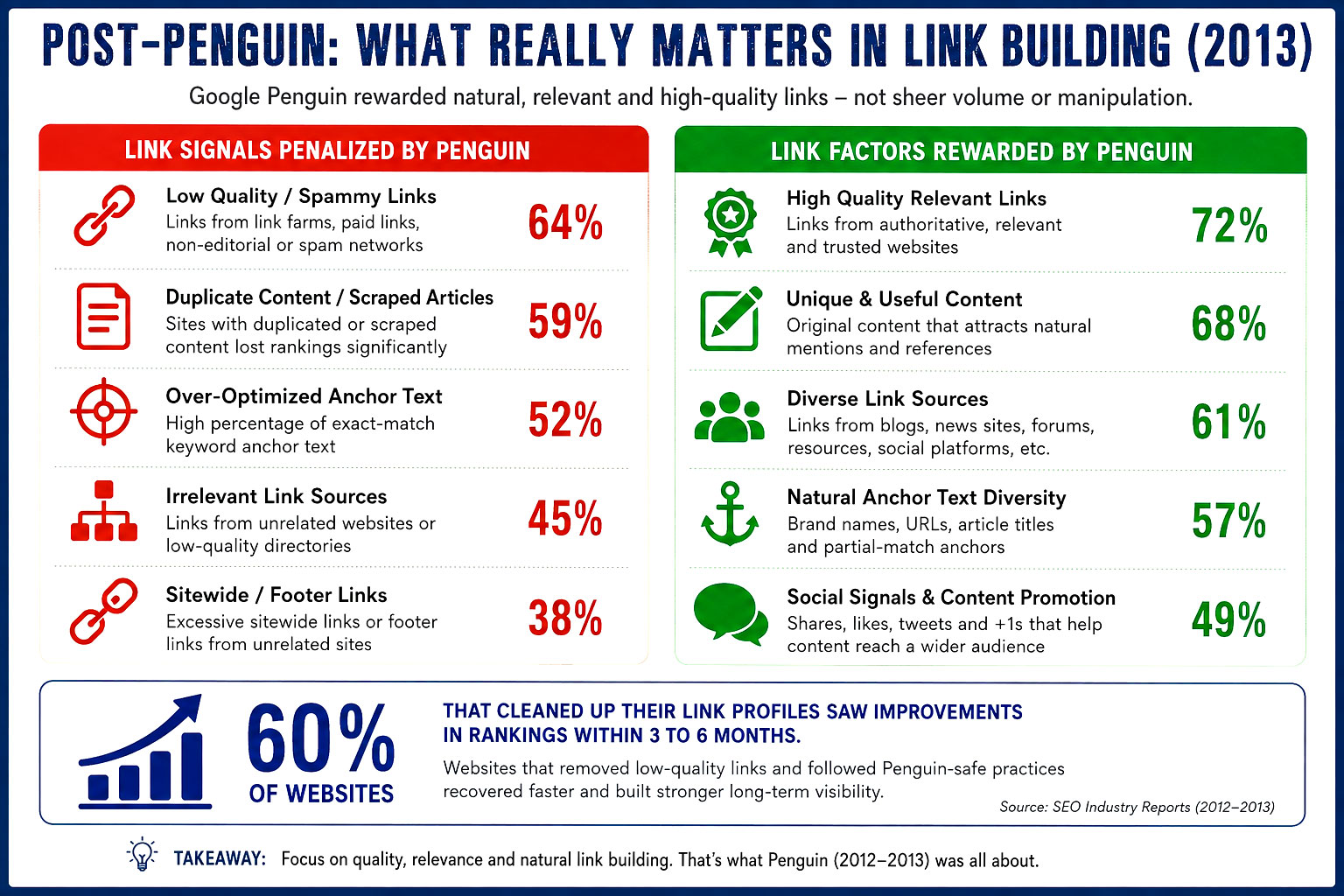
Google always wants bloggers and website owners to provide fresh and unique content to their audience. It is strongly suggested that each article, press release, and blog that you write is unique, original, researched, and informative. The value of informative content will always remain on top.
After Penguin, useful content became even more important because good content gives other websites a genuine reason to link to you. Instead of producing large volumes of weak articles only for backlinks, businesses should focus on information that answers questions, explains a topic clearly, or provides something useful to readers.
2. Publish Content More Selectively
Publishing the same article on a very large number of websites should no longer be the main objective. A better approach is to create original articles, press releases, and blog posts and submit them to a smaller number of useful and relevant websites.
Quality should be considered before quantity. Look at whether the website is related to your industry, whether it contains genuine content, and whether people actually use it. A link from a relevant and established website can provide more value than many links from weak submission sites created mainly for SEO purposes.
3. Use Target Anchor Text Selectively
The number of anchor text types must be changed by replacing the company, business, or owner name. This is more applicable in good-quality business directories, but it should be followed in different SEO practices.
Using the exact same keyword as anchor text again and again can create an unnatural link pattern. A healthier profile may include the company name, website address, general phrases, article titles, and occasional target terms. Anchor text should make sense naturally within the surrounding content rather than appearing only because a particular keyword needs to be promoted.
4. Create a Diverse Link Network
Make sure you are getting backlinks from a diverse range of sources. If you are just building links from one source, then you are asking for trouble. Remember, the goal is to make sure that your link network appears as natural as possible to the search engines.
A diverse link network can include relevant blogs, press releases, business directories, forums, Q&A websites, YouTube, industry resources, and social media networking websites such as Facebook and Twitter. However, diversity does not mean collecting links from every available website. Each source should still be checked for quality and relevance before it becomes part of your strategy.
5. Focus on Relevance and Website Quality
One of the most important post-Penguin practices is to pay attention to the website that’s providing the backlink. Links should be relevant to your industry, location, products, services or audience and preferably from websites. A link from a reputable site in a related niche can look a lot more natural than a link from a site that is not related and is built mainly for link exchanges. Carefully review the website before linking.
6. Reduce Low-Quality Directory and Comment Links
Typical SEO tactics included submitting to directories, social bookmarking, participating in forums and commenting on blogs. They can still be part of an off-page strategy but should be used with caution. Creating a site with hundreds of crappy directories or leaving keyword stuffed comments on random blogs can create patterns that look fake. Instead, opt for real business directories and industry sources. If you’re participating in forums or blog comments, try to add something useful to the conversation. A comment or forum answer should add value to the conversation, not simply exist to place a backlink.
7. Review Your Existing Backlink Profile
If you were heavily involved in link building before Penguin, review your existing backlinks. Older SEO campaigns have produced a lot of directory links, sitewide links, keyword-heavy anchors and backlinks from sites that have little relevance. Identify suspicious or obviously poor quality links and make a reasonable effort to remove harmful links where possible. It also helps to keep track of link-building activity and removal requests. A regular backlink audit can help businesses understand whether their link profile is becoming more balanced or whether their old SEO practices are still creating unnecessary risk.
8. Use Social Media and Content Promotion to Support Links
Don’t just rely on the backlinks you manually create for off-page SEO. Social networking can help good content get to more people, and increase the likelihood of natural mentions and links. Facebook, Twitter, LinkedIn, Google+ and other relevant networks enable businesses to share new articles, company updates, videos, guides and other resources. It should not be the goal to put links everyplace. Social platforms can rather help businesses put useful information in front of people who might read, discuss, share or refer to it on their own sites. It creates a more organic relationship between content marketing, social activity and link building.
Building a Safer and Stronger Off-Page SEO Strategy
Google Penguin changed how businesses should approach link building by making natural link patterns, relevance, authority, and content quality far more important. Sustainable off-page SEO should therefore focus on earning trustworthy backlinks, maintaining anchor text diversity, and avoiding aggressive tactics that may create unnatural signals. A carefully managed backlink profile can support stronger search visibility while reducing unnecessary SEO risks.
Conclusion
Post-Penguin off-page SEO requires a more careful and balanced approach than many earlier link-building campaigns. Quality content, selective publishing, varied anchor text, relevant backlinks, quality directories, backlink reviews, social activity, and a diverse link profile can all contribute to more sustainable search visibility. The main aim should be to build authority naturally rather than rely on shortcuts that may create an over-optimized backlink pattern.
Our expert SEO Team can help plan and manage off-page SEO strategies focused on quality, relevance, and sustainable growth. Our team combines content marketing, backlink analysis, link-building planning, and broader SEO practices to help businesses strengthen their online authority while following modern search engine guidelines.
Comments
Author Details

Ashwani Kumar Sharma
Ashwani has been actively involved in SEO services since 2005. His expertise and distinctive work approaches have made him one of the most experienced and trusted SEO experts in the industry. He is a certified SEO and Google Ads professional. He also has strong business development skills in advanced SEO, PPC, and digital marketing strategies.


Just want to say your article is as astonishing.
The clearness in your post is just nice and i could assume you are an expert on this
subject. Well with your permission let me to grab your
feed to keep updated with forthcoming post. Thanks a million and please keep up the rewarding work.