



AI, Automation & Human Strategy: The New Marketing Operating Model

Key Takeaways
- AI speeds up execution, but human judgment still decides what deserves action and investment.
- Automation reduces repetitive work, giving marketers more time for strategy, testing, and creative thinking.
- The strongest marketing systems combine speed, consistency, insight, and brand-level decision-making in one model.
- Human strategy keeps AI-powered marketing from sounding generic, flat, or emotionally disconnected from audiences.
- Connected data and workflows make personalization more practical, scalable, and easier to manage across channels.
- Over-automation can quietly weaken originality, trust, and memorability even when performance looks efficient.
- Businesses grow faster when technology supports strategy instead of trying to replace strategic thinking.
- The future belongs to teams that balance AI efficiency with human creativity, restraint, and commercial judgment.
Modern marketing works best when AI handles speed, automation handles repetition, and humans handle judgment. That is the real power of an AI marketing operating model. It is not about replacing marketers with software or turning every workflow into a machine-led assembly line. It is about building a smarter system where AI identifies patterns faster, automation removes repetitive friction, and people decide what deserves attention, budget, and creative energy. That balance matters because many teams are producing more than ever, yet sounding less distinct than ever.
A small business owner trying to stretch a lean team, a startup trying to build repeatable growth, and an agency trying to scale client delivery all face the same pressure. They need speed, but clarity as well. They need personalization, but they also need control. They need efficiency, but not at the cost of sounding like every other brand using the same prompt.
That is where the new model starts to make sense. AI gives processing power. Automation gives consistency. Human strategy gives relevance, originality, and commercial judgment. When those three are used properly, they do not compete with one another. They strengthen each other. In this blog, you’ll see where AI speeds up execution, where automation improves consistency, and where human strategy still makes the biggest difference. You’ll also learn how to build a marketing model that scales efficiently without flattening creativity, judgment, or brand identity.
Can AI Fully Automate Marketing Today?
Marketing did not move away from manual execution because people became less capable. It moved because the workload became too wide, too fast, and too fragmented for humans alone to manage efficiently. One team may now be expected to handle SEO shifts, paid campaigns, CRM updates, content production, audience insights, and reporting cycles simultaneously. That is why AI and automation in marketing have become operational necessities rather than interesting side experiments. The real change is not that software exists. The real change is that manual coordination is no longer enough to keep up with the pace modern teams are expected to maintain.
Why this shift matters now:
- Modern teams manage too many moving parts to rely solely on manual coordination.
- Faster execution matters when platforms, behaviors, and attention shifts happen constantly.
- Repetitive work drains strategic energy that should be devoted to growth decisions.
- Intelligent systems reduce delays that quietly weaken campaign performance over time.
- Marketers need support systems, not five dashboards demanding constant babysitting.
Here is what this looks like in practice. A marketer who once spent half a day compiling reports can now walk into a live dashboard, spot a drop in performance, and spend the time saved fixing the funnel instead of formatting numbers. Campaign launches move faster, audience signals surface earlier, and teams can react before opportunities go stale. That is where marketing workflow automation becomes genuinely valuable, and where AI decision-making marketing works best when it supports human direction rather than pretending to replace it.
The Role of Automation In Modern Marketing
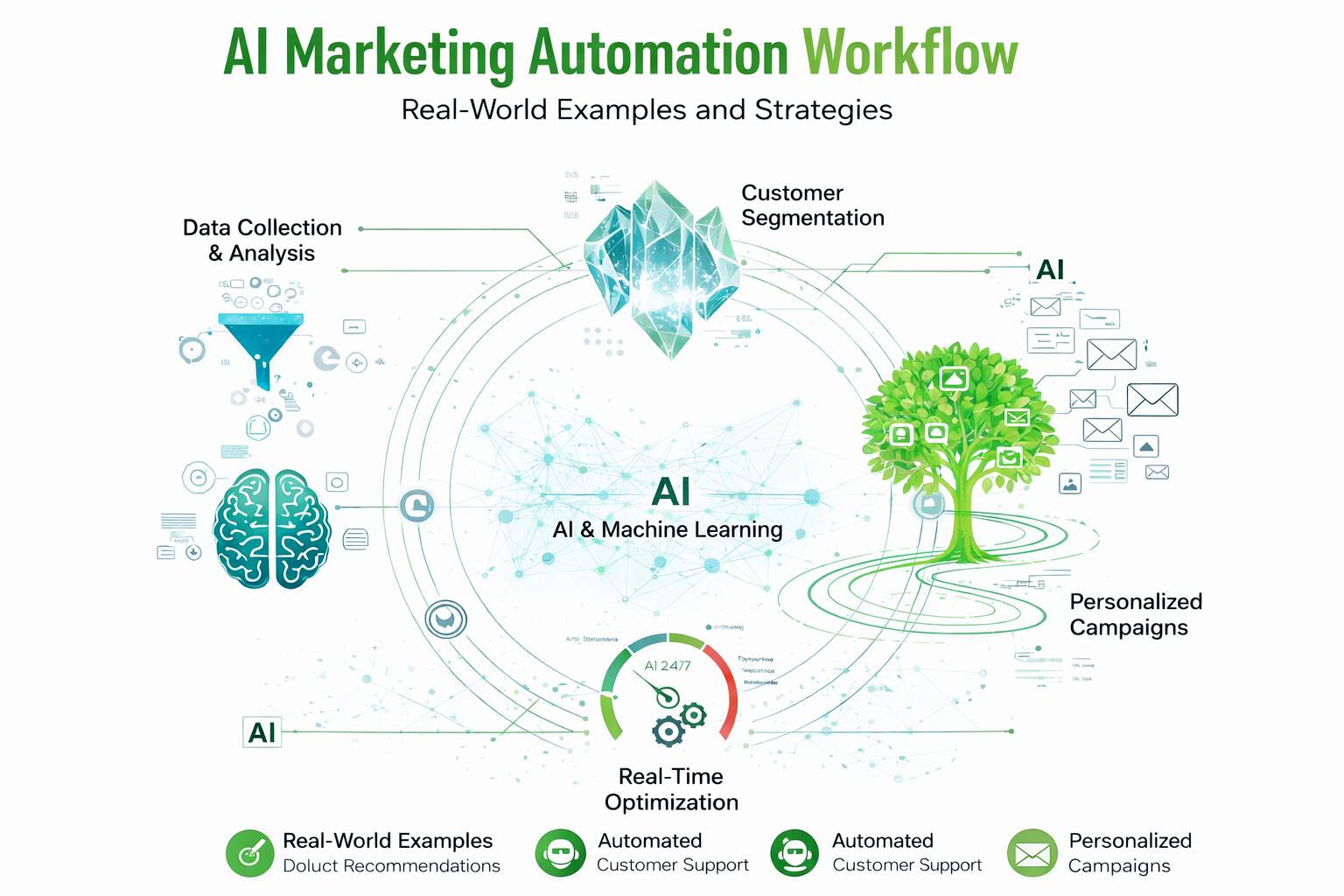
Automation is not powerful because it can send an email on time. That is basic. Its real value lies in creating consistency across a messy marketing operation. Lead routing, nurture sequences, reporting cycles, audience triggers, follow-up actions, and campaign timing become more reliable when they no longer depend on memory, manual effort, or scattered handoffs. That is why a strong marketing automation framework matters. It does not just save time. It protects performance from operational sloppiness, missed follow-ups, and internal confusion that quietly eat away at growth.
HubSpot’s 2026 marketing report found that 80% of marketers use AI for content creation, which reinforces a broader reality: automation is no longer a side feature. It is becoming part of the default marketing layer.
What automation improves most?
- It reduces follow-up delays that often cost businesses qualified leads.
- It keeps campaign timing consistent across channels and recurring workflows.
- It improves operational discipline without forcing constant manual oversight.
- It helps teams scale execution without multiplying confusion and missed steps.
- It creates repeatable systems that support growth without exhausting people.
That is where automated campaigns become genuinely useful. Search behavior can influence remarketing. Email engagement can shape paid messaging. CRM activity can drive more effective nurture flows. Add AI personalization engines into the mix, and the result is not just faster marketing. It is more coordinated marketing with a stronger chance of feeling timely, useful, and relevant.
Why Human Strategy Remains Irreplaceable?
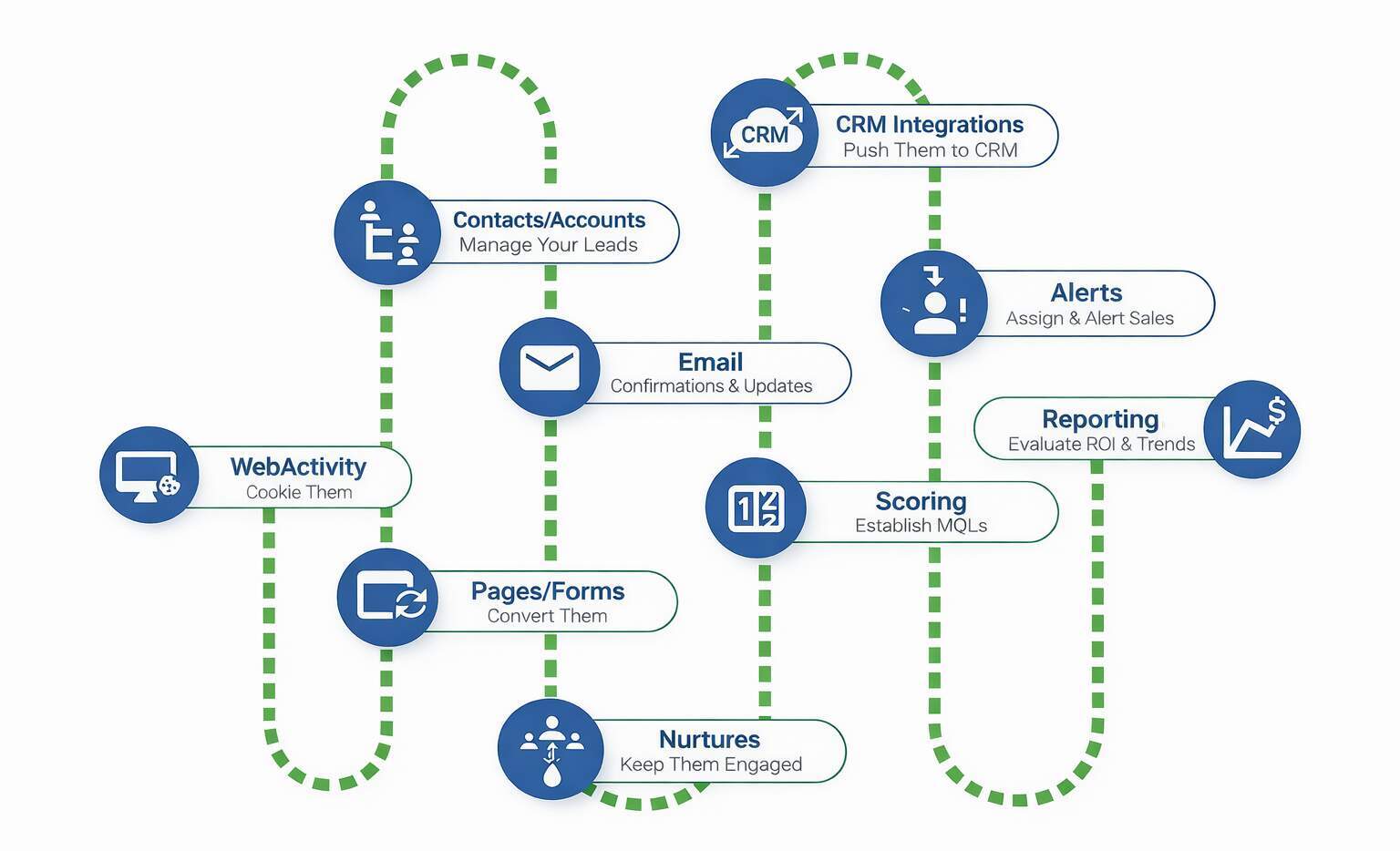
AI is excellent at recognizing patterns, detecting anomalies, and automating repetitive tasks. It is still terrible at deciding what your business should stand for, which tradeoff matters most this quarter, or what kind of message will create differentiation instead of just more noise. That is why a human + AI marketing strategy is not a compromise model. It is the strongest model. AI can surface opportunities, but people still decide which are worth pursuing and which would pull the brand in the wrong direction.
This matters even more now that speed is becoming cheap. When every team can generate drafts faster, automate more steps, and launch more quickly, the real differentiator becomes judgment. Not just output. Not just optimization. Judgment. That includes positioning, tone, risk, restraint, and the ability to say, “Yes, this is efficient, but no, this does not feel like us.” That is the layer machines still cannot handle with real sophistication, especially when brands need to sound distinct instead of merely polished.
What humans still do best:
- Set direction when data offers multiple paths but no business context.
- Protect brand voice from becoming generic, polished, and emotionally flat.
- Make judgment calls around timing, tone, ethics, and strategic fit.
- Add perspective that turns competent marketing into memorable marketing.
- Decide what should never be automated, even if software allows it.
That is why the human strategy marketing role is becoming more valuable, not less. Creativity, editorial instinct, and commercial judgment are the forces that keep AI-enhanced work from collapsing into sameness. Technology can move faster than ever, but someone still has to decide what deserves momentum, what deserves restraint, and what deserves a completely different approach.
How Do AI, Automation & Humans Integrate?
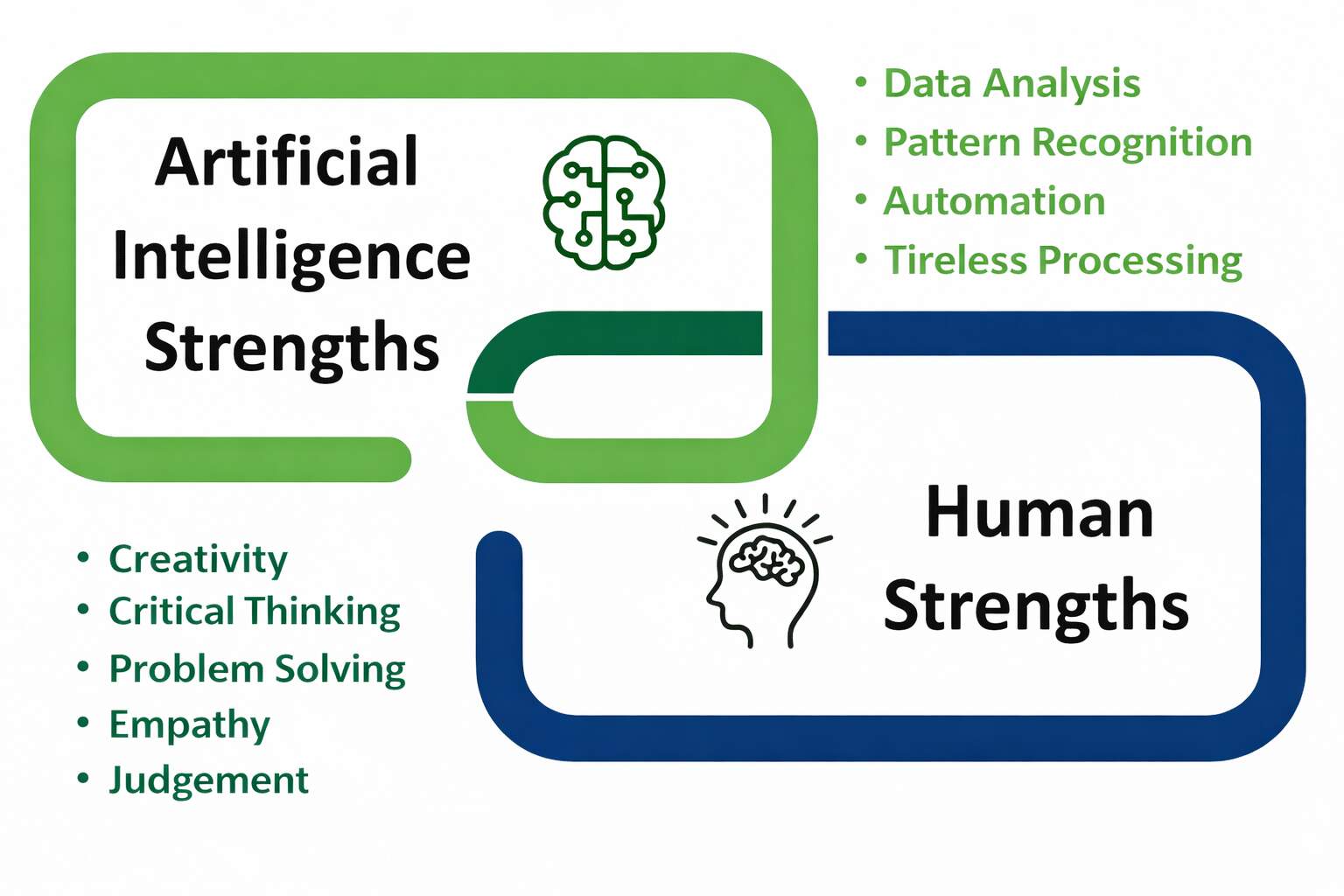
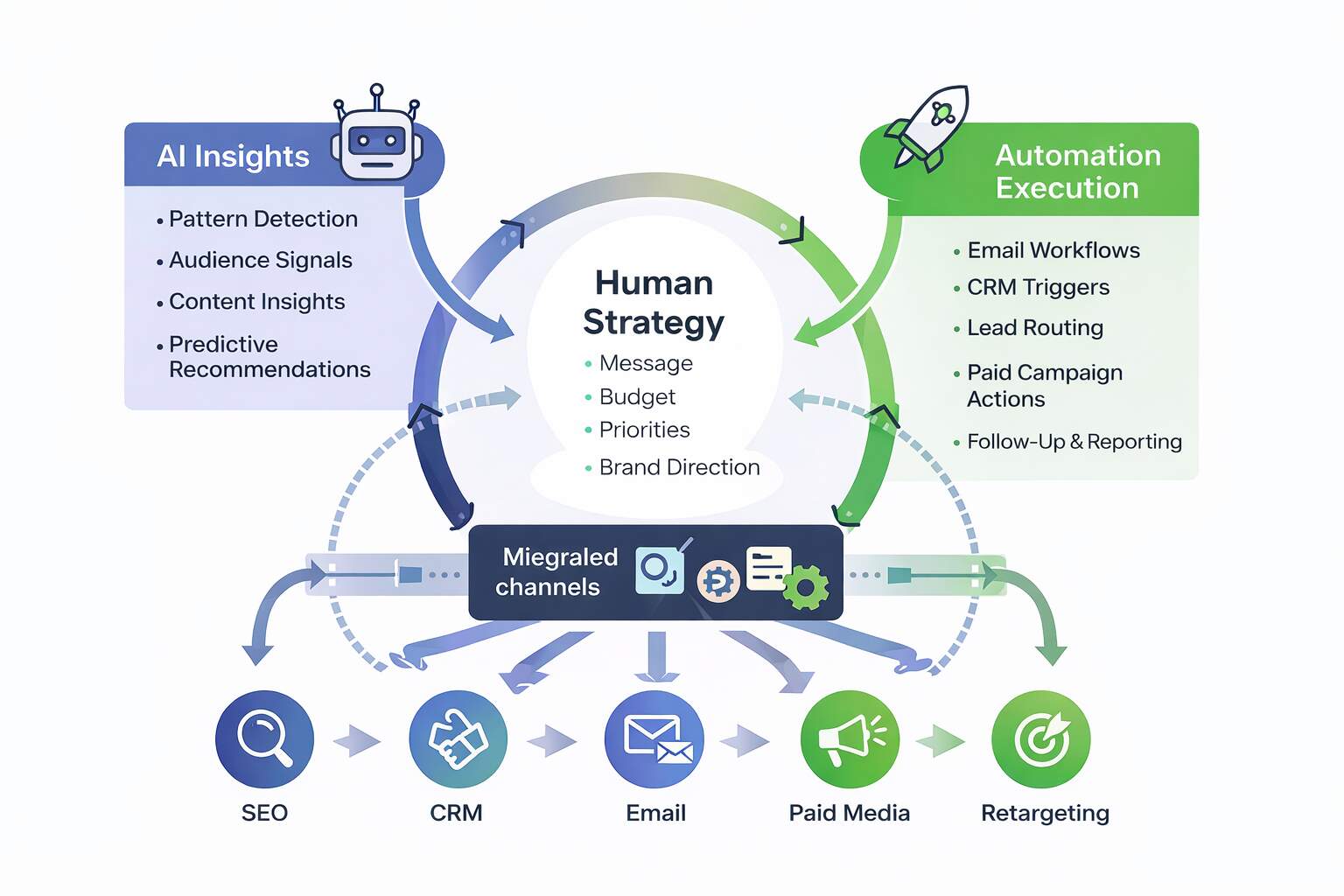
The most effective teams do not treat AI, automation, and strategy as separate lanes. They build a system where each one strengthens the others. AI should identify patterns, summarize signals, and reveal opportunities faster than a human could. Automation should carry repeatable execution across email, CRM, SEO, paid media, and follow-up workflows. People should make the decisions about message, budget, priorities, and commercial direction. That is where an AI-driven marketing strategy starts to feel useful instead of overhyped, because every layer is doing the job it is actually suited to.
Salesforce found that 98% of marketers still face barriers to personalization, largely because their data is disconnected or difficult to activate. That is exactly why integration matters more than buying more tools. If systems do not talk to each other, speed just creates faster confusion.
What strong integration actually creates:
- SEO insights can sharpen messaging before paid campaigns waste budget.
- CRM behavior can trigger follow-up without manual chasing and delays.
- Email engagement can feed stronger segmentation and retargeting logic.
- Shared data improves timing, consistency, and message relevance across channels.
- Feedback loops help teams optimize faster without operating in silos.
This is where AI content systems become more than drafting assistants, where the marketing technology stack starts acting like one coordinated environment, and where businesses begin building scalable marketing systems that do not collapse under growth. The point is not to automate everything. The point is to make every layer do the work it handles best.
How the hybrid model actually behaves:
| Layer | Main Job | What It Should Not Own |
| AI Insight Engine | Finds patterns, summarizes signals, and surfaces insights faster than humans can. | Final brand direction, strategic tradeoffs, and judgment-heavy business decisions. |
| Workflow Automation Layer | Executes repeatable workflows, triggers actions, and keeps systems moving consistently. | Creative positioning, audience nuance, and strategic prioritization across campaigns. |
| Unified Data Layer | Unify audience, CRM, channel, and performance signals into usable context. | Strategic interpretation without human review or business-specific decision framing. |
| Content Production Layer | Supports drafting, repurposing, optimization, and structured production across channels. | Original brand voice, emotional nuance, and final editorial judgment. |
| Human Strategy Layer | Shapes positioning, approves direction, and makes high-context commercial decisions. | Repetitive manual tasks that software can handle faster and better. |
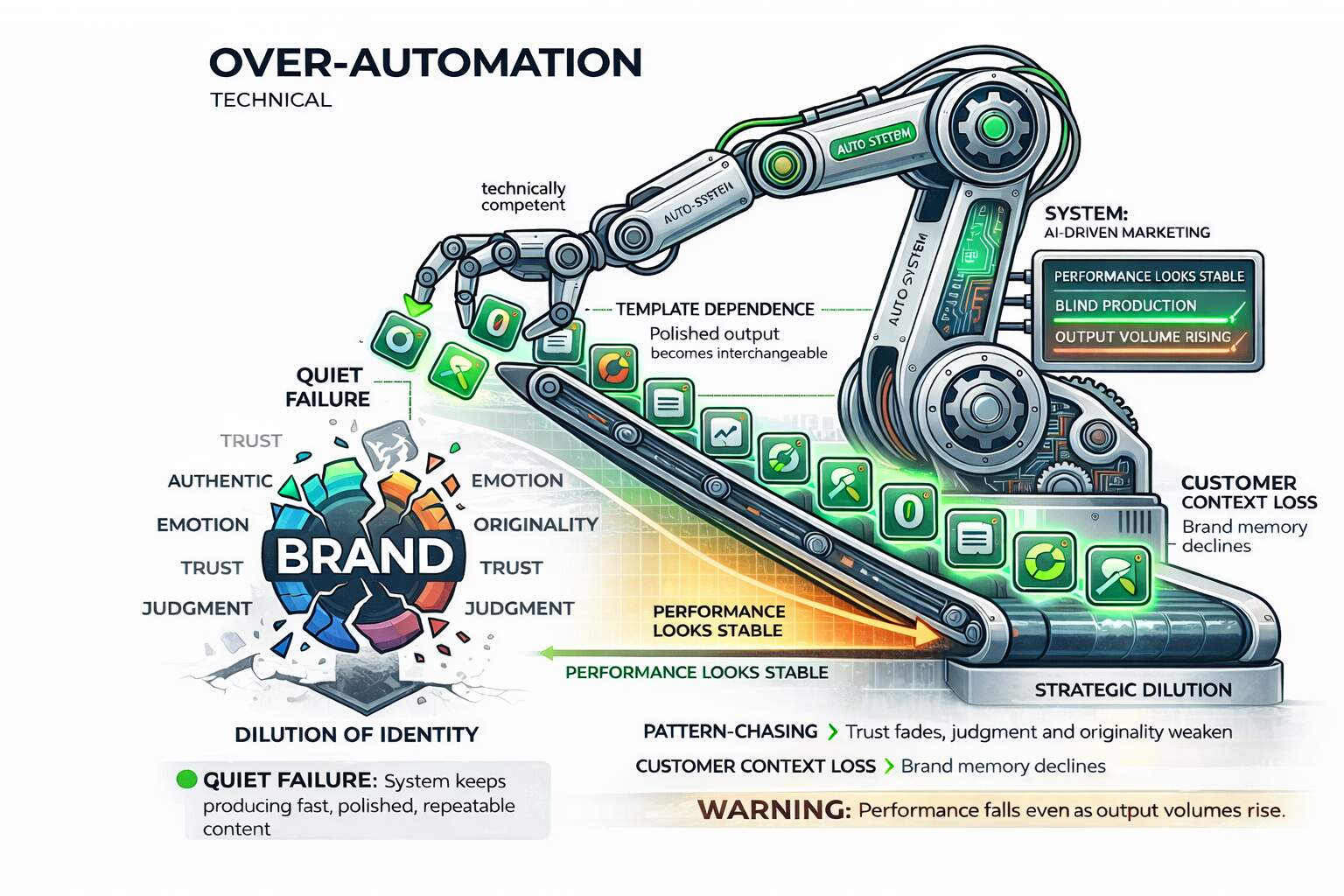
Over-automation usually does not fail in a dramatic, obvious way. It fails quietly. The campaigns are still launching. The reports still arrive. The copy still looks polished. But over time, the brand becomes easier to ignore because everything starts sounding technically competent and emotionally interchangeable. That is the risk hiding inside an AI marketing operating model when too much control shifts to machines. More content, more flows, and more efficiency can look like progress even while distinctiveness quietly disappears.
This is also where teams get tricked by clean-looking output. When automation is overused, performance can appear stable while originality, trust, and brand memory steadily weaken. The system keeps producing, so nobody stops to ask whether what it is producing still feels sharp, specific, and worth remembering. That is why over-automation is not really a productivity problem. It is a strategic dilution problem, and one that can take months to become visible in performance data.
The warning signs are usually these:
- Copy sounds polished but strangely interchangeable across every channel.
- Campaigns feel efficient, yet performance loses emotional pull and memorability.
- Teams trust templates more than customer context and actual behavior.
- Strategy becomes pattern-chasing instead of judgment-led decision-making.
- Brand identity softens while output volume keeps rising month after month.
That is where generative AI marketing needs human restraint, and where marketing efficiency models should never be mistaken for strategic intelligence. Fast systems are useful. Blind systems are dangerous. If a brand automates every decision worth making, it should not be surprised when it starts sounding like software wearing a company logo.
Insight: Hybrid Marketing Leads Ahead
The future of marketing will not be built by choosing between humans and machines. It will be built by knowing exactly what each one should do. AI can process signals faster, automation can keep systems moving, and human strategy can protect the decisions that shape positioning, trust, and long-term growth. That is what makes this model powerful. It does not remove marketers from the equation. It makes their judgment more valuable.
Businesses that get this balance right will move faster without sounding mechanical, scale without losing clarity, and personalize without creating chaos. Businesses that get it wrong will produce more output but less meaning. The real advantage is not using more tools. It is creating a smarter operating rhythm where technology supports execution and people still own direction. In the years ahead, the strongest marketing teams will not be the most automated ones. They will be the ones disciplined enough to combine speed, structure, and human insight into one system that actually performs.
Ready to Build a Smarter Marketing Engine?
AI can speed things up, but real growth still needs the right strategy behind it. eSign Web Services helps businesses put that strategy into action with services like expert SEO, PPC, content marketing, web design, and digital marketing services support built to improve visibility, generate leads, and turn more visitors into customers. If you want a smarter system that does more than create activity, our team is ready to help. Request a free quote to explore the right approach for your business, or call us today to get started.
Frequently Asked Questions (FAQS)
Question: What is an AI marketing operating model?
Answer: An AI marketing operating model integrates artificial intelligence, automation tools, and human strategic decision-making into a unified system. AI handles data analysis, pattern recognition, and execution tasks such as campaign optimization and content generation. Automation ensures consistent workflow execution across multiple channels. Human strategy defines direction, positioning, and creative differentiation. This combined approach improves efficiency while maintaining strategic control. Businesses adopting this model achieve better scalability, faster execution, and more accurate decision-making. The goal is to balance technology capabilities with human insight to drive sustainable marketing performance and long-term growth.
Question: How does AI improve marketing performance?
Answer: AI improves marketing performance by analyzing large datasets to identify patterns, trends, and user behaviors that humans cannot process efficiently. It enables precise audience targeting, predictive insights, and real-time optimization of campaigns. AI-driven tools adjust bids, personalize content, and recommend strategic improvements based on performance data. This reduces manual workload and increases decision accuracy. However, AI works best when guided by clear objectives and strategic direction. Combining AI capabilities with human insight ensures that data-driven decisions align with business goals and produce measurable outcomes.
Question: What are the limitations of marketing automation?
Answer: Marketing automation increases efficiency but has limitations when used without strategic oversight. Automated systems follow predefined rules and data patterns, which may not always reflect changing market conditions or audience sentiment. Over-automation can result in generic messaging, reduced creativity, and lack of personalization depth. Automation tools cannot fully understand context, emotions, or brand positioning nuances. Without human intervention, campaigns may lose relevance or fail to adapt effectively. Regular monitoring and strategic input are essential to ensure automation supports business objectives and delivers meaningful engagement outcomes.
Question: Why is human strategy still essential in AI-driven marketing?
Answer: Human strategy remains essential because it provides context, creativity, and decision-making that AI cannot replicate fully. While AI analyzes data and automates execution, it lacks understanding of brand positioning, emotional messaging, and long-term business vision. Human strategists interpret insights, define goals, and ensure alignment with market dynamics. They also manage ethical considerations and audience perception. Without human input, marketing efforts risk becoming mechanical and less engaging. Combining human intelligence with AI capabilities creates balanced strategies that deliver both efficiency and meaningful brand differentiation.
Question: Can small businesses benefit from AI and automation?
Answer: Yes, small businesses can significantly benefit from AI and automation by improving efficiency and reducing operational costs. Automation tools streamline repetitive tasks such as email marketing, social media scheduling, and ad optimization. AI-driven insights help small businesses make informed decisions without requiring large teams. This enables them to compete with larger organizations by leveraging data-driven strategies. However, success depends on proper implementation and strategic alignment. Small businesses should focus on using automation to support clear goals and maintain personalized communication with their audience.
Question: How do AI tools impact content marketing strategies?
Answer: AI tools enhance content marketing by assisting in ideation, keyword research, content generation, and performance analysis. They enable faster production and data-driven optimization. However, AI-generated content often lacks originality and emotional depth if used without human refinement. Effective content strategies combine AI efficiency with human creativity to maintain authenticity and engagement. AI helps identify trending topics and optimize structure, while humans ensure storytelling quality and brand voice consistency. This hybrid approach improves both scalability and effectiveness of content marketing efforts.
Question: What is the risk of relying too much on AI in marketing?
Answer: Over-reliance on AI can lead to generic messaging, reduced creativity, and weakened brand identity. Automated systems may prioritize efficiency over originality, resulting in content that lacks differentiation. Additionally, AI may misinterpret data without contextual understanding, leading to incorrect decisions. Excessive automation can also reduce human oversight, increasing risks related to ethics, privacy, and audience perception. Balanced usage ensures AI enhances productivity without replacing strategic thinking. Businesses must maintain human control over key decisions to preserve brand authenticity and long-term performance.
Question: How can businesses integrate AI into their existing marketing processes?
Answer: Businesses can integrate AI by identifying repetitive tasks and data-heavy processes suitable for automation. Implementing AI tools for analytics, content optimization, and campaign management improves efficiency. Integration should begin gradually, ensuring systems align with existing workflows. Training teams to use AI tools effectively is essential for success. Combining AI insights with human decision-making ensures balanced execution. Regular monitoring and performance evaluation help refine integration strategies. Successful adoption depends on aligning technology with business objectives and maintaining flexibility to adapt processes as needed.
Question: Does AI replace marketing jobs or transform them?
Answer: AI primarily transforms marketing roles rather than replacing them entirely. It automates repetitive tasks, allowing professionals to focus on strategy, creativity, and analysis. New roles emerge around data interpretation, AI tool management, and strategic planning. While some operational tasks become obsolete, demand increases for skills such as critical thinking, storytelling, and decision-making. Marketers must adapt by developing capabilities that complement AI technology. The shift creates opportunities for higher-value contributions rather than eliminating human involvement. Businesses benefit from teams that combine technical understanding with strategic expertise.
Question: What is the future of marketing with AI and automation?
Answer: The future of marketing lies in integrated systems where AI, automation, and human strategy work together seamlessly. AI will continue to enhance personalization, predictive analytics, and real-time optimization. Automation will streamline workflows and improve scalability. Human strategists will focus on creativity, positioning, and ethical decision-making. Businesses that adopt this hybrid model will achieve stronger performance and adaptability. Continuous innovation and learning will be essential as technology evolves. The balance between efficiency and human insight will define long-term success in digital marketing.
Author Details

Ashwani Kumar Sharma
Ashwani has been actively involved in SEO services since 2005. His expertise and distinctive work approaches have made him one of the most experienced and trusted SEO experts in the industry. He is a certified SEO and Google Ads professional. He also has strong business development skills in advanced SEO, PPC, and digital marketing strategies.


