



Building Topical Authority That Survives Algorithm Updates

Key Takeaways:
- Topical authority helps your website stay steadier when algorithm updates start rewarding depth and trust.
- Strong topic coverage beats scattered keyword chasing because it shows clearer expertise and stronger relevance.
- Topic clusters work best when pillar pages and support pages connect in a natural, useful way.
- Repetitive content weakens authority, while fresh insight and real depth make articles more valuable.
- Internal links help search engines understand your content and help readers move through topics smoothly.
- Trust signals like author names, updates, and sources make content feel far more believable.
- Small businesses grow faster when they master one topic before trying to expand too broadly.
- Lasting SEO growth comes from clarity, structure, and consistency, not short-term ranking shortcuts.
Algorithm updates rarely take down strong websites out of nowhere. Most of the time, they just expose problems that were already there: thin pages, repetitive blog content, fuzzy expertise, and articles that feel disconnected from one another. Google has been signaling the same thing for a while now. It wants content that is genuinely helpful, reliable, written for people first, and easy to trust. That is why building topical authority matters so much right now. It makes your expertise easier to recognize, your content easier to trust, and your rankings less shaky when search visibility starts moving around.
That matters to readers just as much as it does to SEO. When your site covers a topic with real depth, it does more than pull in traffic. It starts to feel like a place people can trust. Instead of banking on one standout post or a keyword that works for a few months, you build a library of content that proves you know the subject from different angles.
In this blog, we’ll break down why topical authority SEO matters more than ever, how a strong content cluster strategy supports long-term growth, and why algorithm update SEO gets easier when your content has real depth behind it. We’ll also look at how better planning, stronger structure, and SEO content authority can help your site stay steady through future updates.
Why Does Topical Authority Matter Now?
Publishing one decent article and expecting it to carry an entire subject is like opening one store and acting like you own the whole market. Just being present is not enough anymore. They look for depth, clarity, originality, and consistency across related pages. That is why topical authority SEO has become a stronger long-term play than chasing isolated rankings. When your site covers a subject thoroughly, it gives search engines more context and gives readers more reasons to stay, click, and trust what they find. That depth matters even more during ranking shifts, because strong coverage spreads value across a topic rather than concentrating it in a single fragile URL.
Trust is what really amplifies everything else. A site that answers related questions well starts to feel like a specialist, not a content machine. That changes how people interact with the brand and how search systems interpret its relevance. Instead of looking like content that was simply uploaded, it starts to look intentional. That difference is subtle but powerful. Durable rankings usually come from patterns of usefulness, not isolated flashes of success. When a business builds authority around one subject with focus and consistency, it stops competing only on keywords and starts competing on credibility.
Are You Covering Topics Or Chasing Terms?
Some blogs look productive right up until you read three posts back to back and realize they are all saying the same thing with slightly different packaging. One article targets a keyword, the next chases a trend, and the third repeats the same advice with a shinier title. That kind of drift weakens the structure and scatters your relevance. Instead of building one clear area of expertise, the blog starts to feel like a pile of disconnected guesses. A smarter move is to stop asking what to publish next and start asking what you want to be known for. That shift is where the content cluster strategy becomes useful.
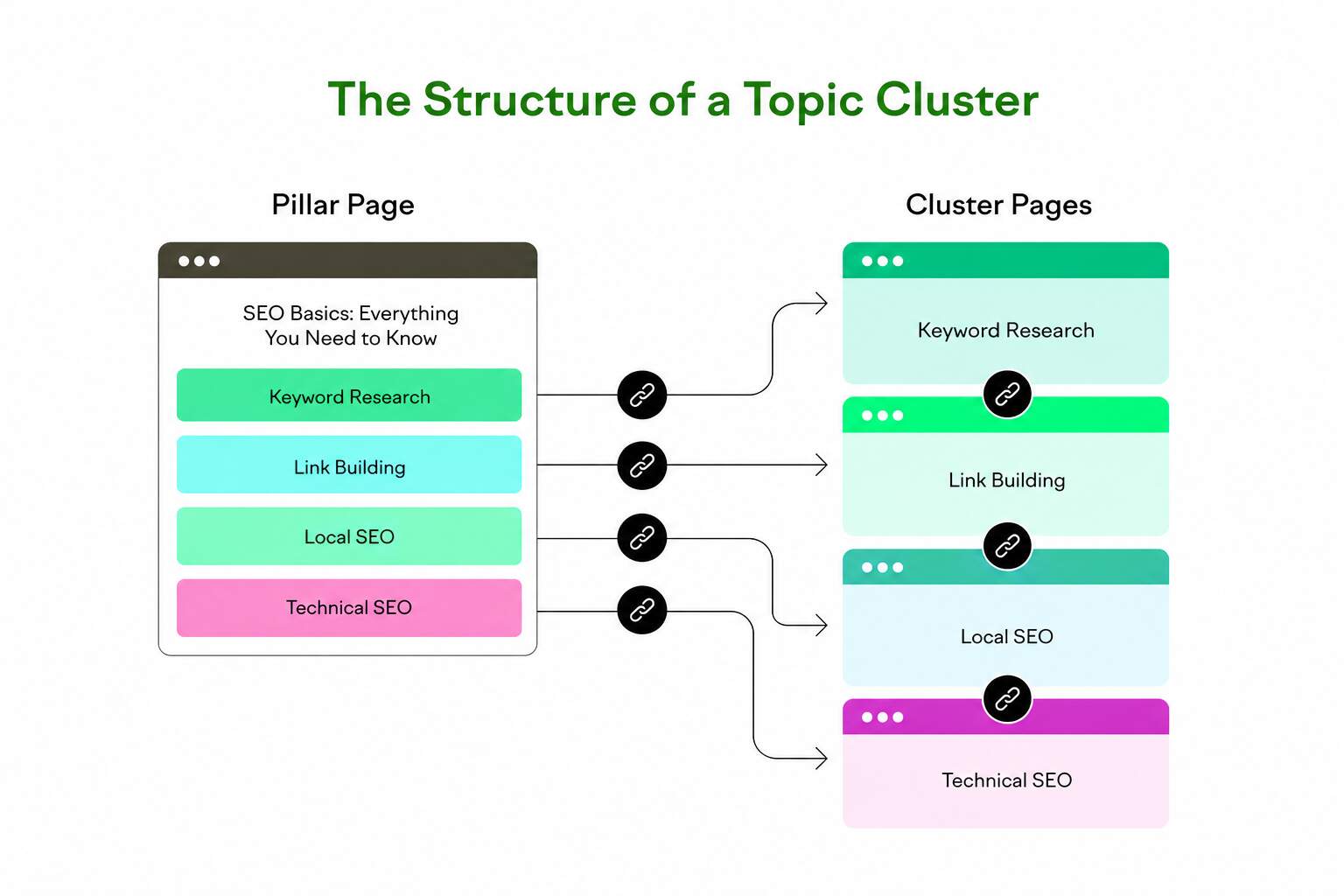
A focused topic map assigns a job to every page. One pillar page frames the subject. Supporting pages answer comparisons, objections, mistakes, and next-step questions. That creates stronger subject signals than a random editorial calendar ever will.
- Pick one commercial topic closely tied to revenue, expertise, audience demand, and long-term business growth.
- Create a pillar page that clearly defines the topic, intent, scope, and supporting content direction.
- Build support pages around real buyer questions, comparisons, objections, use cases, and decision-making moments.
- Make every article deepen the topic, strengthen relevance, and support the broader authority strategy.
This is also why algorithm update SEO works better when it is built on relevance, not volume. Focus beats noise because every page reinforces the same idea rather than competing for attention.
What Makes A Topic Cluster Actually Work?
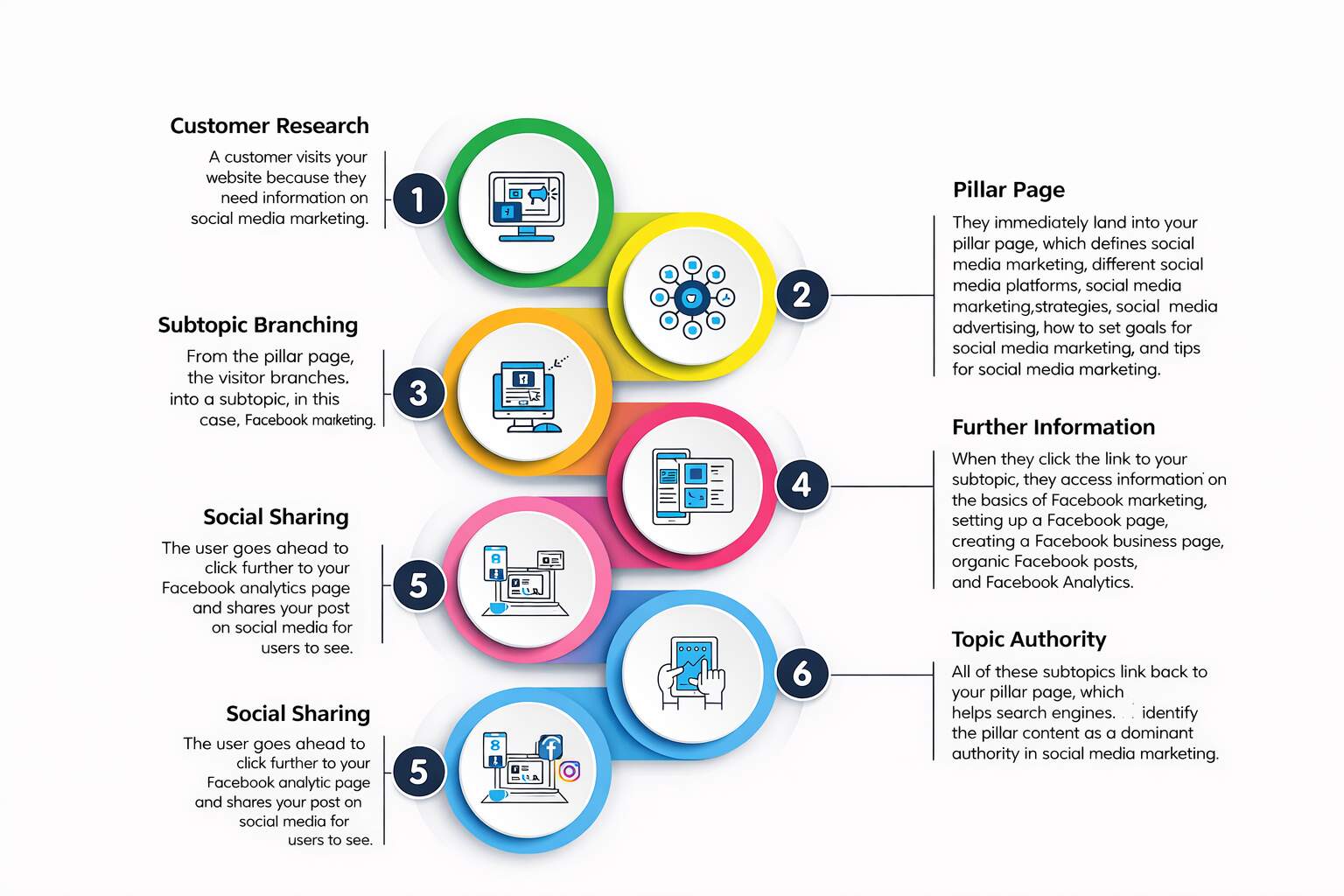
A topic cluster works when it has a clear center, useful support, and pathways that make sense. The pillar page should feel like the front door to the subject, not a long blog post pretending to be a strategy. It sets the scope, introduces the major questions, and helps readers find the exact follow-up page they need next. That is where SEO content authority starts looking real. The site stops feeling like a pile of articles and starts feeling like a real knowledge hub.
The supporting pages are where most of the real work happens. One handles comparisons, another tackles mistakes, another explains the process, and another addresses edge cases that buyers genuinely care about. That is what makes coverage feel complete instead of repetitive. A strong cluster isn’t built by stuffing similar posts into a single category. It is built by giving each page a distinct purpose within the same subject.
The last piece is structure. Links between pages should feel natural, intentional, and helpful. That is where semantic SEO structure turns content into a system. When each page has a role, and each link helps move the reader forward, authority becomes easier for both people and search engines to recognize.
Is Your Content Deep Or Just Repetitive?
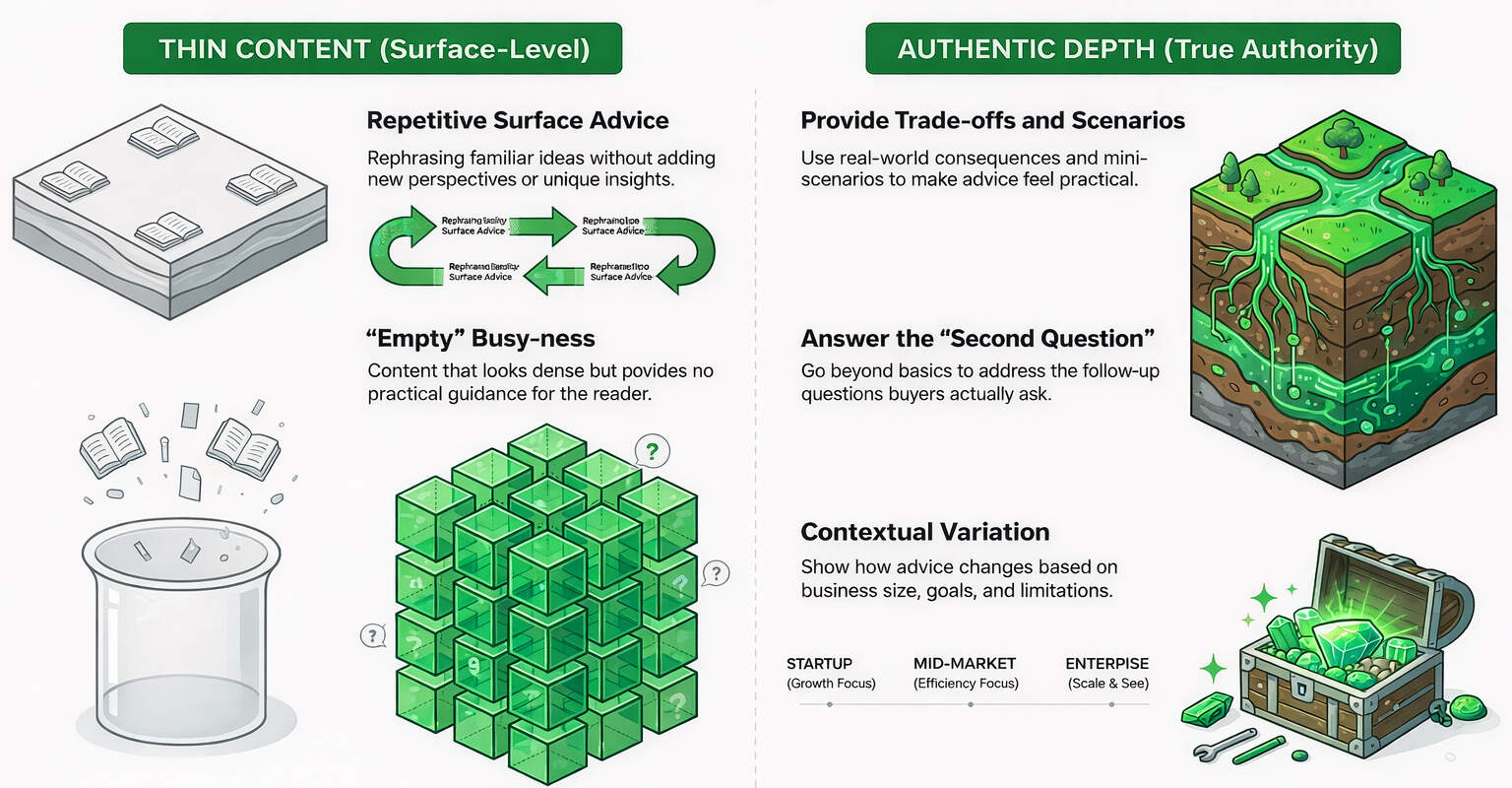
A site can publish 10 articles on a single topic and still leave readers feeling like nothing new was said. That usually happens when the writing repeats surface-level advice, rephrases familiar ideas, and adds no real perspective. The result is content that looks busy on the surface but feels empty once you read it. Real depth shows up in the details. It includes examples, trade-offs, practical context, mini-scenarios, and the follow-up questions buyers actually ask once the basics are out of the way. That is where content depth and relevance become apparent, and where a strong topical authority SEO approach starts to outperform generic content production.
- Add trade-offs, not just definitions, so readers understand choices, consequences, and real decision-making context.
- Include mini-scenarios readers can picture instantly, making the advice feel practical, specific, and easier to apply.
- Answer the second question too, so the content feels complete instead of stopping at basics.
- Show how the advice changes by business type, size, goals, complexity, and real-world limitations.
Depth is not just about length. It is about whether the page feels like guidance instead of a lightly reworded summary. A useful article does not stop at explaining the topic. It helps the reader apply it. That difference is often what separates forgettable content from content people actually trust, save, and revisit later.
Are Your Internal Links Doing Enough?
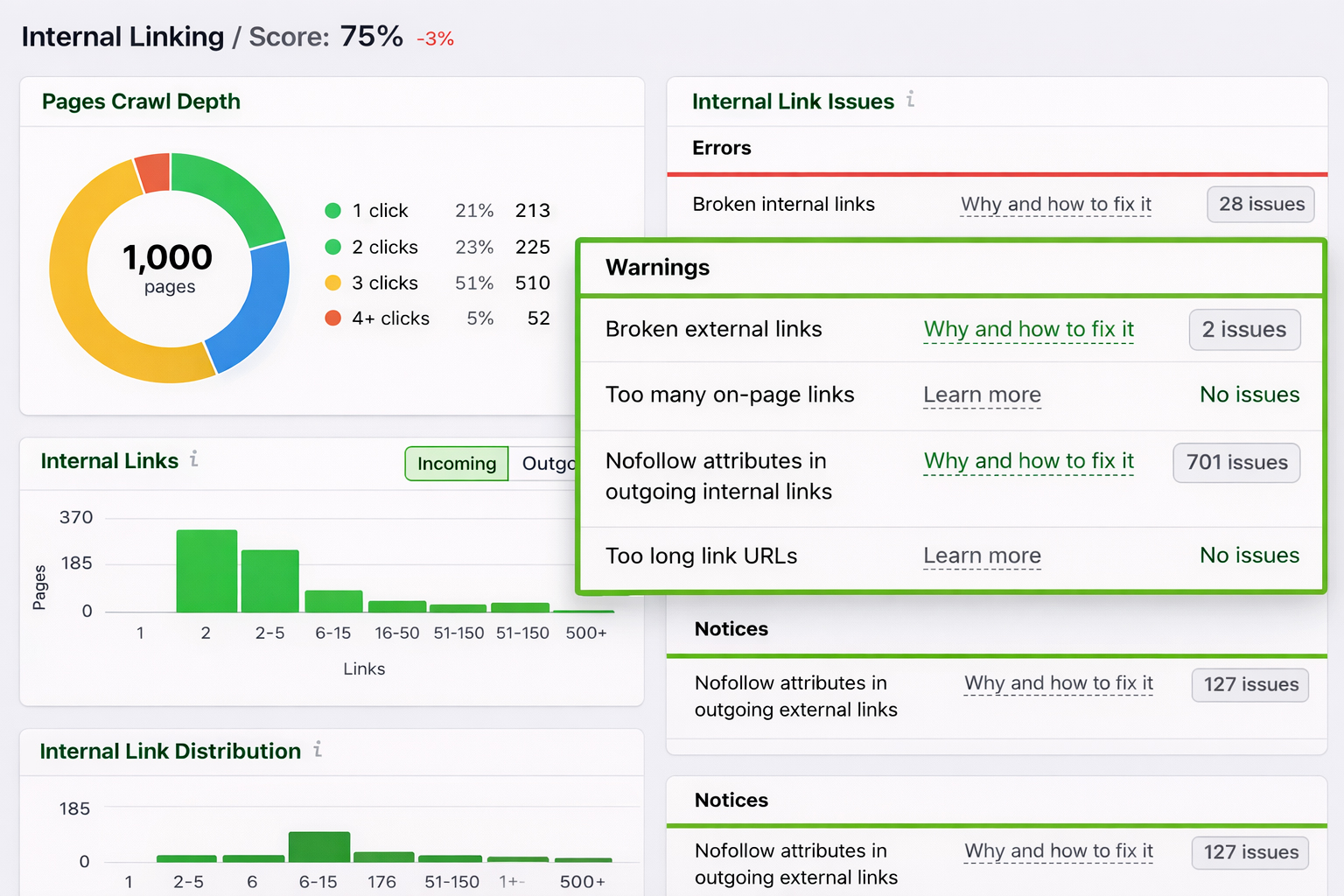
Internal links are not decoration. They are explanations. A strong internal linking strategy tells search engines which page leads the topic, which pages support it, and how related ideas connect. Without those signals, even good content can feel isolated. Many sites quietly underperform here. The pages exist, but the pathways do not. Pillar pages forget to link down. Support pages never link back. The anchor text says “learn more,” but it should clearly name the idea. That weakens building topical authority because the content cannot reinforce itself properly. Readers hit dead ends, and crawlers get only part of the story.
- Use anchor text that names the exact topic clearly, improving relevance, context, and user understanding.
- Link pillar pages to every important support page so search engines understand the full topic.
- Link support pages back to the main guide naturally to reinforce hierarchy and improve navigation.
- Add contextual links exactly where the next question appears, guiding readers deeper into related content.
The fix is usually simple but powerful. Better linking improves navigation, crawlability, and content discovery. It also makes the topic feel more complete because the reader can move through it logically. Good architecture does not just support content performance. It helps the entire subject make more sense, which is exactly what a strong authority strategy is supposed to do.
Do Trust Signals Support Your Authority?
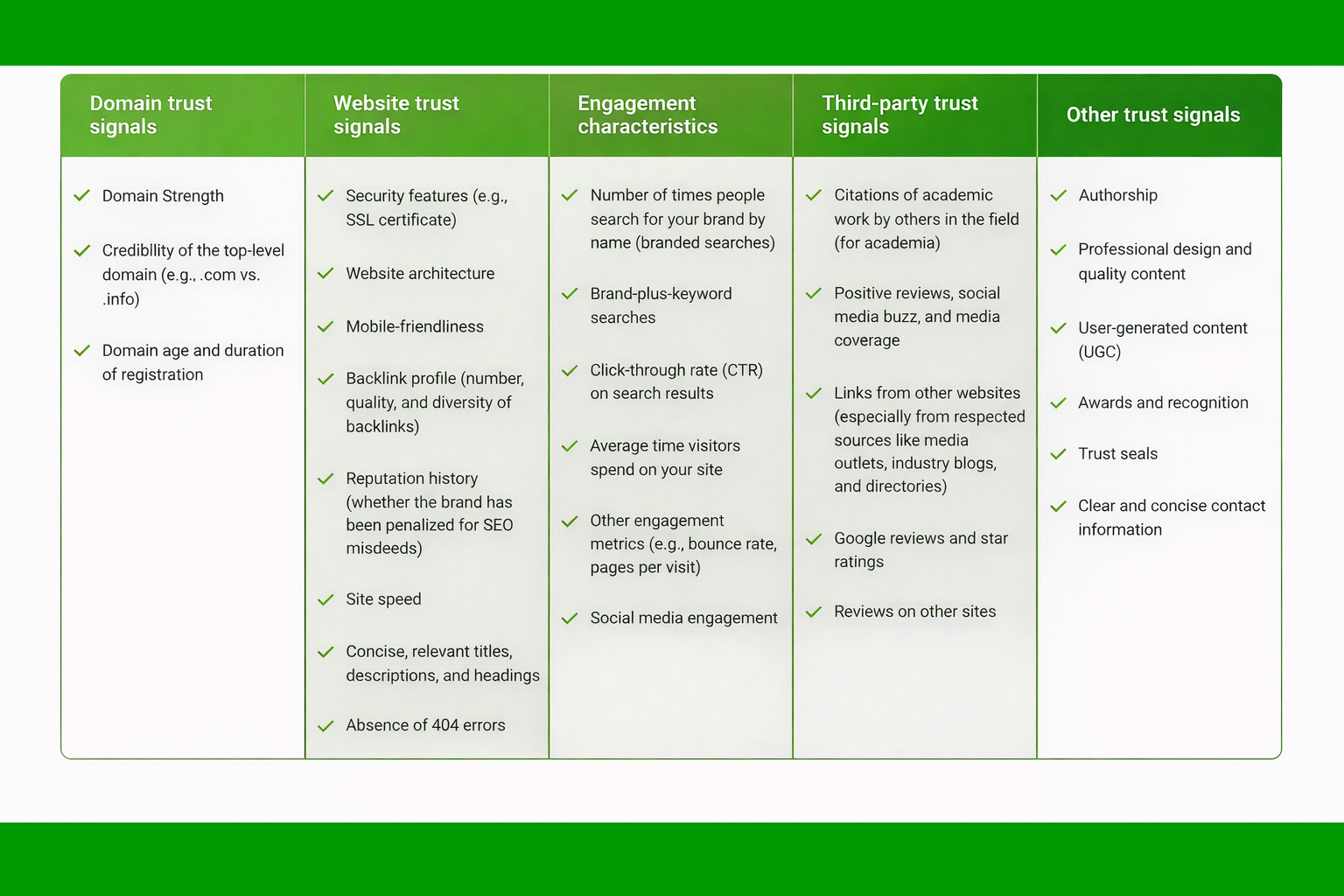
Authority sounds stronger when it looks earned. Named authors, visible credentials, updated dates, credible references, and grounded examples all reduce that quiet “Who wrote this?” hesitation readers feel when a page seems polished but generic. That matters because trust is not just a branding detail. It shapes how readers interpret quality and how search systems interpret credibility. Strong expertise signals make the content easier to believe before the reader even reaches the halfway point. That is where SEO trust and expertise start doing real work.
Examples make this practical, not theoretical. An expert byline tied to a real role adds weight. A visible “last updated” date shows maintenance. A cited benchmark beside a bold claim improves confidence. A mini-example taken from real business scenarios feels more trustworthy than vague general advice.
- Add expert bylines with relevant credentials to make authorship clearer, stronger, and easier for readers.
- Show updated dates on strategic pages to signal freshness, maintenance, and ongoing content reliability.
- Cite credible sources beside important claims to strengthen trust, accuracy, and reader confidence quickly.
- Use real examples instead of filler statements to make the content feel believable and useful.
When trust cues are visible, authority feels more believable. And when authority feels believable, readers stay longer, engage more deeply, and are more likely to treat the site as a reliable source rather than just another article in the pile.
How Do You Make Authority More Durable?
Durable visibility usually comes from clear ownership, not lucky spikes. When a brand becomes closely associated with one subject, search engines have less guesswork to do, and readers have fewer reasons to hesitate. That is the practical side of algorithm update SEO. You are not trying to look relevant for everything. You are trying to become the clearest, most useful answer for one commercially meaningful area. That focus is what gives authority staying power.
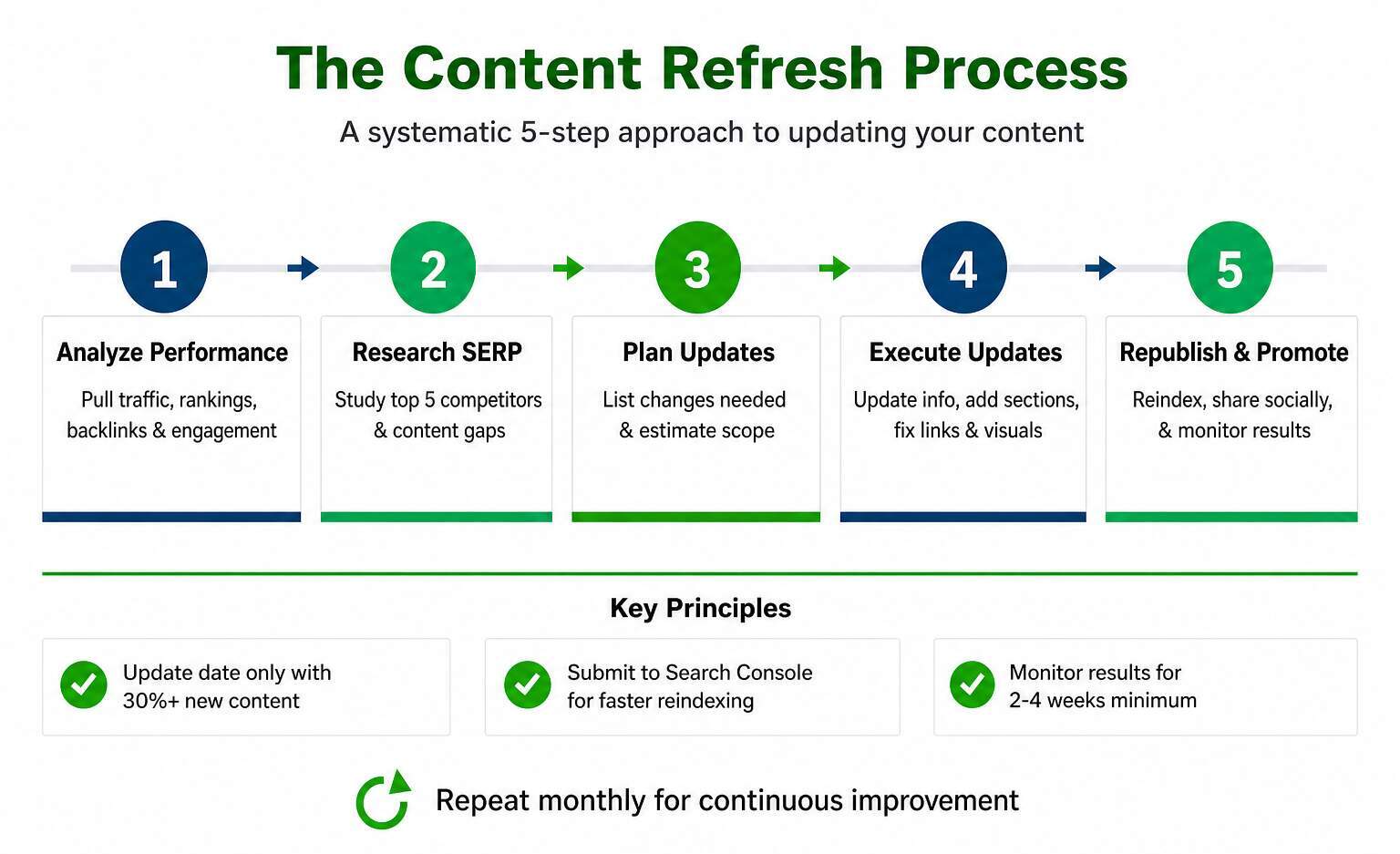
But durable authority is never a publish-once asset. It needs maintenance. Old pages age out. Weaker articles overlap. Broken links appear. New questions emerge within the same topic. That is why editorial systems matter so much. Review cycles, refresh plans, pruning, and clearer page roles keep the topic sharp after the excitement of publishing fades.
This is where building topical authority becomes more than a content tactic. It becomes a discipline. The brands that hold up best are not always the fastest publishers. They are usually the most consistent editors. They update what matters, merge what overlaps, and expand only when the existing cluster feels complete. That kind of discipline is what turns short-term visibility into long-term resilience.
What Should Small Businesses Do First?
Start with one topic, not seven. Small businesses often lose momentum by trying to look broad before they look credible. The better move is to choose one subject tightly connected to revenue, expertise, and buyer demand, then build depth there first. That is what makes building topical authority realistic for smaller teams. Focus reduces wasted effort, sharpens messaging, and gives every page a clearer role. It also enables faster learning because you can see what is working within a single cluster before expanding.
Most businesses are not starting from zero. They are starting from a messy middle. A few posts are useful, a few overlap, and one is probably the strongest pillar candidate without anyone formally calling it that yet. That is why the first step should be a clean audit.
- Pick one service-led topic closely tied to revenue, expertise, demand, and long-term business growth.
- Audit existing posts quickly to spot overlap, weak structure, missed opportunities, and content gaps.
- Choose the strongest existing page to become the pillar and anchor the entire topic.
- Build support pages only where real gaps exist and buyer questions still remain unanswered.
- Expand outward only after the first cluster performs, connects well, and proves commercial value.
That last part matters. A second content cluster strategy should come only after the first one feels connected, useful, and commercially strong. Go deeper before wider.
Final Thoughts: Build SEO That Lasts
The brands that come through algorithm updates strongest are usually not the ones publishing the most. They are the ones making the most sense. When your content works as a connected system instead of a scattered collection of blog posts, rankings stop leaning so heavily on luck. They begin to reflect something much more reliable: structure, usefulness, depth, and trust. That is the real value of building topical authority. It helps your business compete by being clear, credible, and consistently helpful, not just by being louder than everyone else.
That is also why this approach tends to last. A site built around strong topic coverage, better internal connections, and content that genuinely answers related questions is harder to shake when updates roll out. It gives search engines more context, gives readers more confidence, and gives your business a stronger position in the market. Instead of chasing every keyword opportunity that appears, you create a content foundation that keeps working long after individual rankings move up or down. Go deeper before you go wider, and let relevance become your advantage instead of just a marketing line.
Ready to Build Stronger Topic Authority?
Want a smarter content system that can hold up through the next update and the one after that? Book a free quote with eSign Web Services or call us today to start building content that earns trust, strengthens visibility, and drives long-term growth.
Frequently Asked Questions (FAQs)
Question: Why does topical authority help during algorithm updates?
Answer: Topical authority helps because it gives search engines a clearer picture of what your site genuinely knows well. When your content covers a subject with depth, structure, and consistency, it sends stronger signals of expertise and relevance. That matters during algorithm updates because thin, scattered, or overly keyword-focused content tends to lose ground faster. A well-organized topic ecosystem gives your site a better chance of holding steady when ranking standards shift.
Question: How many articles do I need to build topical authority?
Answer: There is no magic number. Topical authority is not about publishing as much as possible. It is about covering a topic well enough that your site feels useful, complete, and credible. A smaller set of strong, connected pages can easily outperform a bigger group of weak or repetitive ones. The real goal is to answer the important questions around the topic and make sure each page supports the others in a meaningful way.
Question: What is the difference between topical authority and keyword targeting?
Answer: Keyword targeting is about trying to rank for specific search terms. Topical authority is about becoming a trusted source on a broader subject. A keyword-first strategy often creates isolated pages aimed at individual queries. A topical authority strategy connects those pages so they work together. Keywords still matter, but they are more effective when they sit inside a larger structure built around depth, context, and consistency.
Question: Do small businesses really need topic clusters?
Answer: for search engines to understand where their expertise really sits. Most small businesses do not need dozens of clusters. One or two strong ones built around their main services or areas of expertise can create far more value than a blog filled with unrelated posts.
Question: How do I know if my content is too thin or repetitive?
Answer: A simple way to spot it is to compare similar articles side by side. If several pages are saying nearly the same thing with only slight keyword changes, there is a good chance the content is repetitive. Thin content also tends to stay at the surface. It explains the basics but skips examples, practical context, comparisons, or real insight. If each page does not bring something distinct to the topic, it may be adding volume without adding much value.
Question: How important is internal linking for topical authority?
Answer: It is extremely important. Internal linking helps search engines understand how your content connects, which page leads the topic, and how supporting pages fit around it. It also makes the reader journey smoother by guiding people naturally from one useful page to the next. Without those connections, even good content can feel isolated. Strong internal links turn separate articles into a more complete and convincing content system.
Question: Can old content be used to build topical authority?
Answer: Absolutely. In many cases, older content is one of the best places to start. A lot of businesses already have useful material, but it may be outdated, too thin, or poorly connected. Updating those pages can often be faster and more effective than starting from scratch. Refreshing examples, improving structure, adding depth, and linking older pages into stronger clusters can help existing content contribute much more to long-term SEO performance.
Question: What trust signals help support topical authority?
Answer: Trust signals include things like expert authorship, clear brand positioning, updated information, strong author or About pages, accurate explanations, and content that shows real understanding of the topic. These elements help readers feel more confident in what they are reading, and they also support how search engines interpret credibility. Topical authority becomes much stronger when the content does not just look optimized, but also looks dependable and well grounded.
Question: What is the best first step to build topical authority?
Answer: The best place to start is with one core topic that is closely tied to your business. Then look at the content you already have around it. Find what is useful, what overlaps, what is missing, and which page could serve as the main pillar. From there, you can improve or create supporting pages that answer related questions more clearly. Starting with one focused subject is usually much more effective than trying to build authority across too many disconnected topics at once.
Author Details

Ashwani Kumar Sharma
Ashwani has been actively involved in SEO services since 2005. His expertise and distinctive work approaches have made him one of the most experienced and trusted SEO experts in the industry. He is a certified SEO and Google Ads professional. He also has strong business development skills in advanced SEO, PPC, and digital marketing strategies.


