



Facebook Ads vs Google Ads: Key Differences, Pros & Cons, and When to Use Each

Key Takeaways
- Google = intent; Facebook = discovery. Map them to different funnel stages for efficient spend.
- Facebook typically wins on CPC for awareness; Google often delivers higher conversion value despite higher CPC.
- Audience targeting options differ: Facebook uses interests/behaviors; Google uses keywords, queries, and context.
- Pair Google with refined keyword targeting and high-performing landing pages to lift Quality Score and conversions.
- Refresh Facebook creatives frequently; lifestyle storytelling + video improves thumb-stop rate and warm retargeting pools.
- Use Analytics, pixel/conversions API, and clear KPIs to attribute results across both paid advertising platforms.
- For small budgets, start with Facebook for reach, layer Google for bottom-funnel capture; then scale what proves ROI.
- The smartest online advertising strategy blends both: Facebook to build demand, Google to harvest it.
Digital advertising success hinges on more than just where you invest; it’s about understanding how each platform aligns with your goals, audience behavior, and sales cycle. When evaluating Facebook Ads vs Google Ads, it’s not about which platform is better universally; it’s about which one fits better at specific points in your online advertising strategy.These two paid advertising platforms dominate for good reason. They represent different user mindsets, traffic sources, and levels of intent. Facebook Ads leverage behavioral targeting, allowing you to reach users based on demographics, interests, and online interactions. This makes them especially powerful for sparking curiosity, building emotional resonance, and creating brand familiarity—even before a customer begins their buying journey.
Google Ads, on the other hand, operate on keyword-driven intent. Your ads show when someone is actively searching for a product, solution, or service; often at the final decision-making stage. It’s a direct line to high-conversion opportunities, especially in competitive niches where every search click counts.Think of it as PPC ads vs social media ads: Google brings precision, while Facebook delivers persuasion. Used wisely, both channels can work together to cover every angle of your marketing funnel, from awareness to action.
This article explores the difference between Google Ads and Facebook Ads in depth; so you can decide which is better for your next campaign. We’ll break down audience targeting options, show where each excels in the funnel stage marketing, and provide a real-world look at ad cost per click comparison.
Understanding the Two Advertising Powerhouses
Both are dominant paid advertising platforms but operate on very different logic. One aligns with PPC ads vs social media ads dynamics, while the other reflects keyword-driven behaviors. Let’s explore how they differ in strategy and results.
What Makes Facebook Ads Unique
Facebook Ads are designed for social discovery, not direct search. This means that instead of catching users while they’re actively searching, you’re reaching them during their daily scrolling; when their guard is down and they’re more open to engaging with content. Facebook allows detailed audience targeting through interests, behaviors, demographics, and life events. It offers a rich array of ad formats like images, videos, carousel ads, and interactive polls. Facebook’s ad network includes Facebook, Instagram, Messenger, and the Audience Network. It’s most effective for top-of-funnel campaigns like brand awareness, visual product promotion, and retargeting.
To get the most out of Facebook, strong creative and consistent content refresh cycles are essential. Its performance shines when visuals are compelling and storytelling aligns with audience interests. While tracking can sometimes be impacted by platform-level changes (such as privacy settings), smart use of custom events and broader campaign metrics can still provide valuable direction.
How Google Ads Leads the Search Game
Google Ads excels at capturing demand the moment it happens. It’s intent-based advertising, making it ideal for direct response marketing and immediate conversions. The Google Ads ecosystem spans Search, Display, YouTube, Shopping, and more. Advertisers can choose from text ads, Shopping ads with images and prices, responsive display ads, and in-stream video ads. Its biggest strength lies in keyword targeting; you’re matching ads to users actively searching for products or services.
The platform performs best when paired with refined keyword strategies and high-performing landing pages. It does require close campaign monitoring and regular optimization to keep performance in check and cost-effective. While some industries may experience higher click costs, this often reflects the high commercial value of those search terms. When executed properly, Google Ads becomes a precision engine for conversions and measurable outcomes.
Core Differences at a Glance
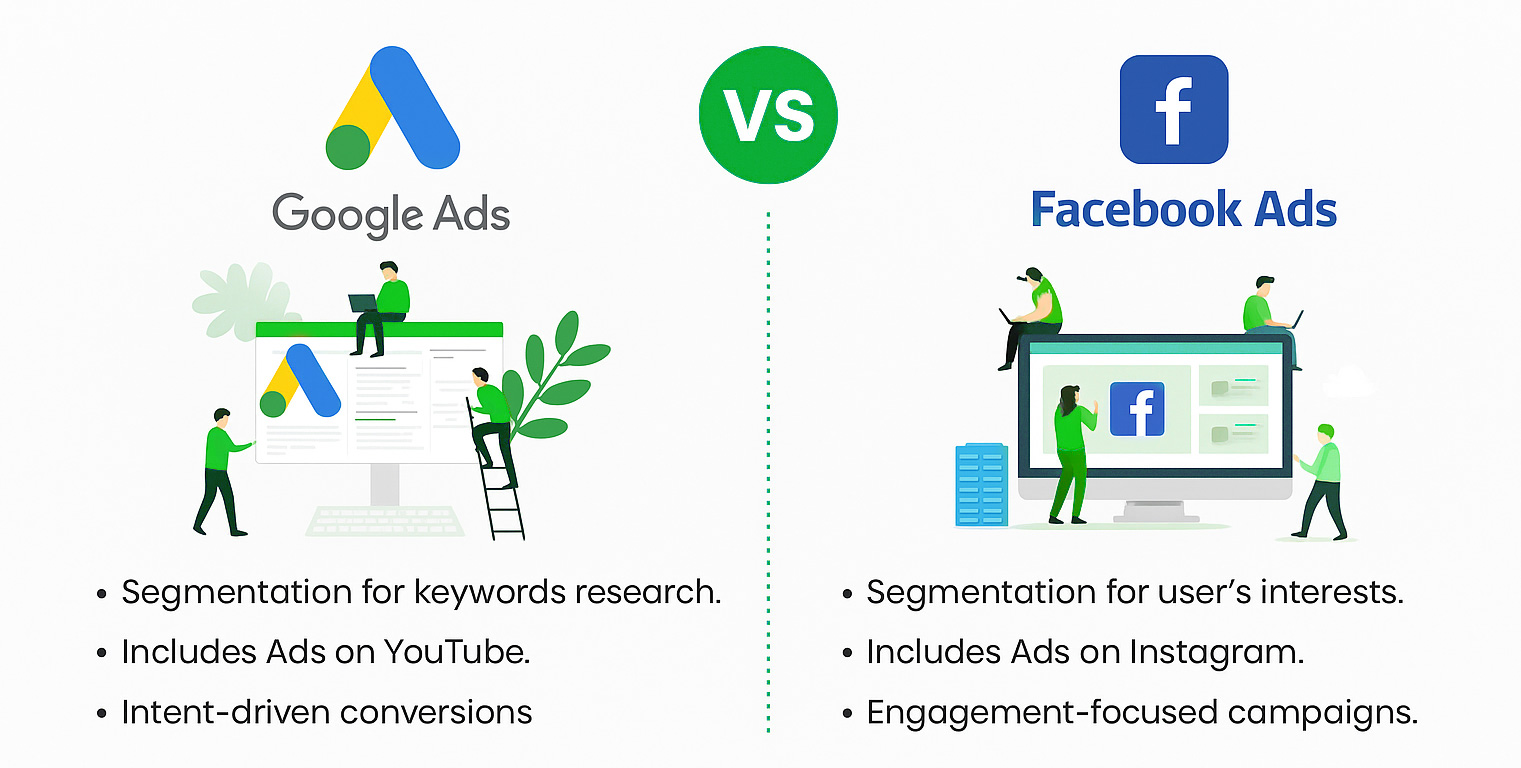
Both platforms are heavyweights; but they punch in very different ways. Here’s how their core mechanics stack up in real-world campaign scenarios.
Before you choose a platform, it’s essential to understand how their foundations differ; not just in tools, but in the psychology behind user behavior. The subtle nuances in ad placement, user intent, and optimization strategies can make or break your campaign ROI.
| Feature | Facebook Ads | Google Ads |
| Primary Strategy | Interest-based audience targeting | Intent-based keyword targeting |
| Best Funnel Stage | Top-of-funnel awareness | Bottom-of-funnel conversions |
| Ad Formats | Visual: images, videos, carousels | Text, shopping, video, display |
| Networks | Facebook, Instagram, Messenger | Search, YouTube, Display Network |
| Targeting Type | Demographics, interests, behaviors | Keywords, device, location, time |
| Average CPC | $0.30 – $1.00 (low) | $1.00 – $5.00+ (varies by niche) |
| Optimization Style | Engagement-focused (likes, views) | Conversion-focused (ROI, Quality Score) |
These differences reflect fundamentally different user mindsets. Facebook users are open to discovery while browsing, responding well to engaging content. Google users are solution-focused and expect relevance and speed. Facebook, while more visually immersive, works best when creative assets are aligned with emotion and lifestyle storytelling. In contrast, Google rewards relevance, speed, and precision; making it ideal for time-sensitive or purchase-ready interactions. Choosing the right platform should be based on where your audience is in the funnel and your marketing objectives.
Cost Breakdown and Return on Investment
Facebook’s Pricing and ROI
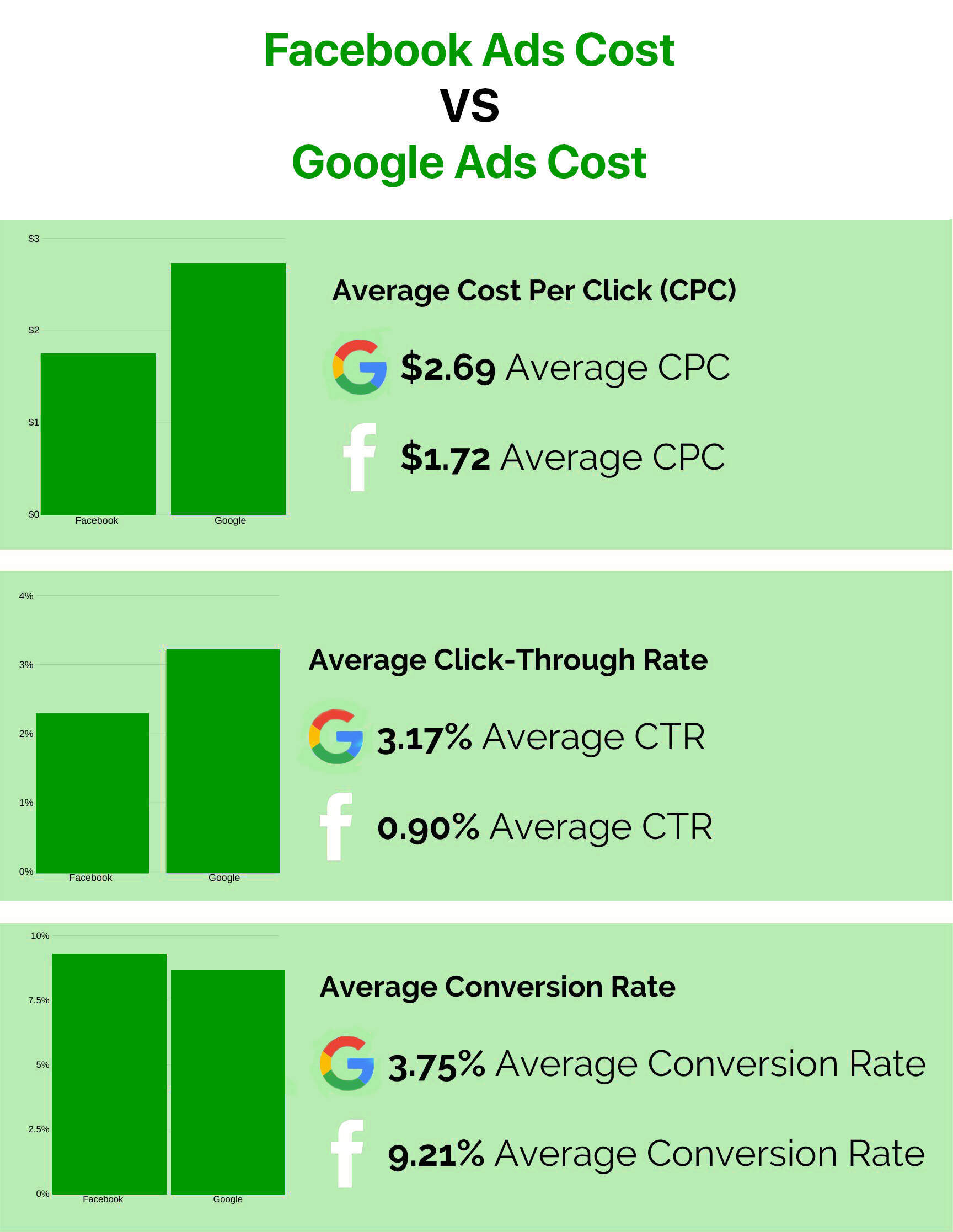
Facebook’s pricing model makes it a go-to for businesses looking to scale with limited ad spend. Average CPCs are attractively low, especially for broad targeting campaigns focused on reach and visibility. The platform is especially efficient for building awareness, nurturing interest, and retargeting users through dynamic creative formats. Since the buying intent may not always be immediate, results often shine with brands that prioritize storytelling and customer engagement.
Campaigns tend to perform best with fresh, scroll-stopping visuals and a test-and-learn mindset. Performance tracking tools like the Facebook Pixel offer solid insights, though results may require interpretation across platforms. Used strategically, Facebook can turn casual browsers into brand advocates over time.
Google Ads Costs and ROI Expectations
Google Ads typically commands a higher cost-per-click, especially in competitive verticals. This reflects the platform’s value in targeting users who are further down the buying funnel and actively searching for solutions. When keyword alignment and landing page experience are strong, ROI potential is considerable. Even a single well-optimized campaign can yield high-converting leads or sales.
Because of its demand-focused nature, success with Google Ads is often tied to the precision of campaign structure and ongoing optimization. While budgets need to be planned carefully, the reward is the ability to show up when it matters most; during decision-making moments. It’s a powerful conversion driver, particularly when aligned with high-intent queries.
Here’s a quick snapshot comparing average ad costs and performance metrics for both platforms:
Performance Tracking and Measurement Tools
Facebook’s Measurement Strengths
Facebook Ads Manager offers intuitive dashboards and actionable data on ad performance. Advertisers can monitor impressions, clicks, conversion actions, and more. For businesses that install the Facebook Pixel correctly and leverage aggregated event measurement, insights can be both timely and directional. The interface is beginner-friendly, giving quick snapshots of campaign health.
As advertising regulations evolve, flexibility in reading cross-platform behavior becomes increasingly important. Smart marketers supplement Facebook data with CRM integration or tools like Google Analytics to build a fuller picture. The real power of Facebook tracking lies in its ability to test creatives, monitor engagement trends, and continuously refine content.
Google’s Analytics Advantage
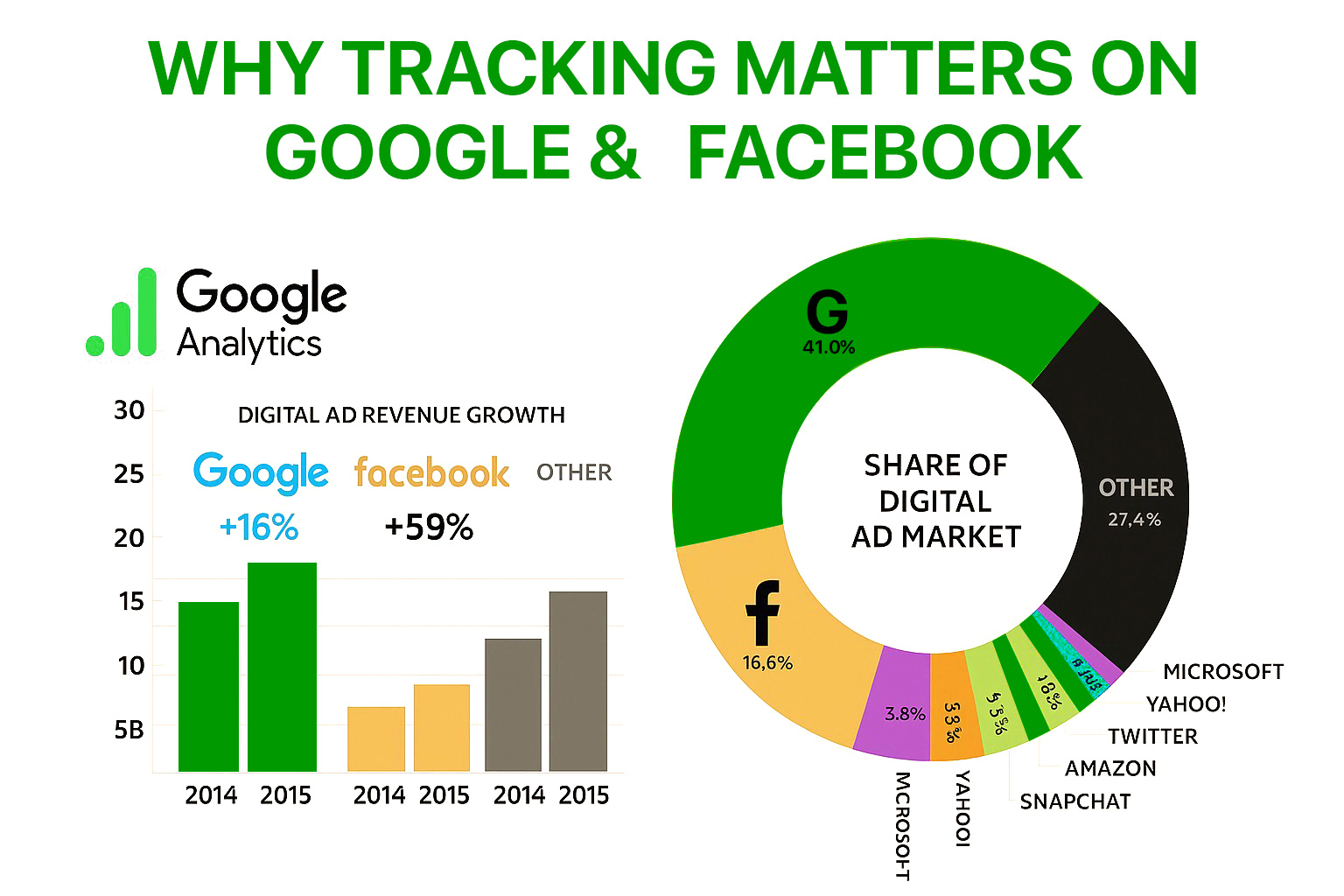
Google Ads stands out for its integration with broader analytics ecosystems. Paired with Google Analytics, Data Studio, and Search Console, it delivers granular insights into user journeys; from keyword click to final conversion. This ecosystem is ideal for marketers seeking to measure performance at every stage and attribute results across channels.
Setup and data interpretation can be more technical, but the payoff is precision. Those willing to invest in thoughtful campaign architecture and clear KPIs can derive substantial value. It’s a strong fit for conversion-focused strategies that demand tracking at a more advanced level.
 Strategic Use Cases: When to Use What
 Strategic Use Cases: When to Use What
Best Scenarios for Facebook Ads
Facebook Ads are ideal for brands seeking to engage audiences in a more emotional, visual, and narrative-driven way. With its rich media formats; such as video, carousel, and Instant Experience; Facebook allows brands to create immersive ad experiences that don’t rely on users actively searching for a product or service. This makes it especially powerful for:
- Showcasing lifestyle and retail products: Facebook’s visual appeal and dynamic formats help capture the attention of users casually browsing their feed.
- Running remarketing campaigns: With features like Custom Audiences and dynamic product ads, businesses can re-engage users who have interacted with their website or social channels.
- Launching awareness campaigns: Facebook excels at introducing new offerings to a large audience, ideal for product launches or brand repositioning.
Additionally, the platform nurtures trust and brand familiarity. It’s particularly effective for small to mid-sized businesses looking to build long-term recognition before converting customers. While it may not always drive immediate action, Facebook plays a crucial role in planting the seeds that lead to future conversions; especially when complemented by conversion-focused platforms.
Best Scenarios for Google Ads
Google Ads is the performance engine of online advertising. It shines when the goal is to reach users who are already in the market for a product or service. Its keyword-driven targeting ensures that ads appear when intent is highest. Ideal use cases include:
- Actively searching for a solution or provider: Users typing in queries like “best dentist near me” or “buy running shoes online” are primed to act.
- Comparing product or service options: Google Ads enables businesses to intercept buyers at the decision-making stage, using Shopping ads, reviews, or ad extensions.
- Responding to urgent needs: For time-sensitive offerings; like plumbing, legal aid, or limited-time deals; Google captures the moment users need fast answers.
Beyond just clicks, Google Ads is ideal for driving qualified leads and sales. Businesses in high-competition sectors like real estate, healthcare, or B2B services often benefit from its precision. It’s less about storytelling and more about delivering immediate, relevant solutions. When paired with optimized landing pages and clear CTAs, Google Ads becomes a high-conversion machine.
When to Use Both: Harmonizing the Strategy
Rather than viewing Facebook Ads vs Google Ads as competing forces, savvy marketers often use both in tandem to build a full-funnel advertising strategy. Each platform plays a complementary role across various stages of the buyer journey; from awareness and consideration to conversion. In the top-of-funnel stage, Facebook excels with visually engaging formats like videos, lifestyle imagery, and carousel ads that spark curiosity and create brand recognition. Simultaneously, Google Ads can reach users with display banners and YouTube pre-rolls, helping expand reach while reinforcing visual messaging.
As the audience progresses to the consideration stage, Facebook becomes effective for storytelling and retargeting campaigns that remind users of previous interactions. These can include user-generated content, testimonials, or personalized product showcases. Google steps in with branded search ads and competitor keyword targeting, allowing businesses to position themselves during side-by-side product or service comparisons.
| Funnel Stage | Facebook Ads | Google Ads |
| Awareness | Utilizes lifestyle images, video storytelling, and broad targeting to spark curiosity. | Engages users via YouTube pre-rolls and display banners based on browsing behavior. |
| Consideration | Delivers retargeted ads with testimonials, reviews, and interactive creatives. | Captures mid-funnel interest using branded keywords and competitor search targeting. |
| Conversion | Drives action with urgency-driven messaging, special offers, and dynamic retargeting. | Converts high-intent users with focused search ads and optimized landing experiences. |
Finally, when the goal is to convert, both platforms serve different but critical roles. Facebook leverages urgency messaging and limited-time offers through remarketing strategies, while Google captures users at the decision point with high-intent keyword campaigns. The synergy between emotional influence and search precision enhances conversion efficiency, ensuring the audience is nurtured at every stage. Together, they don’t compete; they collaborate to drive stronger ROI across the funnel.
Summary: Making the Right Choice for Your Goals
Choosing between Google Ads vs Facebook Ads doesn’t need to be complicated. Whether you’re focused on lead generation, brand awareness, or scaling your online advertising strategy, understanding their strengths ensures your campaigns hit the mark.
Facebook Ads and Google Ads are distinct tools with different strengths; but they work best together. Facebook offers lower-cost visibility and emotional engagement. It builds brand familiarity and loyalty. Google brings intent-matching precision and high-converting moments. It turns attention into action.
The better question isn’t “which is better” but “which fits my objective right now?” Choose Facebook for long-term presence and creative flexibility. Choose Google when targeting urgency and conversion is key. Smart marketers know how to weave both into their funnel, creating campaigns that connect, nurture, and convert.
Need help weaving both into a single, ROI-focused campaign?
At eSign Web Services, we specialize in building performance-driven advertising strategies across Google and Facebook. Whether you’re a startup or scaling enterprise, our certified PPC experts help you target the right users, at the right time, with the right message; turning every click into revenue.
Let us help you create smarter ads that convert. Reach out to eSign Web Services today for a tailored PPC strategy.
Frequently Asked Question (FAQs)
Question. Can I run both Facebook and Google Ads at the same time?
Answer. Yes. Combining PPC ads vs social media ads helps cover every stage of funnel stage marketing. Use Google for intent-driven clicks and Facebook for awareness to balance your online advertising strategy across both paid advertising platforms.
Question. Which platform is better for small businesses with limited budgets?
Answer. For limited budgets, Facebook often wins in an ad cost per click comparison. It delivers lower CPCs and flexible audience targeting options, while Google remains ideal for conversion-focused PPC ads vs social media ads in a lean online advertising strategy.
Question. How long does it take to see results from each platform?
Answer. Results vary by campaign goals. Paid advertising platforms like Google show quicker conversions from intent searches, while Facebook’s funnel stage marketing builds brand trust gradually. Track both through analytics and KPI benchmarks in your online advertising strategy.
Question. What industries perform best on Facebook vs Google?
Answer. Lifestyle, retail, and creative brands thrive on Facebook’s visual reach and strong audience targeting options. High-intent sectors—like legal or B2B; succeed with Google’s PPC ads vs social media ads precision and measurable ROI through structured funnel stage marketing.
Question. Should I start with Facebook or Google ads as a beginner?
A.nswer Beginners should test both paid advertising platforms. Start with Facebook for awareness and cost-effective reach, then add Google for conversions. This layered funnel stage marketing approach forms a balanced online advertising strategy suited to any budget size.
Question. Which platform works better for brand awareness vs lead generation?
Answer. Facebook dominates brand awareness through emotional engagement and visual content. Google excels in direct lead generation via keyword-driven PPC ads vs social media ads. Align both with funnel stage marketing to create a cohesive online advertising strategy.
Question. Which offers better audience targeting and reach?
Answer. Facebook’s behavioral and interest-based audience targeting options give unmatched segmentation. Google’s reach is broader through search intent and display placements. Combining both paid advertising platforms enhances targeting precision, efficiency, and ROI across your online advertising strategy.
Question. Which platform provides better ROI tracking tools?
Answer. Google excels with conversion data, Analytics, and real-time insights for PPC ads vs social media ads campaigns. Facebook provides engagement-focused reports. Both paid advertising platforms help measure ROI effectively when aligned with your online advertising strategy and funnel metrics.
Question. How does ad placement differ between Facebook and Google?
Answer. Google’s placements rely on search and display intent, while Facebook focuses on feed-based discovery and storytelling. This ad cost per click comparison affects results—so align placements with funnel stage marketing objectives in your online advertising strategy.
Question. How do I decide ad budgets between both platforms?
Answer. Base your ad cost per click comparison on performance goals and competition. Use Facebook for low-cost engagement and Google for purchase-ready clicks. Smart budget allocation across paid advertising platforms strengthens your online advertising strategy and long-term campaign scalability.
Author Details

Ashwani Kumar Sharma
Ashwani has been actively involved in SEO services since 2005. His expertise and distinctive work approaches have made him one of the most experienced and trusted SEO experts in the industry. He is a certified SEO and Google Ads professional. He also has strong business development skills in advanced SEO, PPC, and digital marketing strategies.


