


Local SEO for Law Firms: How to Generate More Local Leads from Google Search & Maps

Key Takeaways:
- Local SEO can help law firms appear in Google Search and Maps when people look for legal help in a specific city, neighborhood, or service area.
- Google says local visibility is influenced mainly by relevance, distance, and prominence, so law firms need strong local signals as well as accurate business information.
- A complete and well-maintained Google Business Profile can help prospective clients understand practice areas, location, hours, contact details, and next steps more quickly.
- Reviews can influence both trust and local prominence, making a steady and ethical review process particularly important for law firms.
- Practice-area pages and location pages should be genuinely useful and specific rather than duplicated versions with only the city name changed.
- Lawyer profile pages can strengthen credibility by clearly presenting qualifications, experience, bar admissions, areas of practice, and professional background.
When someone needs legal help, one of the first things they often do is search for a lawyer nearby. They might type “family lawyer near me,” “personal injury attorney in Chicago,” or “immigration lawyer in downtown Toronto”. These aren’t casual searches. They’re often made by people dealing with a difficult situation who want reliable advice. But appearing in the results doesn’t automatically mean they’ll choose your firm. They’ll look at your experience, reviews, location, and whether your website clearly explains how you can help. Your online presence needs to give them a reason to feel confident about contacting you.
In this blog, we’ll look at how local SEO for law firm scan improve visibility on Google Search and Maps while attracting more relevant inquiries. We’ll cover Google Business Profile improvements, practice-area pages, attorney profiles, reviews, and local authority. We’ll also explain how to make your website easier to use and measure whether local visibility is turning into consultations and new cases.
Why Local SEO Matters So Much for Law Firms
Most legal services are very location dependent. Clients often need someone who understands the laws and court procedures that apply to where they live or where their case is being handled.
That’s why local visibility matters. A practical law firm local SEO approach helps your practice reach people who are already looking for the kind of legal assistance you provide in the areas you serve.
1. Legal Searches Often Have Strong Local Intent
If someone wants a divorce lawyer in Dallas, they’re likely looking for an attorney who knows Texas family law and practices in that area. They might be comparing firms already or getting ready to book a consultation.
That makes these searches different from general legal research. The person often has a specific problem and wants to know who can help. Your website should reflect the services you actually offer and the locations or jurisdictions where you can represent clients.
2. Prospective Clients Compare Several Firms Quickly
Choosing a lawyer isn’t a decision most people make without doing some research. Legal problems are usually personal, stressful, and expensive, so prospective clients typically are keen to explore their options.
They may look at:
- Reviews: What other clients say about their experiences.
- Practice areas: Whether the firm handles their particular legal issue.
- Location: How convenient the office is to visit.
- Lawyer experience: Relevant qualifications and professional background.
- Website quality: Whether the information is clear and trustworthy.
- Availability: How easily they can arrange a consultation.
A company that makes these details easy to find has an advantage over a company that leaves visitors searching for basic information. The practice that most directly answers the client’s questions is more likely to be contacted, even if multiple practices are listed.
3. Maps Can Influence High-Intent Decisions
Google Maps listings often come up when people search for lawyers or legal services in a certain area. These listings can show reviews, office locations, phone numbers, hours, and links to websites.
Someone who needs legal assistance may use that information to compare nearby firms before deciding whom to call. Good Google Maps rankings can help your practice become part of that decision, but your profile still needs to give people a reason to contact you.
Understand How Google Evaluates Local Businesses
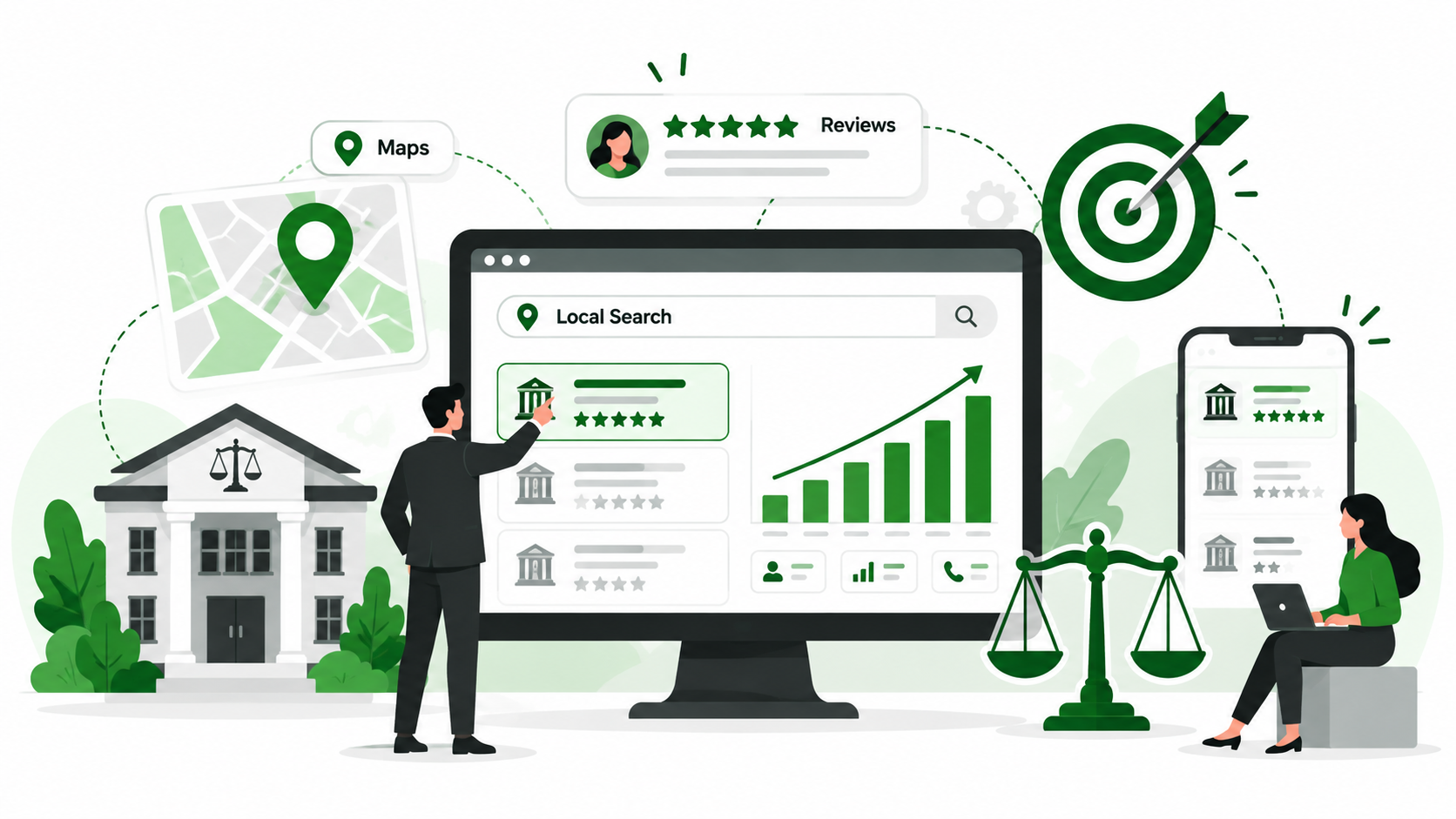
According to Google, three main factors drive local search results: relevance, distance, and prominence. These are the factors that help decide which businesses show up for local searches. Law firms can’t control all of that, but they can make the information Google and prospective clients find more accurate and useful.
1. Relevance
Relevance is about how closely your firm matches what someone is looking for. For example, a practice focused on family law is more relevant to a divorce-related search than one that only handles corporate contracts. Your business categories, services, and website content help explain what your firm does. A successful legal SEO strategy should make those services clear instead of trying to attract every possible legal search.
2. Distance
Distance considers how close a business is to the location entered or suggested in the search. Someone searching from downtown Chicago might receive different results than someone from a nearby suburb.
You can’t control where your potential clients are searching from, but you can control whether your office details and geographic coverage are correct. Don’t claim your firm has offices in places where it does not actually do business.
3. Prominence
Prominence refers to the perceived establishment or popularity of a business online. Google may consider reviews, links, and information about the business found across the web. Credible professional references, genuine feedback, and consistent business details can boost the prominence signals of a law firm.
Rather than looking for shortcuts, build a reliable web presence that accurately reflects the firm’s actual work and reputation.
Optimize Your Google Business Profile Properly
Google Business Profile is often one of the first places prospective clients encounter a law firm. They may see your listing before visiting your website, especially when searching for legal services nearby. A well-maintained lawyer’s Google Business Profile should make it easy to understand what the firm does, where it’s located, and how someone can arrange a consultation.
1. Choose the Most Accurate Primary Category
Your primary category should accurately reflect the primary legal service offered by the firm. Examples may include, depending on the services you offer and the categories Google has:
- Personal injury attorney
- Family law attorney
- Criminal justice attorney
- Immigration attorney
- Bankruptcy attorney
For example, if you primarily work in family law, it makes more sense to choose a family law category if it applies to your work than to choose something else because it’s more popular. The purpose of this category is to help both people and Google understand your business accurately.
2. Complete Every Important Business Detail
Someone looking for a lawyer shouldn’t have to guess where your office is or how to reach you. Review the following details:
- Business name: Use the firm’s genuine name.
- Address: Show the correct eligible office location.
- Phone number: Provide a working contact number.
- Website: Link to the firm’s official website or appropriate location page.
- Hours: Please ensure that the opening and consultation hours are accurate.
- Practice areas: Explain the legal services available.
- Appointment options: Make it clear how someone can request a consultation.
Let’s say someone is searching for an immigration attorney. They might want to know if your firm accepts their type of application, where the office is located, and if consultations are available. Giving those answers early can make it easier to reach your practice.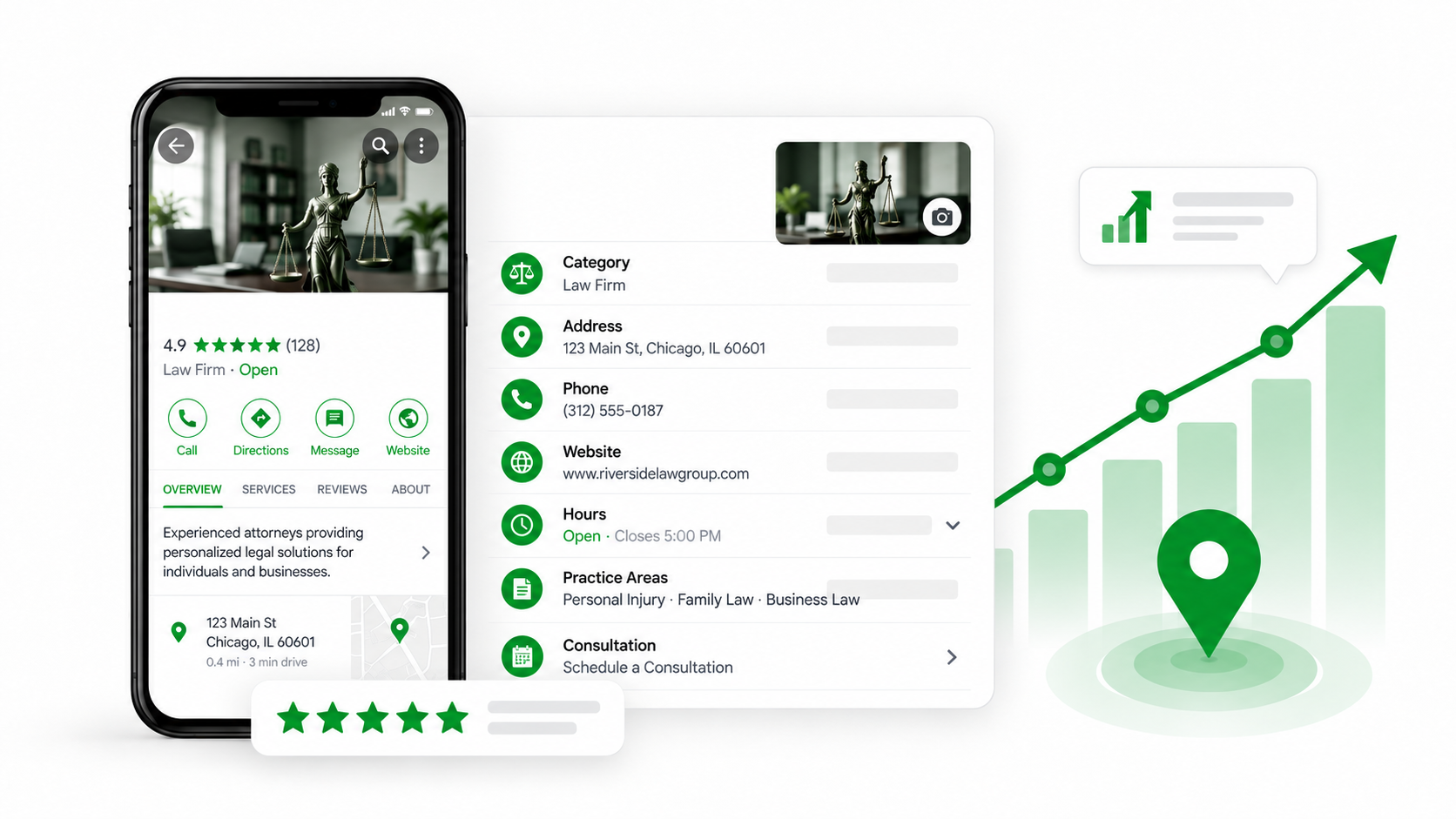
Build Practice-Area Pages around Real Legal Intent
Your website should do more than list the legal services your firm offers. Prospective clients want to know whether you handle their situation, what the process may involve, and when they should speak with an attorney.
Well-written legal practice area pages can answer those questions while helping the website appear for relevant searches.
1. Give Each Major Practice Area Its Own Useful Page
Different legal services involve different problems, procedures, and client concerns. Depending on your firm’s work, separate pages may be useful for:
- Personal injury
- Divorce
- Child custody
- Criminal defense
- Immigration
- Estate planning
For example, someone researching child custody probably has very different questions from someone preparing a will. Giving each major service its own page allows you to explain the subject properly rather than squeezing everything into a short overview.
2. Explain the Legal Problem Clearly
Avoid descriptions that say little more than “Our experienced lawyers provide professional representation.” That doesn’t tell someone whether your firm can help with their situation.
For example, a criminal defense page might describe the general importance of knowing about charges, court processes, and available legal options. The information should be useful and accurate without promising a particular result.
3. Address Common Client Questions
Think about what prospective clients ask during their first conversation with your firm. A helpful practice-area page can explain:
- Who the service is for: The people or businesses your firm represents.
- When legal help may be needed: Common situations that prompt individuals to seek advice.
- What the process may involve: A general overview of relevant legal steps.
- Which documents may help: Information clients might need for an initial meeting.
- When to contact a lawyer: Circumstances where timely advice may be important.
For example, a divorce page could explain which financial or family-related documents someone may want to gather before a consultation. This kind of information helps visitors prepare and shows that the firm understands the questions they’re likely to have.
Create Strong Location Pages for Multiple Offices or Service Areas
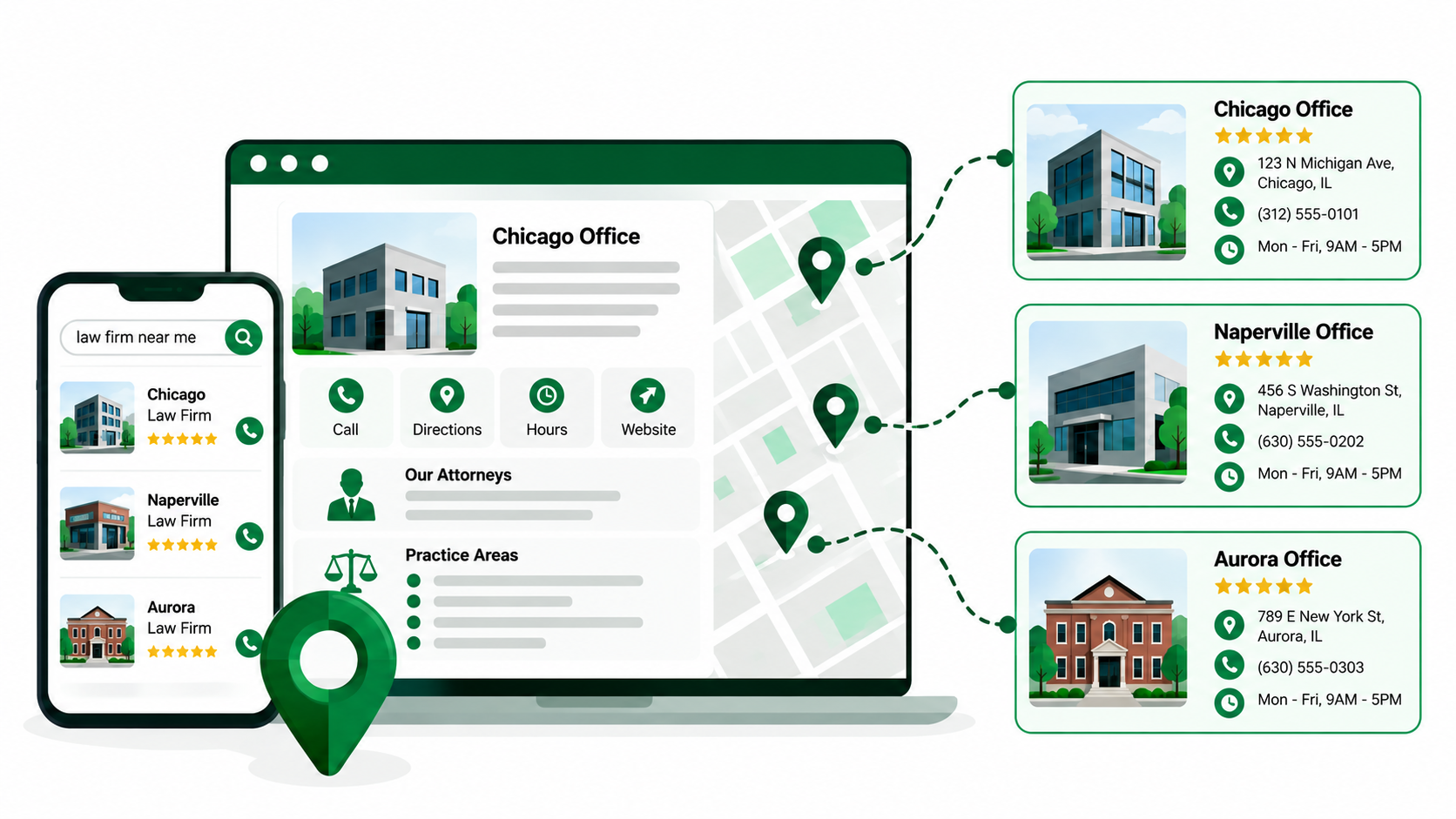
If your firm operates from more than one office, location pages can help people find the right team and contact information. These pages are also useful for explaining which attorneys and services are available at each location. Good attorney location pages should provide visitors information they can actually use.
1. Assign Each Physical Office Its Own Page
Each genuine office should have a dedicated page with accurate details. Useful information includes:
- Office address and phone number
- Opening hours
- Directions and nearby landmarks
- Parking information
- Accessibility details
- Attorneys based at the office
- Practice areas handled there
For example, a company with offices in Chicago and Naperville can detail the services and visiting information for each location. That helps clients choose the right office without calling for basic information.
2. Avoid Copying the Same Page for Every City
Creating dozens of nearly identical pages with different city names doesn’t help visitors very much. A location page should contain something genuinely useful about that office or service area. That might include attorney availability, local contact details, or information about the relevant jurisdiction. If your firm serves a nearby city without maintaining an office there, please provide an honest explanation. There’s no need to suggest a physical location exists when it doesn’t.
3. Match the Page with the Correct Google Business Profile
If a business has multiple eligible offices, each Google Business Profile should be linked to the correct location information. Anyone clicking through from the Chicago listing should be taken to details relevant to that office. This makes it easy for visitors to check the address, services, and contact options.
Strengthen Lawyer and Attorney Profile Pages
Many people seeking legal help want to know who they will be talking to before scheduling a consultation. They can read an extensive attorney profile to learn about the lawyer’s background, experience, and practice areas. These pages are more than basic bios for law firms. They can help build self-confidence.
1. Show Qualifications Clearly
Make the attorney’s professional background easy to understand. Relevant details may include:
- Education and legal qualifications
- Bar admissions
- Professional memberships
- Main practice areas
- Years of experience
Keep this information accurate and current. Someone researching an attorney should be able to understand where that lawyer is qualified to practice and what kind of legal work they handle.
2. Link Lawyers to the Correct Office Locations
For multi-office firms, the attorney profiles should describe where the lawyers work or take consultations. This prevents visitors from assuming that a particular lawyer is located at an office where he or she does not normally work. The right connections between lawyers and places make it easier to set up consultations.
3. Use Professional, Real Photography
Real pictures help make an attorney profile more personable. People may be more likely to get in touch with a firm if they can see the people behind the firm. Use up-to-date professional images, not generic stock photos, of team members. Real pictures say credibility without the long claims of being professional.
Build a Consistent Review Strategy
Legal matters can be stressful, and prospective clients often look for reassurance before choosing a lawyer. Reviews may help them understand how previous clients experienced the firm’s communication and service. A thoughtful approach to law firm reviews should encourage genuine feedback while respecting confidentiality and professional rules.
1. Ask Satisfied Clients for Reviews Ethically
Where professional rules and platform policies allow, firms can solicit clients to share their experiences. The request should be polite and voluntary. Don’t pressure clients or ask them to talk about confidential legal issues in public. Timing and manner of making a review request can also be important, particularly in a matter involving sensitive circumstances.
2. Focus on Consistency over Sudden Volume
Instead of asking for reviews once or twice a year, come up with an appropriate ongoing process. For example, the firm might request feedback after an issue is resolved if the request is appropriate and compliant. Constant flow of authentic reviews can keep the firm’s online reputation up to date. The goal is honest feedback, not a sudden spike in ratings.
3. Do Not Incentivize or Manipulate Reviews
Paying customers for positive reviews or inventing reviews to undermine trust. It might go against professional standards for advertising or the platform’s rules. A genuine review process should enable clients to express their experience candidly, without being coerced into a specific rating.
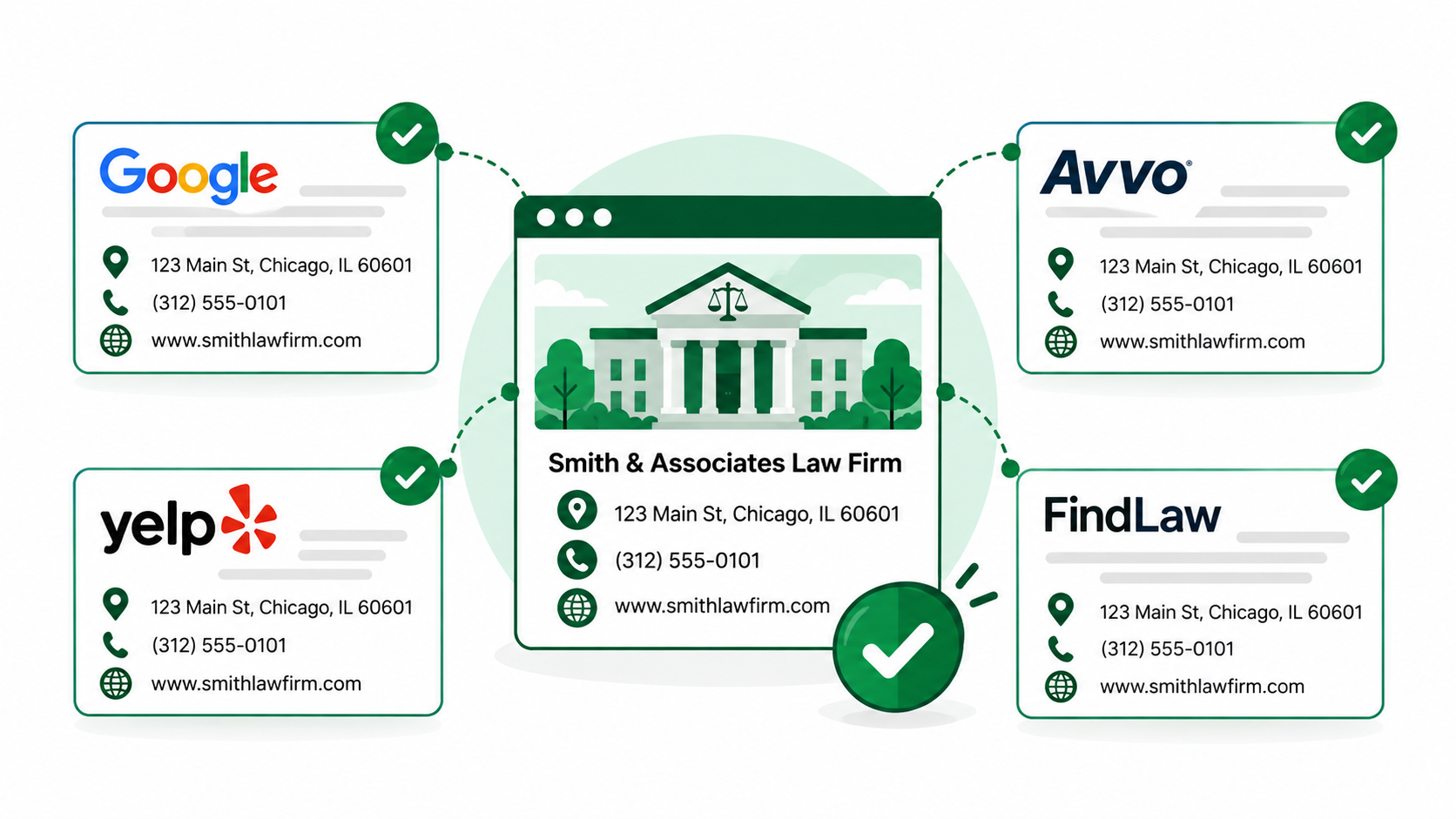
Keep Your Name, Address, and Phone Information Consistent
Your firm’s contact details may appear on Google, legal directories, professional association websites, and other online listings. If those sources show different addresses or phone numbers, prospective clients may not know which information to trust. Maintaining accurate local business citations helps prospective clients find consistent and reliable information about your law firm across online platforms.
Audit Major Legal Directories
First, check the legal and general business directories to see if your firm is listed there. This can be anywhere from popular lawyer directories to professional organizations and to local business platforms depending on where you are.
Check the firm’s name, address, phone number, and website link. Useful legal directory listings should represent the business accurately and help people find reliable information.
Keep Phone Numbers Consistent Where Appropriate
Use verified contact numbers on major business directories. Call tracking can help you measure inquiries, but it should be set up carefully so visitors can still get through to the right office. The first thing we have to do is improve the accuracy and usability of contact information.
Strengthen Local Relevance on the Law Firm Website
Your website and Google Business Profile should complement one another. For instance, if your profile indicates you work on immigration issues in Toronto, it should be clear on your website as well.
Good law firm website optimization makes the relationship between services, locations, and contact details easy to understand.
1. Make Office Locations Easy to Find
Visitors shouldn’t have to dig through multiple pages just to find your office address. Make a simple contact/locations page. If you have several locations for your business, link to each location page with the appropriate information. This helps people find the office that is closest to them.
2. Reference Relevant Courts or Jurisdictions Naturally
Information about courts or jurisdictions may be helpful if it helps someone understand where they can address their legal issue. For example, a law firm may describe the courts relevant to a particular practice area.
But those references should be accurate and related to the real services the firm offers. Listing unrelated courts just to get more searches doesn’t make for a better experience for prospective clients.
Create Local Legal Content That Helps Prospective Clients
Of course, not everyone looking for legal information is ready to call an attorney right away. Some people need to know where they’re at before they make the decision to seek professional help. Useful legal content can address those initial questions and assist visitors to become familiar with your firm’s practice areas. A well-planned content marketing strategy can help law firms address common client questions, demonstrate legal expertise, and attract prospective clients throughout their decision-making journey.
1. Answer Jurisdiction-Specific Questions
Legal requirements can differ between states, provinces, and other jurisdictions.
Helpful topics may include:
- State-specific filing requirements
- Local court procedures
- Regional legal timelines
- Jurisdiction-specific documentation
- Differences between applicable legal processes
For example, a family law practice might outline the general procedure for filing for divorce in its jurisdiction. The information should be accurate and appropriately qualified, especially when dealing with rules that may change.
2. Cover Common Client Concerns
Think of the questions people always ask when they first meet you. They may want to know what papers to bring, how a process usually goes, or when they might need a lawyer. Your website can answer those questions and help people understand what they need to do next. It shows that your firm understands the concerns clients have in their first conversation.
3. Publish Useful Legal Guides
A well-written guide can explain a complicated legal subject without overwhelming the reader. For example, an estate planning firm might publish a guide comparing wills and trusts. A criminal defense practice could explain the general stages of court proceedings. The content should be clear, accurate, and genuinely useful rather than unnecessarily technical.
4. Update Outdated Legal Information
Laws, procedures, and filing requirements can change. An article written several years ago may contain information that is no longer accurate. Review important pages regularly, particularly those discussing deadlines, eligibility, or procedural requirements. Where appropriate, show when the content was last reviewed.
5. Avoid Writing Generic Legal Content Just for Keywords
Publishing more articles doesn’t automatically make a website more useful. Generic posts that repeat the same basic information without addressing real client questions often add little value. Instead, choose topics based on genuine concerns and relevant local legal keywords. A smaller collection of detailed, accurate resources may serve prospective clients better than dozens of thin articles.
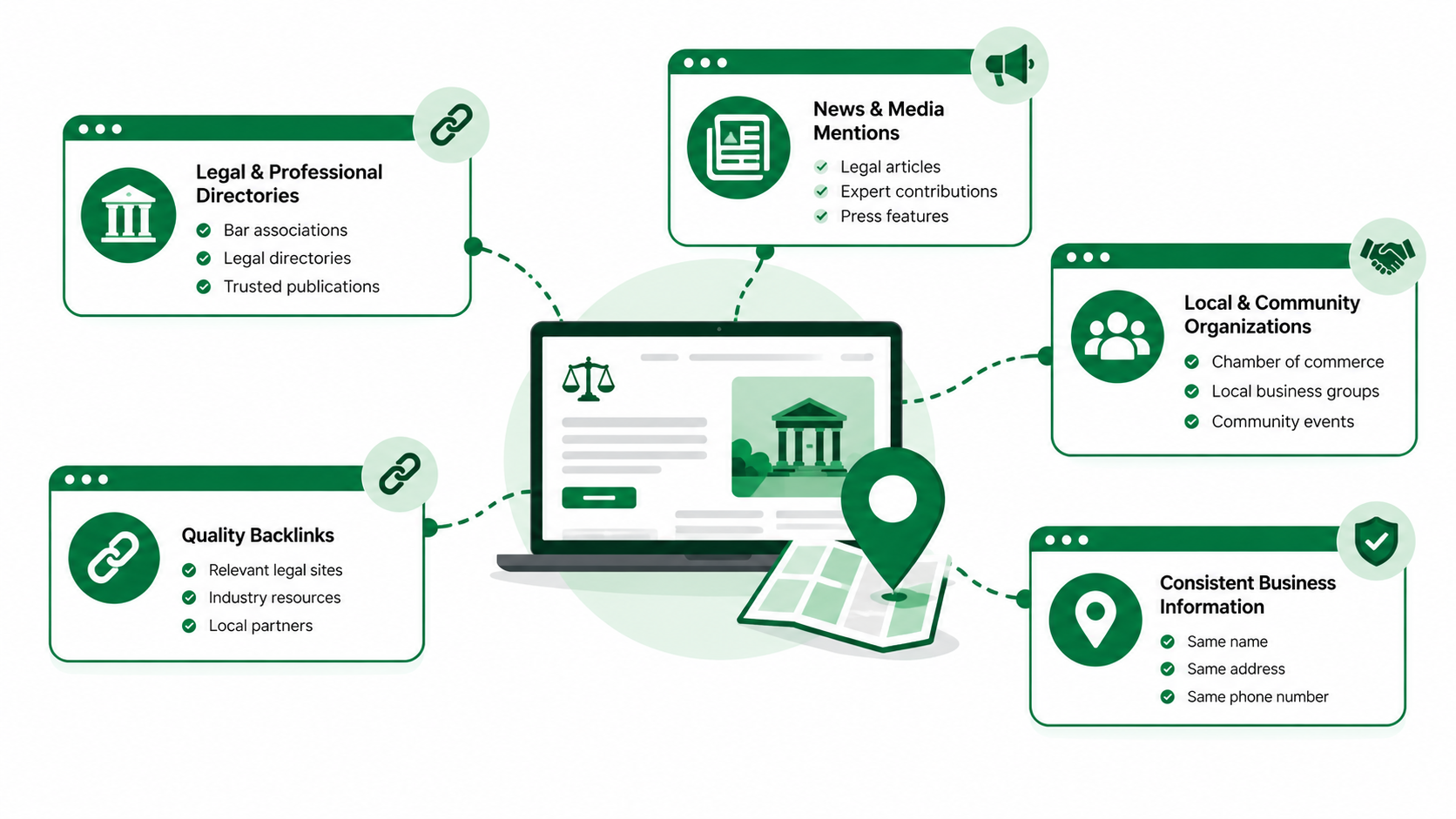
Build Local and Legal Authority through Links and Mentions
A law firm’s reputation doesn’t exist only on its own website. Professional associations, credible publications, local organizations, and other relevant sources can help establish a stronger online presence. These references may also support broader legal search visibility, although the value of individual links and mentions can vary.
1. Earn Links from Relevant Legal Organizations
Professional organizations and reputable legal resources may link to firms or attorneys when there is a legitimate reason. For example, an organization may list its members or refer to an attorney’s contribution to an educational resource. These links should be from real professional activity, not just arrangements aimed at affecting rankings.
2. Participate in Local Business Associations
Local business groups and chambers of commerce can help businesses build relationships within their communities. Maybe it’s a valid directory entry, or a mention in an event, or a chance for professional networking. The real participation should be the main value, not another link back.
3. Support Legitimate Community Organizations
Law firms can participate in educational events, charitable initiatives, or other community activities. These efforts can lead to real relationships and sometimes even relevant online references. Community engagement should be an expression of the firm’s real interests and commitments, not simply a marketing exercise.
4. Publish Research or Legal Insights worth Referencing
Other websites will want to link to your firm if you provide original analysis and helpful legal resources. For example, an attorney might post an article explaining a significant regulatory change that affects local businesses. Content that provides meaningful insight is more likely to be useful for readers and professional audiences.
5. Avoid Spammy Directory Link Building
Submitting your website to hundreds of unrelated directories is not a good way to establish credibility. Some low-quality listings may also show wrong business information. Instead, reference other reliable sources. A smaller number of legitimate references is generally more useful than a large collection of unrelated links.
Poor backlink quality and irrelevant directory submissions are among the common reasons SEO campaigns fail to deliver results.
Make the Website Easy for Prospective Clients to Use
Getting someone to your website is only the beginning. If visitors struggle to find the right service, understand your information, or contact the firm, they may leave without making an inquiry. This is especially important in legal services, where people may already feel stressed or uncertain. Investing in professional website design and development can help law firms create a user-friendly online experience that builds credibility and encourages more consultation requests.
1. Make Phone Numbers Easy to Tap
If someone wants to call your office, they shouldn’t have to copy and paste the number. Clickable phone links on mobile pages. Include contact details in logical places such as the header, contact page, and relevant service pages. This little change makes it a lot easier to get in touch.
2. Use Clear Consultation CTAs
A call to action should tell visitors what they can do next.
Examples include
- Request a Consultation
- Speak With an Attorney
- Schedule a Case Review
Choose wording that matches how your firm actually handles inquiries. For example, don’t promise an immediate conversation with an attorney if an intake team normally handles the first contact. Clear expectations help visitors decide whether to proceed.
3. Keep Contact Forms Short
Long contact forms can discourage people who simply want to ask whether your firm can help. Request only the information needed to understand and route the initial inquiry. That may include contact details, a general practice-area selection, and a brief explanation of the issue. Avoid asking visitors to share unnecessary confidential or highly sensitive details through a general form.
4. Explain What Happens Next
People are more likely to submit an inquiry if they know what will happen next. Say whether someone will call, email, or make an appointment. Provide a realistic time frame for the response, where possible. It’s also good to clarify that submitting a form does not automatically create an attorney-client relationship.
Build Trust before Asking Someone to Contact the Firm
Legal problems can have serious personal, financial, or career consequences. “Generally, people want to ensure that they are dealing with qualified professionals who understand their situation before they contact a law firm.”
Your website should provide enough information to support that decision.
1. Show Attorney Credentials
Simplify the process of locating professional credentials, bar admissions, and work history. This information helps visitors understand who might be working on their legal issue. Do not make representations about an attorney’s special certification (or lack thereof) unless the representations are supported and permitted under applicable rules.
2. Include Relevant Client Reviews
Honest feedback can give potential clients an idea of what the service was like for other people in the firm. Testimonials may be posted on the website where appropriate (where allowed). But the requirements of confidentiality and professional advertising should never be forgotten. Do not display reviews in a way that implies similar results in cases.
3. Highlight Professional Associations Where Appropriate
Membership in legitimate professional organizations can help explain an attorney’s involvement in the legal community. Include relevant associations where membership is current and accurately described. Don’t suggest that ordinary membership represents an endorsement or special qualification unless that claim is supported.
4. Explain the Firm’s Approach
Prospective clients often want to know what working with your firm might involve. What can clients expect in the early stages, how are initial consultations done, and what is the general communication with the team? For example, you could explain how inquiries are evaluated before being passed to the relevant lawyer. This information can dispel some of the mystery.
5. Avoid Unsupported Claims
Statements such as “guaranteed results” or “the best lawyer in the city” can be misleading. Legal advertising rules may also restrict certain claims, depending on the jurisdiction. Use factual information about services, qualifications, and experience. A trustworthy presentation is more valuable than exaggerated promises.
Use Schema and Structured Data Where Appropriate
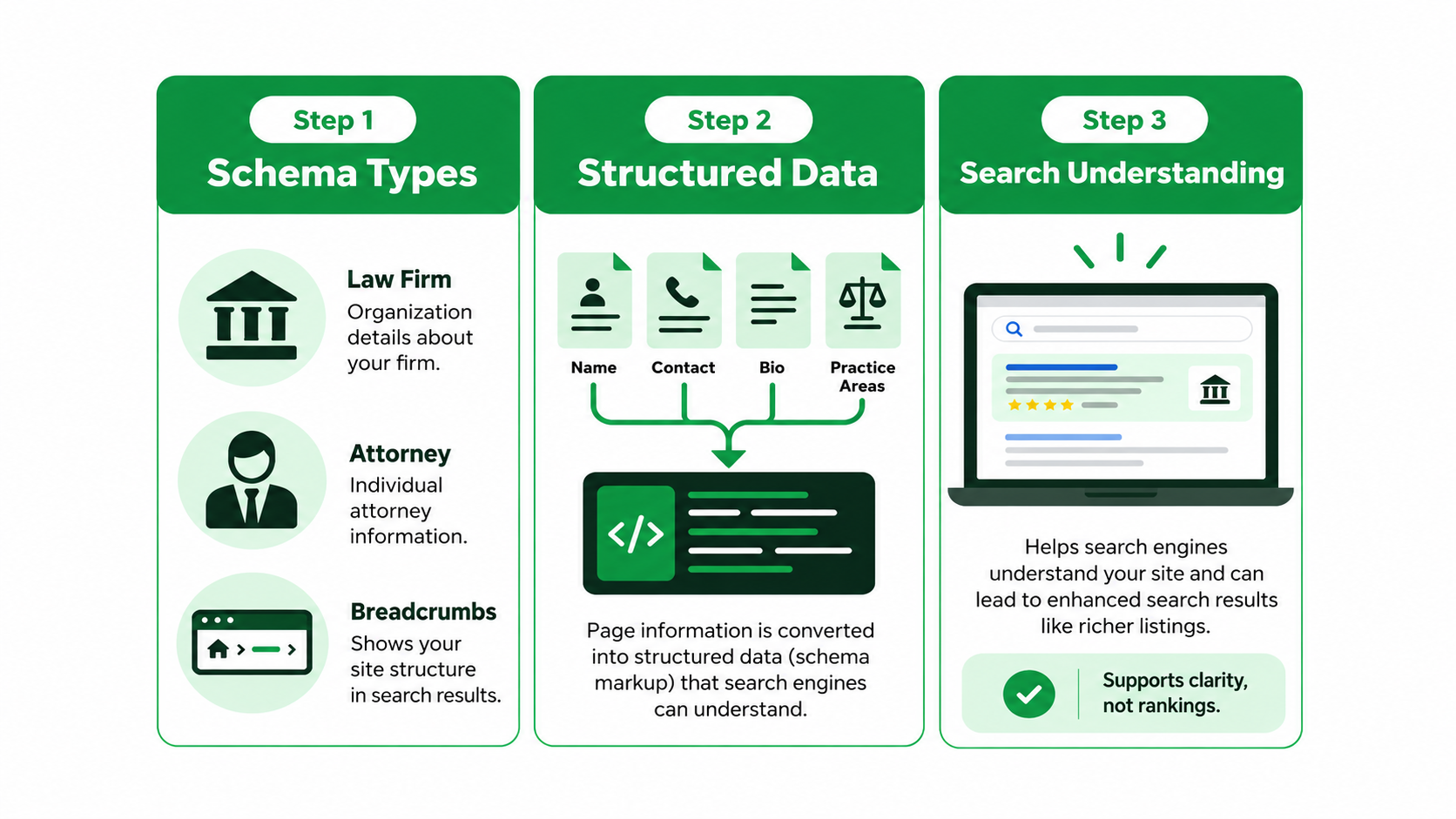
Structured data helps search engines understand the data on your website. It helps to explain information about the firm, individual attorneys, published articles, and website navigation. But it is quality content, not a hack, to get higher rankings.
1. Local Business or Relevant Organization Markup
Appropriate organization or local business structured data can describe details such as the name of the firm, website, and contact information. Select an appropriate supported type and ensure the information is correct. The markup should reflect what is visible to the visitor on the page.
2. Attorney or Person Information
Attorney biography pages may use appropriate structured data to describe individual legal professionals. This can help clarify the relationship between an attorney and the firm where they work. Don’t add qualifications or professional claims that aren’t supported by the visible biography.
3. Breadcrumb Markup
Breadcrumbs help visitors understand where a page sits within the website. For example, someone may move from the homepage to a practice-area section and then to a particular service. Breadcrumbs structured data can describe that navigation structure to search engines.
4. Do Not Treat Schema as a Local Ranking Shortcut
Structured data doesn’t replace useful content, accurate business details, genuine reviews, or local credibility. It should help describe a website that’s already organized properly. The priority remains making your firm’s services and professional information easy for people to understand.
Making your website AI-ready also requires accurate structured data, clear business information, credible content, and strong entity relationships.
Consider local services ads alongside local SEO
Google Local Services Ads may be available to eligible legal service providers in supported locations. These ads are different than organic Google Search and Maps results. They may be another way to reach prospective clients, but they are available and required depending on the market and legal category.
1. Local Services Ads Are Paid Visibility
Local Services Ads are a paid advertising product. They shouldn’t be confused with organic Maps rankings or improvements made through SEO. A law firm may appear through both paid and organic placements, but those results come from different systems.
2. Screening Requirements Can Be Strict
Advertisers are subject to screening or verification. This can include information on the business, professional licensing, and other checks depending on the category and location. Don’t jump into running ads for your business without reviewing the current requirements first.
3. Use Paid and Organic Together
Depending on your firm’s goals and budget, a broader marketing approach may include:
- Local SEO: Improving organic visibility and the usefulness of your online presence.
- Google Ads: Reaching relevant audiences through targeted Google Ads campaigns.
- Local Services Ads: Gaining additional paid visibility where your firm is eligible.
Each approach plays a different role. Paid campaigns can help you reach potential clients while your firm works on its website, reviews, and organic local presence. The right mix will depend on the competition, the budget you have available, and the quality of leads you generate.
Track the Local Leads That Actually Matter
Better rankings and more profile views are encouraging, but they don’t automatically mean your firm is gaining new clients. Google Business Profile reporting may show views, calls, website clicks, direction requests, and other interactions where supported. For meaningful local lead generation for law firms, you need to understand what happens after someone finds your practice.
1. Track Contact Form Submissions
Website forms allow those who don’t want to call to make an inquiry. Count successful submissions instead of just counting hits on the contact page. Also ensure questions get directed to the right team and receive a quick response.
2. Track Consultation Requests
Consultation requests are often a sign of stronger intent than a general site visit. Calculate the number of people requesting appointments and the number of appointments made. This can help you to establish whether your inquiry process is working well.
3. Track Lead Quality
Some questions aren’t worth asking. For example, a criminal defense firm might receive a request for representation on a relevant matter and a question on an unrelated legal issue. Both are contacts, but not necessarily to be considered equally valuable opportunities. Use a consistent process to identify the inquiries that fit your services and requirements.
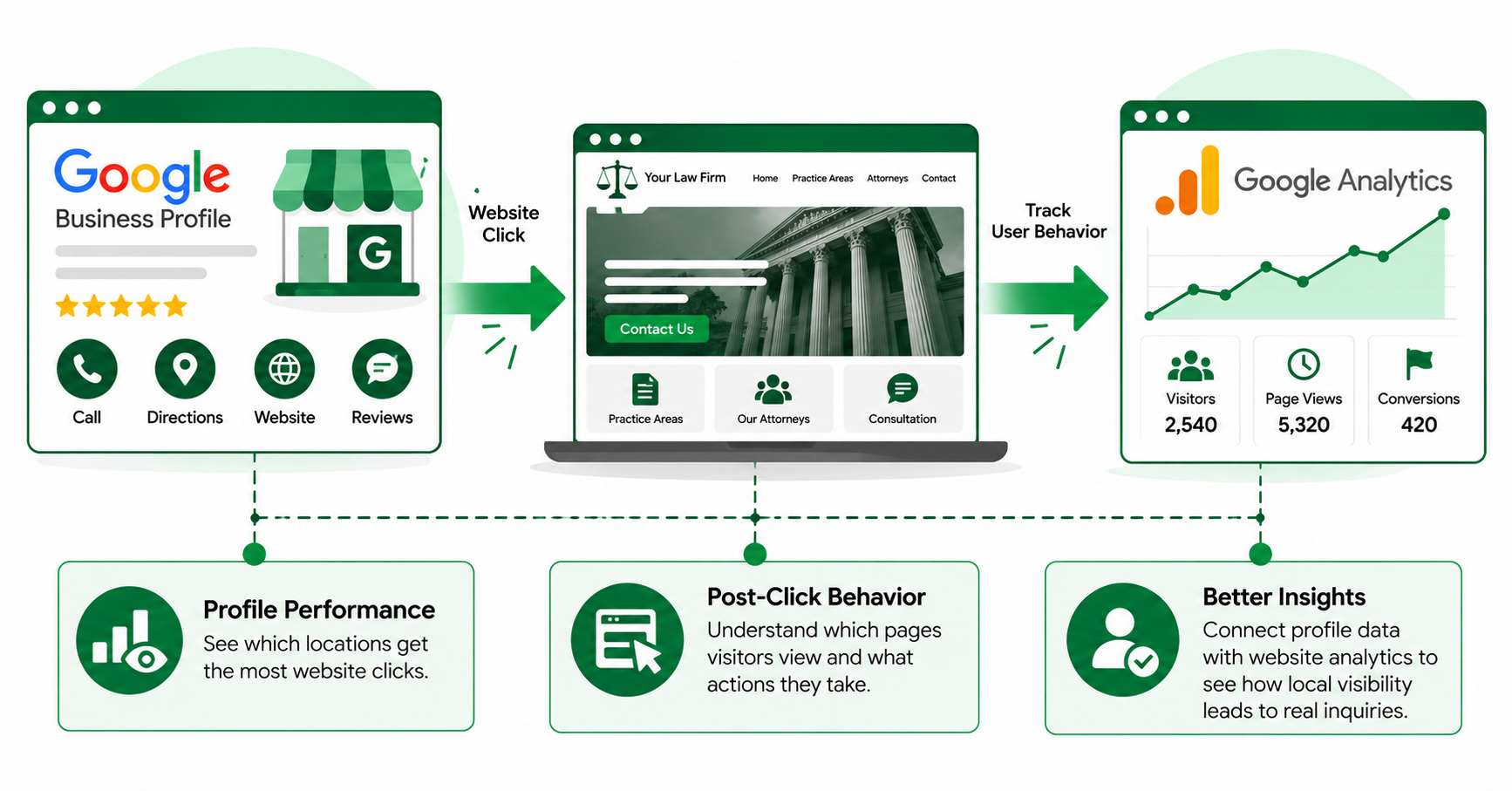
Connect Google Business Profile Data with Website Analytics
Google Business Profile data can tell you how people interact with your business listing. Site analytics help you understand what happens after they click through. By looking at both you can get a better picture of how local visibility generates inquiries.
Where supported, Google Business Profile and Google Analytics connections or appropriately tagged website links can help with this analysis.
1. Review Which Profiles Generate Website Traffic
If your firm has multiple office locations, compare the website traffic coming from each location’s profile. One office may get many visits, another fewer clicks but more relevant inquiries. These differences can give an indication of where content or contact information of the website may need attention.
2. Measure Post-Click Behavior
Once someone reaches your website, what happens next? Do they read a practice-area page, view an attorney biography, or request a consultation? If a profile generates many clicks but few inquiries, the landing page may not be answering visitors’ questions. Improving that experience could help turn more existing traffic into contacts.
3. Look beyond Profile Views
Profile views can show exposure, but they don’t tell you whether people become clients. An office with fewer views may still generate more qualified consultations than one receiving much higher visibility. The more useful question is what people do after finding your firm.
Understanding why your Google Business Profile gets views but not enough leads can help identify gaps between local search visibility and actual client acquisition.
Common Local SEO Mistakes Law Firms Should Avoid
Local SEO problems often come from several smaller issues rather than one major mistake. A firm might have useful website content but outdated business information. Another may appear prominently on Google but make it difficult for visitors to request a consultation.
Common mistakes include:
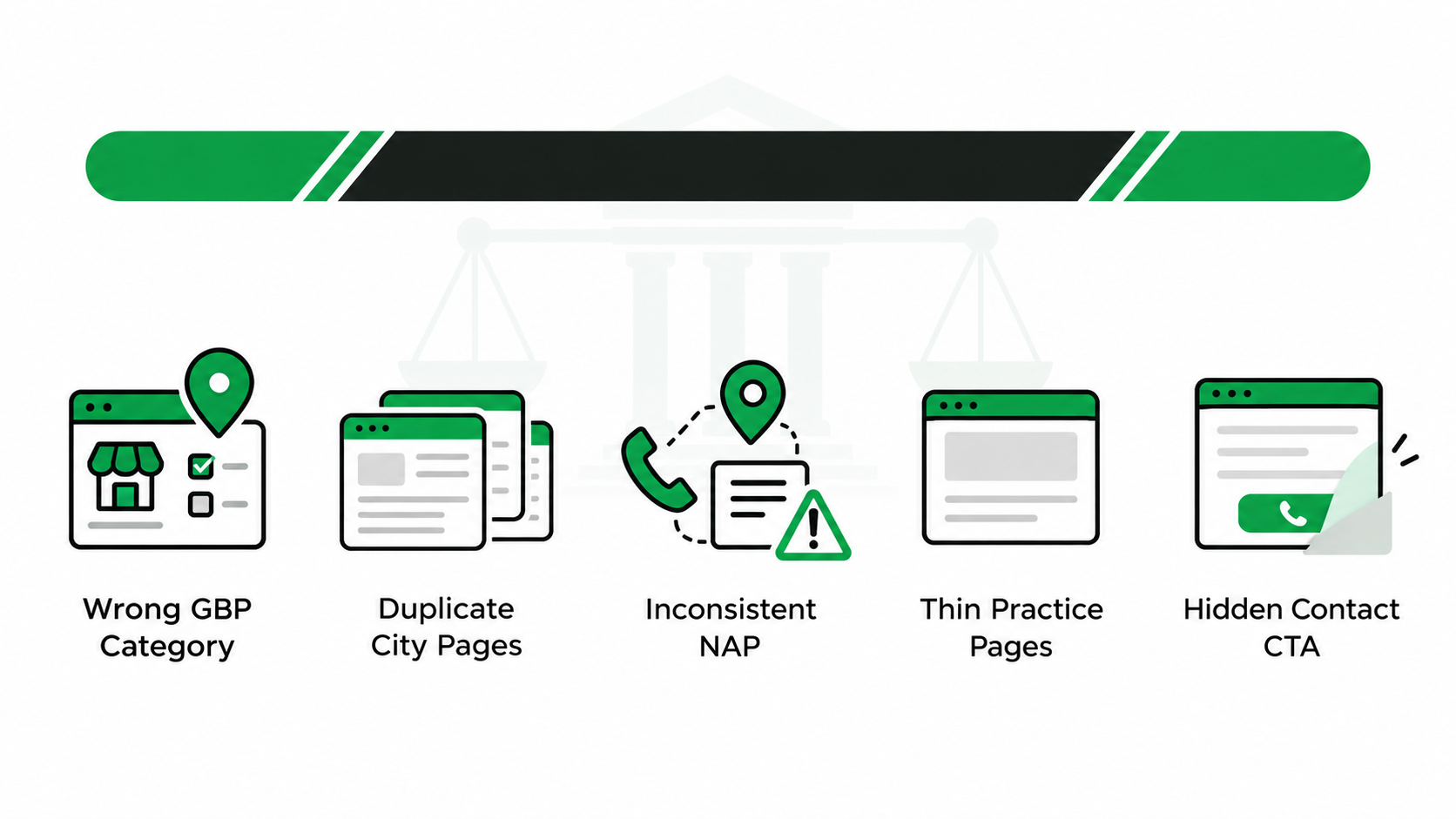
- Choosing the wrong Google Business Profile category: Describing the firm’s services inaccurately.
- Creating fake or virtual office locations: Suggesting a physical presence where no eligible office exists.
- Using duplicate city pages: Publishing nearly identical content with different location names.
- Ignoring attorney profile pages: Leaving out useful information about the professionals handling legal matters.
- Letting reviews become outdated: Neglecting an appropriate ongoing feedback process.
- Inconsistent business details: Showing different addresses, hours, or phone numbers across listings.
- Publishing thin practice-area pages: Giving visitors little information about important services.
- Ignoring mobile usability: Making the website difficult to navigate on phones.
- Hiding consultation CTAs: Forcing people to search for contact options.
- Failing to track phone leads: Missing an important source of prospective clients.
- Measuring rankings instead of signed cases: Focusing on visibility without checking business outcomes.
- Using generic legal content with no local relevance: Publishing information that doesn’t address the firm’s actual audience.
- Making unsupported claims in legal marketing: Using statements that may mislead visitors or conflict with professional rules.
Good local search optimization involves more than changing a few website settings. Your firm needs accurate information, useful content, professional credibility, and an easy way for prospective clients to get in touch. When those elements work together, local visibility has a better chance of producing meaningful inquiries.
A Practical Local SEO Framework for Law Firms
“With a defined process, it’s much easier to improve local visibility.” Don’t change everything at once. Start with the information people see first and work your way up to stronger content, credibility, and lead tracking.
Step 1 – Audit the Current Google Business Profile
Review your firm’s current profile. Lists categories, office information, practice areas, photos, reviews, and contact information. Check to see if anything is out of date, incomplete, or potentially confusing.
Step 2 – Map Practice Areas to Search Intent
Consider what your potential clients Google when they need your services. Someone looking for divorce representation might have very different questions than someone seeking estate planning advice. Link each core practice area to relevant search intent and real-world coverage.
Step 3 – Strengthen Practice-Area Pages
Check if your core service pages are clearly outlining the legal issues. Add helpful information about who the service is for, common questions, and what an initial consultation might look like. Facilitate visitors’ ability to identify the appropriate attorney and request help.
Step 4 – Improve Location Pages
“Get good and useful information to all legitimate offices.” Provide local contact information, visiting arrangements, attorneys, and services available. Remove duplicate or misleading content that does not serve the visitors.
Step 5 – Build Strong Attorney Profiles
Update attorney bios with correct qualifications, relevant experience, and practice areas. Match each lawyer with the correct services and office locations. This means that potential clients will know who might be working on their legal matter.
Step 6 – Improve Reviews and Local Citations
Check the company’s online reviews and business profiles. Correct old contact information and create an ethical way to solicit real reviews. Public responses must maintain confidentiality and meet professional obligations.
Step 7 – Strengthen Local Links and Mentions
Look for real opportunities to build relationships in the community and with other professionals. Appropriate associations, trustworthy publications, and helpful legal resources can produce opportunities for legitimate citations or links. Don’t try to buy your way to the top with low-quality arrangements.
Step 8 – Improve Mobile Conversion Paths
Test your site on mobile devices. Visitors should be able to read service information, locate attorney profiles, tap phone numbers, and request consultations without undue effort. Eliminate anything that would deter people from reaching out to the firm.
Final Thoughts
Local SEO can make it easier for law firms to be found by people in the area who are looking for legal help. But being on Google Search or Maps is just the beginning. Future clients also want to see clear information about your services, attorney credentials, office locations, and how to get a consultation. Accurate business profiles, helpful practice-area pages, real reviews, and relevant local content can help answer those questions. All of these upgrades combined make it easier for visitors to know if your firm is a good fit before they contact you.
The longer term goal is converting that visibility into qualified inquiries and new cases. This means looking beyond rankings and website traffic to see how many people are asking for consultations, how relevant those consultations are, and how many of them become clients. If you have real expertise that is reflected in your local presence and you have an easy way for people to contact your firm, then Google Search and Maps can be a good source of legal inquiries.
Is your law firm appearing in local searches but still struggling to attract qualified enquiries?
With eSign Web Services, you can improve Google Business Profile information, practice-area content, local visibility, and website contact options. Contact our team for a practical SEO approach focused on relevant consultations and potential clients.
Frequently Asked Questions
Question: What is local SEO for law firms?
Answer: Local SEO helps law firms get discovered by people in a specific area searching for legal services. It’s about optimizing your Google Business Profile information, your website content, your reviews, and local listings. The aim is to assist prospective clients in finding companies that can offer them the legal help they require in their area.
Question: How can a law firm rank higher on Google Maps?
Answer: Law firms can increase their local visibility by ensuring their business information is up to date, selecting the correct categories, gathering genuine reviews, and publishing valuable content on their website. When showing local results, Google will take into account relevance, distance, and prominence. Let us work on the real way of improving, not by manipulating the rankings with false information.
Question: Do law firms need separate pages for each practice area?
Answer: Major practice areas usually benefit from separate pages because prospective clients have different legal questions and concerns. A divorce page, for example, should explain different issues from an estate planning page. Each page should offer useful information, relevant attorney details, and a clear way to request legal assistance.
Question: Should a law firm create location pages for every city it serves?
Answer: Not really. Location pages should have actual information about an office or a significant amount of service coverage. Creating nearly identical pages for every city nearby doesn’t add much value. But don’t simply duplicate pages to target different locations—ensure accurate geographic detail, relevant legal services, and useful local information.
Question: How important are Google reviews for lawyers?
Answer: Google reviews can boost the confidence of potential clients and provide a way for a business to assert their local supremacy. Real reviews help people compare legal services before they reach out to them. But lawyers must follow the applicable professional rules, keep information confidential, and not use incentives or deceptive practices when soliciting or responding to reviews.
Author Details

Ashwani Kumar Sharma
Ashwani has been actively involved in SEO services since 2005. His expertise and distinctive work approaches have made him one of the most experienced and trusted SEO experts in the industry. He is a certified SEO and Google Ads professional. He also has strong business development skills in advanced SEO, PPC, and digital marketing strategies.


