



How Can My Business Be Found in a Local Search?

When people need a nearby service or business, they often start with a local search. They may look for a plumber, dentist, restaurant, accountant, retailer, or repair company and compare options based on location, reviews, business information, and how easy it is to make contact. For a local business, simply having a website is not enough. Search engines need clear signals about what the business offers, where it operates, and whether the information is accurate and trustworthy.
A complete local presence includes the website, business listings, customer reviews, contact details, location information, and other signals that help customers find the right company at the right time. The goal of local search optimization is therefore straightforward: make your business easier to discover when nearby customers are actively looking for the products or services you provide.
Understand How Local Search Ranking Works
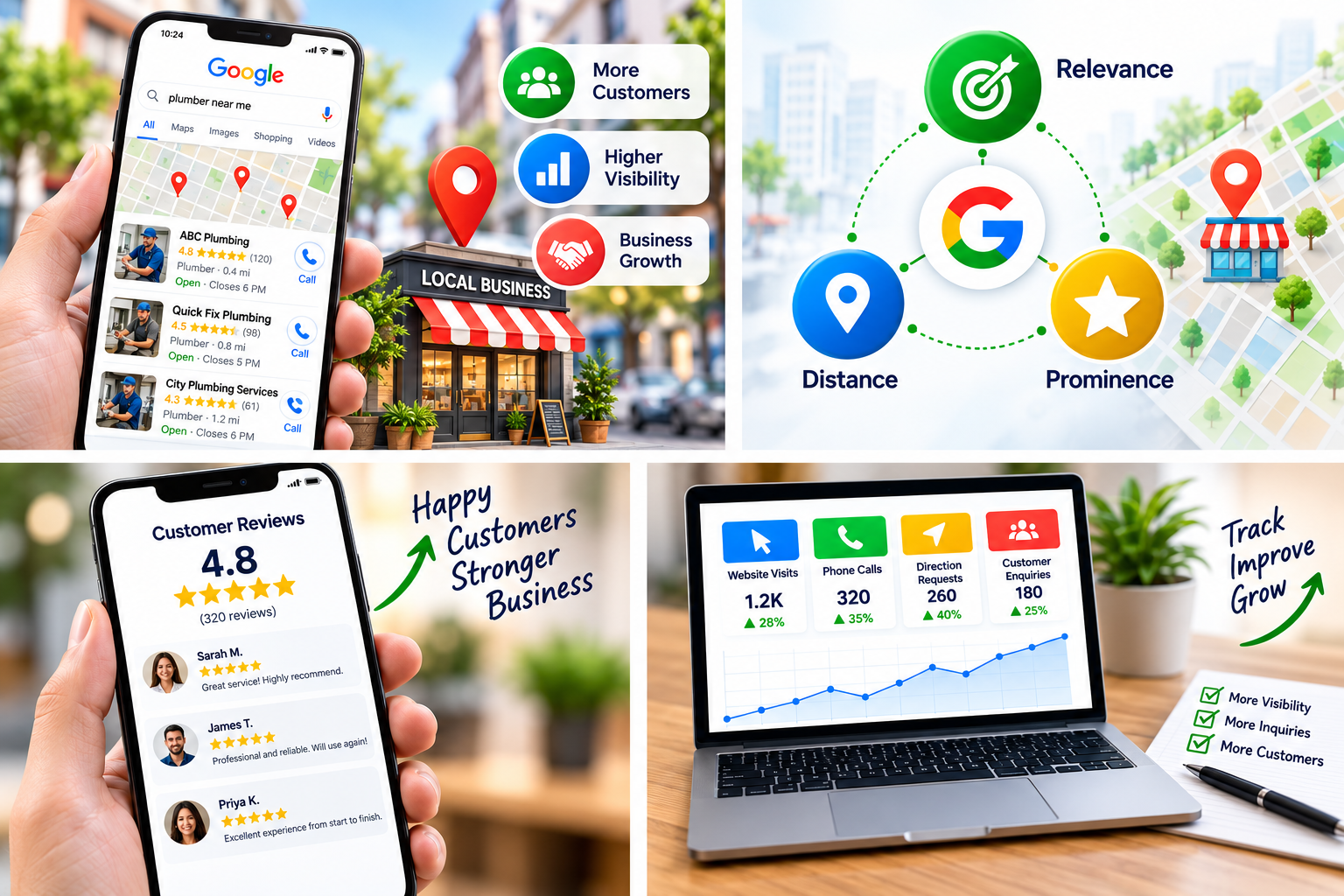
Google’s local search algorithm mainly considers relevance, distance and prominence.
-
Relevance
Relevance is the degree to which a business is aligned to what somebody is looking for. For instance, if a customer searches for “emergency plumber Bristol” Google needs to know if a business offers emergency plumbing services in that area.
Clear service descriptions, accurate categories and location information all help Google understand what the business is all about.
-
Distance
Distance considers how close the business is to the location associated with the search. If someone is searching for a local service, Google might favor businesses that are geographically closer or clearly serve that area. That’s why companies should focus on the locations they actually serve, not create pages for locations they have little connection to.
-
Prominence
Prominence is how well known the business is on the Internet. Google can take data such as links, reviews, ratings, articles, directory listings and other references to the company.
Create and Optimize Your Google My Business Listing
Back in 2020, Google’s local business platform was called Google My Business. A well-maintained listing can display your business name, address, telephone number, operating hours, website, category, photos, reviews and other useful information on Google Search and Maps. The 2020 Local Search Industry Survey from BrightLocal says that optimizing Google My Business is one of the most valuable local marketing activities.
The listing should be a reflection of the actual business. Proper Google Business Profile optimization includes selecting the right main category, providing correct contact information, adding the correct address or service area, and keeping opening hours current. Don’t stuff the business name with unnecessary keywords just to influence rankings. The listing should reflect how the company really operates.
Keep Your Business Information Consistent
Customers and search engines need to see the same fundamental information wherever the business is listed online. Make sure your business name, address, phone number, website and hours are the same on your website, Google My Business, directories, social profiles and other important platforms.
Contradictory information can cause confusion. For example, a customer could get an outdated phone number from one directory or an old address from another website and be unsuccessful in reaching the business. There is no need to send the company to every directory that exists. Having a lot of low-quality listings is less helpful than using relevant local directories, industry associations, chambers of commerce and trusted business platforms.
Create Helpful Local Pages on Your Site
The website should clearly state what the company does and where it does it. A good local service page should be clear on the service, location, contact details and next step. When a business has several legitimate locations, multiple pages may be appropriate, provided each page contains useful information specific to that area. Don’t make lots of nearly identical pages that only change the city name. Those pages have little customer value.
Instead, provide details that are actually useful for local visitors, such as service availability, local contact information, coverage areas, directions, hours, or how the service works in that area.
Use Location Keywords Naturally
Location terms help search engines gage geographic relevance. For example, a cleaning company in Leeds may use the phrase “commercial cleaning services in Leeds” naturally in the page title, main heading, service description, and contact details. No need to repeat the same keyword over and over in every paragraph. The aim is to be clear. Both search engines and customers should be able to tell what service is available and where it is available without the page sounding forced or repetitive.
Solicit Real Customer Reviews
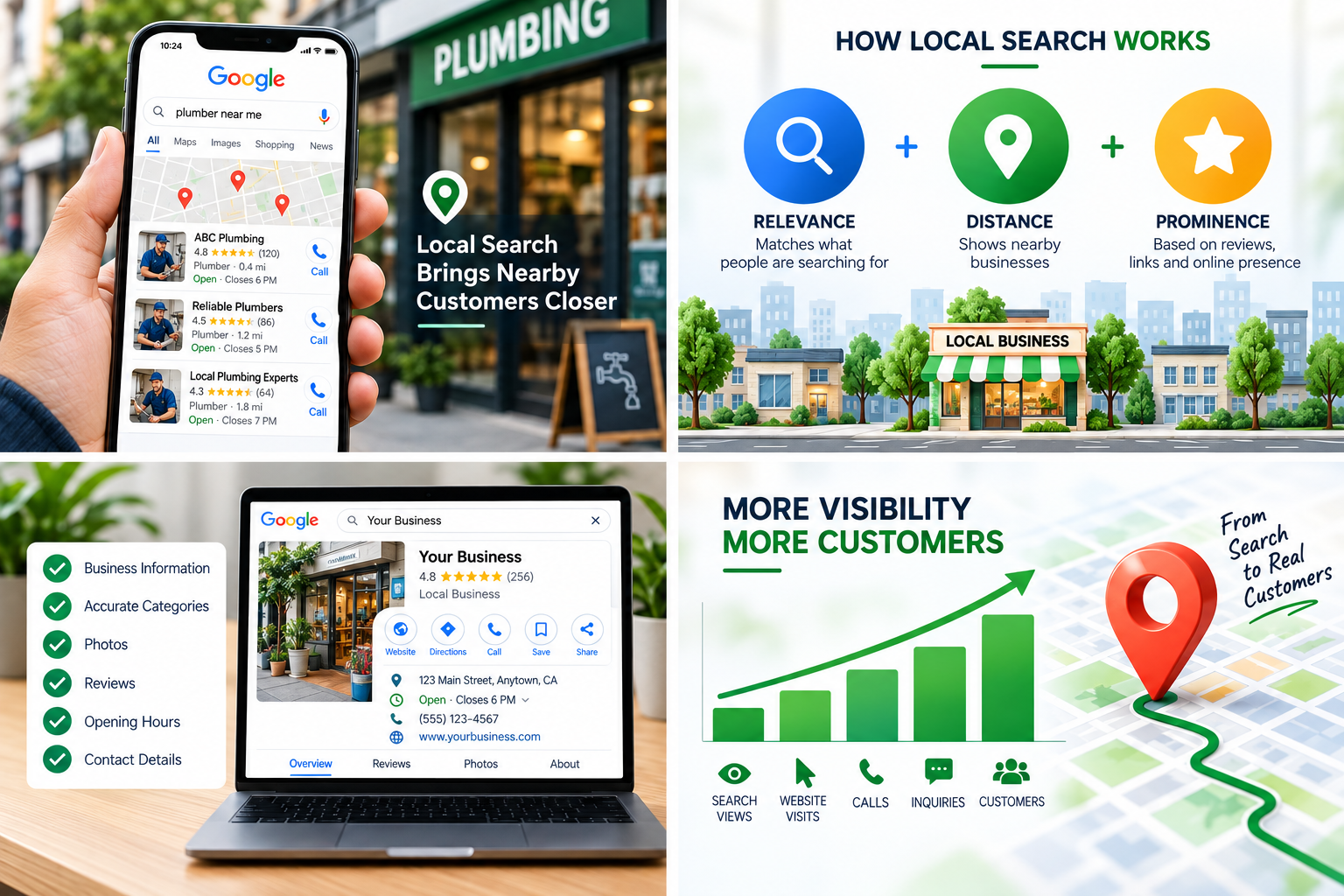
Reviews already played a powerful role in local search decisions by 2020. A BrightLocal survey found that 87% of consumers read online reviews for local businesses and 48% said they would consider using a business with less than 4 stars. Recency of reviews was also important, with many customers checking more recent feedback. Businesses should encourage real customers to leave honest feedback, rather than trying to create good reviews.
Responding to reviews is important too. The business is up and running and they care about customer experiences, says a professional response. Reviews impact both consumer trust and local visibility. Google’s Local Guidelines include the number of reviews and ratings as part of prominence.
Create Local Citations & Relevant Links
Combine your Google My Business listing with a good website. Local or industry related websites can help to strengthen the company’s online presence through links and mentions. They can be local news sites, professional associations, suppliers, community organizations, business partnerships or actual sponsorships.
Quality and relevance should be the focus
A few hundred low value directory links are unlikely to be as good as a smaller number of genuine mentions from trustworthy organizations tied to the business or local area.
Make Website Mobile Friendly
Local customers are often searching on the go, comparing nearby businesses or finding the contact information they need right now. A website therefore needs to work well on smartphones. Google’s guidance on mobile-first indexing also stressed the need to ensure that important website content was available on mobile devices. Phone numbers should be easy to tap, contact info should be easy to find, pages should load quickly, and forms should be easy to fill out. A good local ranking doesn’t do much good if the customer arrives at the website and struggles to use it.
Keep Business Details & Opening Hours Updated
Accurate business information became even more important as COVID-19 forced many companies to change opening hours, temporarily close or change the way services were delivered. “Keep your online information current as conditions change in how you operate,” Google said. When hours, services, addresses or contact information change, businesses should make sure their Google My Business listing and website are aligned. Old information rapidly turns into lost inquiries and disappointed customers.
Measuring Local Search Performance
Rankings shouldn’t be the sole measure of local SEO. A business also needs to know if greater visibility leads to useful actions such as website visits, phone calls, inquiries, directions, bookings or sales. Google Search Console reports on which queries and pages are increasing in visibility. Website analytics can also provide additional information on visitor behavior and conversions. If the rankings improve but the inquiries don’t, the business may need to review the website content, offer, contact process or quality of the traffic it is attracting.
Build Local Presence with Clear Business Information
There was a lot that had to come together for local search in 2020. A complete Google My Business listing, correct contact information, relevant local website pages, genuine reviews, pertinent links and a mobile friendly website all helped search engines and customers to understand the business more easily.
The most important starting point was simple. Make it obvious what the business does, where it operates and how customers can get in touch. From there businesses could increase their local presence by building reviews, building relevant local authority, keeping accurate information and measuring whether greater visibility actually produced inquiries and customers. Talk to our local SEO experts to improve your local visibility and turn more nearby searches into genuine customer enquiries.
Author Details

Ashwani Kumar Sharma
Ashwani has been actively involved in SEO services since 2005. His expertise and distinctive work approaches have made him one of the most experienced and trusted SEO experts in the industry. He is a certified SEO and Google Ads professional. He also has strong business development skills in advanced SEO, PPC, and digital marketing strategies.


