



Social Media Algorithms in 2026: What Brands Must Adapt Now

Key Takeaways
- Algorithms now reward depth of engagement, not just how often or loudly brands post online.
- Short-form video is the main discovery engine, turning quick, snackable stories into massive new audiences.
- Creator partnerships unlock trust and reach faster than polished brand channels trying to talk alone.
- AI-powered feeds personalize every timeline, so two people can see completely different brand stories daily.
- Metrics like watch time, saves, shares, and comments now matter more than impressions or followers.
- Organic reach is shrinking; brands grow by consistently earning meaningful reactions, not chasing quick virality.
- Experimenting with hooks, formats, and posting rhythms turns algorithms into teachers instead of mysterious enemies.
- Blending organic winners into paid campaigns stretches budgets further and scales content audiences already love.
Your best post this month probably died in someone’s thumb-scroll without you ever knowing why. That’s the quiet power shift behind social media algorithms 2026: they decide what lives, what vanishes, and which brands feel “everywhere” even if they don’t actually post more than you do. At the same time, more than 5.66 billion social media user identities now represent about 68.7% of the global population, so every feed your brand enters is already crowded before you show up.
Envision two local businesses on the same street: one posts random promos when someone remembers, the other builds snackable stories, replies to almost every comment, and turns customers into recurring characters, same platform, same city, wildly different results. The second brand isn’t “lucky”; it simply understands that algorithms follow human behavior, not marketing slogans. It experiments with formats, pays attention to what people actually finish or share, and adjusts its content accordingly. Instead of asking “How do we post more?”, it asks “What made them stop scrolling here?”, then builds more stories from that exact moment of attention again and again.
This guide breaks down what’s actually happening inside the feeds in 2026 and how to respond without burning out your team, so your content starts to feel less like a desperate shout into the void and more like a series your audience is genuinely excited to keep up with.
How Social Media Algorithms Work in 2026
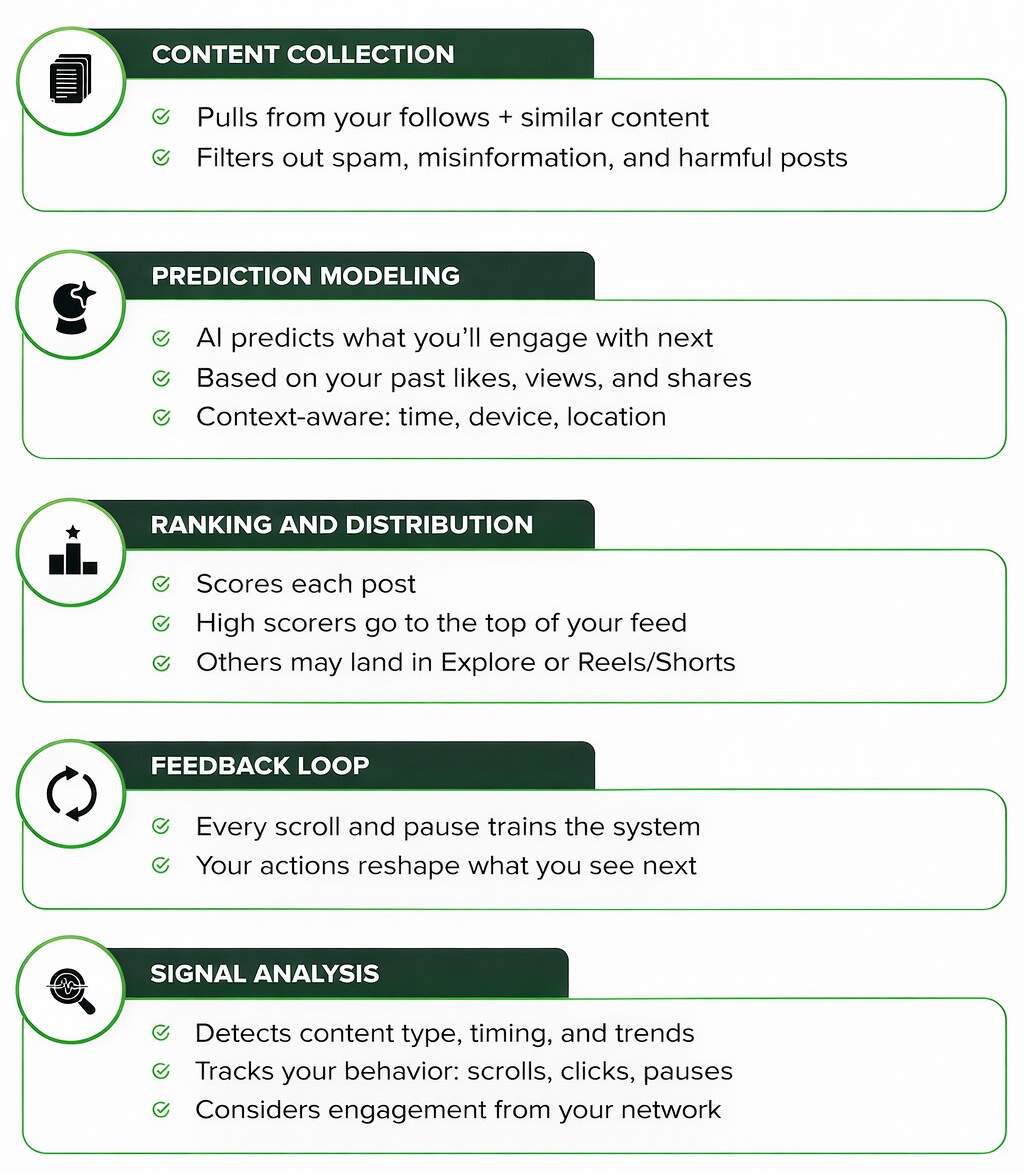
In 2026, social media algorithms 2026 behave less like simple timelines and more like constantly evolving prediction engines, silently asking “What is this person most likely to watch, read, or tap on next?” every time someone opens an app. Behind the scenes, these systems track how long users linger on your posts, whether they zoom, swipe, comment, share, save, or just flick past without thinking. Over time, they build a taste profile for each person and treat your content accordingly: if your posts usually trigger quick exits, you’ll see less reach; if they spark conversation and curiosity, your brand suddenly appears in more recommendations, explore tabs, and suggested follows.
It’s not just about who follows you anymore; it’s about who actually reacts when you show up. That’s why brands clinging to old “post daily and hope” routines feel invisible. At the same time, those treating social like a data-backed story engine quietly keep growing even as competition explodes across every feed. Once you understand how social media algorithms work, you stop guessing and start creating content that the system is almost eager to show more people.
How the 2026 Algorithm Thinks About Your Content
- Algorithms judge posts by how deeply people interact with them, not by how many followers your account has.
- Machine learning tracks watch time, comments, shares, and saves to build highly detailed user profiles.
- Content that sparks conversation, curiosity, or replays signals quality, so platforms recycle it into discovery surfaces.
- Forgettable updates that people quickly skip send negative signals, shrinking your reach each week without obvious warning.
In simple terms, the algorithm is just mirroring your audience’s behavior back to you, creating content people genuinely watch, react to, and return to. The 2026 feed will quietly become one of your most powerful distribution channels rather than your biggest frustration.
How Do Short-Form Video Dominant?
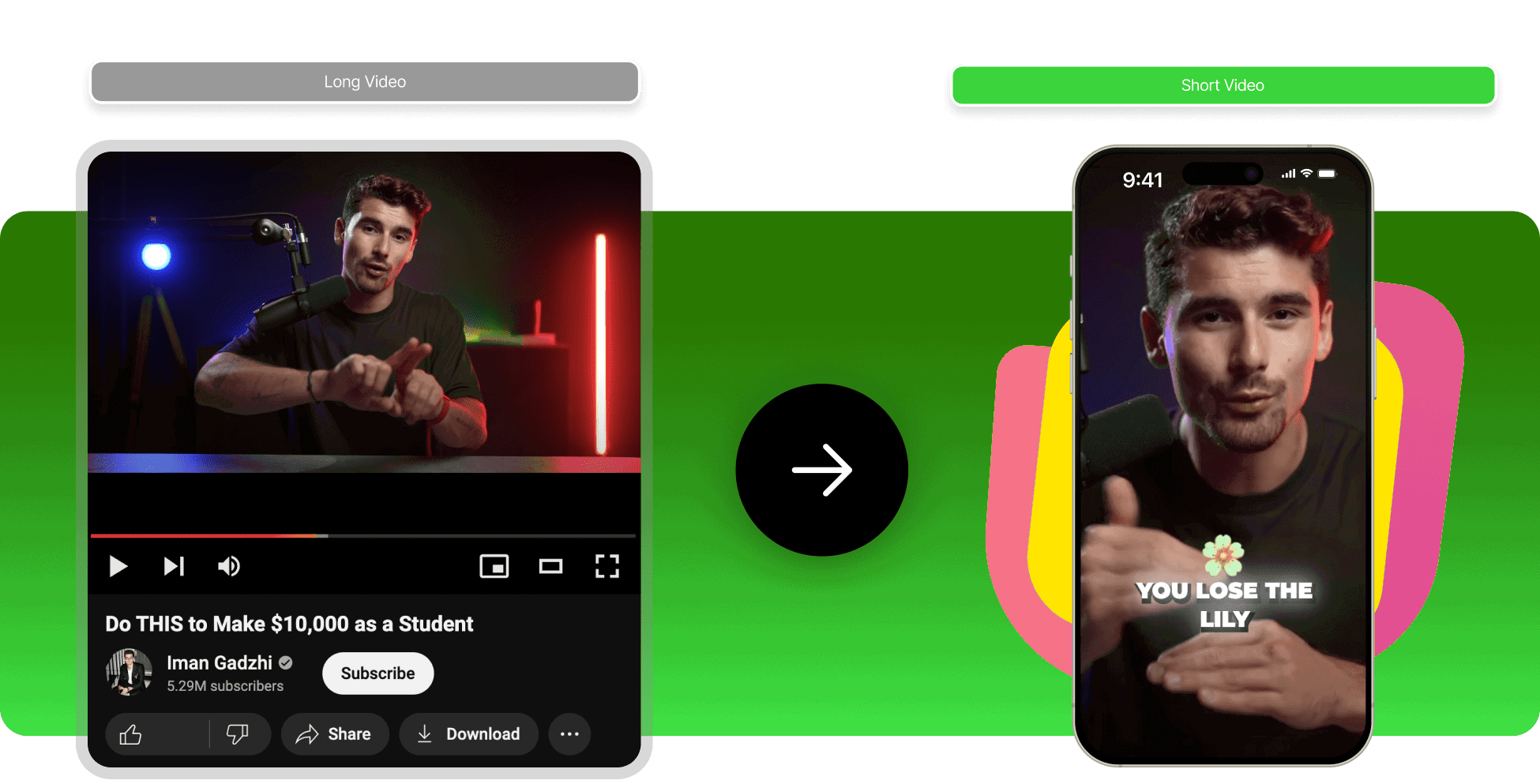
Scroll any feed today, and it’s obvious why short clips sit at the center of modern ranking logic: the short-form video algorithm gives priority to content that can grab attention in under a second, hold it for twenty more, and nudge people to share, comment, or replay before they swipe away. By 2026, under social media algorithms, vertical video becomes the natural engine of discovery; research shows that more than 10% of internet users already consume micro-dramas and very short scripted content on social platforms, with younger audiences spending close to an hour per day watching short video stories.
For brands, that means your social media reach strategy has to treat short clips as the trailer for everything else you do, whether that’s long-form content, webinars, or straight-up product pages. The right hook, caption, and visual framing can turn a single insight, stat, or transformation moment into an asset that travels through explore pages and recommendations far beyond your follower list, quietly compounding brand reach optimization while your static posts sit still. When you string those moments together into a coherent episodic series, algorithms start viewing your account as a reliable source of entertaining, useful episodes, and your whole social distribution strategy becomes easier to scale without needing a massive ad budget, instead of rewarding only the brands with the glossiest studio shoots.
The Shift Toward Creator-Led Distribution
The biggest plot twist in 2026 is that audiences don’t really “follow brands” anymore; they follow people, and those people decide which brands get invited into the conversation. That’s why creator-led distribution has quietly replaced old-school influencer blasts and glossy brand channels as the real engine of reach. When a niche creator casually shows how your product fits into their day, their audience doesn’t experience it as an ad; it feels like a recommendation from a friend who just happens to have great lighting and editing skills.
The algorithm loves this because creator content usually generates the kind of signals it’s hunting for: longer watch times, real comments, saves, inside jokes, and friends tagging friends. Every time that happens, the platform is basically learning, “When this brand appears next to this creator or in this community, good things happen,” and it becomes much more willing to surface your handle, your sounds, and your future content. The brands that win don’t treat creators as rented billboards; they treat them as co-writers of an ongoing story their audience actually wants to binge.
Why Creator-Led Distribution Wins in 2026
- Creators unlock niche communities where recommendations feel personal, making branded content feel native rather than intrusive.
- Their audiences generate comments, saves, and shares that algorithms recognize as powerful signals of trust and quality.
- Long-term collabs and recurring series teach platforms how to keep your brand’s viewers consistently engaged, not just casually curious.
- Repurposed creator clips power ads, emails, and landing pages, extending every successful collaboration’s lifespan and impact.
Leaning into creator economy trends doesn’t mean handing over your brand; it means co-writing stories audiences already love. When you weave those stories through a smart social distribution strategy, creators stop being a “nice-to-have” and become the connective tissue between your content, your community, and the algorithms deciding who gets seen.
What Metrics Truly Matter in 2026
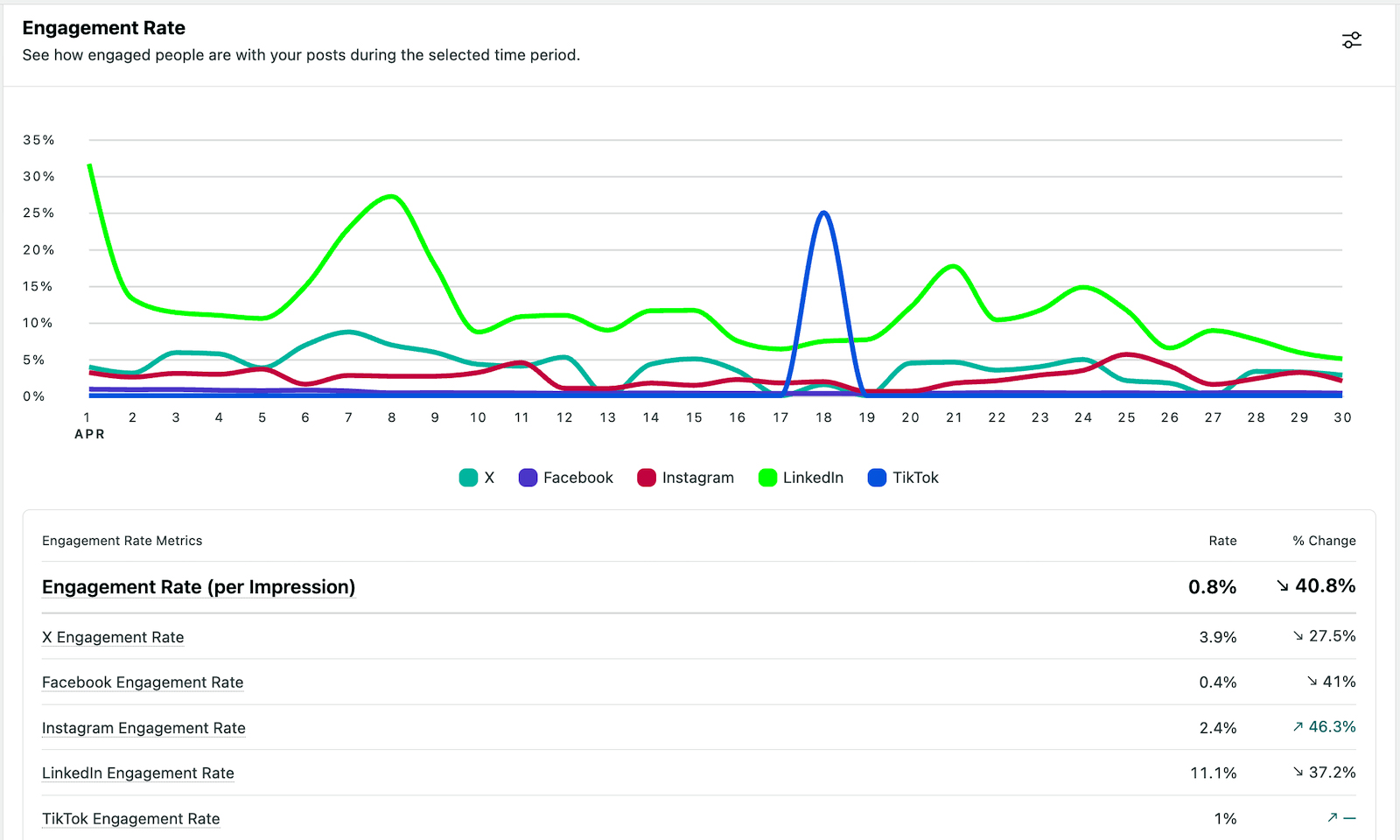
The scoreboard has completely changed: in 2026, shouting louder doesn’t help if no one actually reacts. You can have a gorgeous grid, slick videos, and impressive follower numbers, but if people just swipe past, the feed quietly files you under “background noise.” That’s the reality of organic reach decline; platforms simply have too much content and will only keep pushing what proves it can hold attention and spark real responses.
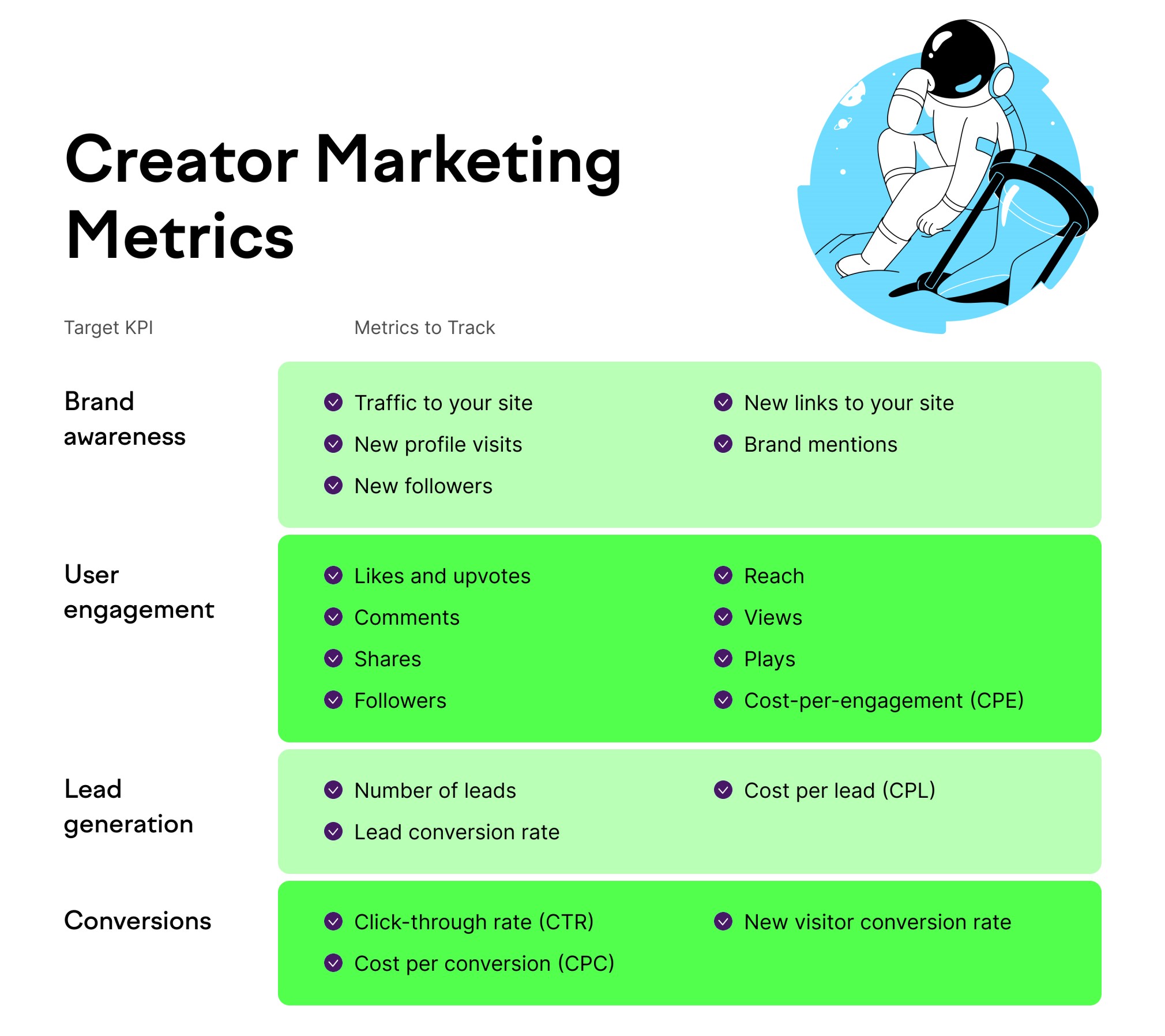
Instead of asking, “How many people saw this?”, winning brands now ask, “What did this make people do?” Did they watch to the end, comment with a real thought, send it to a colleague, or save it for later? Those behaviors are the new currency the algorithm cares about, and they tell you far more about whether your content is actually working than any vanity metric ever could.
How 2026 Metrics Actually Tell the Story
- Completion rate shows if your hooks and pacing respect people’s time or lose them in the first seconds.
- Saves and shares reveal which ideas feel valuable enough to revisit, discuss, and move into private spaces.
- Comment depth exposes whether you’re starting real conversations or just collecting emoji drive-bys and generic reactions.
- Non-follower reach highlights which posts broke out of your bubble and truly impressed the recommendation system.
When you start optimizing for social media engagement metrics rather than raw views, your strategy shifts from “post more” to “earn more reactions.” That mindset turns analytics into a creative partner. Every high-performing post becomes a blueprint, every flop becomes a lesson, and your content evolves in sync with what both humans and algorithms are clearly telling you they want more of.
What Brands Must Adapt Now
Surviving the next wave of social media algorithms 2026 isn’t about chasing every new feature; it’s about tightening the fundamentals so each post has a real job to do. First, brands have to swap spray-and-pray promotion for story-led education and entertainment, because feeds increasingly reward content that teaches, reassures, or delights over anything that just yells “buy now.”
Second, teams need lightweight experiment habits that keep pace with algorithm changes 2026: testing hooks, formats, and posting rhythms on purpose rather than treating every underperformer as a mystery. The goal is to build a repeatable understanding of what works for your audience, rather than hoping for accidental virality. Third, your social media reach strategy should treat organic performance as a lab for paid; when a reel or carousel proves it can hold attention and drive saves, that’s the creative you lightly boost to new lookalikes.
Combined, those moves become an algorithm visibility strategy that’s far more resilient than trend-chasing alone, because you’re aligning storytelling, data, and paid amplification around the same simple question: “What actually earns us the right to stay in this feed?” Brands that make this shift early quietly compound an advantage; every month, their content library grows smarter, performance reports get clearer, and competitors still stuck on random posting calendars look increasingly invisible by comparison inside crowded feeds worldwide.
Comparison Table: Brand vs. Competitor Algorithm Readiness
|
Aspect |
Brand A (Adaptive Strategy) |
Brand B (Old-Playbook Strategy) |
| Content focus | Educational stories, customer moments, creator POVs | Promo-heavy posts, product pushes |
| Testing cadence | Weekly hook/format tests with clear hypotheses | Ad-hoc testing, inconsistent follow-up |
| Use of data | Reads, saves, shares, retention before boosting | Looks only at impressions and follower growth |
| Paid amplification | Boosts top organic performers as social proof ads | Runs generic evergreen ads unrelated to organic |
| Visibility trajectory (1 year) | Steady growth in non-follower reach | Flat or declining reach despite more posting |
When a post holds attention, sparks replies, and gets saved for later, the feed is telling you, “More of this, please.” When people bounce, it’s telling you exactly what to fix next. If you build a culture around listening to those signals, collaborating with creators, and using short-form to open doors for deeper stories and offers, you stop guessing and start iterating. Over time, that turns social from a stressful, trend-chasing chore into a predictable growth channel.
Ready to Stop Fighting the Algorithm?
If you’d rather not decode all of that alone, this is the moment to bring in a specialist partner like eSign Web Services to audit your current footprint, design a smarter roadmap, and help you ship a social presence that algorithms and humans are genuinely excited to see, reach out for a free quote and call us today to get started.
Frequently Asked Questions (FAQs)
Question: Why has my organic reach declined despite consistent posting?
Answer: Organic reach often declines because algorithms now prioritize the quality of engagement rather than how often you post. When content fails to generate meaningful interactions such as comments, shares, or longer watch time, platforms gradually reduce its distribution. Audience fatigue, repetitive messaging, or weak opening hooks can also weaken engagement signals. At the same time, growing competition across feeds limits how much exposure any single post receives. Instead of focusing only on follower growth, it’s more useful to evaluate retention rates, interaction depth, and share behavior. Strengthening storytelling structure and encouraging genuine community participation can help rebuild stronger engagement signals and gradually improve visibility.
Question: Do hashtags still matter in 2026 social media algorithms?
Answer: Hashtags still play a role, but their influence has changed significantly. Modern algorithms rely more on content context, captions, on-screen text, and engagement signals than on hashtag volume alone. Relevant hashtags can still help categorize posts and improve discoverability within niche communities. However, using large numbers of generic or trending hashtags provides little ranking advantage. Precision now matters more than quantity. Well-written captions and strong engagement signals typically influence distribution far more than hashtag stacking. Brands should focus on semantic relevance and audience targeting instead of chasing trending tags. Hashtags support discoverability, but sustained visibility depends on meaningful engagement.
Question: Should brands post more frequently to improve reach?
Answer: Posting more often does not automatically improve reach. Algorithms evaluate engagement consistency rather than simple posting volume. Publishing lower-quality content frequently can actually reduce average engagement rates and weaken distribution over time. A steady rhythm of high-value content generally performs better than excessive posting. Platforms consider signals such as retention, interaction depth, and overall engagement patterns when deciding what to promote. Brands benefit more from creating content that resonates with their audience than from maximizing daily output. Testing different posting schedules and analyzing engagement patterns can help determine the most effective cadence for long-term visibility.
Question: Are social media ads affected by algorithm changes?
Answer: Yes, advertising performance is indirectly influenced by algorithm behavior. While paid campaigns operate through bidding systems, ad delivery still considers factors such as engagement signals, click-through rates, and overall content relevance. Ads that generate stronger interaction often achieve more efficient delivery and lower costs. Issues like creative fatigue, weak retention, or poor targeting can reduce performance in much the same way they affect organic content. Changes in feed structure or platform design may also influence ad visibility. When brands align their ad creatives with formats that perform well organically, they often improve campaign efficiency and maintain stronger results.
Question: What’s the most reliable “algorithm-proof” content format?
Answer: Content built around practical utility tends to remain the most resilient. Formats such as checklists, templates, short guides, and structured frameworks naturally encourage saves and shares because they provide ongoing value. Combining usefulness with clear storytelling makes these formats even stronger. A strong hook should capture attention quickly, followed by a clear takeaway that viewers can easily revisit or save. Instead of constantly chasing short-lived trends, brands benefit from building a library of evergreen formats their audience returns to repeatedly, while adapting how those formats are presented across different platforms.
Question: How do creator partnerships influence algorithm performance?
Answer: Creator partnerships expand reach by tapping into communities that already trust the creator’s voice. Algorithms often prioritize authentic interaction within these communities, which means creator-led content can generate stronger engagement than direct brand posts. When audiences comment, share, and participate in conversations around collaborations, distribution tends to expand naturally. The creator’s credibility also transfers some trust to the brand, increasing interaction quality. In addition, creator content often appears in new discovery pathways that brand accounts alone may not reach. Partnerships work best when creators align with audience interests and when brand integration feels natural rather than overly scripted.
Question: Does long-form content still work in 2026?
Answer: Long-form content continues to perform well when it maintains strong retention and clear value. Although short-form video dominates discovery feeds, platforms still reward longer viewing sessions for formats like podcasts, detailed videos, and educational series. Distribution is influenced more by completion rates and sustained engagement than by content length alone. Clear structure, thoughtful pacing, and well-organized segments help long-form content remain engaging. Brands producing in-depth insights or educational material can build authority and long-term audience loyalty. In practice, short-form and long-form content serve different roles within a balanced strategy.
Question: How can brands measure algorithm alignment effectively?
Answer: Brands can evaluate algorithm alignment by focusing on engagement depth rather than surface metrics. Retention rates, share frequency, saves, and meaningful comments provide stronger signals than impressions alone. When reach declines alongside low interaction levels, it usually indicates weak audience resonance. Tracking performance across different formats also helps identify which content types the algorithm favors. Consistent improvements in engagement quality often signal stronger alignment with platform priorities. Comparing organic performance with paid campaign results can provide additional insight. Regular experimentation and careful analysis help refine strategy and support steady visibility growth.
Question: Are AI-generated posts penalized by social media algorithms?
Answer: Platforms do not automatically penalize AI-generated content. What algorithms evaluate is engagement quality and audience response. Content that lacks originality, emotional connection, or clear relevance may perform poorly regardless of how it was created. Platforms are increasingly capable of detecting repetitive patterns or low-value outputs, which can reduce distribution. AI tools can still be valuable for research, ideation, and production efficiency, but human creativity remains essential for authentic storytelling. The strongest results usually come from combining automation with a clear brand voice. Ultimately, meaningful engagement and retention determine visibility.
Question: What is the biggest mistake brands make with social algorithms?
Answer: A common mistake is optimizing for vanity metrics instead of engagement quality. Metrics such as follower counts, impressions, or posting frequency often receive more attention than retention and interaction depth. Many brands chase trends without considering whether the content actually resonates with their audience. Ignoring analytics insights or failing to test new formats also limits adaptability. Excessive promotional messaging can reduce authenticity and weaken engagement signals. Sustainable growth requires understanding how algorithms evaluate content and continuously refining strategy. Combining data-driven experimentation with audience-focused storytelling creates a stronger foundation for long-term visibility.
Author Details

Ashwani Kumar Sharma
Ashwani has been actively involved in SEO services since 2005. His expertise and distinctive work approaches have made him one of the most experienced and trusted SEO experts in the industry. He is a certified SEO and Google Ads professional. He also has strong business development skills in advanced SEO, PPC, and digital marketing strategies.


