



Why B2B Companies Need Professional SEO Services to Generate Qualified Leads

Key Takeaways
- Most B2B purchases begin with a search engine, not a sales call; visibility at that exact moment is everything.
- Decision-makers research vendors quietly before they raise a hand, and search is where first impressions form.
- Appearing in the right searches makes your brand feel credible before any conversation ever begins.
- Content built around buyer intent brings in leads that sales teams actually want to work with.
- Technical SEO, content strategy, and authority building need to work as a system, never in isolation.
- Consistent organic presence reduces dependence on paid ads and compounds commercial returns over time.
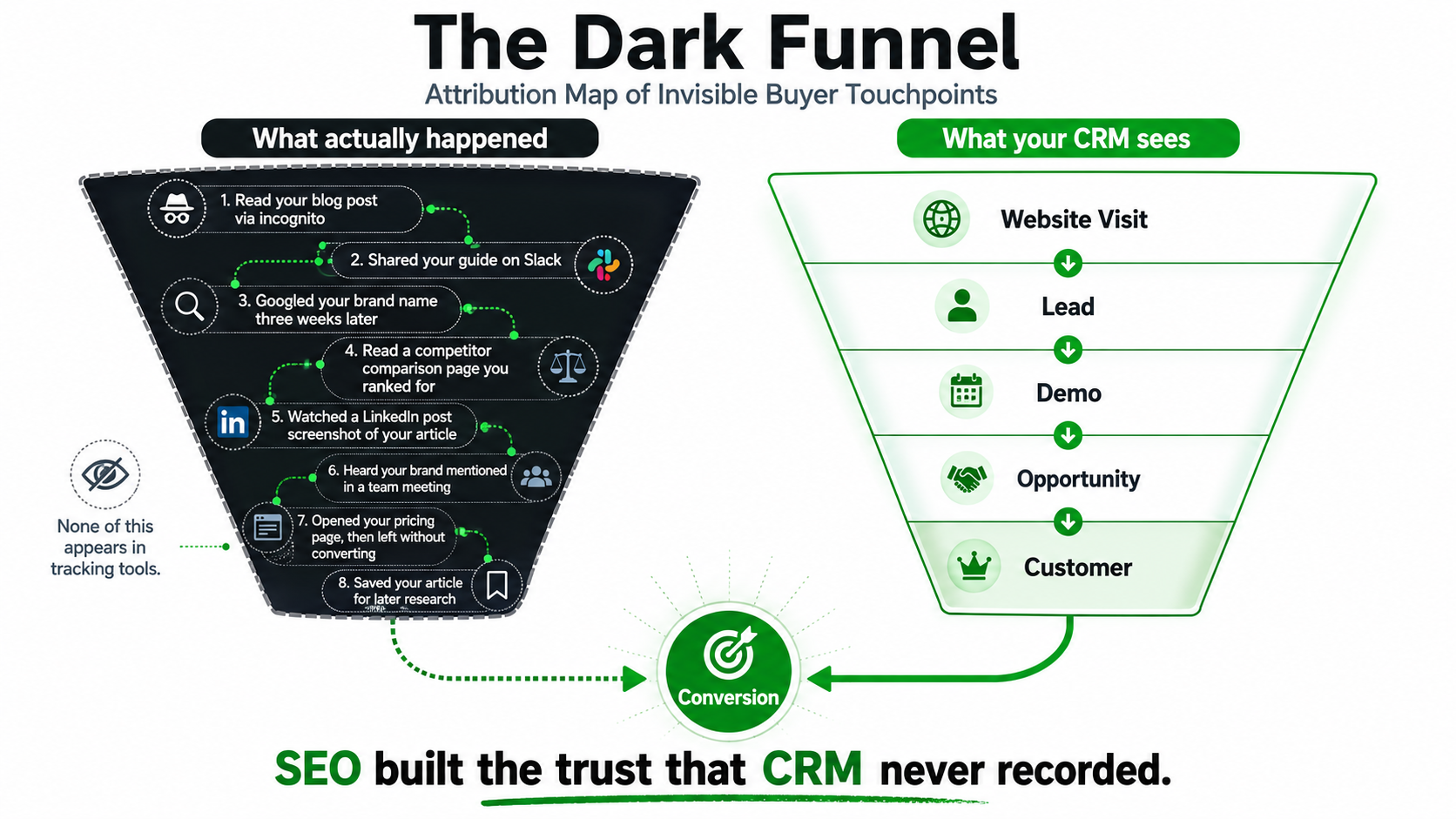
Most B2B deals do not begin with a phone call. They begin with a search at 11 pm, a quiet browser tab on a commute, or a link dropped into a Slack channel with the message “thoughts on this?” By the time a buyer contacts your sales team, they have already visited your site, checked two competitors, and formed an early opinion about whether your brand looks like it understands the problem.
B2B SEO services exist to make sure that opinion goes in your favor; every single time, at every stage of a buyer’s research journey.
Professional SEO services replace guesswork with strategy, scattered content with a connected buyer journey, and vanity metrics with pipeline conversations. For startups, agencies, and marketing managers under pressure to generate genuine demand, SEO is often the most underused commercial lever sitting right in front of them.
Why SEO Matters for B2B Companies
Buyers do their homework well before they want to talk to anyone. A procurement manager typing “managed IT support for mid-size logistics companies” is not casually browsing; a contract is expiring, a target has been missed, or a quiet shortlist is already forming. Pew Research Center data shows users clicked organic results 15% of the time without an AI summary at the top, dropping to 8% when one appeared. SEO for B2B companies that earn clear, specific visibility captures the qualified lead generation opportunity before a competitor steps in first.
What Buyers Are Judging Before You Know They Exist:
- A specific, direct service page signals you understand the problem deeply; not just broadly or generically.
- Consistent visibility across repeated searches builds brand familiarity before a single email is exchanged.
- Well-structured content helps a buyer make the internal case for choosing you to their own management team.
- Clear, confident messaging removes the hesitation that vague corporate copy creates at every critical touchpoint.
B2B SEO services designed around buyer intent function less like a traffic machine and more like a precision filter, separating serious buyers from casual visitors before they even reach your homepage. Someone who found you by typing a specific business problem into Google is already warmer than almost any cold outreach target on your list. That filter is what makes organic search the most commercially efficient demand channel, most B2B brands are still dramatically underinvesting in.
Difference Between B2B and B2C SEO
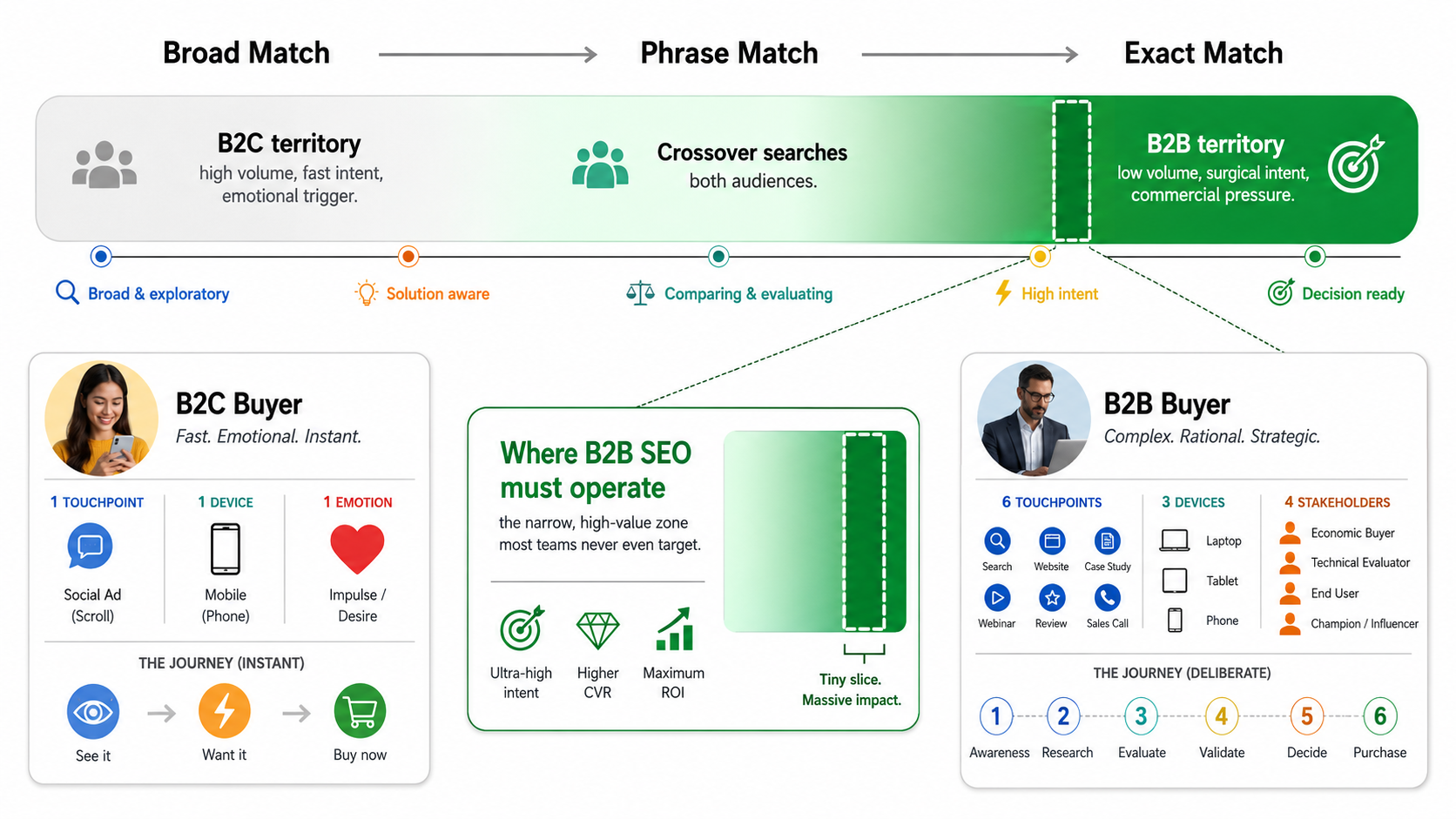
Buying a pair of sneakers and selecting an enterprise software partner are not remotely the same conversation. One ends with a credit card and sixty seconds of thought. The other involves a procurement committee, legal reviews, finance sign-offs, and an internal champion who must defend the decision to their director on a Tuesday morning. B2B lead generation SEO is engineered specifically for that second kind of purchase; the slow, careful, high-stakes decision where choosing the wrong vendor costs far more than budget alone.
| SEO Element | B2C SEO | B2B SEO |
|---|---|---|
| Buyer mindset | Fast, emotional, convenience-led | Careful, researched, risk-aware |
| Sales cycle | Short and direct | Longer with multiple stakeholders |
| Content focus | Product benefits and offers | Education, proof, trust, comparison |
| Success metric | Purchases and traffic volume | Lead quality and pipeline impact |
⚡ The Four Gaps That Change Everything in B2B:
- A niche keyword with 200 searches a month generates more revenue than a broad term with 20,000; because the intent behind it is sharper and the buyer is far more qualified.
- Content must answer the objections your sales team hears every week in calls, not just the questions a keyword tool happens to recommend.
- Every page a serious buyer visits is an audition. Vague messaging fails that audition silently, at scale, and without ever sending a rejection notice.
- Trust matters more in B2B because a wrong purchase decision affects entire teams, annual budgets, and sometimes a buyer’s own professional credibility.
The differences in the table above are not just semantic; they represent fundamentally different commercial realities. SEO for B2B companies cannot borrow B2C playbooks and expect results. Every element, from how keywords are chosen to how success is measured, must reflect the fact that a B2B buyer is making a risk-weighted, committee-approved decision. Long sales cycle SEO demands the patience, strategic depth, and content architecture to match every stage of that high-stakes decision journey.
How Do SEO Services Improve Growth?
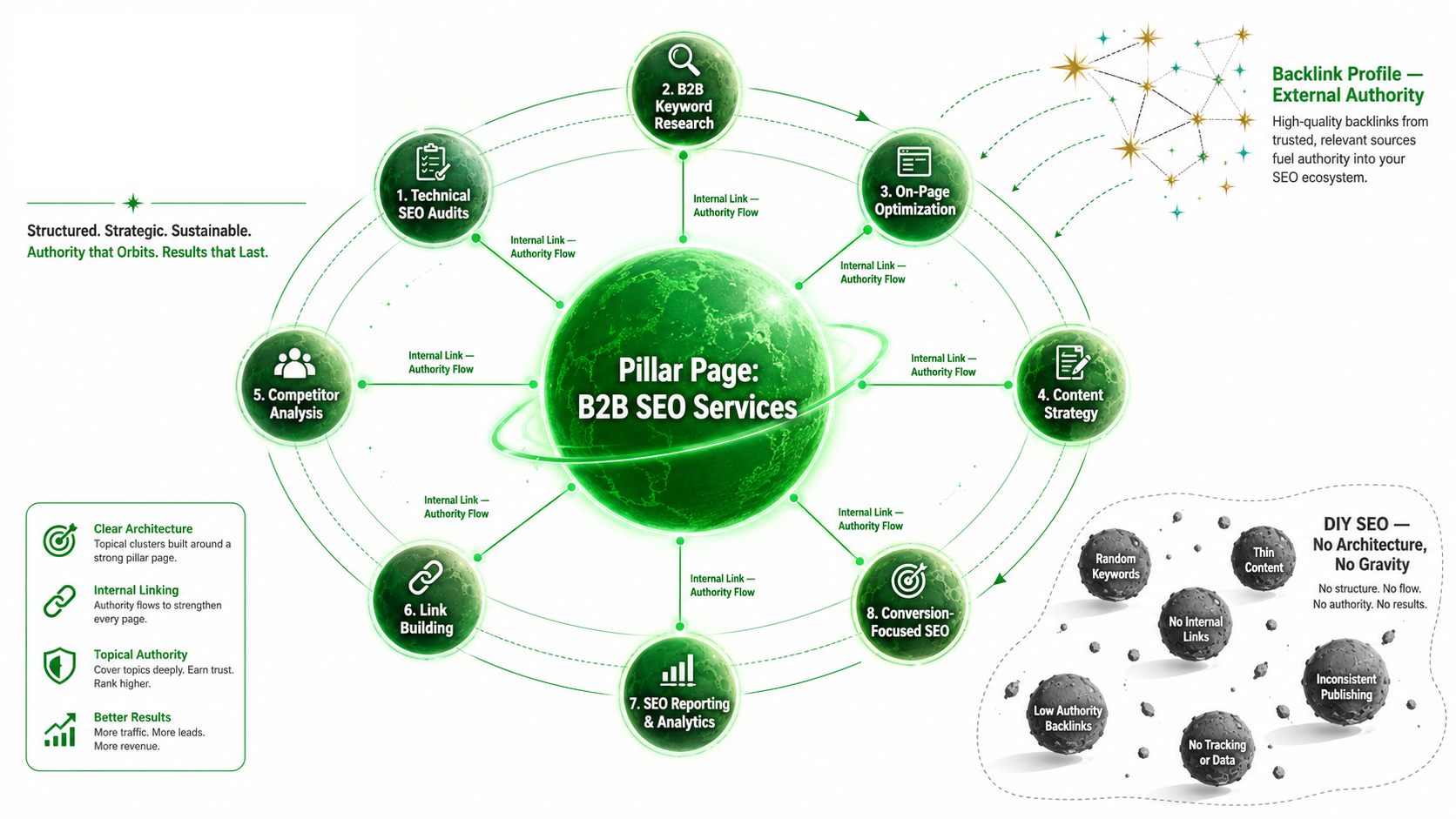
Most B2B teams approach SEO the way someone fixes a boiler using a YouTube tutorial; confident at the start, confused by step three, and calling a professional after something expensive breaks. Blog posts go live without strategy. Keywords get scattered like confetti. Rankings stay flat. Nobody can explain why, and everyone quietly assumes it is the content’s fault. Professional SEO services replace that entire cycle with a connected system where technical health, content depth, search intent, and authority development all point toward the same commercial destination.
Where a Professional System Outperforms Piecemeal Effort:
- Technical audits surface the problems that content alone will never fix: crawl errors, thin pages, broken internal links, and speed issues that have been quietly draining visibility for months.
- Content strategy builds a connected web of topical authority instead of isolated blog posts that never reinforce each other or serve a shared commercial objective.
- Enterprise SEO strategy disciplines help even smaller teams prioritize correctly; directing effort toward pages that genuinely influence buying decisions rather than just generating impressions.
- Keyword research focused on buyer psychology identifies what prospects type when they are close to a decision, not just when they are mildly curious about a topic.
Google’s Core Web Vitals confirm what teams often learn too late: a slow, clunky website loses ground to a faster competitor even when its content is demonstrably stronger. B2B content marketing SEO and technical performance are not separate disciplines; they are the same engine running at different speeds. B2B SEO services stop feeling like a marketing cost and start behaving like a commercial asset the moment every element; technical, creative, and structural; is built as one coherent, buyer-focused system.
Does SEO Help in Lead Qualification?
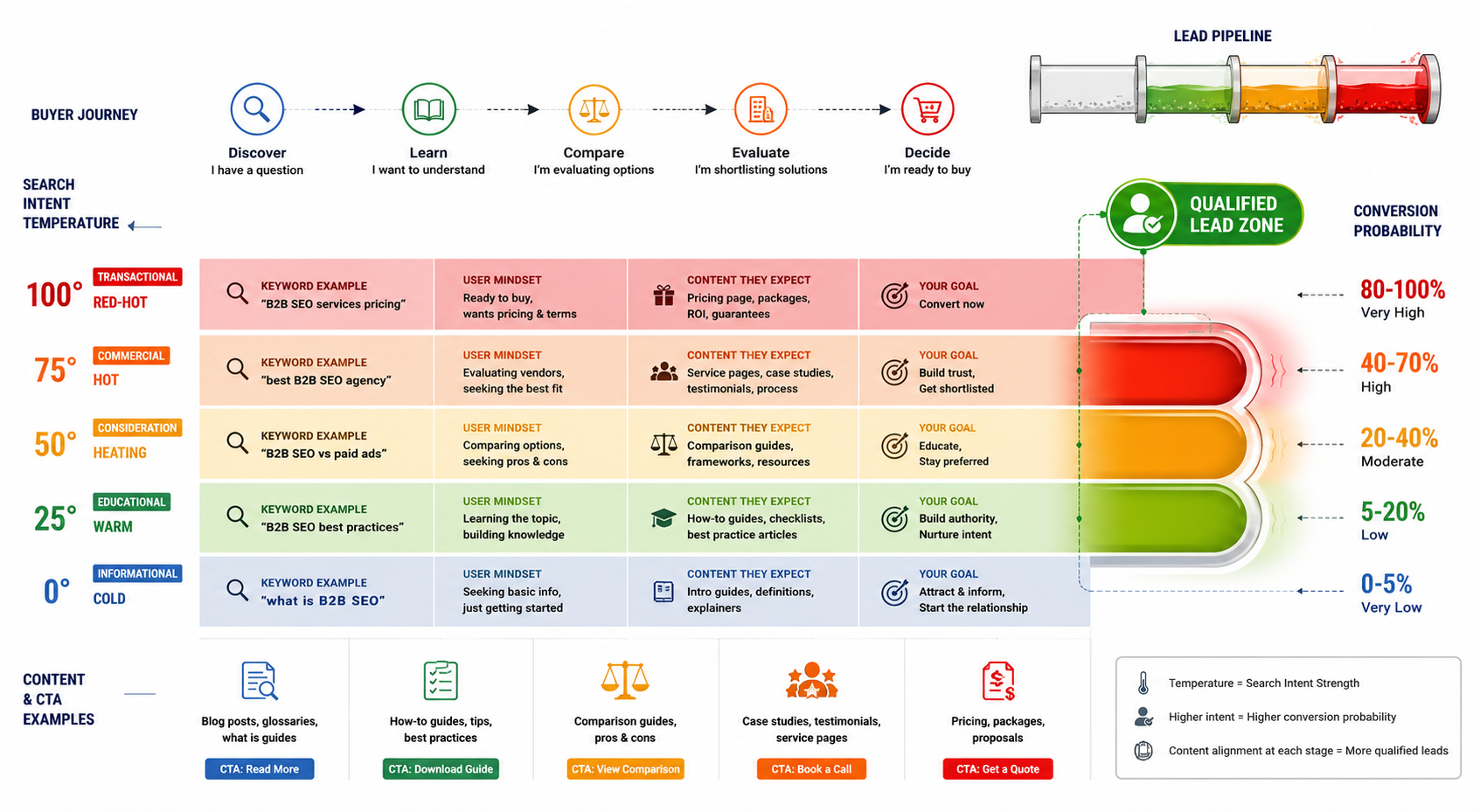
One version of SEO fills a website with readers who absorb content and leave without converting. The problem is not volume; it is intent. Intent-driven SEO targets buyers at the exact stage where commercial intent becomes visible in search behavior. The difference between “what is account-based marketing” and “account-based marketing agency for B2B SaaS” is not just phrasing. It is the precise distance between someone who is still learning and someone who is quietly ready to shortlist vendors.
The Four Moves That Turn a Searcher Into a Sales Conversation:
- A case study with a recognizable problem, a documented methodology, and a measurable commercial outcome builds more trust than any self-promotional service page ever written.
- Comparison content that is genuinely balanced earns credibility even from buyers who do not convert immediately; and they remember your brand name when they are finally ready.
- Educational guides that answer real buyer questions from their own perspective demonstrate expertise before any sales interaction has even been scheduled.
- Calls to action placed at the natural end of a buyer’s thinking process; not just stamped at the top of every page; convert far better because the timing matches the intent.
A 2026 arXiv study found Google AI Overviews appeared in 51.5% of real-user queries; meaning generic content is increasingly absorbed into AI summaries and quietly disappearing from results. B2B search marketing earns its budget when content is mapped to exactly where the buyer sits in their decision journey. B2B lead generation SEO is not about publishing more content or shouting louder. It is about saying precisely the right thing to precisely the right person at the exact moment they are genuinely ready to act.
Why DIY SEO Often Fails in B2B
The standard DIY B2B SEO story runs like this: a marketing manager runs a keyword tool, assigns blog posts to whoever has bandwidth, publishes twelve articles over three months, and waits. Traffic nudges upward slightly. The pipeline stays completely flat. Someone suggests running more paid ads instead. The issue is rarely the effort; it is the complete absence of commercial strategy behind the effort. B2B SEO services exist specifically to prevent this pattern by replacing guesswork with a system built around how real buyers actually think, search, and decide.
Where DIY B2B SEO Breaks Down Every Single Time:
- Targeting keywords with high volume but zero commercial intent; attracting thousands of visitors who were never going to convert regardless of how perfectly the page was structured.
- Writing service pages for search engine bots rather than buyers; pages dense with keywords but empty of the specific information a serious prospect actually needs before making a decision.
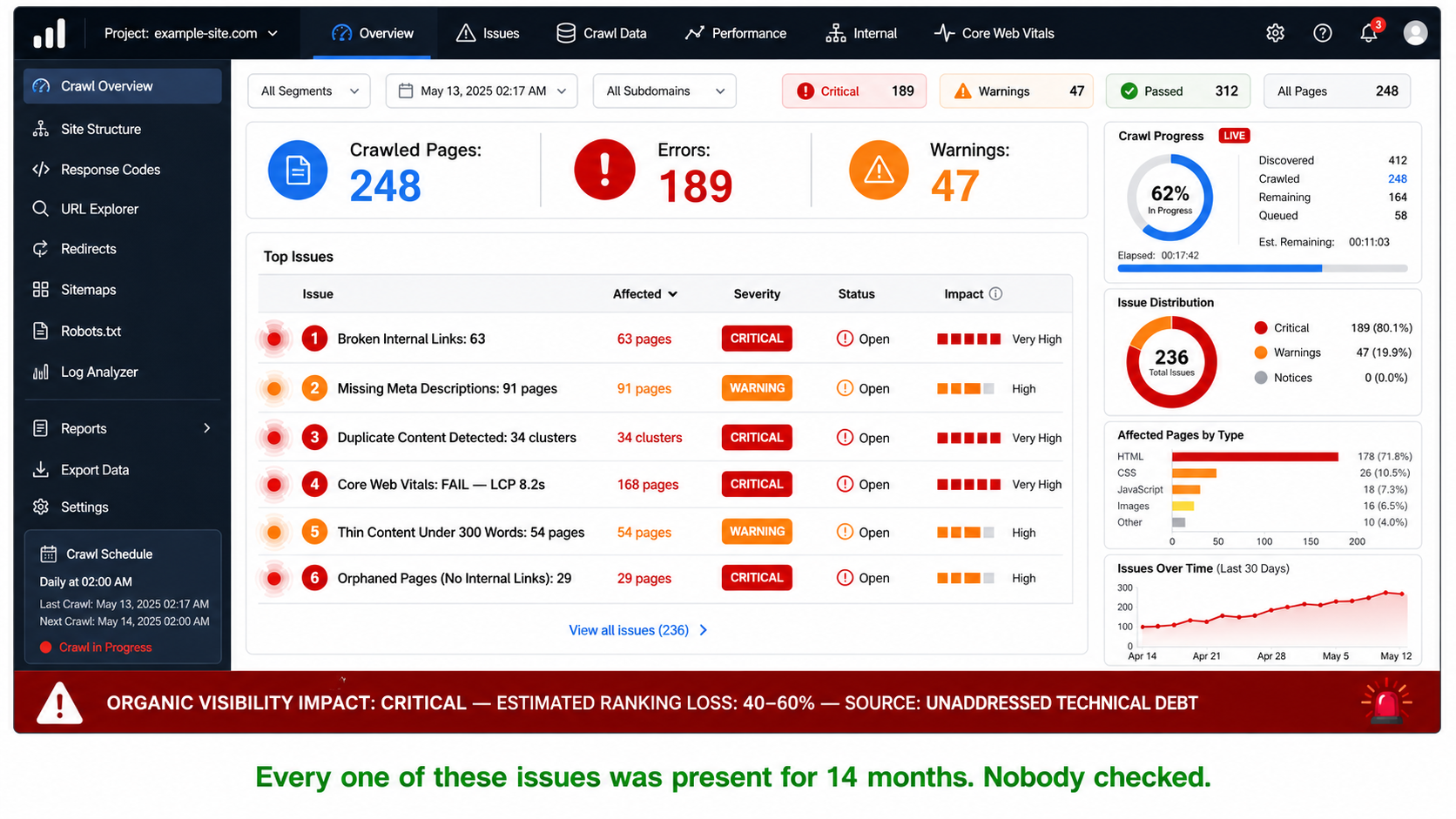
- Leaving technical debt unaddressed for months: slow load times, duplicate content, broken internal linking, and pages that crawlers cannot index even when the content is genuinely strong.
- Measuring success in sessions and impressions while the sales team quietly reports no improvement in lead quality, pipeline volume, or conversations worth pursuing.
Professional SEO services matter most precisely here; not just for execution, but for the commercial thinking that makes execution worth doing. B2B lead generation SEO is not a content frequency game or a posting schedule to maintain. It is a buyer psychology discipline. Without structural clarity to connect search intent, content architecture, technical performance, and conversion paths, the channel produces impressive-looking dashboards and empty pipelines in equal measure. Organic lead generation built on guesswork will always underperform a strategy built on how serious buyers actually decide.
How Is B2B SEO Success Measured?
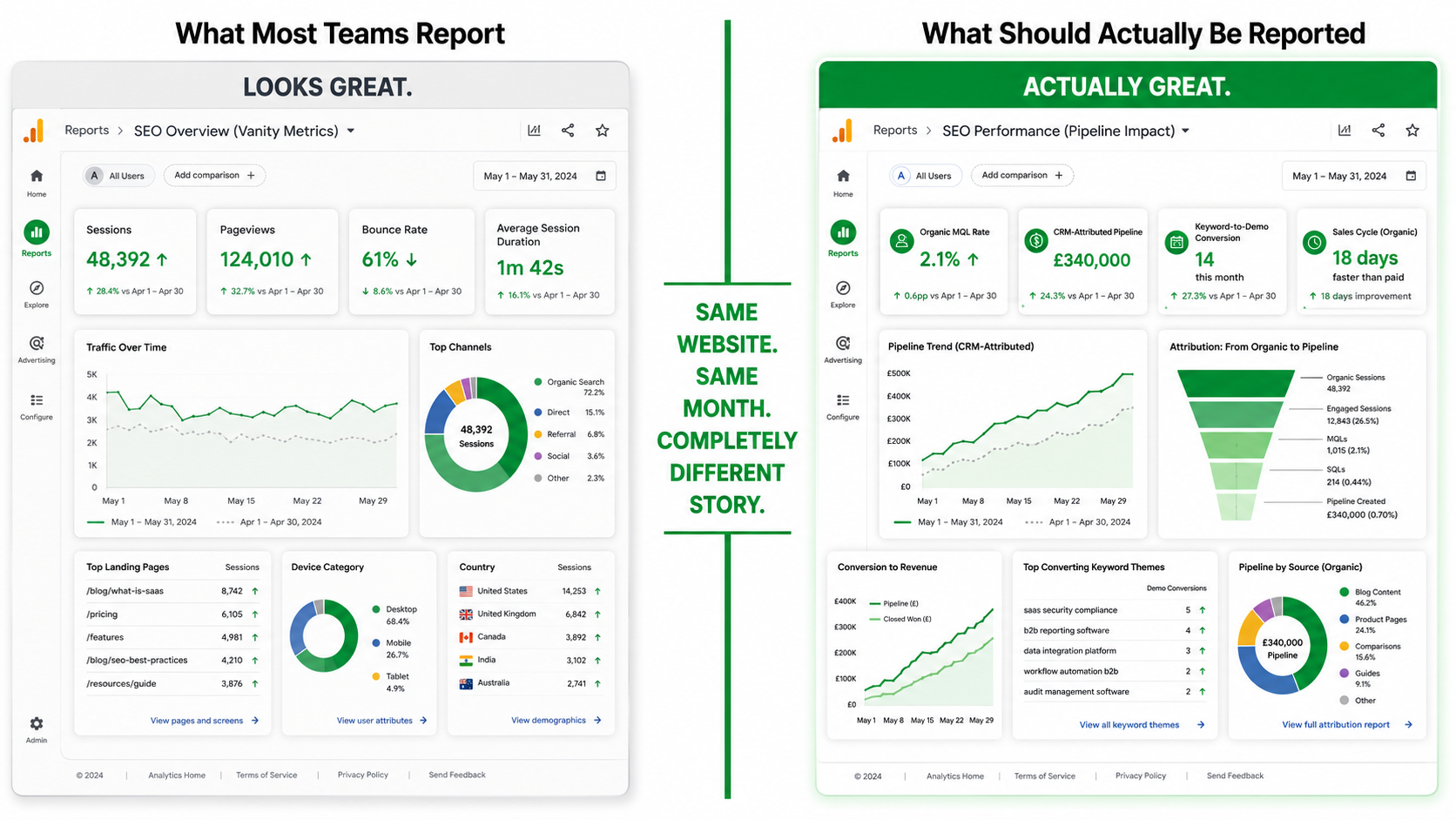
Traffic is the easiest metric to present in a board meeting. It moves visibly, charts cleanly, and rarely asks uncomfortable questions about what happened to revenue. Lead quality is considerably harder to present; but it is the only number that genuinely matters to the people controlling the budget. When B2B organic traffic grows without a matching increase in qualified conversations, something in the targeting, the content, or the commercial intent alignment has quietly gone wrong and needs immediate diagnosing.
The Four Numbers That Actually Matter to the C-Suite:
- Organic-to-MQL conversion rate; not raw traffic volume, but the percentage of organic visitors who become marketing qualified leads worth passing to sales.
- B2B conversion optimization requires CRM-attributed pipeline; active deals trace back to organic search as a first or contributing touchpoint, and exactly what that pipeline is worth.
- Keyword-to-conversion mapping; which specific search terms are generating form fills and demo requests, not just pageviews and average time-on-page.
- Sales cycle length by source; buyers arriving through high-intent organic searches frequently close faster than those from broader awareness channels, and that acceleration has real commercial value.
A coherent B2B digital marketing strategy connects search data directly to sales data; using CRM attribution to prove which content is influencing real deals rather than just generating traffic metrics nobody acts on. SEO for business growth looks fundamentally different from SEO for traffic, and that difference always surfaces in quarterly revenue reviews rather than keyword reports. B2B SEO services that truly deliver are measured by pipeline influence. Every other number simply supports that one argument.
Overview: B2B Growth Requires Strategic SEO
Great B2B vendors are rarely discovered by accident. Buyers find them through clear search visibility, genuinely helpful content, and repeated proof that the brand understands their world. Strategic SEO turns that discovery journey into something intentional instead of leaving it to chance. The strongest B2B SEO services do not simply chase rankings; they help companies earn trust while buyers research, compare, and decide.
A smart B2B digital marketing strategy connects SEO with content, sales, and authority building, so every search touchpoint works harder. Rankings create visibility, but clarity builds confidence. And in a long B2B buying cycle, the brand that explains the problem best often becomes the brand buyers trust first.
Turn Search Visibility Into Qualified Leads
Ready to attract B2B buyers who are already searching for solutions? Partner with eSign Web Services to build a focused SEO strategy that brings stronger leads, earns buyer trust, and turns search into measurable growth. Request a quote or call us today to let your website work harder before sales enter the conversation with momentum.
Frequently Asked Questions (FAQs)
Question: Why is SEO important for B2B companies?
Answer: SEO is important for B2B companies because decision-makers rely heavily on search engines during the research and evaluation process. Buyers compare solutions, analyze providers, and seek educational information before contacting businesses. Strong search visibility improves credibility and brand trust. SEO helps companies appear when prospects actively search for services or products. Unlike short-term advertising, SEO creates sustainable lead generation over time. It also supports long sales cycles through educational and intent-focused content. Businesses with strong organic visibility attract more qualified prospects. Strategic SEO improves authority, engagement, and long-term growth opportunities across competitive B2B markets and evolving digital search environments consistently.
Question: How does B2B SEO differ from B2C SEO?
Answer: B2B SEO differs from B2C SEO because the buying process is longer and more complex. B2B purchases often involve multiple stakeholders and detailed research. SEO strategies must support decision-making through educational content and intent-driven targeting. B2C SEO usually focuses on faster conversions and broader audiences. B2B SEO prioritizes lead quality over traffic volume. Industry-specific keywords and authority building are more important. Content must address pain points, comparisons, and long-term value. Businesses require strategies aligned with longer sales cycles. Professional SEO helps optimize these complex journeys effectively and improves qualified lead generation opportunities consistently over time across competitive business environments and industries.
Question: What are qualified leads in B2B SEO?
Answer: Qualified leads are prospects who are genuinely interested in a business’s products or services and are more likely to convert into customers. In B2B SEO, qualified leads come from users searching with clear intent. These visitors often research solutions, compare providers, or seek expert insights. SEO helps attract them by targeting relevant keywords and creating valuable content. Unlike general traffic, qualified leads have stronger business potential. Generating these leads improves efficiency and return on investment. Businesses should focus on attracting decision-makers rather than maximizing traffic volume. Strategic SEO ensures higher-quality leads and better conversion opportunities across long and complex B2B purchasing journeys effectively.
Question: How long does B2B SEO take to generate results?
Answer: B2B SEO typically takes several months to generate significant results because it focuses on long-term visibility and authority. Timelines depend on competition, industry, and website condition. Early improvements may appear within a few months, but sustainable lead generation requires consistent optimization. Technical improvements, content development, and authority building all contribute to progress. B2B SEO supports long purchasing cycles, so results often compound gradually. Businesses should focus on long-term growth instead of expecting immediate outcomes. Consistency and strategic execution are essential. Professional SEO services help accelerate progress by identifying high-impact opportunities and maintaining ongoing optimization efforts effectively across competitive business search environments consistently.
Question: Why do B2B companies need professional SEO services?
Answer: Professional SEO services provide expertise, strategy, and consistent optimization that many internal teams cannot manage effectively. B2B SEO involves technical optimization, intent analysis, authority building, and content strategy. Professionals understand how to align SEO with business goals and long sales cycles. They identify opportunities, fix hidden issues, and improve performance systematically. DIY approaches often lack strategic direction and consistency. Professional support improves efficiency and reduces costly mistakes. Businesses benefit from data-driven optimization and ongoing performance analysis. Expert SEO services help generate qualified leads and sustainable visibility. Strategic guidance ensures long-term success and competitive positioning in complex B2B digital marketing environments consistently over time.
Question: What type of content works best for B2B SEO?
Answer: The best B2B SEO content is educational, intent-driven, and focused on solving business problems. Buyers often search for guides, case studies, comparisons, and industry insights. Content should address specific pain points and provide practical value. Thought leadership content also builds authority and trust. Long-form, in-depth articles generally perform well because B2B buyers require detailed information before making decisions. Clear structure and relevance improve engagement. Businesses should create content for different funnel stages. Strategic content planning helps nurture prospects over time. Valuable content improves visibility, attracts qualified leads, and supports long-term conversion opportunities effectively across complex B2B purchasing journeys and industries consistently.
Question: Can SEO reduce dependency on paid advertising for B2B companies?
Answer: Yes, SEO can significantly reduce dependency on paid advertising by generating sustainable organic visibility. While paid ads provide immediate traffic, results stop when budgets end. SEO creates long-term visibility that continues attracting prospects over time. Organic traffic also improves trust because users often perceive search results as more credible than ads. Combining SEO with paid advertising creates balanced growth strategies. Businesses can use ads for short-term results while SEO builds future visibility. Over time, strong SEO reduces customer acquisition costs and improves return on investment. Sustainable organic growth provides B2B companies with greater stability and long-term lead generation opportunities across competitive industries effectively.
Question: What are common mistakes B2B companies make with SEO?
Answer: Common mistakes include targeting broad keywords, ignoring user intent, and focusing only on traffic metrics. Many B2B companies also neglect technical SEO and fail to create educational content. Inconsistent publishing weakens authority signals. Another mistake is expecting immediate results without long-term commitment. Some businesses rely on outdated link-building tactics that harm credibility. Lack of conversion optimization reduces lead quality. Businesses often fail to align SEO with sales goals. Avoiding these mistakes requires strategic planning and continuous optimization. Professional SEO services help identify gaps and improve performance. Correcting these issues strengthens visibility, authority, and qualified lead generation opportunities effectively over time consistently.
Question: How can B2B companies measure SEO success effectively?
Answer: B2B companies should measure SEO success using business-focused metrics rather than rankings alone. Qualified leads, conversions, and engagement provide meaningful insights. Organic traffic growth indicates improved visibility, but lead quality matters more. Monitoring keyword performance and user behavior helps evaluate effectiveness. Conversion tracking reveals how SEO contributes to revenue. Measuring pipeline influence provides broader insights into business impact. Businesses should also analyze content engagement and lead nurturing performance. Regular reporting improves decision-making. A strategic measurement framework ensures SEO aligns with long-term growth objectives. Data-driven analysis helps refine optimization strategies and improve overall marketing effectiveness consistently across competitive B2B industries and evolving digital search environments.
Question: Why is consistency important in B2B SEO strategies?
Answer: Consistency is important because B2B SEO success develops gradually through continuous optimization and authority building. Search engines reward websites that regularly publish valuable content and maintain technical quality. Consistent efforts strengthen visibility, engagement, and trust over time. Inconsistent strategies reduce momentum and limit long-term performance. B2B buyers also require repeated interactions before making decisions. Regular content and optimization help nurture these relationships. Businesses should focus on sustainable execution rather than short-term tactics. Consistency improves rankings, lead generation, and brand authority. Strategic and ongoing SEO efforts create long-term competitive advantages and stronger business growth opportunities across evolving B2B digital marketing ecosystems consistently over extended periods.
Author Details

Ashwani Kumar Sharma
Ashwani has been actively involved in SEO services since 2005. His expertise and distinctive work approaches have made him one of the most experienced and trusted SEO experts in the industry. He is a certified SEO and Google Ads professional. He also has strong business development skills in advanced SEO, PPC, and digital marketing strategies.


