



Dynamic Search Ads Are on Their Way Out — Google’s AI Max Is Taking Over

Key Takeaways
- Google is gradually moving Dynamic Search Ads into a newer AI-powered Search setup.
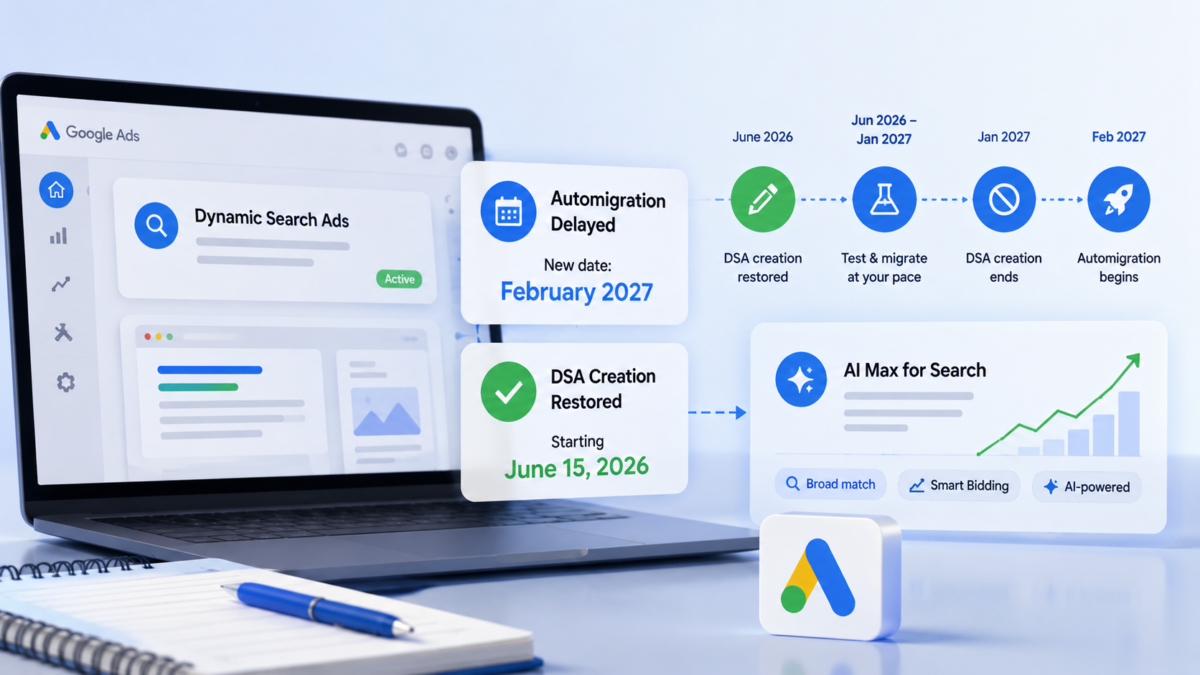
- The automatic DSA upgrade is expected to begin in February 2027.
- AI Max for Search campaigns can use more signals to find useful search opportunities.
- It can also adjust ad text and send users to a more relevant page.
- Existing DSA settings and campaign history are expected to move into the new setup.
- Advertisers still have time to test the change before the automatic upgrade begins.
Overview
Dynamic Search Ads have been useful for advertisers for a long time. Instead of relying only on a fixed list of keywords, Google could look at the content of a website and decide when an ad might be relevant to someone’s search.
That approach is now changing. Google is bringing many of the same functions into AI Max for Search campaigns, which gives its system more freedom to understand searches, adjust ad content, and select landing pages. So, Dynamic Search Ads are not simply being switched off without a replacement. Google is moving the same basic idea into a broader AI-powered setup that can do more than traditional DSA.
Why Is Google Replacing Dynamic Search Ads?
Dynamic Search Ads helped advertisers cover search terms they may not have added as keywords. This was especially helpful for websites with many products, services, or pages. The problem is that people do not always search in short or predictable ways anymore. Many searches are longer, more specific, and written like normal questions. It can be difficult for advertisers to create keywords for every possible variation.
Google wants its ad system to understand those searches more easily. AI Max can look at more than website content alone. It can use the ad, landing page, campaign information, and the meaning behind the search to decide whether an ad should appear. This is really what the change is about. Google is keeping the useful idea behind DSA but placing it inside a bigger AI-based system. Advertisers who want to understand the technical side of the change can also visit the Google Ads Help Center for information about the transition.
Credit: Search Engine Land
How Is AI Max Different From DSA?
AI Max gives Google more information to work with and more ways to match ads with searches. Traditional DSA mainly depended on website content. AI Max can use several signals together, which may help it understand a search more clearly.
Some of the main differences include:
- It can find useful searches outside an advertiser’s existing keyword list.
- It can adjust ad wording so it fits the search more closely.
- It can choose a different landing page when another page is more relevant.
- It can use more campaign signals instead of relying mainly on website content.
- Advertisers can still control brands, locations, URLs, and certain text settings.
- Performance can still be checked through regular Google Ads reports and data.
This means AI Max for Search campaigns goes beyond what DSA was built to do. It brings search matching, ad text changes, landing-page selection, and automation into one place. Google has also said that advertisers using the full AI Max feature set may see better conversion results in some cases. Of course, that will not be the same for every business. Results will still depend on the offer, website, budget, audience, and overall campaign quality. Advertisers can also follow the official Google Ads announcement for direct updates from Google.
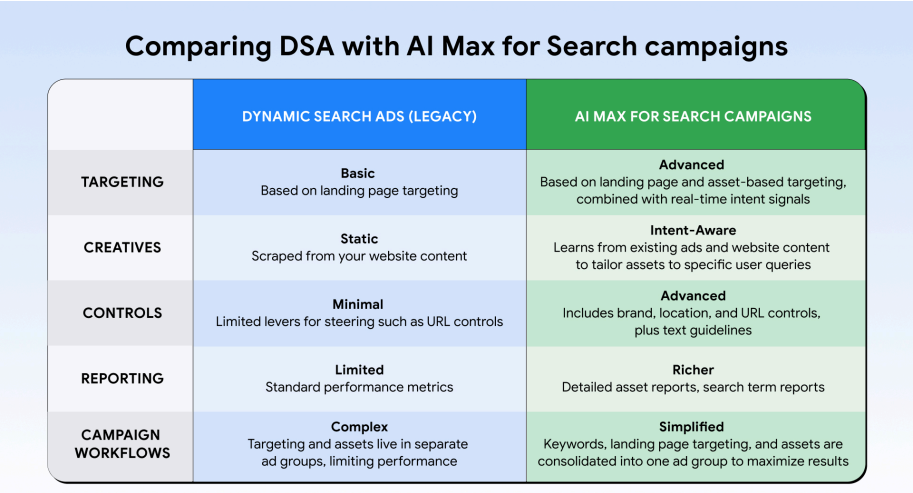
Image credit: Google, April 2026
What Happens to Existing DSA Campaigns?
Advertisers will not have to start again from zero. Google has created a process that moves Dynamic Search Ad campaigns into the newer Search setup. Existing dynamic ad groups can be changed into standard ad groups, while Dynamic Search Ads can be converted into Responsive Search Ads. Important campaign information is also expected to carry over. That includes historical data, which is useful for advertisers who want to compare past results with future performance.
There may be a short period where older ads continue running while the new ads are being reviewed. Once the new ads are ready, the older Dynamic Search Ads can be paused and kept mainly for reference. The timing has also changed. Google originally planned to begin the automatic DSA upgrade in September 2026. It later gave advertisers more time, and the automatic move is now expected to begin in February 2027. That extra time gives businesses a chance to look at their current campaigns, understand the new setup, and make changes before Google starts moving accounts automatically.
It is also worth testing AI Max for Search campaigns before the automatic upgrade begins. Early testing can show how the new matching works and whether Google is sending users to suitable pages.
Advertisers should keep an eye on:
- Search terms that are bringing in traffic and conversions.
- Cost per conversion and return on ad spend.
- Landing pages selected by the system.
- The quality of leads or sales coming from new searches.
- Ad messages created or adjusted through automation.
AI can reduce some manual work, but that does not mean advertisers should stop checking campaigns. Good results still depend on regular review and sensible controls. The best approach is simple: test the new system, watch what it does, and keep control over the parts that matter most to the business.
Conclusion
Dynamic Search Ads are not disappearing all at once, but Google is clearly changing the way they fit into Search advertising. The automatic DSA transition is now expected to begin in February 2027, giving advertisers time to prepare. AI Max for Search campaigns brings together broader search matching, ad text changes, landing-page selection, and more automation. For advertisers, the sensible next step is to review existing DSA campaigns, test AI Max early, watch the results carefully, and make adjustments before the automatic move begins.
Prepare Your Search Campaigns for the AI-Powered Future
As Google Search advertising moves toward smarter AI-powered tools, businesses need to keep their campaigns ready for the change. eSign Web Services can help you understand new Google Ads features, improve campaign performance, and build a practical paid search strategy that supports better visibility, quality leads, and long-term business growth.
Author Details

Ashwani Kumar Sharma
Ashwani has been actively involved in SEO services since 2005. His expertise and distinctive work approaches have made him one of the most experienced and trusted SEO experts in the industry. He is a certified SEO and Google Ads professional. He also has strong business development skills in advanced SEO, PPC, and digital marketing strategies.


