



How to Build High-Quality Backlinks That Improve Rankings in 2026

Key Takeaways
- High-quality backlinks remain the most powerful credibility signal in modern search; bar none.
- Search engines now weigh relevance, authority, and natural link profiles over sheer volume.
- Contextual links from trusted domains consistently push rankings up and keep them there long-term.
- Low-quality or manipulative backlinks don’t just fail to help; they actively damage your SEO performance.
- In 2026, the entire game is about earning links through real value, not manufacturing them through shortcuts.
- Content quality and topical authority are the true, compounding engines behind sustainable backlink growth.
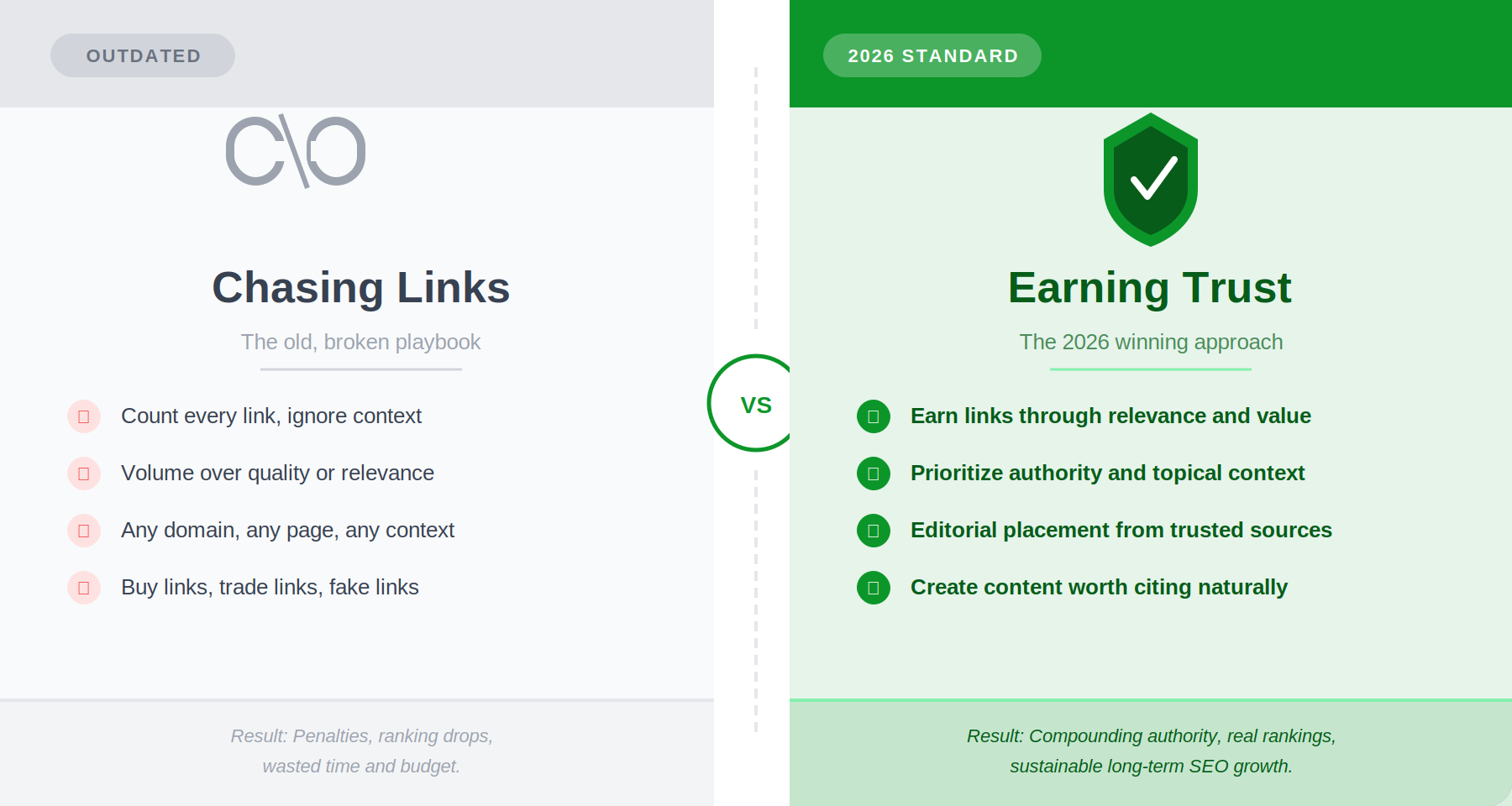
The uncomfortable truth most SEO guides won’t open with: the brands ranking at the top of Google in 2026 aren’t the ones with the most links, they’re the ones with the most high-quality backlinks from sources that genuinely matter. That distinction is everything, and closing your eyes to it is expensive.
Search engines have moved well past simple link counting. Today, every backlink is evaluated based on its context, the authority behind it, and the intent that drove it. According to Backlinko, the top-ranking page on Google earns 3.8x more backlinks than pages ranked below it, but those links are editorially placed, topically relevant, and earned through real credibility, not bulk outreach.
Understanding link-building SEO at this level means accepting a fundamental shift in mindset: a backlink is no longer just an algorithmic signal, it’s a public endorsement. When a respected, authoritative site links to your content, it’s telling both search engines and real readers, “This is worth your time.” That endorsement is what drives rankings today, and no shortcut sustainably replicates it.
What Makes a High-Quality Backlink?
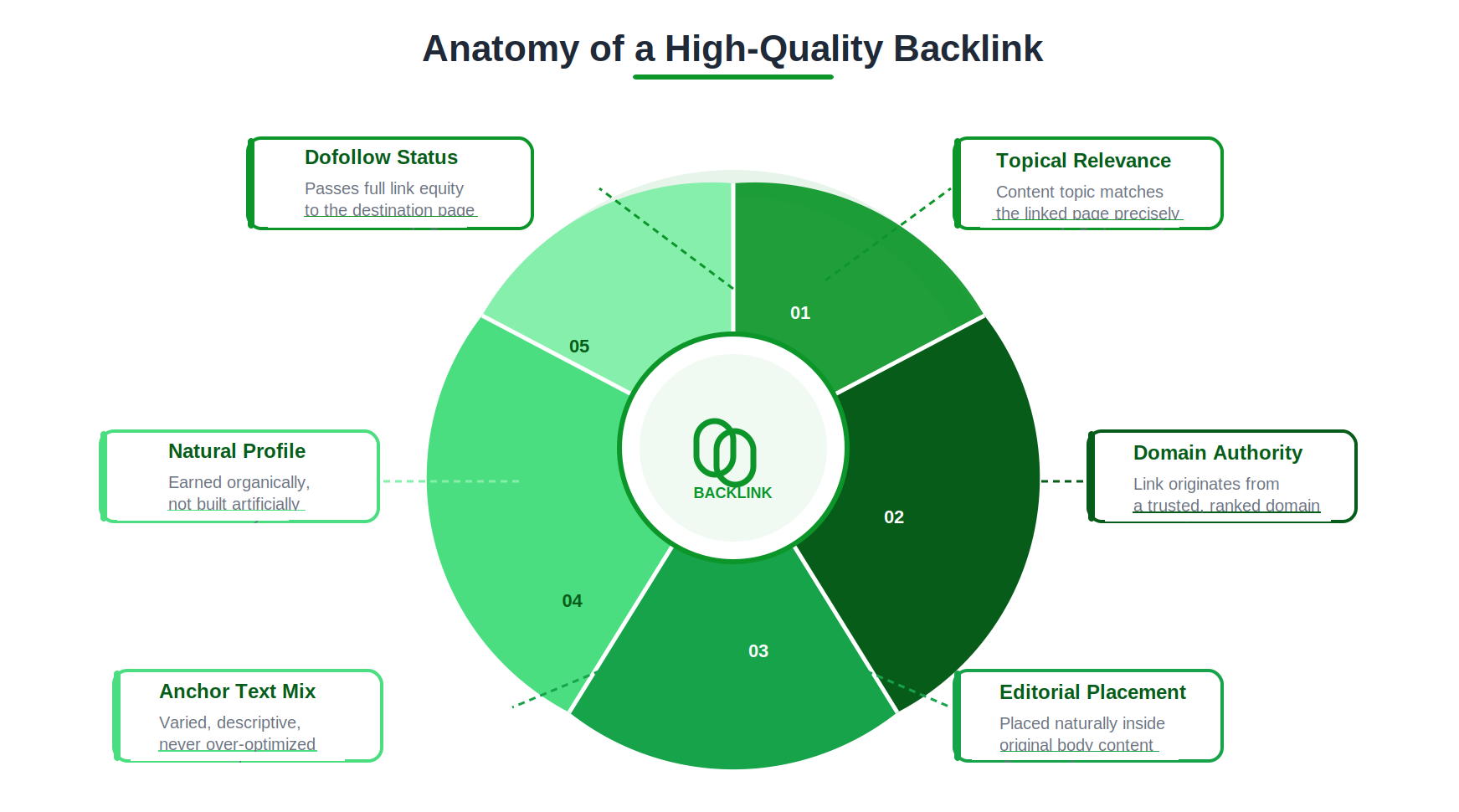
Not every link moves rankings, and in 2026, the gap between a strong backlink and a weak one is wider than most people realize. Search engines now assess a full range of backlink quality factors before assigning weight to any link. Relevance, domain trust, and placement all factor into how much real value gets transferred.
A link buried inside an irrelevant page is fundamentally different from one placed naturally inside a well-researched, on-topic article written for an engaged, real audience. One tells the algorithm your content is genuinely worth citing. The other barely registers, and in some cases actively weakens your profile. The difference isn’t subtle.
- Contextual backlinks placed naturally within relevant, high-quality content carry significantly more SEO weight than forced or isolated placements; context is everything
- Authority backlinks from trusted, established domains transfer real credibility that compounds across your site and compounds over time
- Natural link building — where links are earned through genuinely valuable content; produces link profiles that hold up through every algorithm update, not just the current one
- Anchor text diversity signals an organic link profile and prevents the repetitive patterns modern algorithms flag almost immediately
- Editorial placement inside independently published content increases authenticity and sustains long-term ranking value
When these elements align consistently, your link profile starts reflecting exactly what search engines want to see: credibility built slowly through genuine value, not manufactured through tactics designed to manipulate.
Effective Backlink Building Strategies in 2026
The strongest backlink-building strategies 2026 has to offer share one common thread: they create genuine reasons for other sites to reference your content. When you give the internet something actually worth citing; original data, a unique perspective, a resource that solves a real problem; backlinks follow naturally. Here’s what’s consistently working:
- Publishing original research and proprietary data attracts consistent high-quality backlinks from blogs, journalists, and researchers who need credible, linkable sources to anchor their own work
- Strategic guest posting backlinks through respected, niche-relevant publications build real topical authority while generating editorially placed links that carry genuine weight
- Digital PR backlinks earned through storytelling, expert commentary, and media outreach produce editorial coverage at a scale that no amount of direct link requests can match
- Refreshing and expanding previously high-performing content reopens linking opportunities, signals freshness to search engines, and compounds the value of work you’ve already done
- Broken link building; identifying dead links on authoritative sites and offering your content as the replacement; remains one of the most underused and effective SEO link building techniques available today
According to BuzzSumo, content featuring original data earns 94% more backlinks than content without it. That’s not luck; it’s the direct, predictable result of giving people something genuinely worth referencing.
| Strategy | Impact | Why It Works |
| Original Research Content | High | Original data gives publishers a credible, ready-made source worth citing |
| Guest Contributions | Medium-High | Relevant placements build niche authority and attract editorially placed links |
| Digital PR & Media Outreach | High | Media coverage generates editorial links no outreach campaign can replicate |
| Broken Link Building | Medium | Fixes broken resources on trusted sites and earns a natural placement |
| Directory / Generic Links | Low | Adds link volume without relevance, context, or measurable authority transfer |
Link Building Practices to Avoid
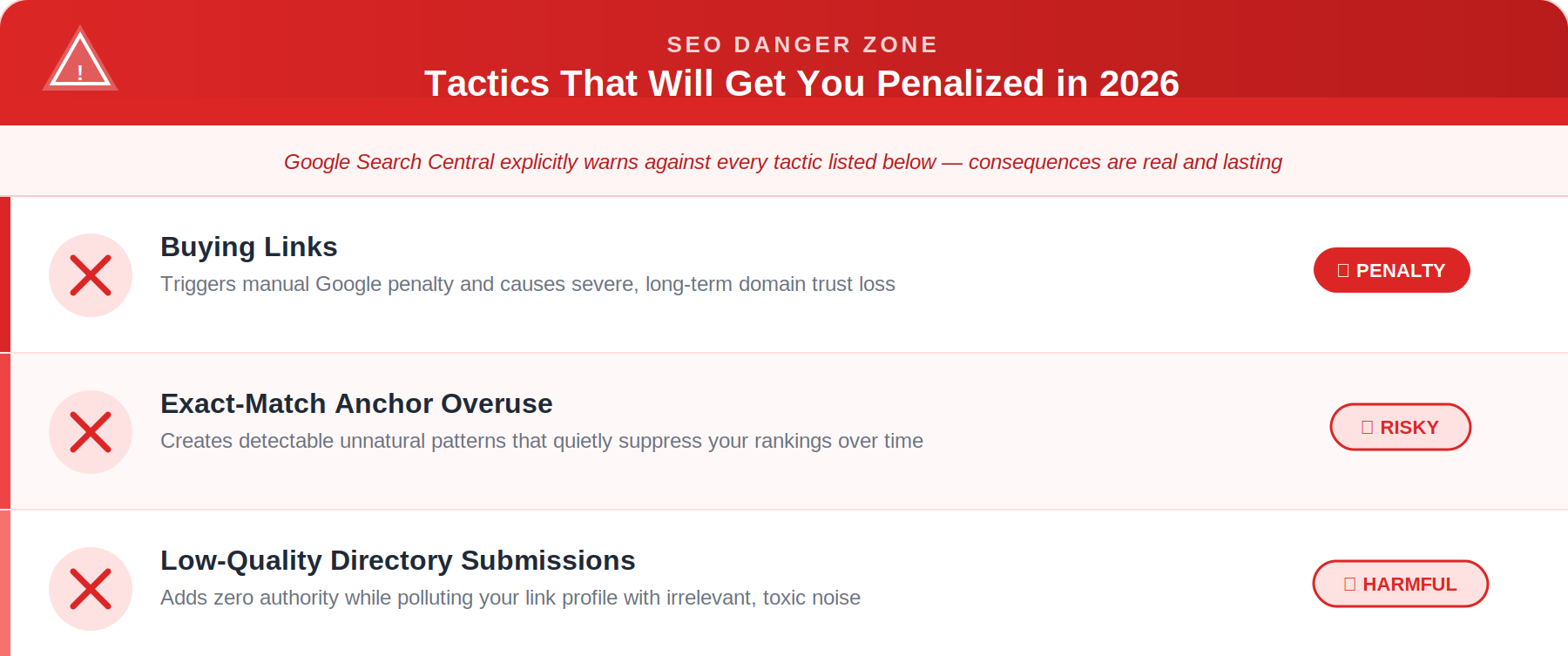
Some tactics still circulate in SEO circles as though they’re legitimate strategies. In 2026, they’re not; they’re penalties waiting to happen. Your SEO off-page strategy is only as strong as the quality of the links supporting it, and building on a weak or manipulated foundation will eventually collapse everything you’ve worked to establish.
- Buying links directly violates Google’s guidelines and puts your domain at risk of manual penalties that can take months, or longer, to fully recover from
- Overusing exact-match anchor text creates repetitive, unnatural patterns that modern algorithms detect and penalize with quiet, difficult-to-diagnose ranking drops
- Submitting to low-quality, irrelevant directories adds noise to your link profile without contributing any meaningful authority, relevance, or actual referral value
- Participating in link exchange networks and private blog networks signals manipulation to search engines, and those signals have become much harder to obscure or explain away
Google’s Search Central guidelines are explicit on this: unnatural linking carries real, documented consequences. The only sustainable path is through white hat backlinks; links earned through quality content, transparent outreach, and genuine professional relationships that hold up under scrutiny.
White-hat backlinks don’t just protect your rankings during core updates. They actively improve in value over time because they’re built on credibility that no algorithm shift can erase. Understanding which SEO link building techniques to avoid is just as strategically important as knowing which ones to execute.
Role of Content In Backlink Acquisition
Every great link starts with content worth linking to. This sounds obvious; until you see how many brands invest heavily in outreach without investing in the content that justifies the ask. High-quality backlinks are consistently earned, not negotiated, and the content behind them is almost always the deciding factor in whether a link opportunity converts or falls flat.
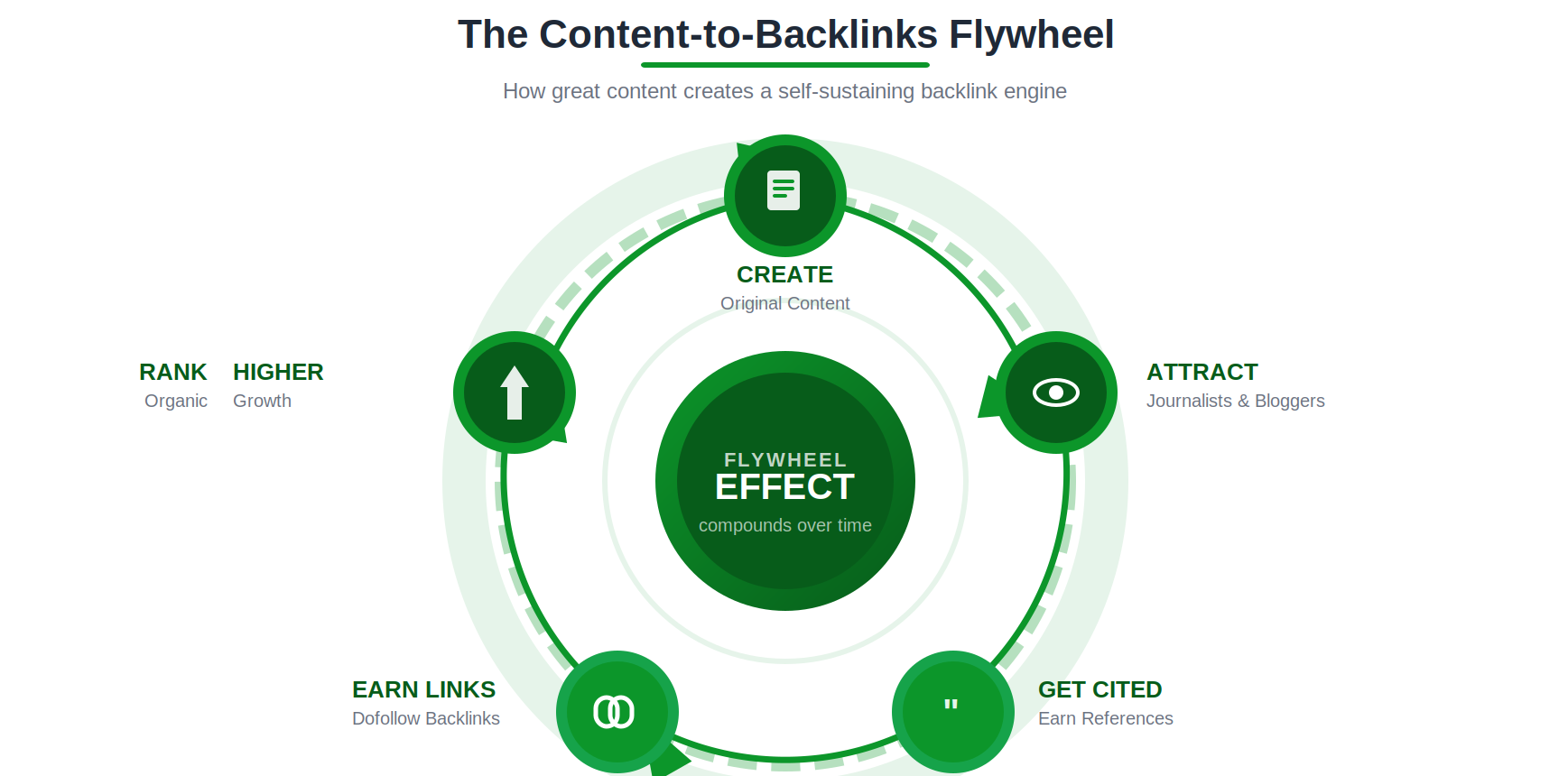
When your content genuinely helps people; answering real questions, presenting original data, or explaining something in a way no one else has; referencing it becomes the natural, logical thing to do. You stop having to pitch every link because your content is compelling enough to attract them. That is exactly what link earning techniques are built on, and why they outperform cold outreach campaigns at scale.
- Data-driven articles and original research attract citations from journalists, bloggers, and analysts who need credible, linkable sources to anchor their own work
- Visual content; infographics, custom charts, original diagrams; improves shareability and creates linking opportunities across formats that text-only content simply cannot reach
- In-depth guides that go meaningfully beyond surface-level advice encourage ongoing referencing and continue generating dofollow backlinks long after the publish date
- Unique angles and original perspectives make your content the natural citation choice even when competitors have covered the same topic dozens of times before
According to the Content Marketing Institute, 72% of marketers report that content directly increases both engagement and link acquisition. Done consistently, this builds a self-sustaining system of authority backlinks that compounds in impact and keeps supporting your rankings long after any individual campaign ends.
Measuring Backlink Quality and Performance
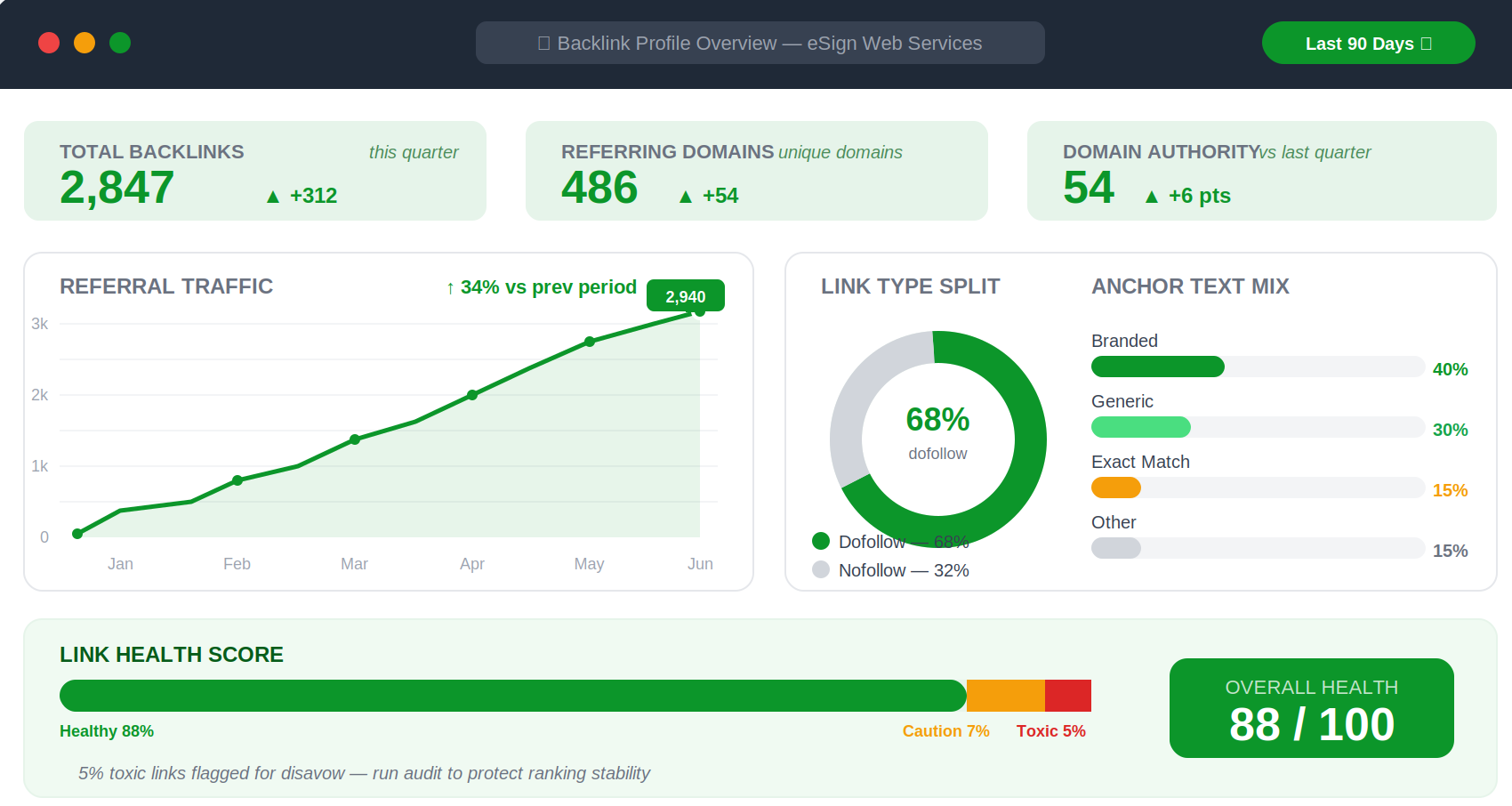
Building high-quality backlinks without measuring their impact is like running a paid campaign with no conversion tracking. You’re investing effort without understanding what’s actually working, and that makes improving your approach nearly impossible. The best backlink-building strategies for 2026 are built on consistent data, clear benchmarks, and a willingness to cut what isn’t delivering.
- Domain authority links should be monitored regularly to evaluate which placements are genuinely strengthening your rankings versus which are adding volume without real impact
- Referral traffic tracking reveals whether your backlinks drive real user engagement, not just algorithmic signals that never translate into actual visitors or conversions
- Regular link profile audits allow you to identify and disavow toxic links before they drag down your site authority and overall search performance
- Separating dofollow backlinks from nofollow links clarifies exactly which placements are directly contributing to rankings and which are serving a supplementary role
- Anchor text distribution analysis ensures your profile looks organically diverse and avoids patterns that trigger algorithmic review or manual scrutiny
According to Ahrefs, 91% of web pages receive zero organic traffic; primarily because they lack backlinks entirely. Knowing how to get backlinks is only the starting point. Knowing how to measure, refine, and compound that effort is what turns high-quality backlinks into a durable competitive advantage that keeps delivering well beyond the initial push.
💡 Pro Tip:Audit your backlinks monthly, not yearly. Regular checks with Google Search Console, Ahrefs, or Semrush help catch harmful links early and keep your SEO profile healthy.
Wrapping It Up
Backlinks in 2026 are not a volume game, and if you’re still treating them like one, you’re leaving real ranking potential on the table. The brands winning in organic search today are not the ones with the most links. They’re the ones with the right links: editorially placed, topically relevant, and earned through content and relationships that genuinely deserve the endorsement.
The shift from link building to link earning is not a trend. It is the permanent new standard. Search engines are better than ever at understanding context, detecting manipulation, and rewarding the kind of credibility that takes time and real effort to build. No shortcut survives that level of scrutiny for long.
What lasts is a consistent, strategic approach: creating content worth referencing, building mutually valuable outreach relationships, executing digital PR that earns genuine media coverage, and measuring performance closely enough to improve with every cycle. That’s what turns high-quality backlinks into a compounding asset rather than a one-time campaign.
The good news is that the brands willing to commit to this approach have a real, durable advantage over the majority who are still looking for shortcuts. If you’re reading this, you already understand the difference. Now it’s simply a matter of executing with the right strategy and the right partner behind you.
Turn Your Backlink Strategy Into Real Rankings
Most businesses know backlinks matter. Fewer know how to build them ethically, strategically, and in a way that actually lasts. At eSign Web Services, we combine content strategy, targeted outreach, and digital PR to build high-quality backlinks that move real rankings, drive qualified traffic, and grow your authority, not just your link count. Let’s build something that holds.
Contact eSign Web Services today and start building the backlink profile your rankings deserve.
Frequently Asked Questions (FAQs)
Question: What defines a high-quality backlink in modern SEO?
Answer: A high-quality backlink comes from a relevant, authoritative, and trustworthy website. It should be placed naturally within content and provide contextual value. Search engines evaluate the credibility of the linking domain, the relevance of the topic, and the placement of the link. Links from spammy or unrelated websites have little value and may harm rankings. A strong backlink profile includes diverse sources and natural anchor text. High-quality backlinks not only improve rankings but also drive referral traffic. Businesses should focus on earning links from credible sources rather than building large quantities of low-quality links.
Question: Are backlinks still important for SEO in 2026?
Answer: Yes, backlinks remain a critical ranking factor in 2026, but their role has evolved. Search engines now prioritize quality, relevance, and trust over quantity. Backlinks act as signals of credibility and authority. However, not all links carry equal value. A few high-quality links can outperform many low-quality ones. Modern algorithms also evaluate context and natural link patterns. Backlinks contribute to both rankings and visibility in AI-driven search environments. Businesses should focus on earning links through valuable content and strategic outreach. A well-structured backlink profile continues to play a vital role in long-term SEO success.
Question: How long does it take to see results from backlink building?
Answer: The time required to see results from backlink building depends on competition, link quality, and overall SEO strategy. In most cases, noticeable improvements may take a few weeks to several months. High-quality backlinks from authoritative websites can accelerate results. However, SEO is a long-term process, and consistent effort is essential. Immediate results are rare, especially in competitive industries. Monitoring performance helps track progress. Businesses should focus on building links gradually and naturally. Patience and consistency ensure sustainable growth and better long-term outcomes from backlink strategies.
Question: What is the difference between dofollow and nofollow backlinks?
Answer: Dofollow backlinks pass authority from one website to another, directly influencing search engine rankings. Nofollow backlinks do not pass authority in the same way, but they still provide value. Nofollow links can drive traffic, increase visibility, and improve brand recognition. A balanced backlink profile includes both types. Search engines consider diversity when evaluating links. Relying only on dofollow links may appear unnatural. Including nofollow links creates a more organic profile. Both types contribute to overall SEO performance when used strategically.
Question: Can low-quality backlinks harm a website’s rankings?
Answer: Yes, low-quality backlinks can harm a website’s rankings by reducing trust and credibility. Links from spammy, irrelevant, or low-authority websites signal poor quality. Search engines may penalize websites with unnatural link profiles. This can result in lower rankings or reduced visibility. Monitoring backlinks regularly helps identify harmful links. Removing or disavowing toxic links protects performance. Businesses should focus on building high-quality backlinks and maintaining a clean profile. Avoiding spammy practices ensures long-term stability and better SEO outcomes.
Question: What are the safest backlink building strategies?
Answer: Safe backlink strategies focus on quality, relevance, and value. Creating high-quality content that attracts natural links is the most effective approach. Guest blogging on reputable websites provides contextual backlinks. Digital PR helps earn links from media sources. Building relationships with industry websites improves opportunities. Avoiding manipulative tactics ensures compliance with search engine guidelines. Consistency and authenticity are key factors. Safe strategies build authority over time and reduce risk. Businesses should focus on long-term value rather than quick wins.
Question: How does content quality impact backlink acquisition?
Answer: Content quality plays a major role in attracting backlinks. Valuable, informative, and unique content encourages other websites to reference it. High-quality content provides insights, solutions, or data that others find useful. This increases shareability and link earning potential. Poor content rarely attracts links. Investing in strong content improves authority and credibility. It also enhances user engagement. Content-driven link building is more sustainable than manual outreach. Businesses should focus on creating resources that others naturally want to link to.
Question: What is anchor text and why is it important?
Answer: Anchor text is the clickable text used in a hyperlink. It provides context about the linked page. Search engines use anchor text to understand relevance. Balanced use of keywords, branded terms, and natural phrases improves link quality. Over-optimized anchor text can appear manipulative and harm rankings. A diverse anchor text profile looks natural and improves credibility. Businesses should avoid repeating the same keywords excessively. Proper anchor text usage strengthens SEO performance and ensures better results from backlinks.
Question: How can businesses track backlink performance effectively?
Answer: Businesses can track backlink performance using SEO tools that monitor link quality, domain authority, and referral traffic. Analyzing which links drive traffic and improve rankings provides valuable insights. Regular audits help identify toxic links and opportunities. Tracking changes over time ensures strategy effectiveness. Metrics such as traffic, rankings, and conversions indicate performance. Monitoring competitors also provides insights. Using data-driven analysis helps refine link building strategies. Effective tracking ensures continuous improvement and better results.
Question: Should businesses outsource backlink building to professionals?
Answer: Outsourcing backlink building to professionals can provide better results due to expertise and experience. SEO experts understand effective strategies and avoid risky practices. They have access to tools and networks that improve link opportunities. Professional services ensure consistency and efficiency. Businesses can focus on core operations while experts handle SEO. However, choosing the right provider is essential. Ethical practices and transparency are important factors. Outsourcing helps achieve faster and more reliable results. It is a strategic investment for long-term SEO success.
Author Details

Ashwani Kumar Sharma
Ashwani has been actively involved in SEO services since 2005. His expertise and distinctive work approaches have made him one of the most experienced and trusted SEO experts in the industry. He is a certified SEO and Google Ads professional. He also has strong business development skills in advanced SEO, PPC, and digital marketing strategies.


