



Google Just Opened the “Black Box”; But Only If You Know Where to Look


Key Takeaways
- The Google Performance Max update introduces first-party audience exclusions and stronger reporting.
- Advertisers can steer acquisition campaigns away from customers who have already converted.
- Budget reporting helps forecast month-end spending and assess daily budget changes.
- Audience and placement insights reveal more about campaign reach and delivery.
- The update improves transparency without replacing Google’s automation.
Google has introduced a significant update to Performance Max, a powerful yet frequently criticised campaign type. The latest Google Performance Max update adds first-party audience exclusions, budget reporting, expanded audience insights, and network segmentation within placement reporting.
For advertisers who have questioned where budgets were going and how Google’s automation made decisions, these changes offer a clearer view inside the system. Performance Max remains driven by Google AI, but advertisers now have practical ways to guide campaigns and understand what happens behind the scenes.
Google outlined the changes in its official announcement, New Performance Max Steering and Reporting Updates Coming in 2026. Google says the features provide more ways to steer its AI while showing advertisers where campaign budgets are spent.
Audience Exclusions Add Direction
The most notable addition is first-party audience exclusions. Advertisers can now exclude selected customer lists from Performance Max campaigns, helping prevent acquisition budgets from repeatedly targeting people who have already converted.
This is useful for brands running separate acquisition and retention strategies. A business can exclude existing customers from a campaign designed to attract new buyers, allowing each campaign to serve a clearer purpose. It can also reduce unnecessary overlap and make new-customer performance easier to measure.
However, this feature does not turn Performance Max into a manually controlled campaign. Google’s systems still decide how bids, assets, audiences, and inventory are combined to pursue conversion goals. The exclusion simply creates a stronger boundary around who should not be included.
Reporting Gets a Needed Upgrade
The reporting changes may prove just as valuable as the audience controls. Advertisers can access a budget report directly within Performance Max to project expected end-of-month spending. It also helps them understand how changing the daily budget could influence performance.
This makes budget pacing easier to review before it becomes a month-end problem. Agencies and in-house teams can discuss adjustments with more context instead of relying only on current spend totals.
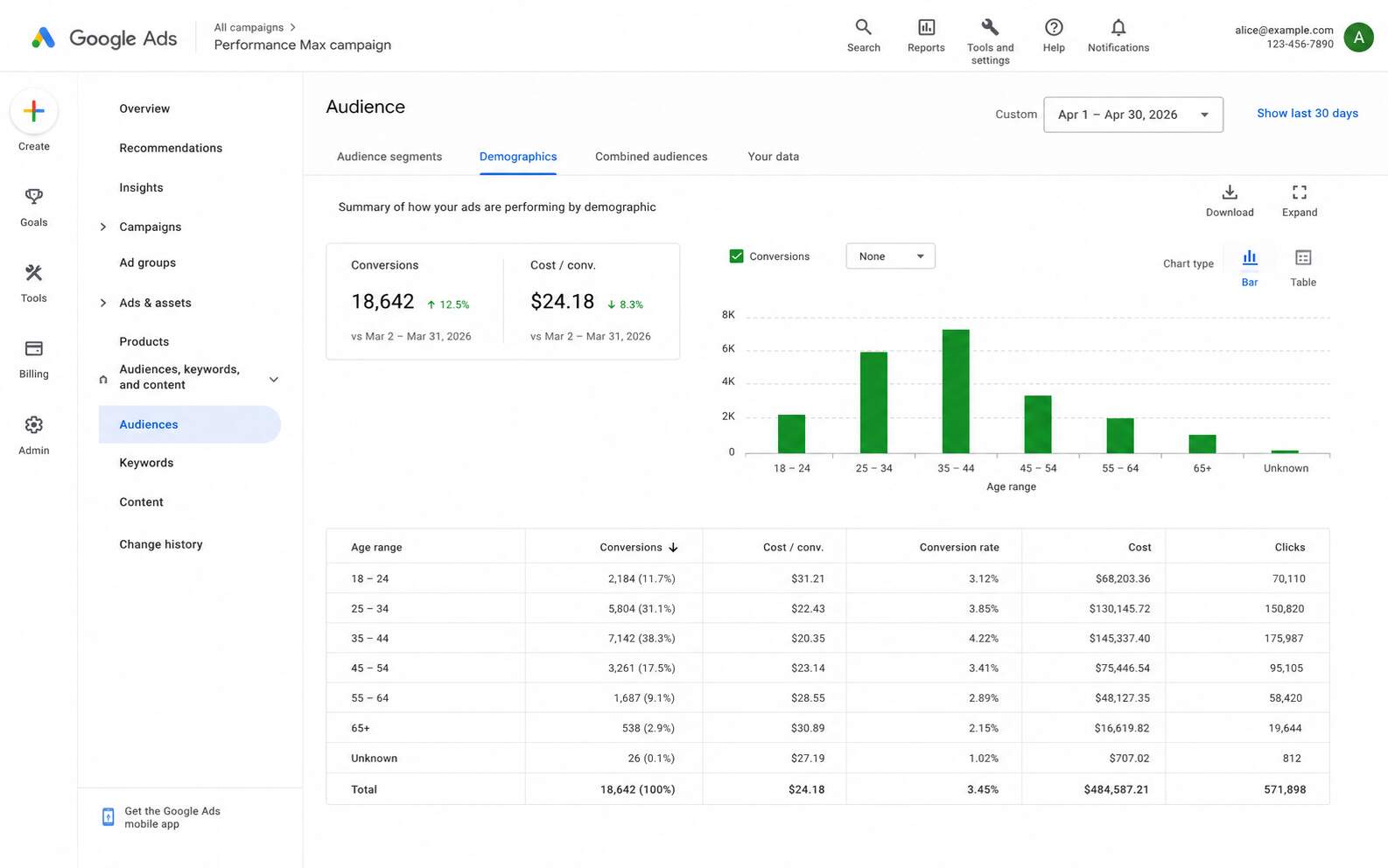
Google is also expanding audience reporting. Advertisers can view performance breakdowns across demographic groups and audience segments, including age range and gender. These insights can show which groups are responding and whether the creative approach matches the audiences producing meaningful results.
Placement reporting is becoming easier to use as well. Advertisers can segment placement reports by network to see where ads have served. Google has moved the report into the “When and where ads showed” tab, making it easier to access during campaign and brand-safety reviews.
Visibility Is Not Full Control
The update is meaningful, but it is important not to overstate what has changed. Performance Max remains automated. Advertisers are not receiving complete manual authority over every channel, placement, bid, or audience decision.
Instead, Google is offering sharper steering and clearer reporting. The platform continues making most campaign decisions, but advertisers now have better information for understanding and influencing them.
Transparency also does not automatically improve performance. A campaign can still struggle if conversion tracking is inaccurate, customer lists are outdated, creative assets are weak, or business goals are unclear. The reports reveal more, but advertisers must still know how to interpret the data.
What This Means for Advertisers
In practice, customer exclusions can separate acquisition and retention campaigns. Budget projections can reduce pacing surprises, while demographic and placement reporting can guide creative decisions, campaign reviews, and brand-safety monitoring.
For businesses working with digital marketing partners such as eSign Web Services, the additional visibility supports more informed optimisation. Teams can compare audiences, review spending, identify placement concerns, and act on evidence rather than assumptions.
Results will depend on consistent use. Advertisers who regularly review the reports, test changes carefully, and connect campaign insights with business outcomes will gain more value than those who continue running Performance Max on autopilot.
The Bigger Picture
Google’s direction is becoming clearer: automation is not going away, but complete opacity may be. The Google Performance Max update reflects a broader move toward accountable automation—systems that continue operating independently while giving advertisers enough information to examine, guide, and trust the outcomes.
Performance Max has not fundamentally changed how it works. What has changed is how clearly advertisers can see it working.
In an environment where businesses often use the same platforms and automated tools, access alone is not the advantage. The real edge comes from knowing where to look, understanding what the data means, and acting on it before competitors do.
If you’re ready to make the most of these updates, request a quote today to see how we can tailor Performance Max to your business goals. Our team can help you turn new insights into measurable growth.
Author Details

Ashwani Kumar Sharma
Ashwani has been actively involved in SEO services since 2005. His expertise and distinctive work approaches have made him one of the most experienced and trusted SEO experts in the industry. He is a certified SEO and Google Ads professional. He also has strong business development skills in advanced SEO, PPC, and digital marketing strategies.


