



Google Just Split Your SEO in Two; And Exposed What’s Actually Growing

Key Takeaways
- The Google branded queries filter separates brand-driven traffic from organic discovery traffic.
- For the first time, businesses can clearly measure real SEO growth versus existing brand recognition.
- The classification is fully automated by Google; advertisers have no manual control over it.
- Non-branded traffic now becomes the clearest signal of whether your reach is actually expanding.
- Agencies like Esign Web Services can use this data to build sharper, growth-focused SEO strategies.
Google has made a quiet but meaningful change to how SEO performance is measured. With the Google branded queries filter now available to eligible Search Console properties, businesses can finally separate two types of search traffic that were often mixed together: people who already know the brand and people discovering it through organic search.
According to the Google Search Central announcement, this feature is built to automatically distinguish between branded and non-branded queries within the Search Console Performance report. It helps website owners better understand how users find their site, making it easier to analyze traffic sources, measure brand visibility, and refine SEO strategies based on more accurate query segmentation.
What the Filter Actually Does
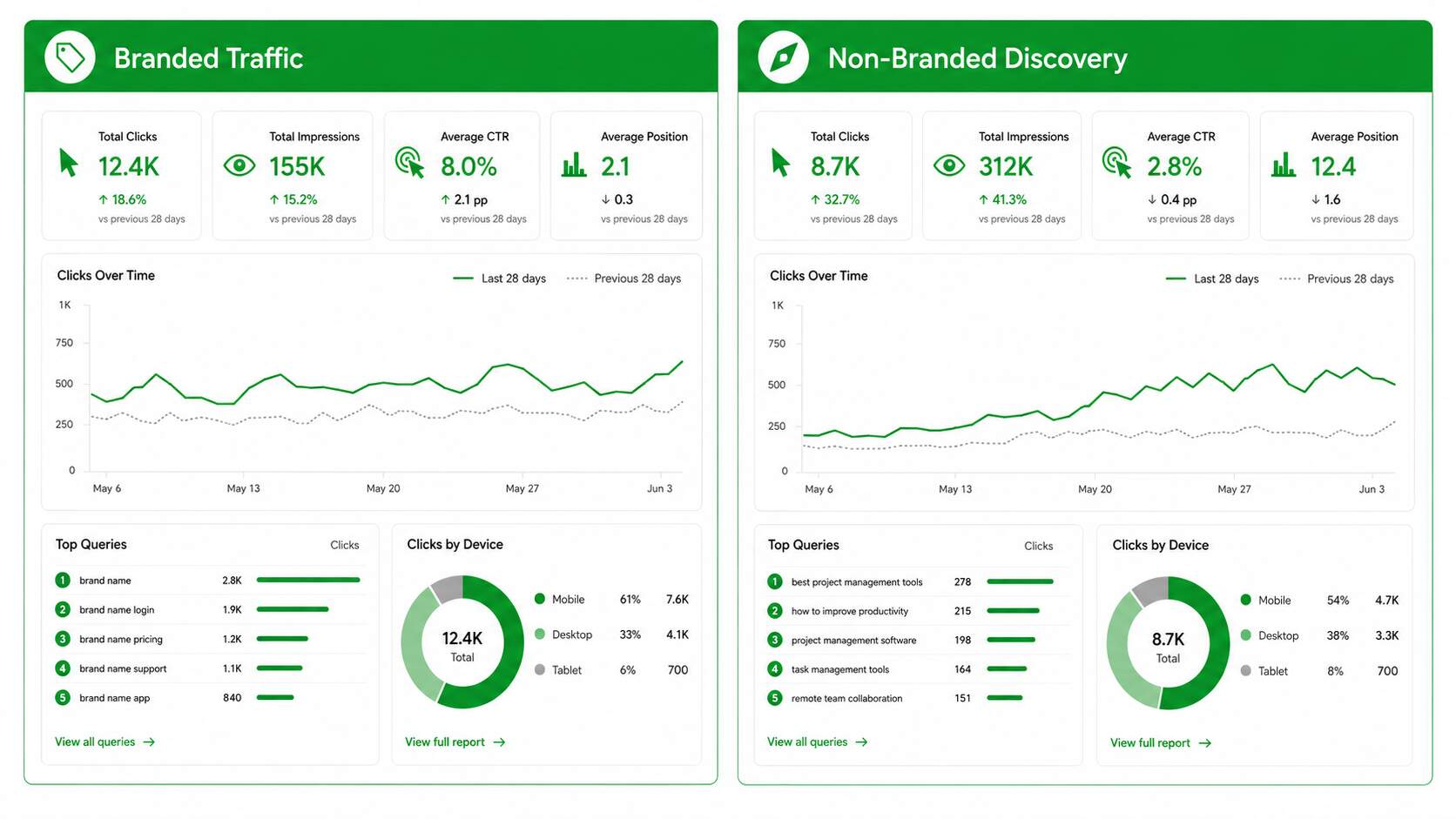
The Google branded queries filter separates queries into branded and non-branded groups. Branded searches include a company name, brand variations, misspellings, or closely related product and service names. Non-branded searches are broader discovery queries where users look for a solution, service, or information without searching for a specific company.
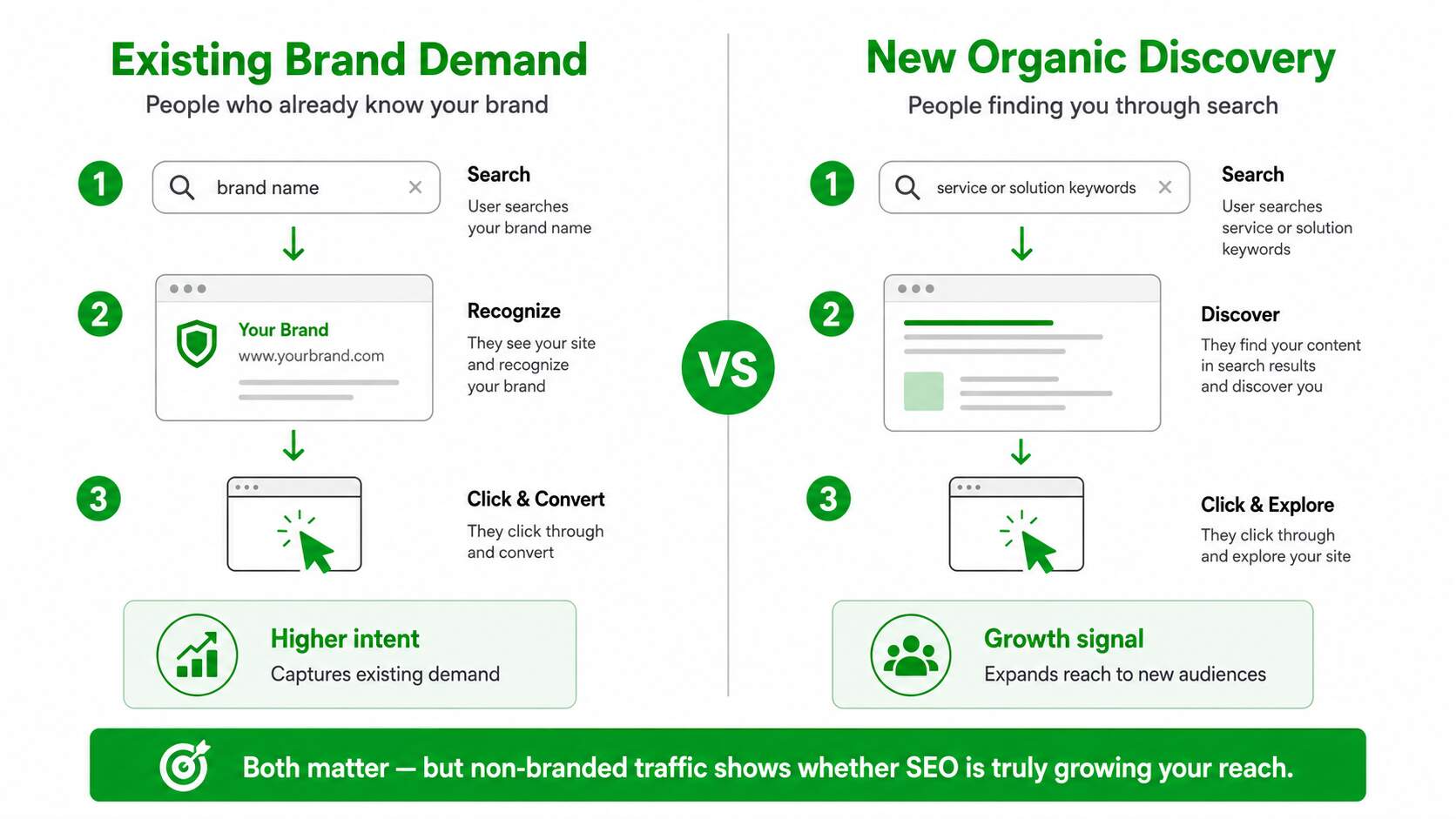
That difference matters. Branded traffic usually reflects demand that already exists. Someone searching for your business by name has likely heard of you before. Non-branded traffic, however, shows whether your SEO strategy is helping new people find your website before they know your brand.
Why This Matters for Businesses
This update makes SEO reporting more honest. Earlier, a business could report rising organic clicks without knowing how much of that growth came from existing brand recognition. If most of the increase came from branded searches, the website may be capturing demand well, but not necessarily expanding its reach.
Non-branded traffic tells a stronger growth story. It shows whether your content, service pages, blogs, and landing pages are visible for intent-driven searches. These are the searches people make when they are still comparing options, learning about a problem, or looking for a provider.
In simple terms, branded traffic shows how well people remember you. Non-branded traffic shows how well people discover you.
Google Controls the Classification
There is one important limitation. Site owners cannot manually decide which queries are branded or non-branded. Google classifies them using its own system, based on how it understands a brand, its variations, and related signals.
For established brands, this classification will likely be useful and fairly accurate. For newer companies, businesses with common names, or brands that overlap with generic terms, the data may need closer review. It should be used as a strong reporting signal, not as a perfect final answer.
Google has also made it clear that this filter does not affect rankings, crawling, or indexing. It changes how performance data is viewed, not how websites rank.
How SEO Reporting Changes Now
This update gives businesses a clearer way to read SEO performance. Instead of treating total organic traffic as one broad number, they can now understand whether growth is coming from existing brand demand or new organic discovery.
Here are the key areas to watch:
- Branded Traffic Growth: Shows how many users already know your business and are searching for it directly.
- Non-Branded Visibility: Reveals whether your website is reaching new audiences through service, product, or solution-based searches.
- Content Discovery: Helps measure whether blogs, landing pages, and service pages are attracting users who did not already know your brand.
- Real SEO Growth: Shows whether SEO is expanding reach, not just capturing traffic from people already familiar with the business.
This makes SEO reporting more honest and useful. For growth-focused agencies like eSign Web Services, the Google branded queries filter can help explain whether results are coming from brand demand, organic discovery, or a healthy mix of both.
Looking Ahead
SEO performance is no longer a single number. It’s now a split story; one side showing how well your brand is known, the other showing how far it’s actually reaching. For businesses working with growth-focused digital marketing agencies like eSign Web Services, the Google branded queries filter provides the sharpest lens yet for separating real expansion from brand familiarity, and for building strategies that actually move the needle.
In a competitive search landscape, understanding which side of that line your traffic falls on isn’t optional anymore. It’s where honest strategy begins.
Want to understand what’s really driving your SEO growth? Request a quote from eSign Web Services today and build a strategy focused on real organic discovery.
Author Details

Ashwani Kumar Sharma
Ashwani has been actively involved in SEO services since 2005. His expertise and distinctive work approaches have made him one of the most experienced and trusted SEO experts in the industry. He is a certified SEO and Google Ads professional. He also has strong business development skills in advanced SEO, PPC, and digital marketing strategies.


