



9 Social Media KPIs That Actually Matter for Business Growth

Key Takeaways
- Not all social media metrics contribute directly to business growth and revenue outcomes.
- Engagement quality matters more than likes, impressions, or vanity metrics alone.
- Conversion-focused KPIs reveal real performance and campaign effectiveness clearly.
- Audience growth without engagement provides limited long-term business value.
- Click-through and conversion metrics connect social media with revenue outcomes.
- Retention and repeat engagement strengthen long-term brand performance significantly.
- Data-driven KPI tracking improves decision-making and marketing efficiency consistently.
The most meaningful metrics are those directly tied to attention quality, user action, operational efficiency, and revenue impact. Despite this, many brands continue to prioritize surface-level indicators such as likes, follower growth, and reach, often treating them as definitive measures of success. In reality, these figures may enhance the appearance of performance in reports, but they rarely provide insight into whether content is attracting the right audience, generating genuine intent, or contributing to business objectives.
A more strategic approach is to focus on social media KPIs that offer deeper visibility into performance, metrics that reveal audience behavior, engagement quality, and conversion impact. These indicators provide a clearer understanding of what is truly driving results and where meaningful growth is taking place.
That shift is overdue. Many brands are still stuck measuring what is visible instead of what is useful. A post can look busy and still do absolutely nothing for the business. Think about the brand that gets plenty of likes on a funny meme but barely earns clicks on its service offer. The attention is real, but the commercial value is weak. That is the difference between content that entertains and content that supports growth.
Here is the real issue: most teams are not lacking data. They are drowning in the wrong kind of data. Likes, impressions, and follower spikes may feel encouraging for a moment, but they do not explain whether people trust your message, explore your site, convert on your offer, or come back later. The better approach is to prioritize metrics that show response quality, action, efficiency, and business impact.
KPI 1: Engagement Rate
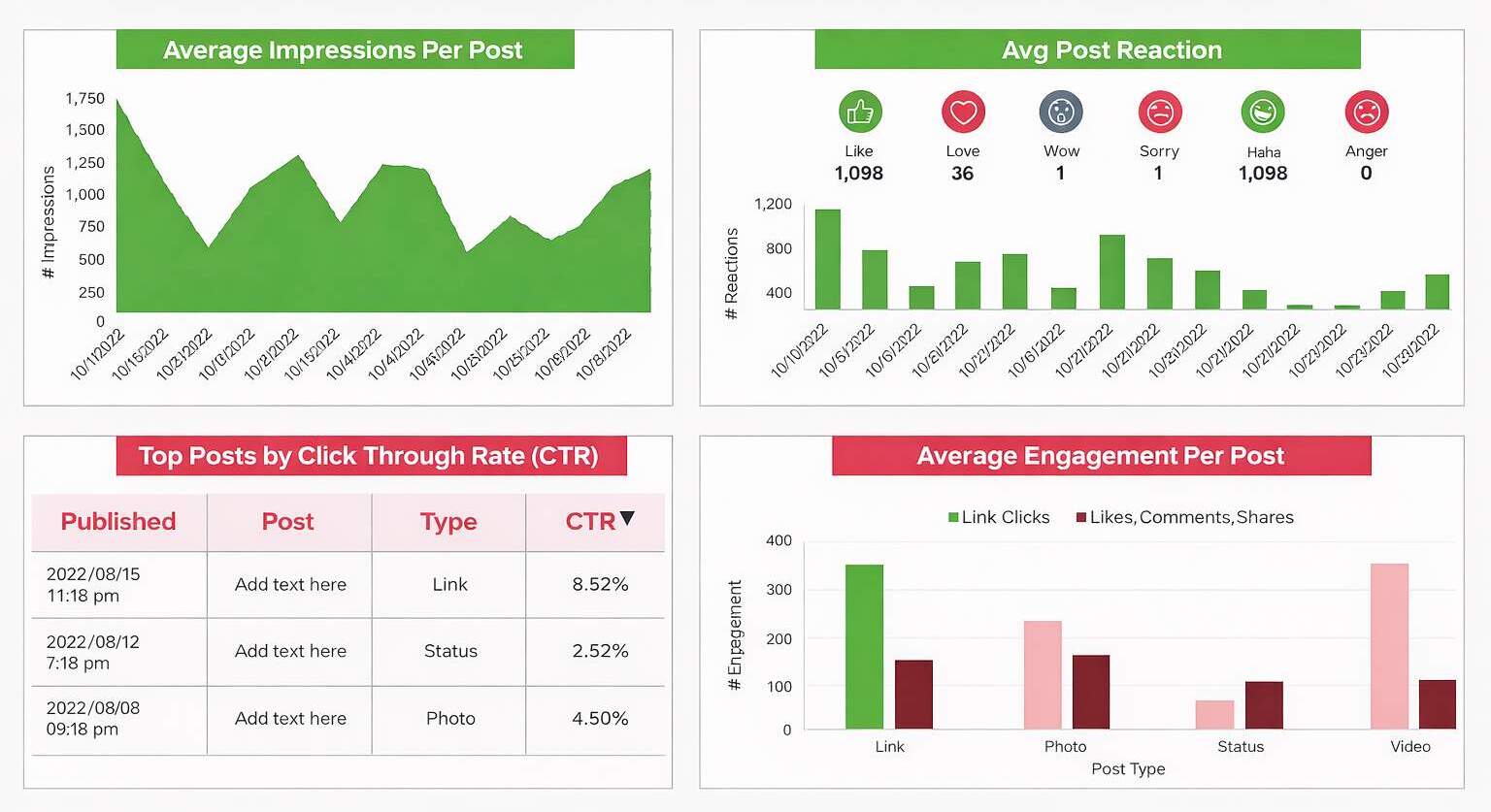
Engagement is still one of the clearest signs that content is connecting, but only if you read it with some discipline. Engagement rate is useful because it adjusts reactions to audience size, making it far more revealing than raw like counts. This is one of the social media metrics that matter because it shows whether the content actually earned a response from the people who saw it, rather than simply passing through their feeds unnoticed.
What this usually reveals:
- Saves often show stronger interest than quick likes from casual scrolling.
- Shares suggest the post felt useful enough to pass along.
- Comments expose curiosity, confusion, objections, or genuine interest.
- Repeat engagement often points to themes worth expanding.
A high engagement rate usually means something landed. Maybe the content solved a problem, framed a frustration clearly, or said something people already felt but had not articulated. A local interior design company, for example, may get fewer likes on a “mistakes homeowners make before renovation” post than on a polished photo carousel. Still, the mistake-based post often earns more saves, shares, and DMs. That is usually a better sign.
The important part is separating shallow reactions from meaningful ones. Ten fire emojis are not the same as a thoughtful comment from a prospect or a save from someone planning to act later. Teams that closely monitor engagement quality gain sharper creative instincts, better audience insights, and faster feedback on what resonates. That is where social media KPIs stop being decoration and start becoming strategy tools.
KPI 2: Click-Through Rate (CTR)
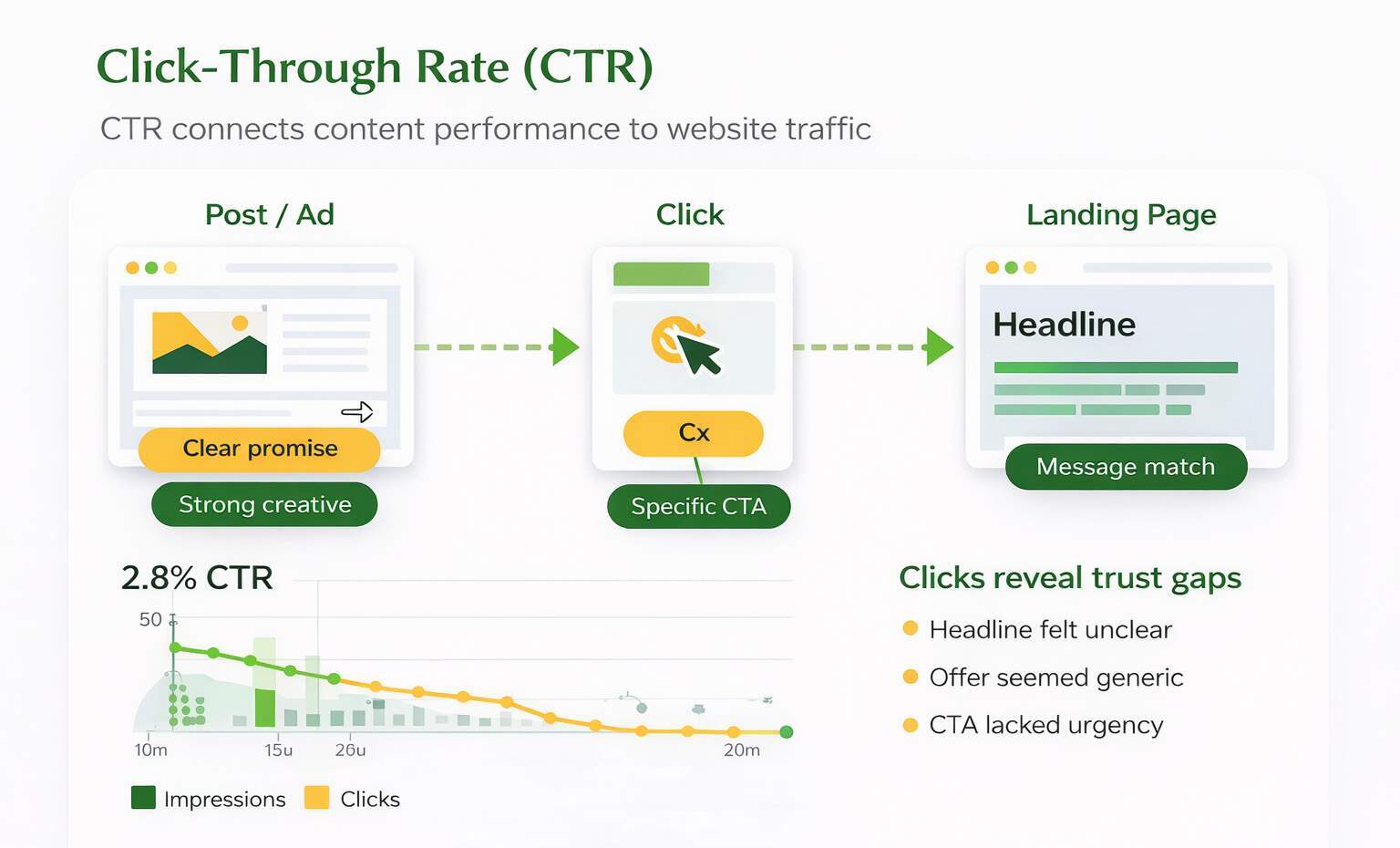
Clicks are where social starts acting like a business channel instead of just a visibility channel. CTR social media measures how many people took the next step after seeing a post, ad, or offer. That makes it essential when you want to measure social media performance beyond passive attention. If people see your content but do not click, the problem is rarely just reach. More often, the message did not create enough curiosity or confidence.
What strong CTR usually depends on:
- A clear promise in the opening line.
- Creative that supports the offer instead of distracting from it.
- A CTA that feels useful, specific, and timely.
- A landing page expectation that matches the post.
Strong CTR usually comes from very ordinary discipline, not magic. The headline is specific. The value is obvious. The design does not overcomplicate the message. Here is what that looks like in the real world: a startup offering a free benchmark calculator will almost always earn more clicks than a vague “see how we can help” post. One creates curiosity with substance. The other asks the audience to care before giving them a reason.
CTR also helps expose trust gaps early. A post may get decent impressions and even respectable engagement, yet still fail to drive action because the audience is not convinced the next step is worth it. That is why social media KPIs should be tracked by format, audience type, offer, and intent. Otherwise, a single average CTR can hide a lot of useful information.
KPI 3: Conversion Rate
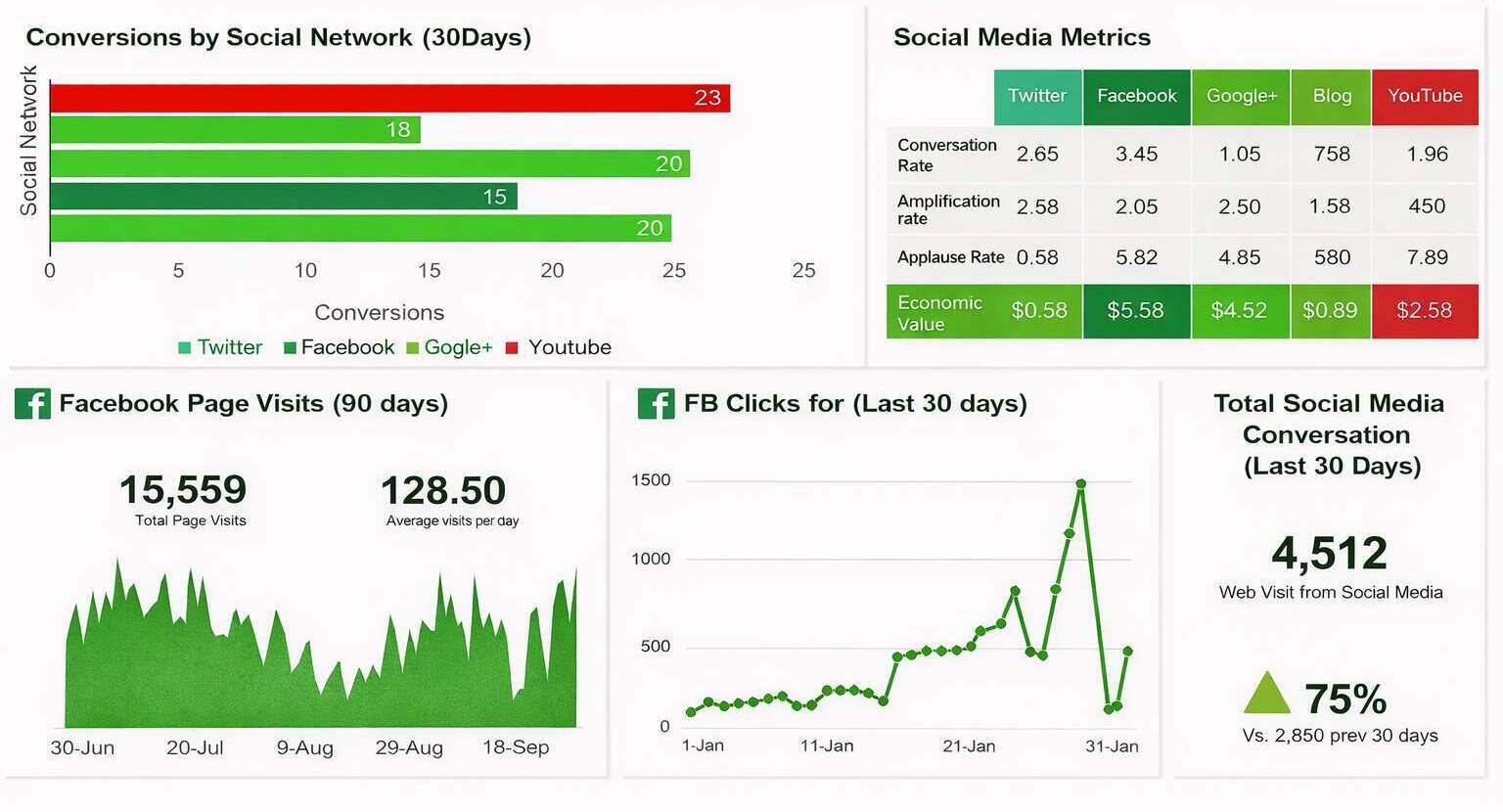
The most satisfying metric in social media is not likes. It is action. Conversion rate social media measures how many visitors from social complete a meaningful goal, whether that is a purchase, sign-up, form fill, consultation booking, or inquiry. That is why it deserves a central role in any social media analytics strategy focused on business growth, rather than just platform-level activity.
What usually improves conversion rate fastest:
- A landing page that immediately repeats the offer.
- Fewer form fields when the intent is still early.
- Social proof is placed near the CTA.
- One clear next step, rather than several competing ones.
This is the KPI that removes excuses. If a campaign gets clicks but fails to convert, the issue is rarely invisible. Maybe the page is slow. Maybe the copy shifts tone and creates confusion. Maybe the ad sounded specific, but the landing page became vague the second someone arrived. A service business may run a social ad promoting a free strategy call, only to send visitors to a cluttered page with a long form and unclear value proposition. The post did its job. The page did not.
That is why conversion data is so useful. It tells you whether social is attracting the right audience, whether the offer is easy to understand, and whether the on-site experience deserves the click it received. When read properly, it also improves social media funnel tracking by helping you identify exactly where the breakdown occurs rather than blaming the channel as a whole.
KPI 4: Cost Per Lead (CPL)
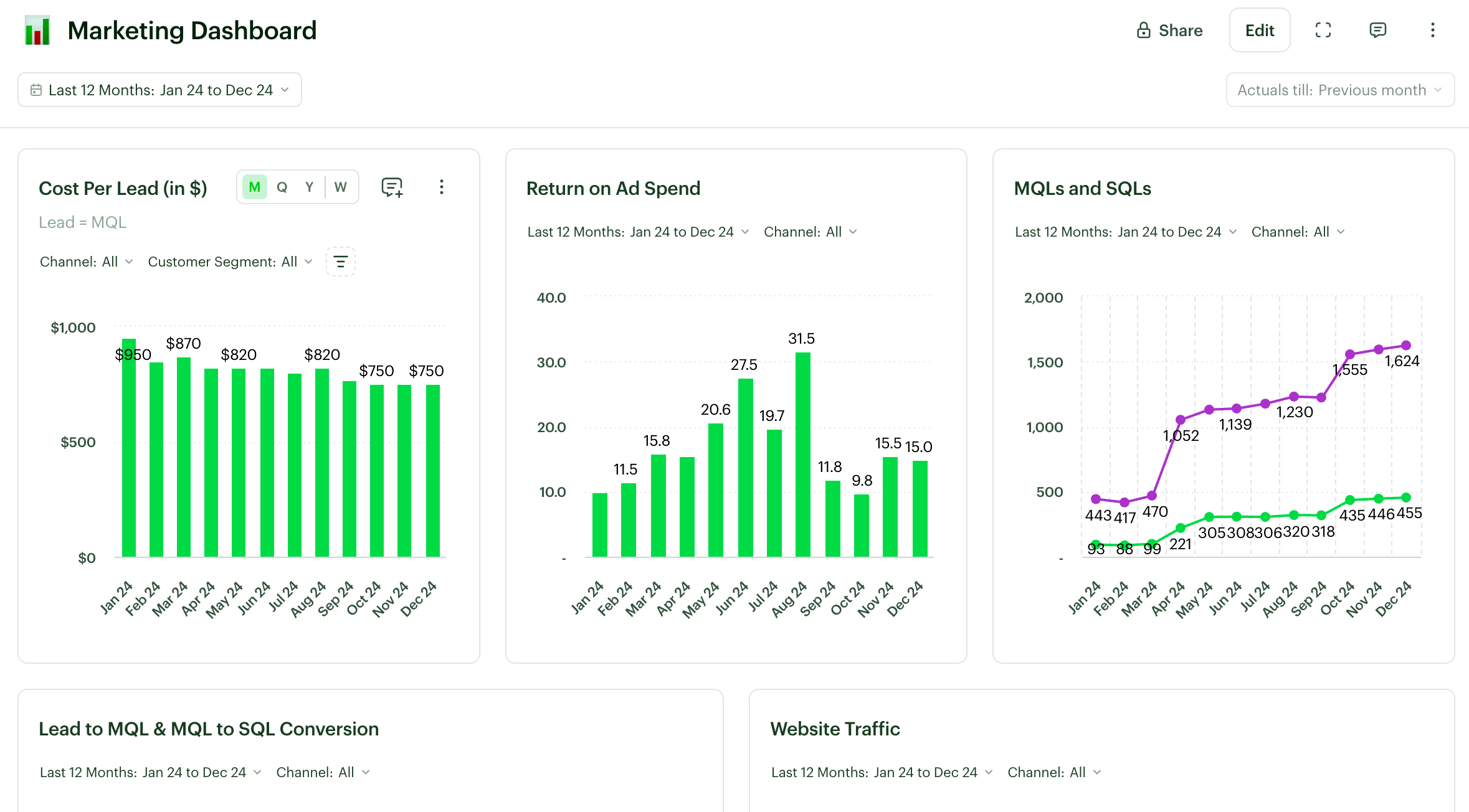
Some campaigns generate leads that look impressively cheap until sales start ignoring them. That is why cost per lead on social media matters so much. It shows how much you are paying to generate one lead, but the smarter use of CPL is not simply about making that number smaller. It compares cost with lead quality, response rate, and eventual business value. That is the more practical side of social media ROI tracking.
What smart CPL analysis includes:
- Source-level comparisons instead of blended averages.
- Qualification input from sales, not just ad platform numbers.
- Offer-specific benchmarks for different campaign types.
- Follow-up speed after the lead arrives.
A low CPL can look fantastic in a presentation and still be a terrible business result. This happens often. One campaign produces cheaper leads, but those people never reply, book, or move forward. Another campaign costs more per lead, yet consistently generates meetings with people who are actually ready to talk. The second campaign may look less efficient at first glance, but it is often the smarter investment.
CPL becomes especially valuable when budgets are tight and expectations are high. It forces a more honest question: Are you paying for qualified interest, or are you simply paying for contact form submissions? That is where social media ROI tracking becomes much more grounded. Instead of admiring cheap leads in isolation, teams start asking whether those leads were ever worth the spend in the first place.
KPI 5: Audience Growth Rate
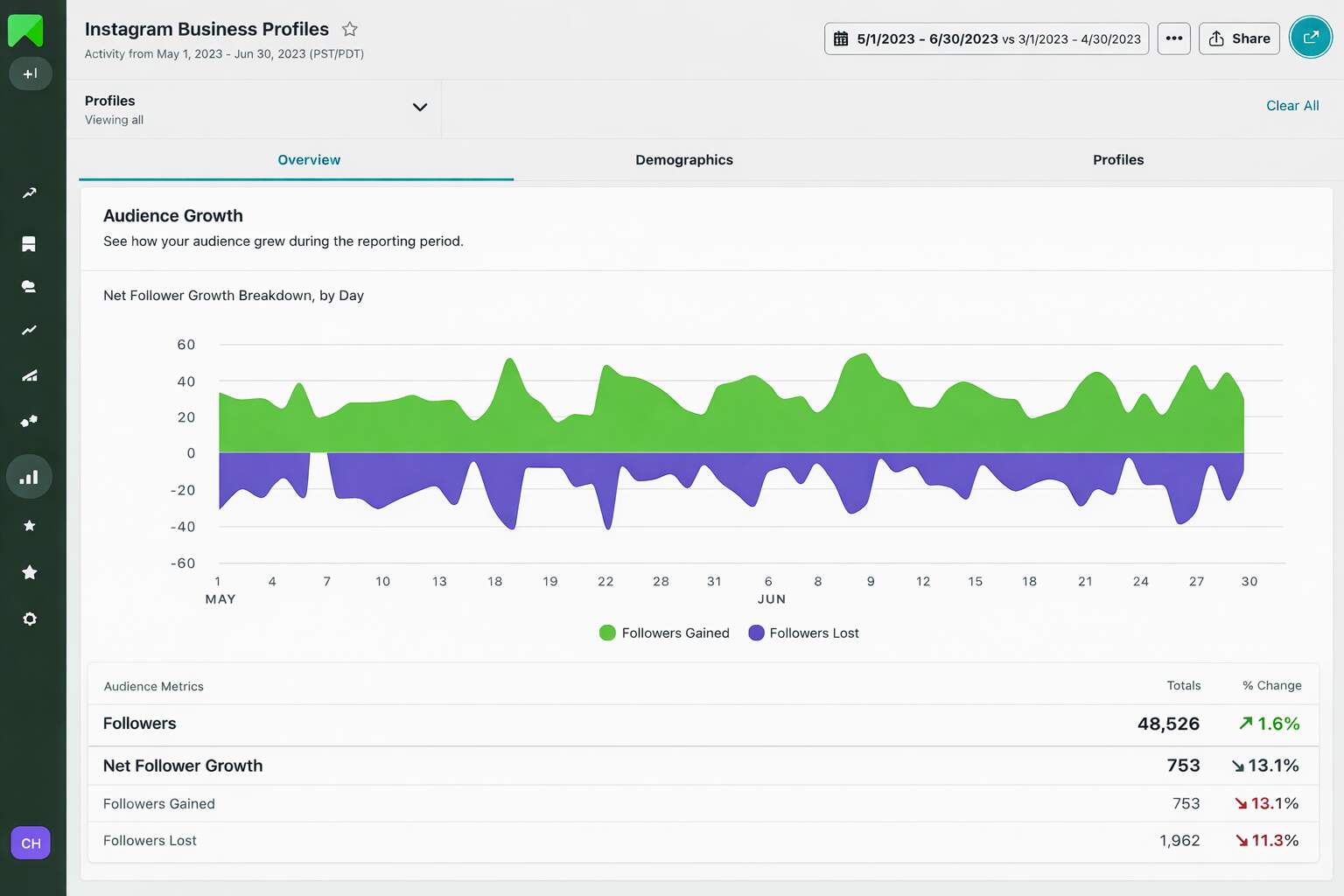
Growth still matters, but follower count without context is one of the most overrated numbers in social media reporting. Audience growth rate is more useful because it shows how quickly your audience is expanding over time, which gives a clearer sense of momentum. Still, it only becomes meaningful when it is paired with relevance and engagement. That is why it belongs among the important social media KPIs, not above them.
What healthy audience growth usually looks like:
- New followers continue engaging after the first week.
- Profile visits and follows rise alongside relevant content themes.
- Growth comes from aligned audiences, not giveaway hunters.
- New followers interact with offers, not just entertaining posts.
A business can add thousands of followers and still weaken future performance if those people are not truly aligned with the offer. That happens more often than brands admit. A giveaway campaign, a viral post, or a trend-heavy collaboration may create a short-term jump in followers. Still, if those people disappear when the incentive or novelty fades, the growth was more cosmetic than strategic.
Used properly, audience growth tells you whether the brand is becoming more discoverable among the right people. That is the real point. A local service company gaining 300 highly relevant followers may be healthier than a broad page gaining 3,000 passive ones. When businesses review important social media KPIs this way, they stop chasing crowd size and start focusing on audience quality, fit, and future commercial value.
KPI 6: Reach & Impressions
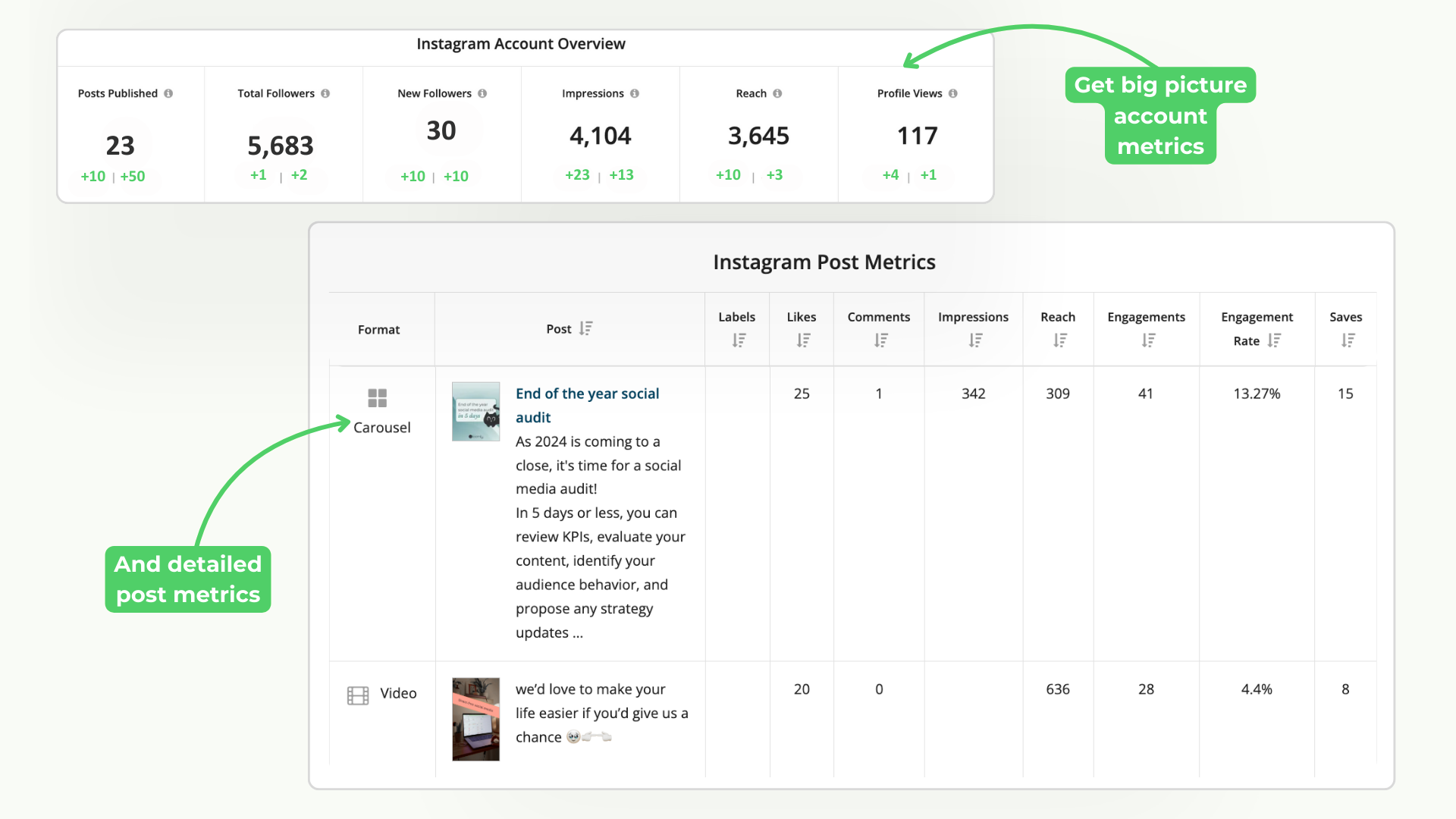
Reach and impressions still belong in the report, but they should never dominate it. These are context metrics. They help explain how widely content traveled and how often it appeared, which is useful for diagnosing delivery, consistency, and content distribution. What they do not prove is whether the content was good, persuasive, or commercially useful. They simply show that people had the chance to see it.
| Metric | What It Tells You | What It Does Not Tell You |
| Reach | How many unique people saw the content | Whether they cared or took action |
| Impressions | How often the content was shown | Whether visibility created business value |
| Engagement | Whether the content sparked interest | Whether interest turned into clicks or leads |
| CTR | Whether people took the next step | Whether the landing page converted them |
| Conversion Rate | Whether traffic completed a goal | Whether the campaign was efficient overall |
Use reach and impressions to ask:
- Did this content travel widely or stay limited?
- Did frequency rise because performance improved or because repetition increased?
- Did visibility create action, or just exposure?
- Did the post attract attention from the right audience?
This matters because visibility and value are not interchangeable. A post can reach thousands of people and still do little for the business. Another can reach a much smaller audience and generate site visits, form fills, and real inquiries. That is why teams that treat reach as the headline often end up mistaking exposure for impact. One looks impressive. The other actually matters.
The smarter approach is to let social media KPIs work together. Reach tells you how many people saw the content. Engagement tells you whether it resonated. CTR tells you whether it sparked action. Conversions tell you whether that action created value. When brands learn how to measure social media performance this way, visibility becomes what it should have been all along: a clue, not a conclusion.
KPI 7: Engagement-to-Follower Ratio
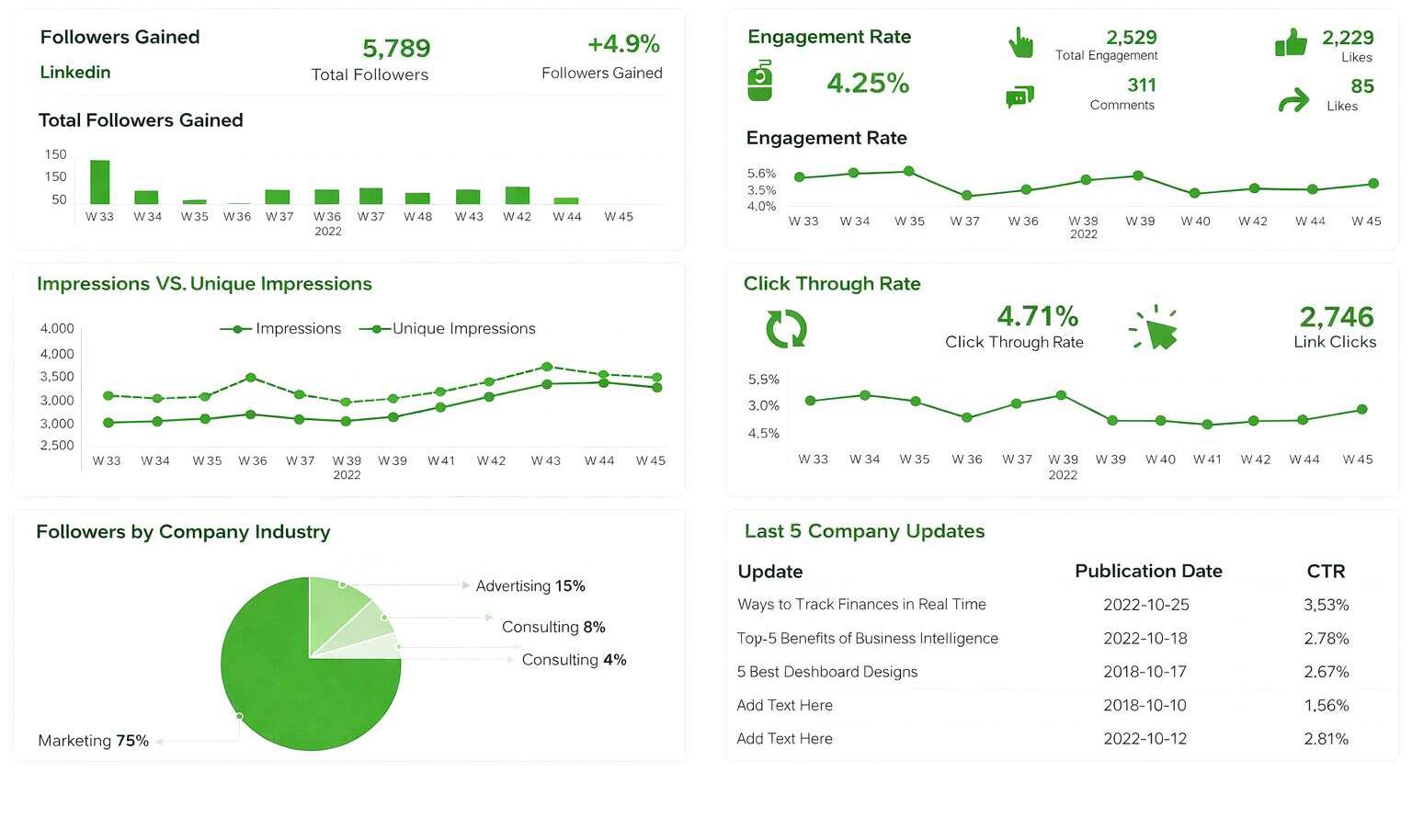
Follower count can make a brand look strong from a distance. The engagement-to-follower ratio reveals whether the audience is actually responsive in real time. It compares interactions to total follower count, making it a practical way to spot weak audience fit, content fatigue, or inflated growth. This is especially useful when you want cleaner performance tracking social media without relying too heavily on big top-line numbers.
What this ratio often helps uncover:
- Fast growth with weak response usually signals a poor fit.
- Smaller communities can outperform larger ones in terms of trust and action.
- Inconsistent posting weakens audience habit over time.
- Broad content can lower community depth.
This KPI matters because it shows whether your audience is merely present or actually engaged. A niche B2B company with 8,000 followers and strong response patterns may be far healthier than a broad page with 80,000 followers and very little meaningful interaction. That is why relative metrics tend to be more honest than raw counts. They make efficiency visible.
It also helps teams measure social media performance more realistically over time. If follower growth keeps rising while interaction ratio keeps sliding, something is wrong. The content may be losing relevance, or the added audience may not be aligned with the business. Either way, this ratio gives you a more useful signal than follower count alone ever could.
KPI 8: Video Retention & Watch Time
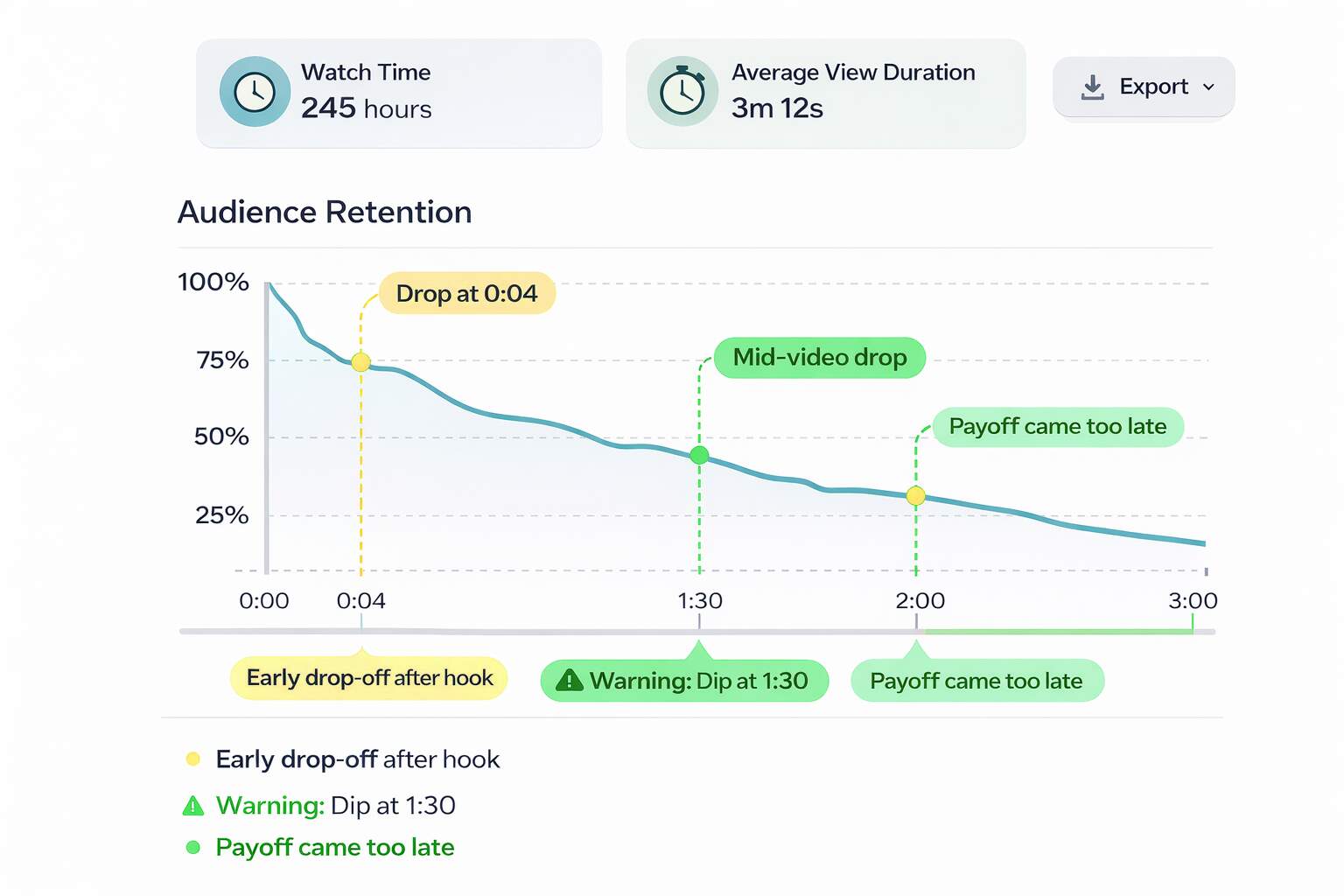
Views are easy to celebrate and even easier to misunderstand. Watch time and retention show whether people actually stayed with the content long enough for it to matter. That makes these metrics essential for modern social strategies, especially when video is doing more of the heavy lifting. Retention is not just a video stat. It is often a message-quality stat, a pacing stat, and a clarity stat all rolled into one.
What retention data usually helps answer:
- Did the opening deliver on the hook?
- Did viewers stay long enough to hear the main point?
- Did a section create confusion or boredom?
- Did one moment deserve to be turned into a separate clip?
Retention data is especially helpful because it tells a story that views alone cannot. Think of a short-form video that starts strong, promises a helpful insight, then wanders for twenty seconds before getting to the point. The viewer leaves before the payoff arrives. When retention drops early, it usually means the hook worked, but the delivery stalled. When it stays strong, the structure is probably doing its job.
This is where social media analytics strategy becomes much more useful. Instead of saying, “That video did okay,” you can say, “The intro worked, the middle dragged, and the proof point should have appeared earlier.” Those are actionable insights. Strong retention usually signals better storytelling, tighter sequencing, and stronger platform fit. Weak retention usually points to friction in the message itself.
KPI 9: Social Media ROI
Eventually, every marketing channel has to answer the same uncomfortable question: what did it produce compared to what it cost? That is where social media ROI metrics matter most. ROI compares commercial return against spend, tools, time, and effort. It is the KPI that turns activity into accountability, which is why it belongs at the top of any mature reporting model.
What accurate ROI reporting usually requires:
- Clear conversion goals from the start.
- UTM discipline across all campaigns and links.
- Visibility beyond platform-level reporting.
- Separation between awareness influence and direct-response outcomes.
This metric works best when it is not forced into a simplistic last-click model. Some campaigns influence demand early. Others capture it late. Both may contribute to revenue, but not in the same way or on the same timeline. A thought-leadership campaign may not drive instant purchases, yet it can support branded searches, demo requests, and warmer sales conversations later. A direct-response campaign may convert faster but build less long-term trust.
That is why ROI should be the final layer of the story, not the only one. Before ROI becomes obvious, clicks, conversions, lead quality, and retention usually tell the story first. At that point, social media KPIs stop functioning as report fillers and start acting like real business controls. Used well, they also strengthen social media ROI tracking, making it much easier to defend the budget, refine the strategy, and invest in what is actually driving business growth metrics worth repeating.
Overview: Drive Growth, Not Just Visibility
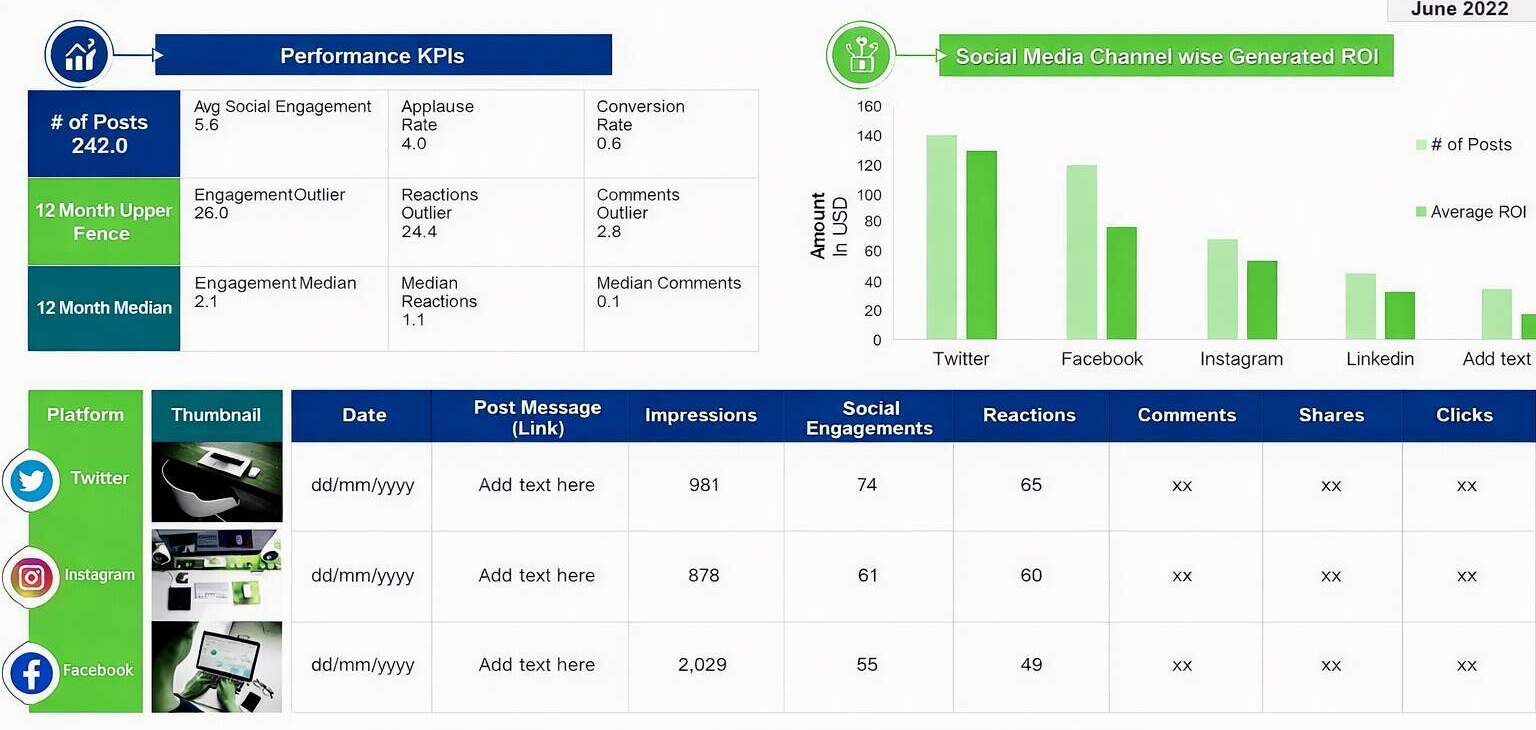
Social media becomes far more valuable when businesses stop measuring surface-level activity and start focusing on outcomes that actually influence growth. Engagement quality, conversion performance, lead efficiency, and ROI-driven insights reveal what is working, what needs improvement, and where resources should go next. Vanity metrics may look impressive in a report, but they rarely help businesses make smarter decisions.
The brands that grow consistently are the ones that treat social media as a performance channel, not just a visibility channel. When meaningful KPIs guide the strategy, social media stops being a guessing game and starts becoming a more reliable driver of qualified traffic, stronger engagement, and measurable business impact.
Turn Social Engagement Into Real Business Growth
If your current social media strategy is generating likes but not leads, visibility but not value, it may be time to rethink what success actually looks like. At eSign Web Services, we build data-driven social media strategies focused on measurable growth, stronger conversion outcomes, and better return on investment. Request your Social Media Performance Audit today and turn engagement into real business results.
Frequently Asked Questions (FAQS)
Question: What are social media KPIs and why are they important?
Answer: Social media KPIs are measurable metrics used to evaluate the performance of social media campaigns. They help businesses understand whether their efforts are achieving desired outcomes such as engagement, traffic, leads, or sales. Without KPIs, it becomes difficult to measure success or identify areas for improvement. Focusing on relevant KPIs ensures that marketing strategies align with business goals. By tracking performance consistently, businesses can optimize campaigns, allocate budgets effectively, and improve return on investment. KPIs provide clarity and direction, making social media efforts more strategic and result-oriented.
Question: Which social media KPI is most important for business growth?
Answer: No single KPI is universally most important, as priorities depend on business goals. However, conversion rate and return on investment are typically the most critical for growth. These metrics directly measure how social media contributes to revenue and lead generation. Engagement and click-through rates support these outcomes by indicating audience interest and intent. Businesses should track a combination of KPIs rather than relying on one metric alone. Aligning KPIs with specific objectives ensures accurate performance evaluation. Focusing on conversion-driven metrics helps transform social media efforts into measurable business results.
Question: Why are vanity metrics misleading in social media marketing?
Answer: Vanity metrics such as likes, impressions, and follower counts often create a false sense of success because they do not directly indicate business impact. High numbers may reflect visibility but not engagement quality or conversion potential. Businesses focusing only on these metrics may overlook deeper performance issues such as low click-through rates or poor conversion outcomes. Vanity metrics lack context and fail to show whether users take meaningful actions. Evaluating metrics that connect to revenue, such as conversions and ROI, provides a clearer understanding of effectiveness. A balanced approach ensures marketing strategies focus on results rather than superficial performance indicators.
Question: How often should social media KPIs be reviewed?
Answer: Social media KPIs should be reviewed regularly to ensure campaigns remain aligned with performance goals. Weekly reviews help identify short-term trends and allow quick adjustments. Monthly analysis provides a broader perspective on performance consistency and campaign effectiveness. Quarterly evaluations help assess long-term strategy and return on investment. The frequency may vary depending on campaign scale and business objectives. Continuous monitoring ensures timely identification of issues and opportunities. Consistent reviews enable data-driven decision-making and support ongoing optimization for better results. Regular evaluation prevents stagnation and helps maintain competitive advantage in dynamic social media environments.
Question: How can businesses improve their social media conversion rate?
Answer: Improving conversion rate requires aligning content, targeting, and landing page experience. Clear messaging that addresses audience needs increases relevance. Strong calls-to-action guide users toward desired actions. Optimizing landing pages for speed, usability, and clarity enhances user experience. Audience segmentation ensures content reaches the right users. A/B testing helps identify effective variations in creatives and messaging. Consistent tracking provides insights for optimization. Reducing friction in the conversion process improves results. Combining these strategies strengthens performance and increases the likelihood of turning social media engagement into measurable business outcomes.
Question: What tools can be used to track social media KPIs?
Answer: Various tools help track and analyze social media KPIs effectively. Native platform analytics such as Facebook Insights, Instagram Insights, and LinkedIn Analytics provide basic performance data. Advanced tools like Google Analytics connect social traffic to website behavior and conversions. Social media management platforms such as Hootsuite, Sprout Social, and Buffer offer detailed reporting and scheduling capabilities. Paid advertising dashboards provide insights into campaign performance and cost metrics. Combining multiple tools ensures comprehensive analysis. Selecting the right tools depends on business goals and campaign complexity, enabling better decision-making and performance optimization.
Question: How does engagement rate impact social media algorithms?
Answer: Engagement rate plays a significant role in how algorithms distribute content. Platforms prioritize posts that generate meaningful interactions such as comments, shares, and saves. High engagement signals relevance and encourages further distribution to a broader audience. Low engagement reduces visibility, limiting reach and performance. Algorithms evaluate both the quantity and quality of interactions. Consistent engagement improves content discoverability and strengthens overall performance. Focusing on creating valuable and interactive content helps maintain strong engagement rates. This approach ensures better alignment with algorithm preferences and improves long-term visibility.
Question: Can social media ROI be measured accurately?
Answer: Yes, social media ROI can be measured accurately with proper tracking and attribution systems. Businesses must define clear goals such as lead generation, sales, or website traffic. Tracking tools such as conversion pixels, UTM parameters, and analytics platforms help connect social activity to business outcomes. Calculating ROI involves comparing revenue generated against total marketing spend. Multi-touch attribution models provide deeper insights into customer journeys. While challenges exist, especially in indirect conversions, consistent tracking improves accuracy. Measuring ROI ensures that social media efforts contribute to business growth and supports data-driven decision-making.
Question: What is the difference between reach and impressions?
Answer: Reach and impressions are both visibility metrics but represent different aspects of content distribution. Reach refers to the number of unique users who see content, while impressions count the total number of times content is displayed, including multiple views by the same user. High impressions with low reach may indicate repeated exposure to a limited audience. Analyzing both metrics together provides better insight into content performance. Understanding the difference helps businesses evaluate visibility more accurately and optimize distribution strategies for broader audience engagement and improved performance outcomes.
Question: How can businesses align social media KPIs with overall marketing goals?
Answer: Aligning social media KPIs with marketing goals requires defining clear objectives and selecting relevant metrics. For brand awareness, focus on reach and audience growth. For engagement, track interaction rates and content performance. For lead generation, measure click-through rates and conversions. Integrating social media data with overall marketing analytics provides a unified view of performance. Regular evaluation ensures alignment with business priorities. Adjusting strategies based on KPI insights improves effectiveness. Consistent alignment ensures social media contributes meaningfully to broader marketing objectives and business growth.
Author Details

Ashwani Kumar Sharma
Ashwani has been actively involved in SEO services since 2005. His expertise and distinctive work approaches have made him one of the most experienced and trusted SEO experts in the industry. He is a certified SEO and Google Ads professional. He also has strong business development skills in advanced SEO, PPC, and digital marketing strategies.


