



How to Write Content That Builds Trust, Not Just Traffic

Key Takeaways:
- Traffic alone does not guarantee conversions without strong trust signals within content.
- Authenticity and transparency significantly improve credibility and audience engagement levels.
- Value-driven content strengthens authority and builds long-term audience relationships consistently.
- Clear messaging reduces confusion and improves decision-making confidence for users.
- Real examples and proof points enhance content reliability and persuasion effectiveness.
- Consistent tone and branding reinforce trust across all content touchpoints effectively.
- Trust-focused content improves conversions, retention, and overall business growth outcomes.
Content that builds trust does more than earn a click. It gives readers a reason to stay, believe, and act. Good content does not stop at answering a question. It proves the brand behind the answer is clear, credible, and worth listening to. That is the practical way to build trust with content. You do not build confidence with polished fluff or oversized claims. You build it by being useful, specific, and honest enough that the next step feels informed instead of manipulated.
That matters because most people meet a business before they ever speak to it. Gartner found that 51% of customer service journeys now begin on third-party platforms such as Google, YouTube, and ChatGPT, meaning your content often makes a first impression long before a sales call or inquiry form enters the picture. In plain terms, the blog post, guide, or landing page is already representing your brand when nobody from your team is there to explain it.
Why Traffic Alone Is Not Enough?
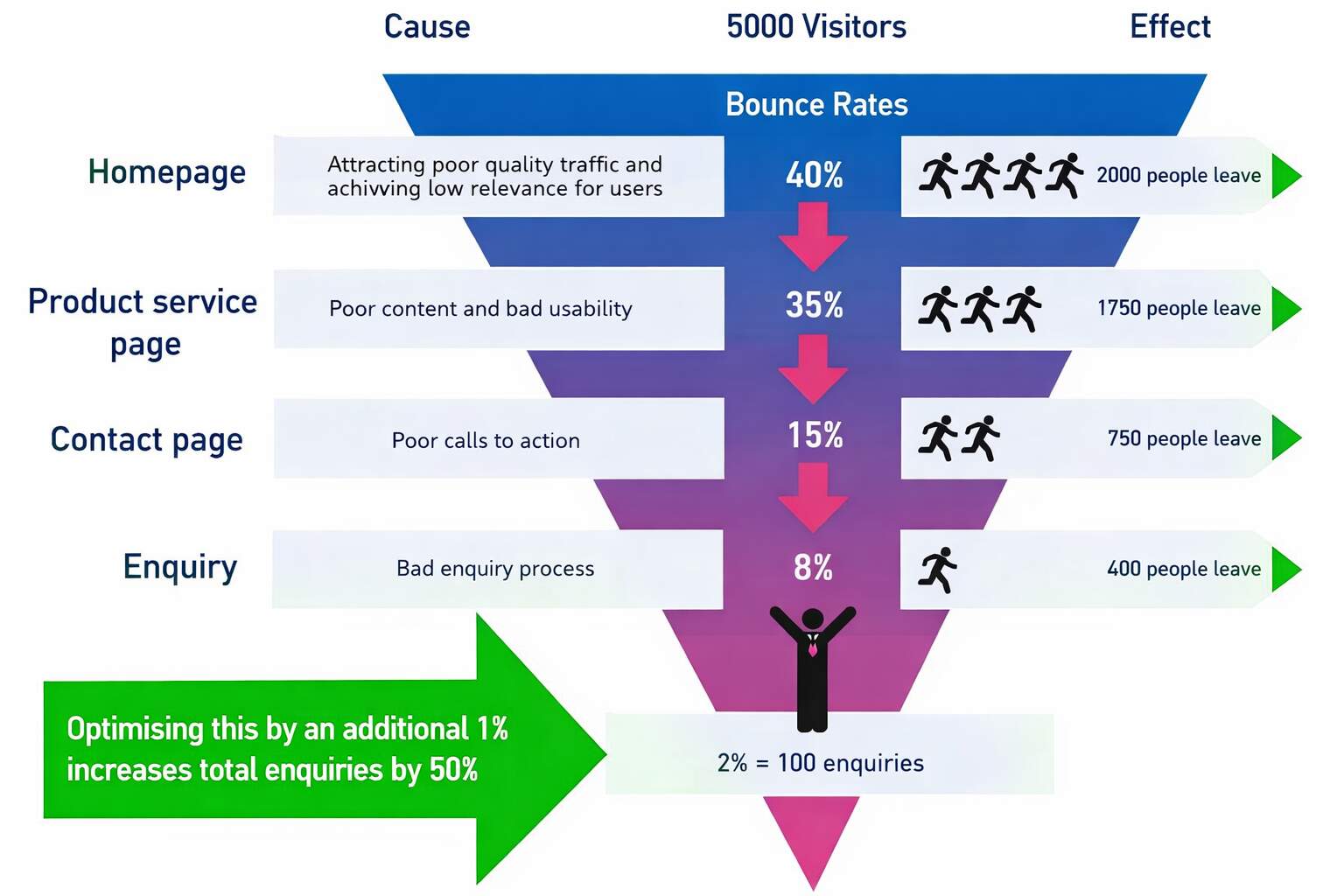
A page can attract thousands of visits and still contribute almost nothing to the business. That is the trap. Traffic looks exciting in a report, but readers don’t convert because the chart looks healthy. They convert when the page feels dependable. If the writing sounds vague, inflated, or suspiciously generic, the visit ends fast. That is why content that builds trust matters more than raw visibility. Attention opens the door, but confidence decides whether anyone stays long enough to move forward.
That confidence often forms earlier than brands think. 6sense found that 95% of winning vendors were already on a buyer’s Day One shortlist in 2025, and that buyers contacted the eventual winner first about 80% of the time. That makes content marketing for credibility far more important than many teams admit, because people often decide who feels trustworthy before a form fill happens. This is exactly where credibility signals content starts doing its real job: clear positioning, grounded proof, and a tone that sounds helpful instead of over-rehearsed.
Just a quick real-life example here: envision a small business owner comparing two agencies. One site has traffic-driving blog posts, flashy claims, and vague promises about “scaling results.” The other has fewer flashy lines, but it clearly explains its process, shows proof, answers common objections, and sounds like it understands the client’s actual problem. The first site may win the click, but the second site wins the confidence. That difference is often what turns a casual visit into a real inquiry.
What readers notice before they trust you:
- Vague copy makes traffic feel hollow, not persuasive or commercially meaningful.
- Specific proof makes the brand feel safer and easier to believe quickly.
- A clear structure keeps attention from leaking before the main point lands.
- Honest framing lowers skepticism before the offer ever asks for action.
Once belief is in place, friction starts dropping. That is where user trust content changes the journey. Readers compare less, hesitate less, and need fewer reassurance loops to keep moving. The strongest pages do not chase attention alone. They make the next step feel low-risk, sensible, and easy to justify without sounding like they are trying too hard to close the deal.
What Makes Content Trust-Building with AI?
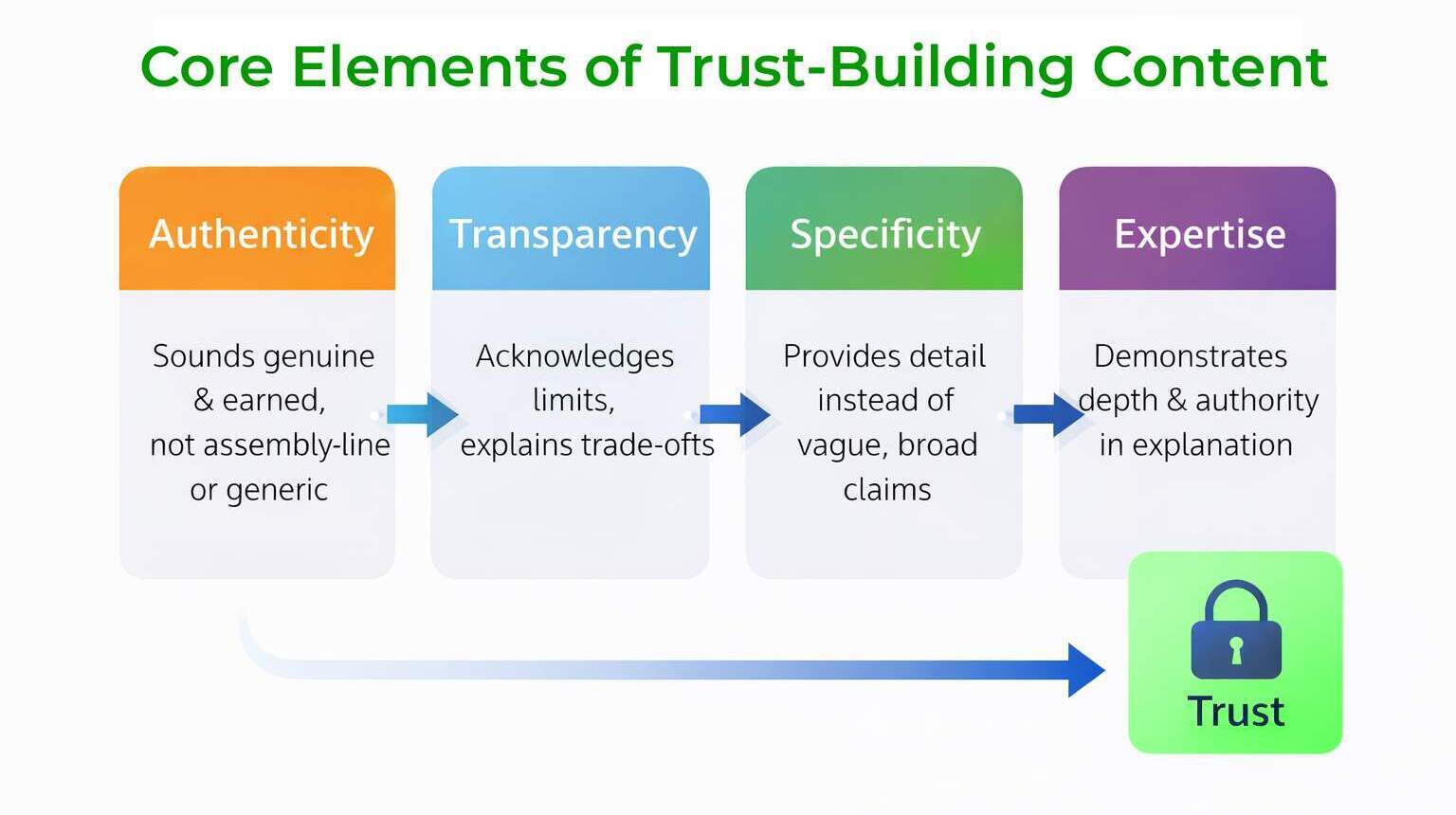
Authenticity is one of the fastest credibility tests a reader makes. If the writing sounds like it was assembled from ten lookalike marketing pages, trust drops almost instantly. Trust-based content writing works because it feels earned, not mass-produced. It sounds like somebody actually knows the subject, has seen the problem before, and can explain it without dressing ordinary advice in expensive language. That is also why authentic content marketing tends to land harder than copy that is trying too hard to sound polished or impressive.
Transparency is what keeps that trust from collapsing under pressure. When a brand explains the process, admits the limits, and clarifies tradeoffs, the content stops sounding slippery. That is where content transparency becomes persuasive. It reassures the reader that the page is not carefully staged to push them into agreement. If you really want to understand how to build trust with content, start here: say what is true, say what is uncertain, and say what people should realistically expect rather than what sounds most flattering in a pitch deck.
What quietly signals credibility:
- Real observations land harder than broad claims wrapped in polished language.
- Honest limitations make advice feel stronger, not weaker, to serious readers.
- Measured wording sounds more expert than dramatic certainty without proof.
- Specific details create confidence because generic content rarely survives scrutiny.
The final layer is depth. Good trust-led content shows knowledge in the texture of the explanation, not just in the headline promise. That is where authority content writing quietly does its best work. It makes content that builds trust feel grounded rather than merely tidy, and it helps the reader sense that the advice comes from experience rather than from assembly-line content habits.
Writing Techniques That Build Trust
Clear writing is persuasive writing. Readers rarely leave because a page made the point too plainly, but they leave all the time because it made them work too hard. A high-converting content strategy does does not confuse clarity with oversimplification. Businesses often rely on professional content marketing services to create clear, persuasive content that supports both user experience and conversion goals. It knows that sharp writing can still sound thoughtful, credible, and premium without dragging the reader through padded transitions or jargon-heavy paragraphs. The fastest way to weaken trust is to make the audience reread your meaning. The strongest pages answer quickly, explain cleanly, and never make intelligence feel performative.
Examples matter because they give readers something real to inspect. A claim like “we improved performance” is easy to ignore. A line like “removing two competing CTAs clarified the offer and increased form starts” is believable because it gives the reader a picture. That is how content for conversions starts doing real work. It turns a nice idea into something visible. It also supports storytelling for trust, because people believe situations faster than slogans and remember specifics longer than polished promises.
What sharp trust-led content does differently:
- It offers one clear takeaway before the explanation starts stretching.
- It gives readers one example they can picture in real life.
- It answers one objection before doubt has a chance to settle in.
- It ends with one next step that feels calm and useful.
That rhythm matters because it turns trust-based content writing into a stronger content engagement strategy and supports conversion-focused content without sounding pushy. The page feels less like a pitch and more like a guide that respects the reader’s time, intelligence, and need for clarity before commitment. That is also how content that builds trust keeps people reading without relying on hype to hold attention.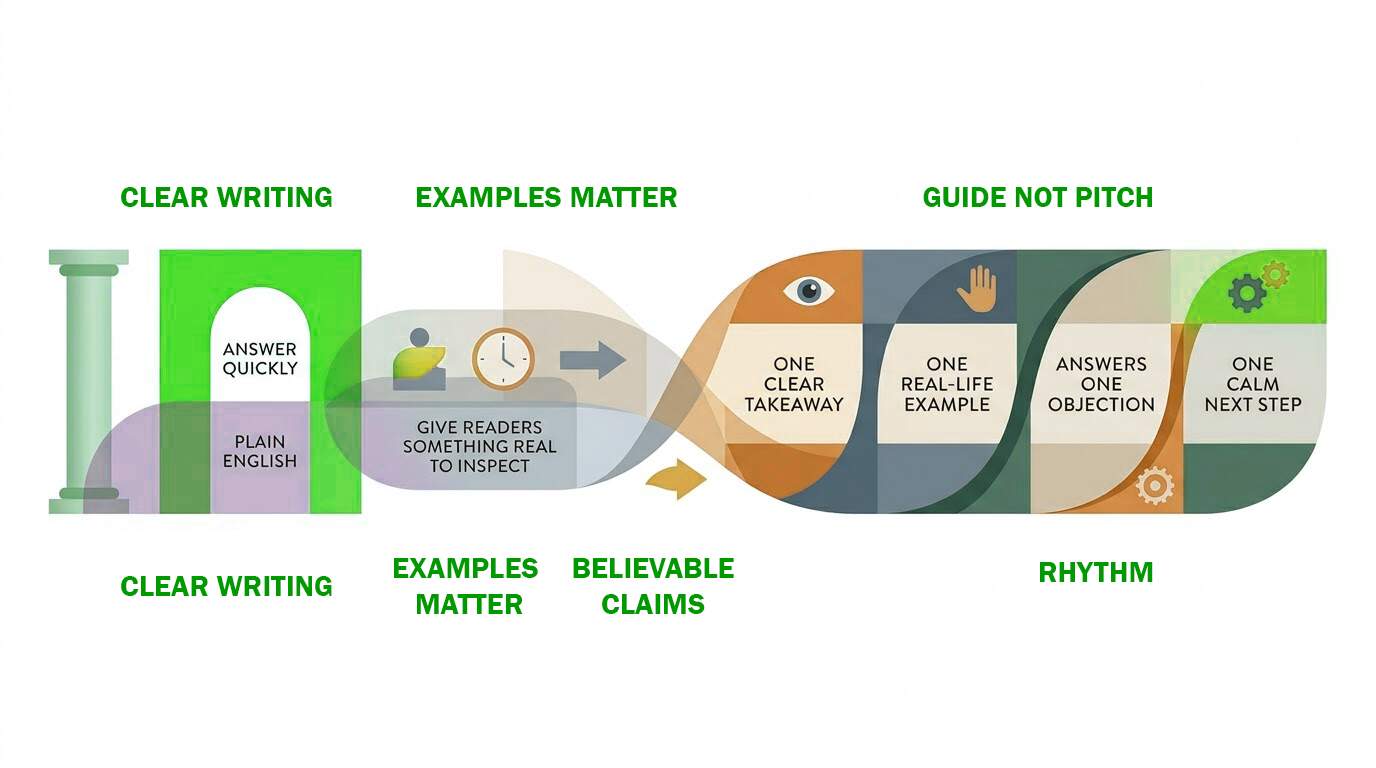
BrightLocal’s 2026 survey found that 97% of consumers read reviews for local businesses, 85% are more likely to use a business after positive reviews, and the most important review factor is similar sentiment across multiple reviews at 56%. That same pattern applies to articles and landing pages. One nice claim is forgettable. Repeated proof from different angles is persuasive. What people trust most is not perfection. It is the consistency they can verify for themselves.
| Trust Signal | What It Shows | Why It Builds Confidence |
| Real author byline | A real person stands behind the advice | Makes the page feel accountable |
| Specific examples | The advice comes from something practical | Makes claims easier to believe |
| Reviews or testimonials | Other people have validated the brand | Adds outside proof |
| Recent updates | The content is current and maintained | Reduces doubt about relevance |
| Consistent tone | The brand sounds stable across pages | Strengthens familiarity and trust |
When these signals appear together, the page starts feeling more dependable without needing to say, “trust us” out loud. That is why content that builds trust usually feels stronger in quiet ways. It shows proof, context, and consistency before the reader even reaches the call to action.
What people believe faster than brand claims:
- Visible authorship makes the message feel accountable, not anonymous.
- Repeated proof beats one shiny claim that sounds too convenient.
- Specific evidence feels stronger than decorative credibility language.
- Consistent tone makes the brand feel stable across decision points.
This is also where E-E-A-T content strategy becomes practical instead of theoretical. Modern content marketing services incorporate experience, expertise, authority, and trust signals to improve both search visibility and user confidence. A real name, a believable point of view, and proof that supports the page make content for conversions more convincing. In the same way, content marketing for credibility works better when it sounds accountable enough to stand behind its advice, rather than hiding behind a vague brand voice.
Common Mistakes That Reduce Trust
Trust starts slipping the second the content sounds more interested in selling than helping. The page may still look polished, but readers feel the pressure immediately. Oversized promises, vague reassurance, generic claims, and aggressive calls to action all send the same message: this brand wants belief without earning it. That is why a really high-converting content strategy teaches before it pushes. Content that builds trust lowers resistance because it does not come across as trying to trap the reader into agreement.
Another common mistake is unclear writing. A weak headline, a fuzzy value proposition, or a bloated paragraph makes the message harder to trust because the reader has to work too hard just to understand it. Clarity is not cosmetic. It is a credibility tool. When the point is easy to grasp, the page feels safer. When it is muddy, the brand starts feeling careless. That damage compounds fast, especially when trust-based content writing is replaced by vague language that sounds polished but says very little.
What breaks trust before the CTA even appears:
- Hype-heavy claims create doubt faster than they create excitement.
- Inconsistent tone makes the brand feel unstable across pages.
- Empty adjectives weaken the message when proof should lead.
- Confusing structure turns curiosity into frustration too early.
Consistency is the final test. If the blog sounds measured, the service page sounds desperate, and the CTA sounds like another company entirely, trust breaks. That is where brand trust building either compounds or collapses. A believable brand sounds like itself everywhere, which is why content that builds trust usually feels steady, readable, and recognizably human from first impression to final action.
Wrapping It Up
Traffic gets you noticed. Trust gets you chosen. That is the real difference. A brand can rank, attract clicks, and still lose the room if the page feels vague, overdone, or too eager to sell. Content that builds trust works because it reduces doubt at every step. It helps readers feel informed, not handled, and it replaces friction with clarity, so the next action feels easier to justify.
The brands that win with this approach are rarely the loudest. They are the clearest, the most specific, and the least afraid to sound honest. They show their thinking, support their claims, and maintain a consistent experience from first impression to final CTA. That is what makes trust-led content stronger than traffic-chasing content over time. It keeps paying off after the click, which is why content that builds trust becomes more than a writing style. It becomes a growth asset.
Ready To Build Content People Trust?
If you want a content strategy that earns confidence before asking for conversion, requesting a free quote at eSign Web Services can help you build content people actually trust. This is the better format because the CTA stands out more clearly and does not get buried inside the conclusion.
Frequently Asked Questions (FAQs)
Question: What is trust-based content writing?
Answer: Trust-based content writing focuses on creating content that builds credibility, authenticity, and confidence among users. Instead of prioritizing keywords or traffic alone, it emphasizes delivering genuine value, clear information, and transparent communication. This approach includes using real examples, data, and social proof to validate claims. Trust-based content addresses user concerns, reduces uncertainty, and guides decision-making. By aligning content with user expectations and providing reliable insights, businesses can improve engagement and conversion rates. This strategy ensures content not only attracts visitors but also builds long-term relationships and loyalty.
Question: How is trust-based content different from SEO content?
Answer: Trust-based content focuses on credibility, authenticity, and user confidence, while traditional SEO content often prioritizes keyword optimization and rankings. Although SEO attracts traffic, trust-based content ensures that visitors feel confident engaging with the brand. It emphasizes clarity, transparency, and value rather than search visibility alone. Both approaches can work together, but trust-based content goes deeper by addressing user concerns and providing meaningful insights. When combined effectively, SEO brings users to the website, and trust-driven content converts them into leads or customers by building credibility and reducing hesitation.
Question: Why does high traffic not always lead to conversions?
Answer: High traffic does not guarantee conversions because users may not trust the content or find it relevant. Visitors often leave without taking action if messaging lacks clarity, credibility, or alignment with their needs. Factors such as weak value propositions, absence of proof, and poor user experience reduce conversion potential. Traffic represents interest, but trust drives decisions. Without addressing user concerns and expectations, content fails to guide users toward action. Improving content quality, transparency, and relevance ensures that traffic translates into meaningful engagement and business outcomes.
Question: What are the most important elements of trust-building content?
Answer: Key elements include authenticity, transparency, expertise, and consistency. Authentic content reflects genuine insights and avoids exaggerated claims. Transparency involves clear communication about processes, pricing, and limitations. Expertise demonstrates knowledge and builds authority. Consistency ensures that messaging remains uniform across all channels. Additional elements such as social proof, data, and real examples strengthen credibility. Combining these factors creates a reliable experience for users. When content consistently delivers value and clarity, it builds trust and encourages users to take action with confidence.
Question: How can storytelling improve trust in content?
Answer: Storytelling improves trust by making content relatable and human-centered. Instead of presenting abstract information, stories show real experiences, challenges, and outcomes. This approach helps users connect emotionally with the message and understand its relevance. Authentic stories demonstrate credibility and differentiate the brand from competitors. They also improve retention and engagement by making content memorable. When users see real-world applications and results, they are more likely to trust the information and take action. Effective storytelling combines emotion, clarity, and value to strengthen trust and improve conversions.
Question: Does transparency really impact conversion rates?
Answer: Yes, transparency significantly impacts conversion rates by reducing uncertainty and building confidence. When businesses clearly communicate pricing, processes, limitations, and expectations, users feel more informed and secure. Hidden information or vague messaging creates doubt and hesitation. Transparent content demonstrates honesty and reliability, which are essential for trust. It also helps users make faster decisions by eliminating confusion. By addressing potential concerns upfront, businesses can improve engagement and increase the likelihood of conversion. Transparency builds credibility and strengthens long-term customer relationships.
Question: How does content consistency influence trust?
Answer: Content consistency ensures that users receive a unified message across all platforms and touchpoints. When tone, branding, and information remain aligned, it reinforces reliability and professionalism. Inconsistent messaging can confuse users and reduce confidence in the brand. Consistency also helps build recognition, making it easier for users to remember and trust the business. Regularly delivering high-quality, aligned content strengthens credibility over time. This reliability encourages users to engage more deeply and increases the likelihood of conversion. Consistency plays a critical role in maintaining trust and supporting long-term growth.
Question: What role do data and statistics play in building trust?
Answer: Data and statistics strengthen trust by providing evidence to support claims. Users are more likely to believe information backed by credible sources and measurable results. Including relevant data demonstrates research, expertise, and transparency. It helps users make informed decisions by presenting clear, factual insights. However, data must be accurate and presented in a simple, understandable manner. Misleading or outdated statistics can damage credibility. Combining data with explanations and real examples improves clarity and trust. Evidence-based content positions the brand as a reliable authority in its field.
Question: Can trust-based content improve long-term SEO performance?
Answer: Yes, trust-based content improves long-term SEO performance by enhancing engagement and user satisfaction signals. When users spend more time on content, interact with it, and return for more information, search engines interpret these behaviors as indicators of quality. High engagement reduces bounce rates and improves ranking stability. Trust-driven content also encourages backlinks and shares, further strengthening authority. Over time, this approach builds a strong content ecosystem aligned with search intent. Combining trust and SEO creates sustainable growth rather than short-term traffic spikes without meaningful results.
Question: How can businesses measure trust in their content?
Answer: Trust can be measured through indirect performance indicators such as engagement rate, time on page, conversion rate, and repeat visits. High interaction levels suggest that users find content valuable and credible. Feedback such as comments, reviews, and direct inquiries also reflect trust. Monitoring bounce rates and exit behavior helps identify areas where trust may be lacking. Surveys and user feedback provide additional insights into perception. Consistent improvements in these metrics indicate growing trust. Businesses should combine qualitative and quantitative data to evaluate how effectively content builds confidence and supports decision-making.
Author Details

Ashwani Kumar Sharma
Ashwani has been actively involved in SEO services since 2005. His expertise and distinctive work approaches have made him one of the most experienced and trusted SEO experts in the industry. He is a certified SEO and Google Ads professional. He also has strong business development skills in advanced SEO, PPC, and digital marketing strategies.


