



How AI Is Changing Search Behavior: What Marketers Must Understand in 2026

Key Takeaways
- AI is changing search from keyword matching to intent-driven, answer-first user experiences.
- Users now search with longer questions, expecting faster, clearer, more useful responses.
- AI summaries are reducing clicks by answering questions before website visits happen.
- Businesses must optimize content for visibility, extraction, trust, and brand recall.
- Conversational search rewards pages that answer real problems, not isolated keywords.
- Multimodal search blends text, voice, and images into one discovery experience.
- Trust signals, authorship, and topical depth strongly influence AI-driven search visibility.
- Marketers should track influence, impressions, and branded lift beyond traditional traffic.
Search in 2026 no longer starts with a list of links. It often starts with an answer. That may sound like a small change, but for marketers, it changes everything. Search used to feel more like a journey. You typed a query, scanned a few results, opened several tabs, compared options, and slowly worked your way toward a decision. Now, that process is getting shorter, faster, and far more guided. AI changing search behavior is pushing search away from simple discovery and closer to instant evaluation. People are asking longer, more natural questions, and search engines are responding with summaries, comparisons, and follow-up prompts before many users ever click a website.
Google reported that AI Overviews were already reaching more than 1.5 billion users per month in 2025, and early AI Mode queries were nearly twice as long as traditional searches. That is not just another update in the search world. It is a real shift in how people look for information, weigh choices, and make decisions. Users now expect speed, clarity, and useful context much earlier in the process.
In this blog, you will read how AI is changing search behavior, why that matters for marketers, what new patterns are shaping visibility, and what businesses need to do now to stay relevant in a search experience that is becoming more answer-led, more competitive, and much harder to ignore.
Are Keywords Officially Dead Yet?
One of the clearest changes in search today is that people are no longer typing in stiff, robotic phrases just to get a result. They are searching for the way they actually speak and think. Instead of entering something basic like “best CRM” or “SEO agency,” they are asking fuller questions that reflect what they really need, what is holding them back, and what kind of solution fits their situation. That is where AI changing search behavior becomes easy to see. Search engines are getting better at picking up intent, context, and natural phrasing, so content cannot depend on exact-match keywords the way it once did.
What this looks like in real life: Instead of searching “best project management tool,” a user may ask, “Which project management tool is easiest for a small remote team that keeps missing deadlines?”
For businesses, this shift is bigger than it looks. A brand that still creates content only around short target phrases may start losing visibility, not because the topic is wrong, but because the wording no longer matches how people actually search. On the other hand, businesses that answer real questions clearly, naturally, and helpfully are more likely to earn attention and trust.
Why AI shift matters for businesses
- Visibility now depends more on meaning, clarity, and intent.
- Content should reflect real customer questions, not just SEO phrases.
- Usefulness matters more if brands want to stay competitive in AI-led search.
To adapt, businesses need to stop writing for keywords first and start writing for people first. That means creating content around real situations, common concerns, comparisons, and decision-making moments. The strongest pages feel like they understand the reader, not just the search term. The businesses that adapt fastest will not be the ones repeating the keyword best. They will be the ones answering the customer best.
Can AI Answers Replace Google Search?
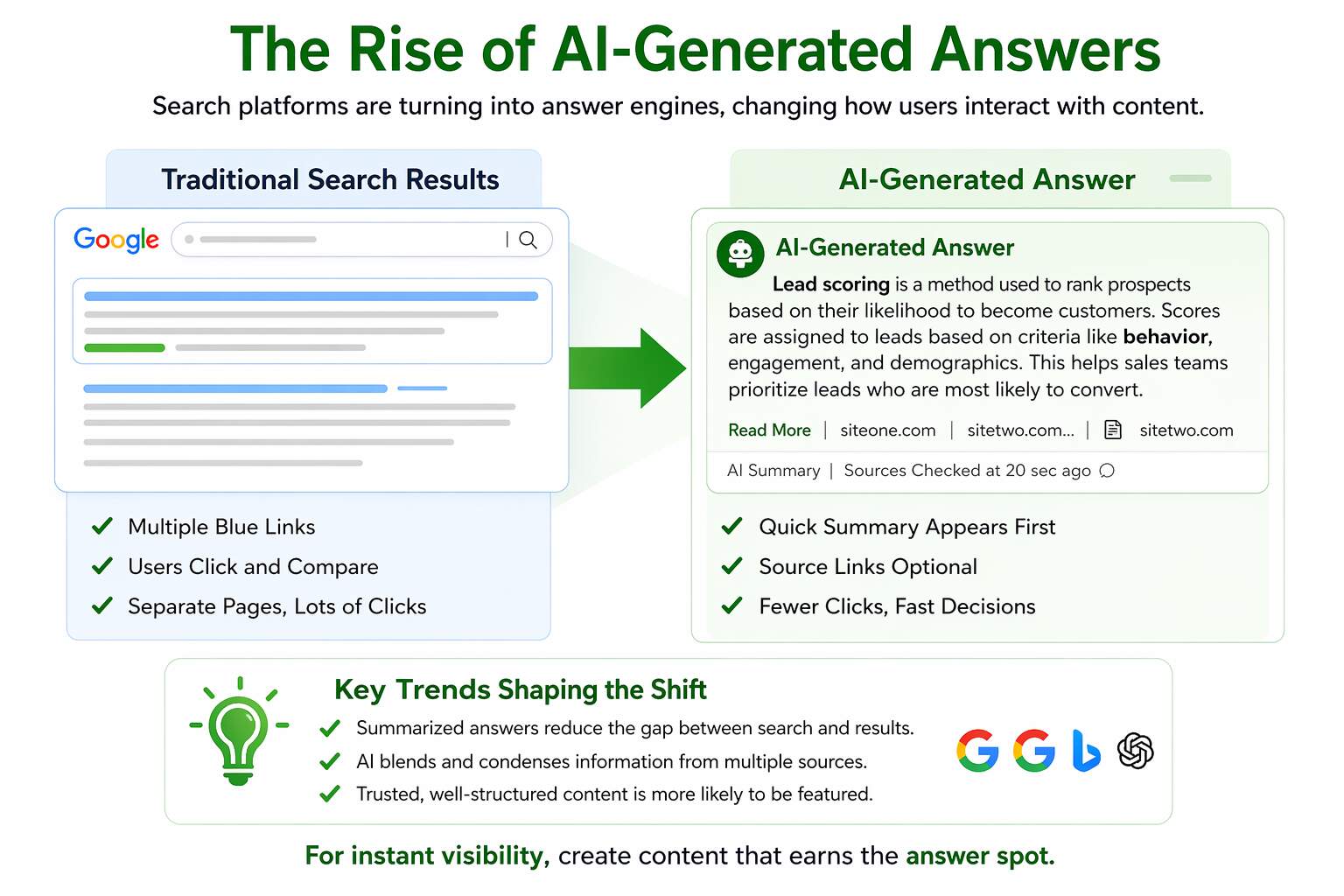
One of the biggest shifts in modern search is that users are increasingly getting the answer before they ever reach a website. Instead of clicking through multiple pages to compare ideas, many people now read the summary shown at the top of the results and decide whether they need to go further. That change is shaping how information is discovered, trusted, and acted on. It is also one of the clearest signs of AI changing search behavior. Search is no longer just pointing users toward content. It is now interpreting, condensing, and presenting that content much more quickly.
The key players driving this shift include Google, Microsoft, OpenAI, and other AI-powered search experiences that are training users to expect quick, direct, and well-structured answers. At the same time, the trend is moving toward summarized results, follow-up prompts, source blending, and fewer traditional clicks. That means businesses are no longer competing only for rankings. They are competing to be included in the answer itself.
Key players and trends shaping this shift
- Search platforms are becoming answer engines, not just result pages.
- AI-generated summaries are reducing the gap between question and decision.
- Content that is clear, structured, and trustworthy is more likely to be surfaced.
For businesses, the takeaway is simple. If your content takes too long to get to the point, it becomes easier to overlook. Strong pages now need to answer early, explain clearly, and still offer enough depth to build trust once the summary earns attention.
Why Clicks Are Disappearing Fast?
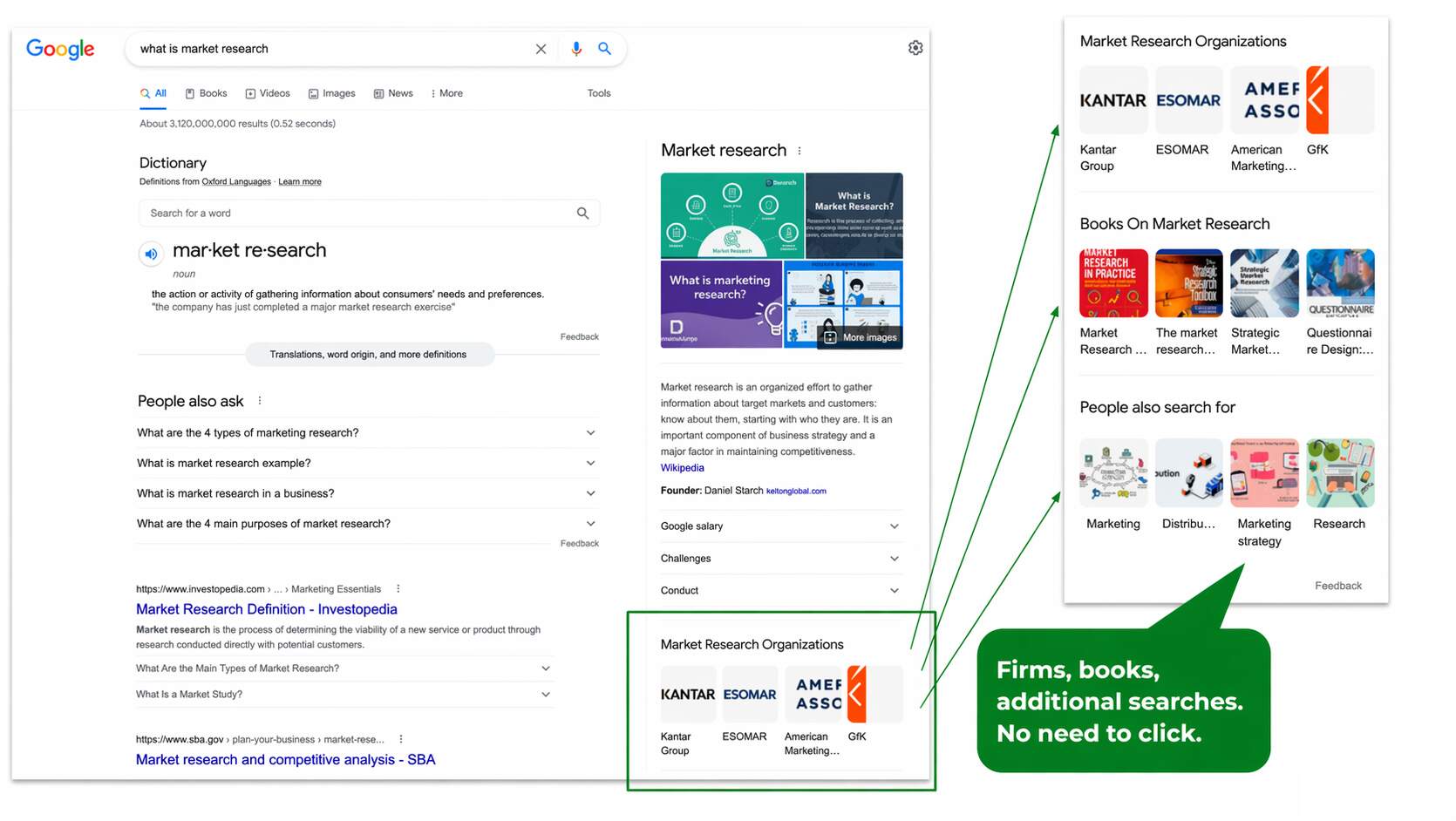
One of the hardest changes for marketers to accept is that usefulness no longer guarantees a visit. Pew found that when an AI summary appeared, users clicked a traditional search result only 8% of the time, compared with 15% when no summary appeared. It also found that users clicked links inside the summary itself just 1% of the time. In other words, AI Overviews search behavior is making the results page more self-contained, especially for informational queries.
This is why zero-click searches are no longer a side note in SEO conversations. Similarweb reports that the median zero-click rate is about 60% for searches without AI Overviews and rises to roughly 80% when AI Overviews appear, with an average of 83% on AIO-triggered searches. Ahrefs’ February 2026 update also found a 58% lower average CTR for the top-ranking page when AI Overviews were present. That changes what success should look like in a world shaped by SGE user behavior and AI-first result formats.
What this means in practice
- Search influence is increasingly happening before the site visit.
- Brand recall matters more when direct clicks become less reliable.
- SEO reporting has to look beyond traffic alone.
The smart response is not panic. It is a better measurement model. If people are seeing your brand in summaries, answer boxes, and cited-source clusters, you may still be influencing decisions before the click even happens. That is one of the clearest examples of AI changing search behavior in action: traffic may soften, but visibility and influence can still grow if the content is built to be surfaced early.
What Many Marketers Still Get Wrong
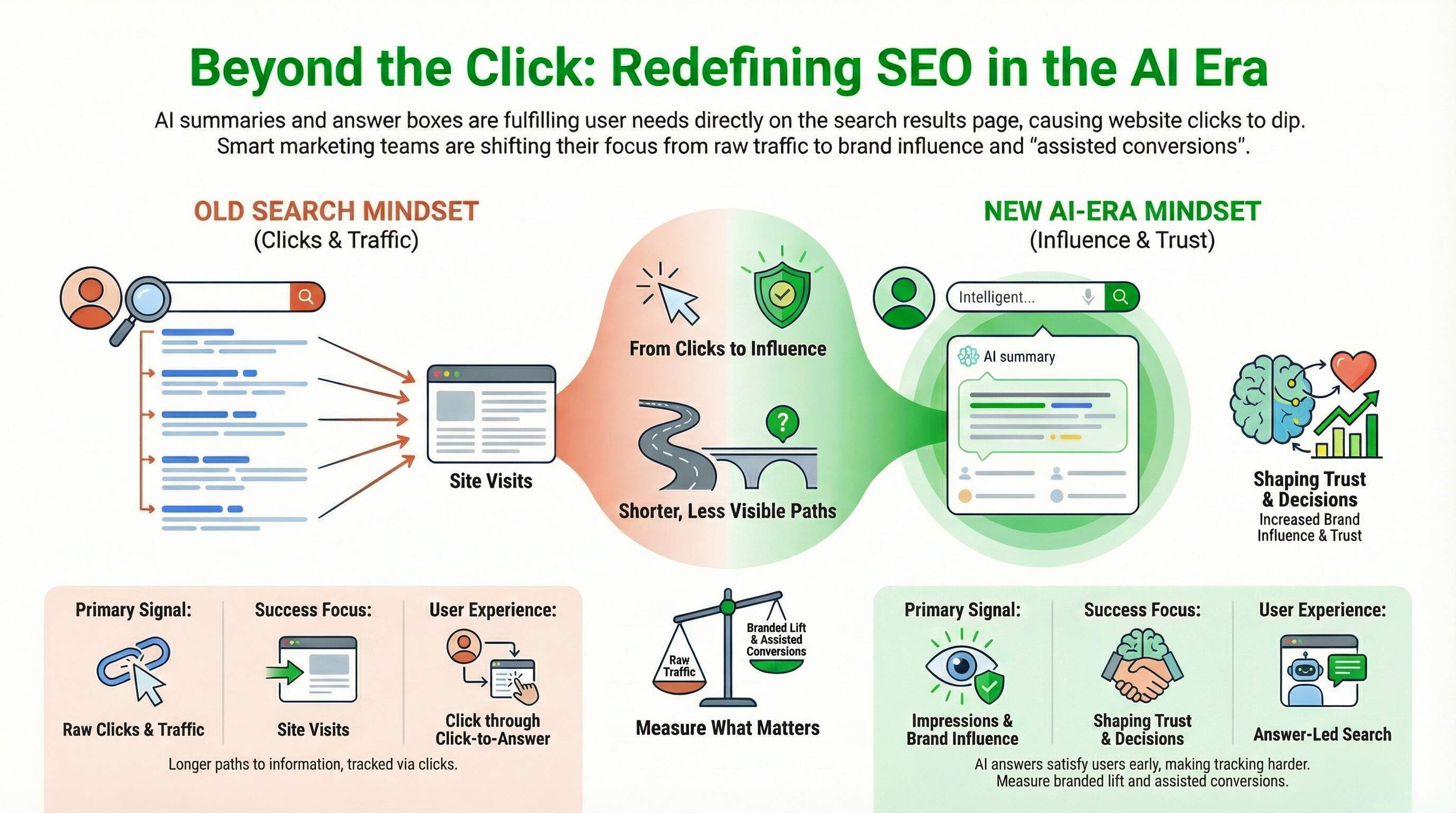
A lot of brands see clicks dip and assume SEO has stopped working. That is usually too simplistic. In many cases, the page did not become weaker. The search experience changed around it. When AI summaries, answer boxes, and comparison features do more of the work upfront, users can get what they need earlier. That means traffic can soften even when your content is still being seen, trusted, and used to shape decisions.
This is where many teams misread the situation. They are measuring success with an older search mindset, where the click was the clearest sign of value. But in a more answer-led search environment, influence often happens before the visit. A user may notice your brand in a summary, remember it, compare it later, and come back when they are closer to acting. That does not mean SEO failed. It means the path got shorter and less visible.
What smart teams do differently:
- They track impressions, branded lift, and assisted conversions alongside traffic.
- They separate visibility loss from click loss instead of treating them like the same problem.
- They ask whether the content is still shaping trust and decisions, even when the visit happens later.
- They judge performance by influence and progression, not just raw clicks.
That shift in thinking helps marketers respond more intelligently instead of reacting too fast to the wrong signal.
Is Visual Search the New Default?
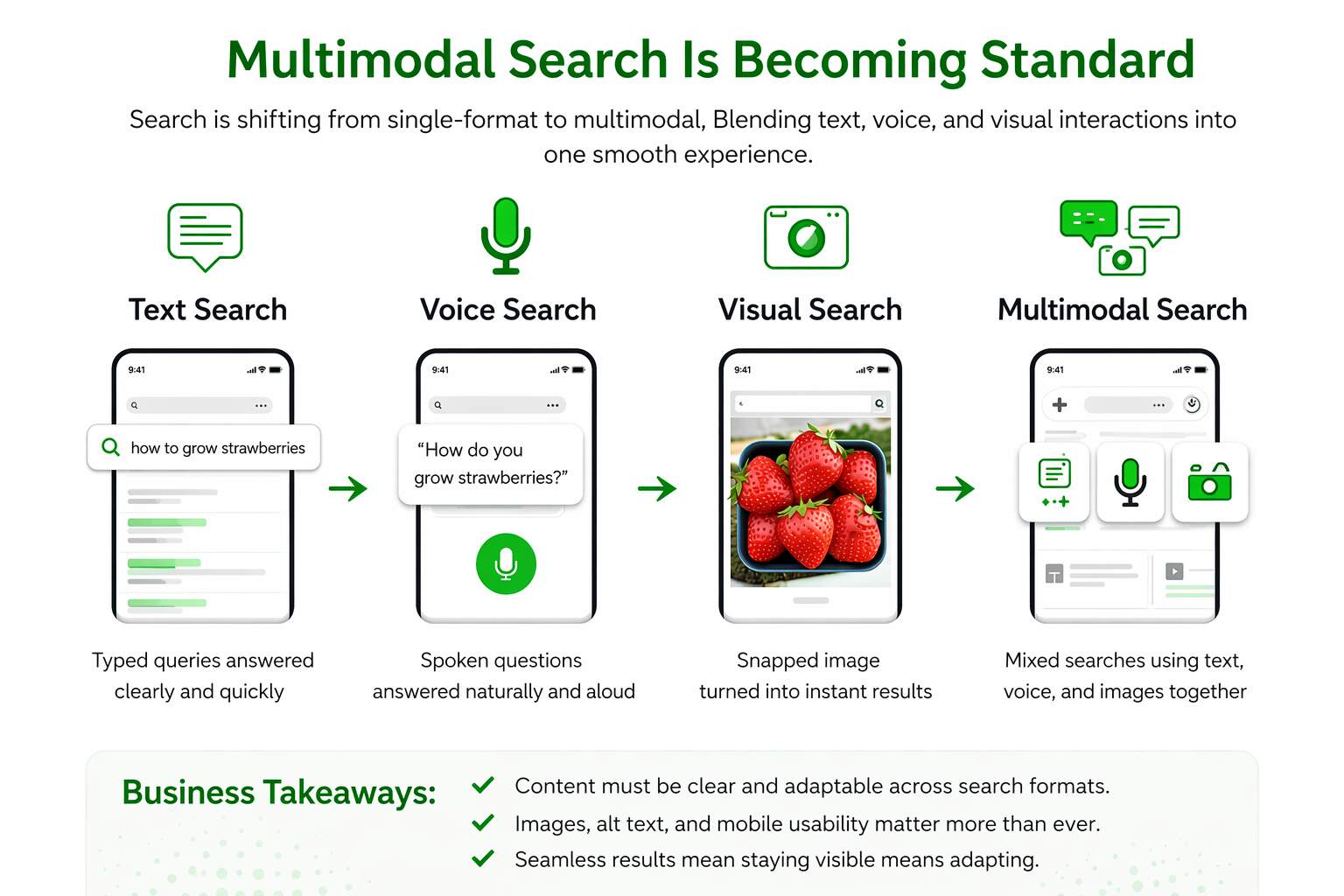
Search is no longer just about typing a few words into Google and choosing from a list of links. People now search in a much more natural way. They might type a question, use their camera to identify a product, and then ask a follow-up by voice while doing something else. To the user, it all feels like one smooth experience. That is exactly why multimodal search is becoming such an important part of how people find information today.
This shift matters because it changes what content needs to do. A page can no longer rely only on ranking for a typed keyword. It also needs to make sense when read aloud, work well with visual search, and stay clear when someone is quickly skimming on a phone. That is one of the clearest ways AI changing search behavior is affecting real content strategy. Search is becoming more flexible, and content has to become more adaptable with it.
| Search format | How users interact | What they expect | What businesses should do |
| Text search | Type a query into search to find specific information quickly | Fast, relevant answers that clearly match their exact intent | Write clear, intent-focused content that answers questions without unnecessary friction |
| Voice search | Ask a spoken question while multitasking or needing hands-free convenience | Direct, natural responses that sound clear, useful, and conversational | Use simple phrasing and concise answers that sound natural aloud |
| Visual search | Use images or camera input to identify products, styles, or objects | Quick identification and comparison with helpful visual and product context | Optimize images, alt text, and product context for better discovery |
| Multimodal search | Mix text, voice, and images during one connected search journey | Seamless, flexible experience across devices, formats, and shifting user intent | Create content that works across formats and multiple discovery paths |
Why this matters for businesses
- Search is no longer happening in just one format.
- Content needs to work across text, voice, and visuals.
- Clear structure and context now matter even more.
For businesses, the lesson is simple. The strongest content today is not just easy to rank. It is easy to understand in different situations. If your content is clear, useful, and flexible across formats, it has a much better chance of staying visible as search continues to evolve.
Authority & Trust Signals Are Critical
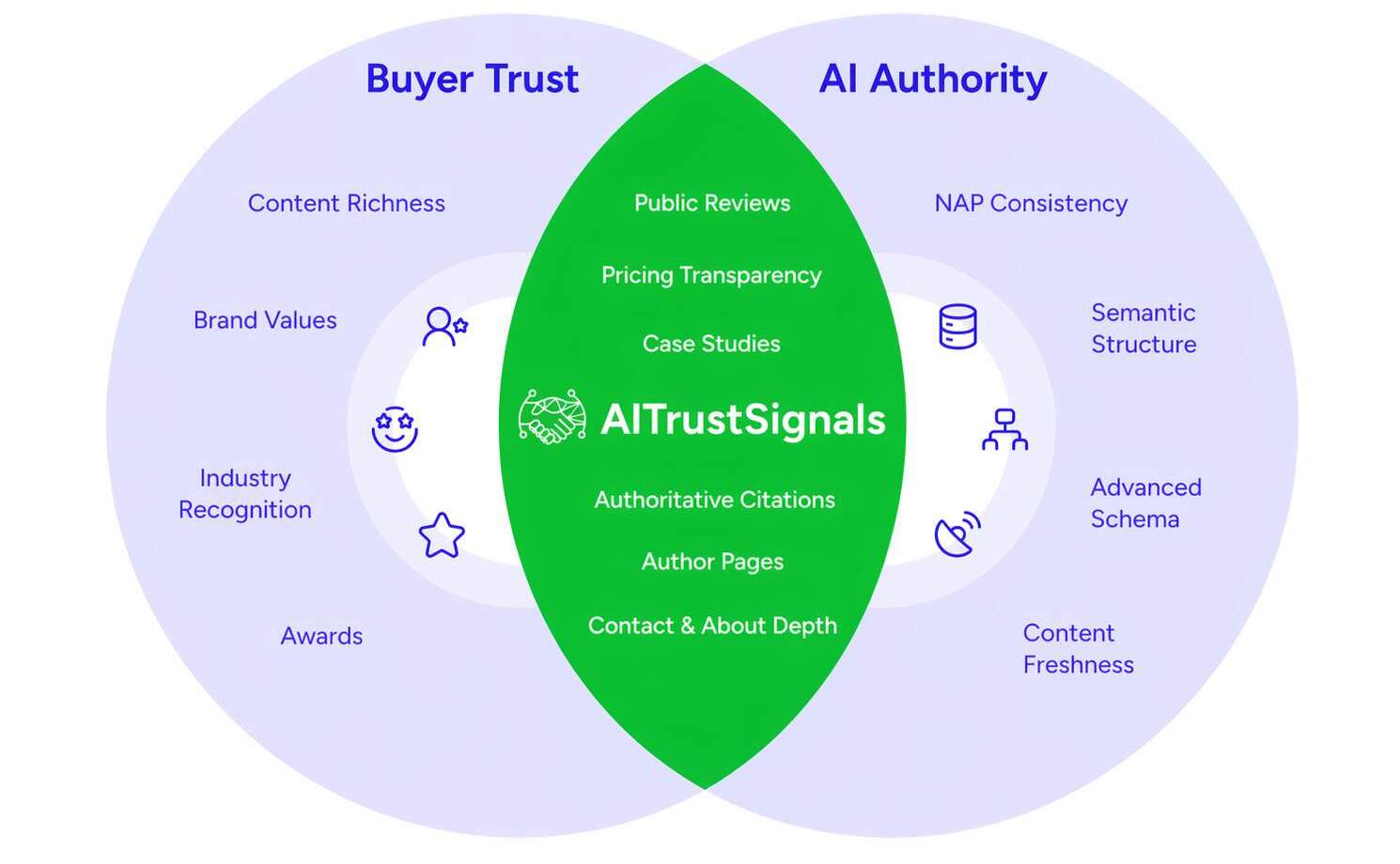
As AI systems summarize more of the web, trust becomes easier to notice and harder to fake. Pew found that Wikipedia, YouTube, and Reddit accounted for 15% of the sources cited in the AI summaries it studied. It also found that .gov sites accounted for 6% of cited AI-summary sources, compared with 2% in standard search results. That is a useful reminder that systems are not only looking for topical relevance. They are leaning toward source types that already carry recognizable authority.
That is where entity-based search and topical clarity become more important. If your site makes it obvious who is publishing, what expertise backs the content, and how the topic fits a broader area of authority, you reduce ambiguity. That matters because ambiguity makes extraction harder. Clear identity, authorship, and evidence make it easier for search systems to understand why a page deserves trust. This is one of the clearest shifts shaping the future of search marketing.
What this means in practice
- Clear authorship improves trust and interpretability.
- Strong topical depth increases reuse potential.
- Credibility signals help content travel further in AI results.
The wider implication is that credibility now compounds faster than thin content ever did. Marketers do not need to imitate giant publishers, but they do need to publish like specialists rather than anonymous content mills. That is why the strongest AI-driven search patterns increasingly reward clarity of expertise, source quality, and consistency across a topic cluster instead of scattered, one-off posts.
Why Are Search Journeys So Short?
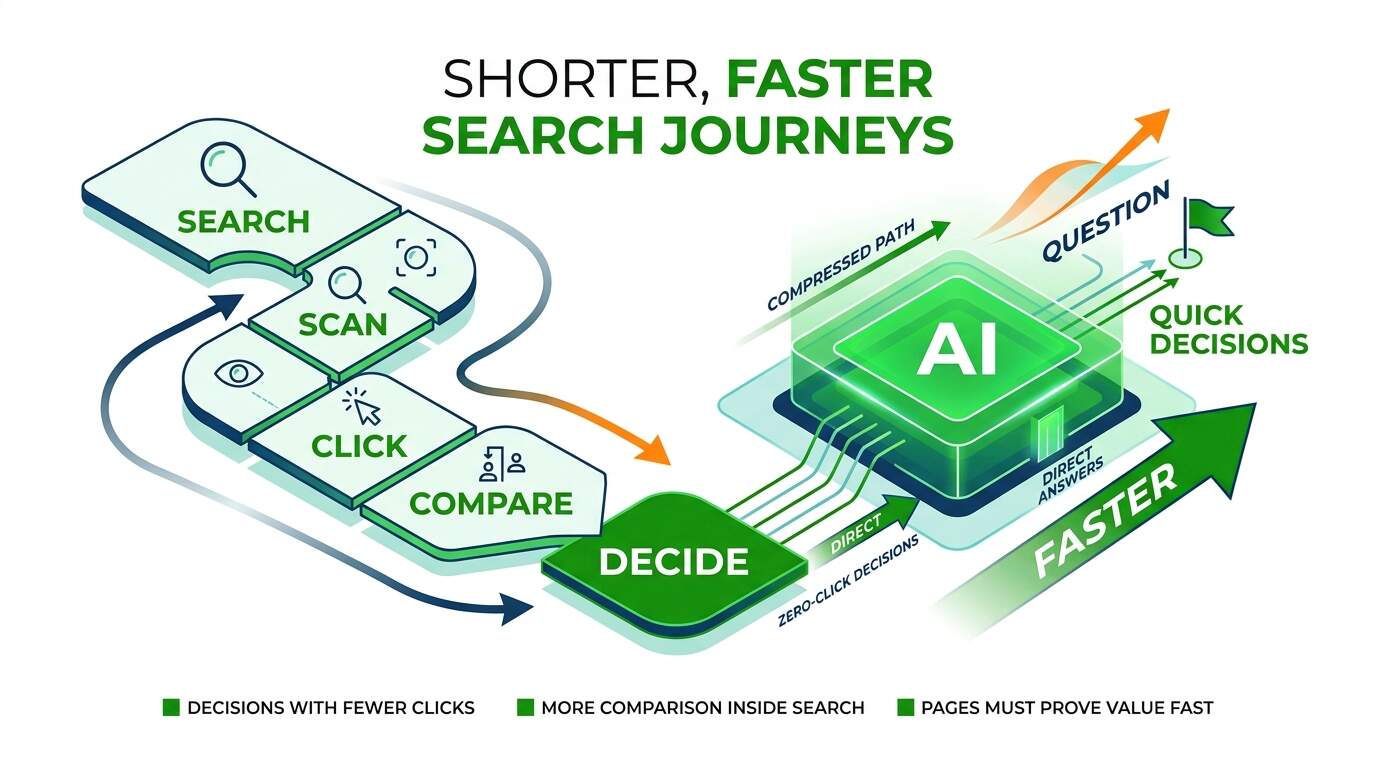
The traditional search journey used to have more visible steps. Users searched, scanned, clicked, compared, and then decided. AI is compressing that path. Similarweb’s 2025 analysis showed that zero-click behavior is already dominant across many search experiences, and Ahrefs’ 2026 update suggests the CTR pressure from AI Overviews is still intensifying. Google has also said AI Overviews are increasing usage for the kinds of queries where they appear, suggesting users are becoming more comfortable asking complex questions directly in search.
That change matters because comparison and evaluation are happening earlier and with fewer visible steps. Google’s later updates also point to more follow-up questions, more multimodal usage, and more conversational sessions in AI Mode. That fits broader predictive search trends and the rise of search personalization AI, where systems respond more dynamically to phrasing, format, and likely next questions. Search is not disappearing. It is becoming faster at helping users narrow options before they ever land on a site.
What this means in practice
- Users are making decisions with fewer clicks.
- More comparison work is happening inside the search interface.
- Pages need to prove value faster than before.
This is why clarity matters so much now. It is not enough for a page to be informative in a general sense. It has to differentiate quickly, answer directly, and make the next step obvious. That is where AI search trends 2026 stop sounding abstract and start shaping real performance. As journeys get shorter, the margin for vague openings and delayed value gets smaller.
Wrap Up: Behavior Over Algorithms
The biggest change is not just that AI is now part of search. It is that people are getting comfortable with it very quickly. They are asking more detailed questions, trusting summaries earlier, moving between text, voice, and visual search more easily, and making decisions faster than before. That is why AI changing search behavior is not only a search engine update. It is also changing how content gets noticed, how trust is built, and how performance should be measured.
For marketers, the answer is not to chase every new feature. It is to become more precise. Create content that gets to the point early, feels trustworthy, and gives AI systems something clear enough to understand and surface. That is what will help brands stay visible, useful, and competitive as search becomes more answer-led and less click-dependent.
Ready to Build Content for the Way Search Works Now?
If your business needs content that is clearer, more strategic, and better aligned with how people actually search today, eSign Web Services can help. We create search-focused content built for visibility, trust, and real user intent, so your brand stays competitive in a search environment shaped by AI, stronger summaries, and faster decisions. Request your free quote today and see how the right content strategy can turn search visibility into real business growth.
Frequently Asked Questions (FAQs)
Question: How is AI changing the way people search online?
Answer: AI is transforming search behavior by enabling users to interact with search engines using natural language and conversational queries. Instead of typing short keywords, users ask complete questions and expect precise answers. AI systems analyze intent, context, and user preferences to deliver personalized results. This reduces the need to browse multiple websites. Users rely more on summarized responses generated by AI. As a result, search becomes faster, more efficient, and focused on outcomes. This shift requires marketers to optimize content for clarity, relevance, and AI interpretation rather than traditional keyword-based ranking strategies.
Question: What is zero-click search and why is it increasing?
Answer: Zero-click search occurs when users find answers directly on the search results page without visiting any website. This trend is increasing due to AI-generated summaries, featured snippets, and knowledge panels that provide immediate information. Users prefer quick answers, reducing the need to explore multiple links. As AI improves, search engines aim to deliver complete responses within the interface. This shift changes how success is measured, focusing more on visibility than clicks. Businesses must optimize content for inclusion in these results to maintain brand presence and influence user decisions effectively.
Question: How do AI Overviews affect website traffic?
Answer: AI Overviews can reduce website traffic by providing users with direct answers within search results. When users receive sufficient information without clicking, traditional traffic metrics may decline. However, this does not mean reduced influence. Being featured in AI-generated summaries increases brand visibility and credibility. Users exposed to trusted sources may return later or search directly for the brand. Marketers must shift focus from click-based performance to overall visibility and authority. Optimizing content for AI inclusion ensures continued relevance, even as user behavior moves away from traditional browsing patterns.
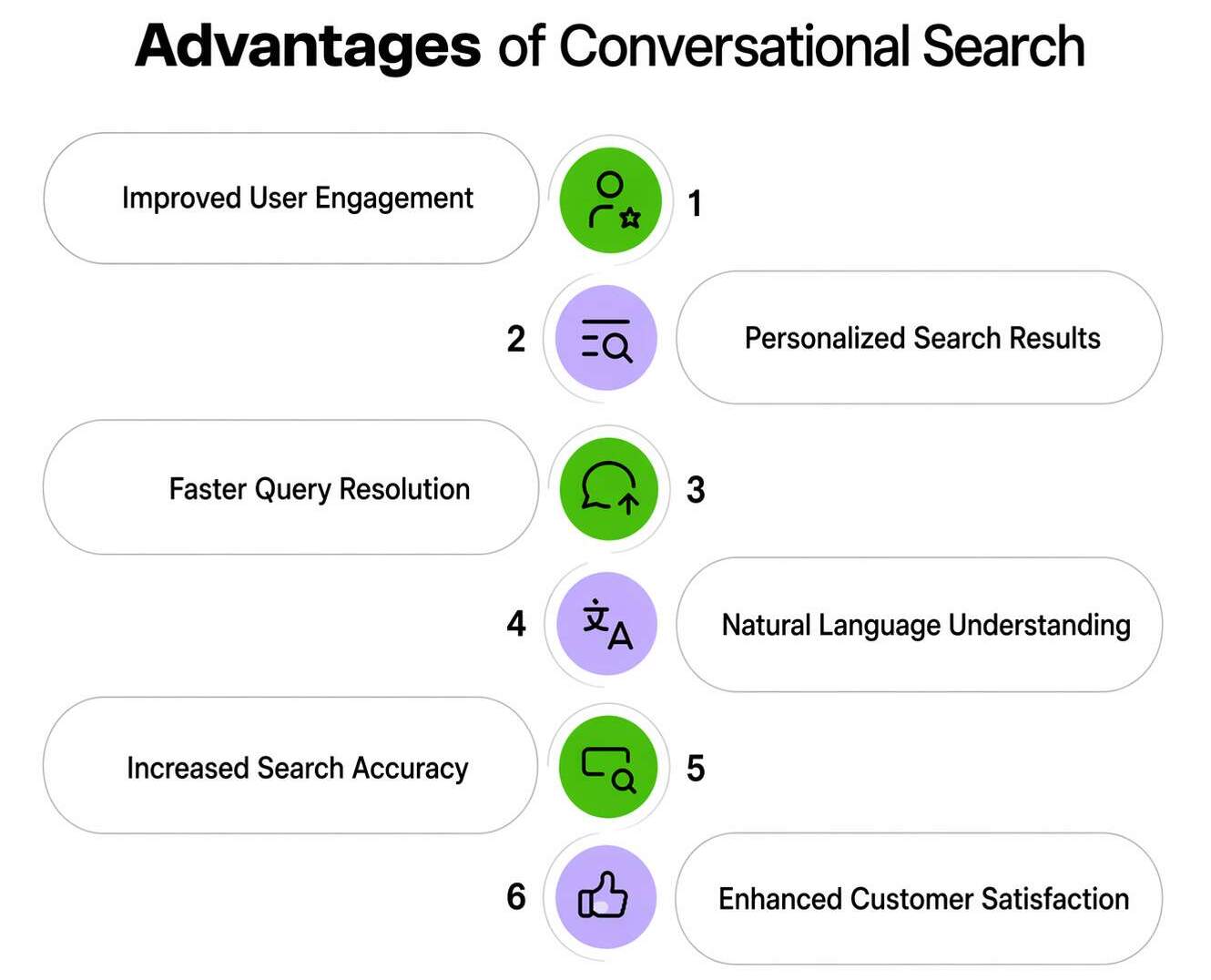
Question: What is conversational search and how does it impact SEO?
Answer: Conversational search refers to users interacting with search engines using natural, question-based language rather than short keywords. This behavior impacts SEO by prioritizing context, intent, and clarity over exact keyword matching. Content must be structured to answer questions directly and comprehensively. Long-tail queries and natural language patterns become more important. Search engines analyze meaning rather than isolated terms. Optimizing for conversational search improves visibility in AI-driven results and voice search. This approach requires a shift toward user-focused content that aligns with how people naturally communicate and seek information online.
Question: Why are entity signals important in AI-driven search?
Answer: Entity signals help AI systems understand relationships between topics, brands, and concepts. Instead of relying only on keywords, AI identifies entities and their connections to interpret meaning accurately. Clear entity definition improves content relevance and increases the likelihood of being included in AI-generated answers. Strong entity signals also support topical authority, making content more trustworthy. Marketers must structure content to define entities clearly and maintain consistency across pages. This approach enhances search visibility and ensures content aligns with how AI processes and evaluates information in modern search environments.
Question: How does voice search influence content strategy?
Answer: Voice search influences content strategy by prioritizing concise, clear, and conversational responses. Users expect quick, direct answers when using voice assistants. Content must be structured to deliver information efficiently, often within a few sentences. Long, complex explanations may not perform well in voice results. Question-based headings and natural language improve relevance. Voice search also emphasizes local intent and immediate needs. Optimizing for voice requires focusing on clarity, brevity, and user intent. This ensures content aligns with spoken queries and increases chances of being selected as a primary response.
Question: What changes should marketers make to adapt to AI search behavior?
Answer: Marketers should focus on intent-driven content, structured formatting, and authority building. Content must provide clear answers early and include detailed explanations for depth. Using schema markup improves AI understanding. Building topical authority through content clusters strengthens credibility. Optimizing for conversational queries and voice search enhances relevance. Monitoring visibility in AI-generated results helps measure performance. Marketers should also prioritize user experience and engagement signals. Adapting strategies to align with AI interpretation ensures content remains competitive and effective in evolving search environments.
Question: Does traditional SEO still matter in the AI era?
Answer: Traditional SEO still matters but has evolved significantly. Core elements such as technical optimization, content quality, and backlinks remain important. However, their role has shifted from driving rankings alone to supporting authority and credibility. AI systems use these signals to evaluate trustworthiness and relevance. SEO now focuses on intent, semantic clarity, and user satisfaction. While rankings still exist, they are not the only measure of success. Combining traditional SEO with AI-focused strategies ensures visibility across both standard search results and AI-generated experiences.
Question: How does personalization affect search results in 2026?
Answer: Personalization tailors search results based on user behavior, preferences, location, and past interactions. AI systems analyze data to deliver more relevant and individualized responses. This means different users may see different results for the same query. Personalization improves user experience but adds complexity for marketers. Strategies must account for diverse audience segments and behaviors. Creating high-quality, intent-focused content increases chances of appearing in personalized results. Understanding audience data and adapting content accordingly helps maintain visibility and relevance in personalized search environments.
Question: What is the biggest challenge for marketers in AI-driven search?
Answer: The biggest challenge is adapting to a shift from traffic-focused metrics to visibility and influence within AI systems. Traditional strategies centered on rankings and clicks are no longer sufficient. Marketers must understand how AI selects and presents information. Measuring success becomes more complex as direct traffic may decline. Balancing content for both users and AI requires new approaches. Continuous learning and adaptation are essential. Businesses that fail to adjust risk losing visibility and relevance. Embracing AI-driven strategies ensures sustained performance in evolving search ecosystems.
Author Details

Ashwani Kumar Sharma
Ashwani has been actively involved in SEO services since 2005. His expertise and distinctive work approaches have made him one of the most experienced and trusted SEO experts in the industry. He is a certified SEO and Google Ads professional. He also has strong business development skills in advanced SEO, PPC, and digital marketing strategies.


